
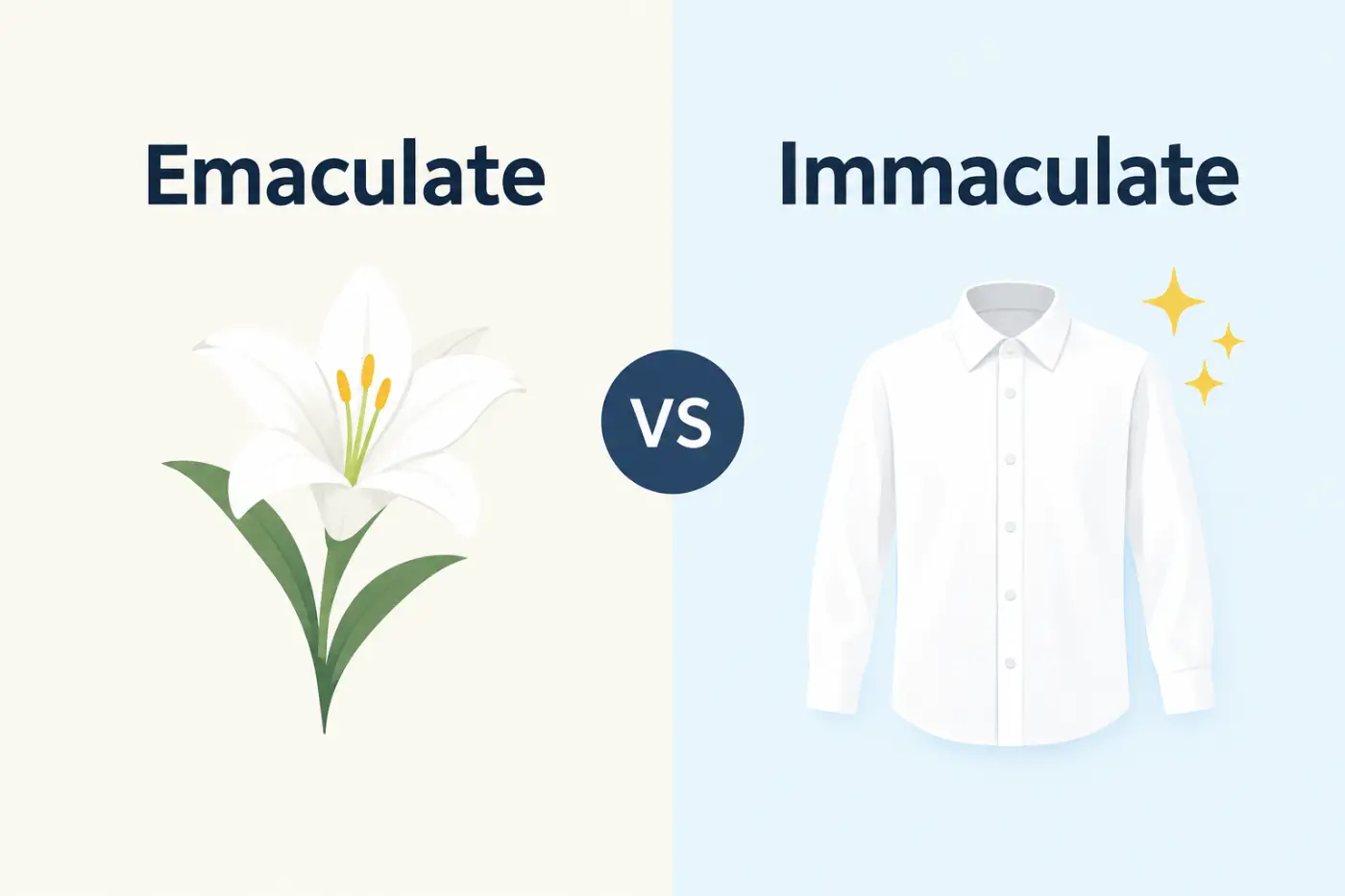
If you’re searching emaculate vs immaculate you probably want to know which spelling is correct. The answer is simple. Immaculate is the correct spelling. Emaculate is a common misspelling and isn’t accepted as the standard English spelling.
The word immaculate has a useful meaning. It describes something that is perfectly clean or free from mistakes or flaws. You might describe a spotless room as immaculate or praise an essay for its immaculate presentation. The word can also describe something morally pure or completely free from wrongdoing.
The tricky part is the first vowel. When people hear the word they may remember an initial sound that makes the spelling seem like it starts with an e. That can lead to the incorrect form. Once you understand where the word comes from and how it is used the correct spelling becomes much easier to remember.
This guide explains the spelling the meaning the pronunciation and the common ways to use the word. You’ll also see examples that show the difference between immaculate and similar words such as spotless pristine perfect and flawless.
Quick Definition
Immaculate is an adjective that means perfectly clean spotless or free from flaws. It can also describe something that is morally pure or without fault. Emaculate is a misspelling and should not be used in standard English.
Direct Answer
The correct spelling is immaculate. Emaculate is incorrect.
Comparison Table
| Word | Meaning | Example Sentence | When to Use It |
|---|---|---|---|
| Immaculate | Perfectly clean or free from flaws. | Her kitchen was immaculate. | Use this spelling in all standard English writing. |
| Emaculate | Incorrect spelling of immaculate. | This spelling is incorrect. | Do not use it. |
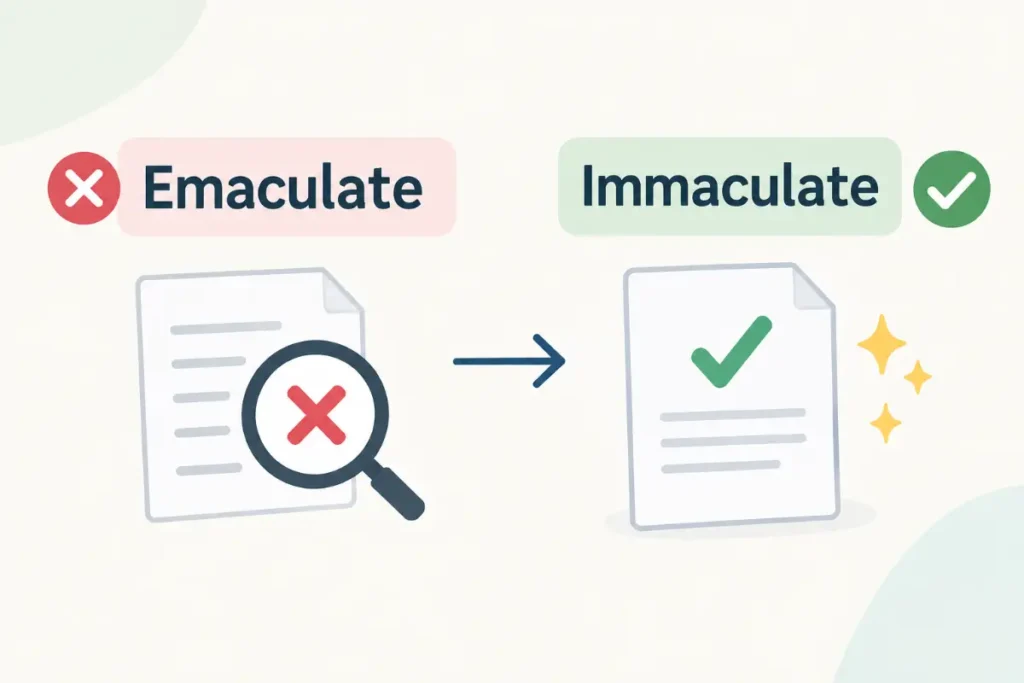
Why Immaculate Is The Correct Spelling
The correct word begins with im followed by maculate. That gives us immaculate with two m letters in the middle.
The spelling can feel strange because the word isn’t pronounced exactly as it looks. In everyday speech the first part can sound soft and quick. When people write the word from memory they may change the first vowel or drop one of the letters.
That explains why the misspelling appears from time to time. It doesn’t make the incorrect form acceptable though. If you’re writing an email a school assignment a product description or a professional document use immaculate.
One useful way to remember the spelling is to connect it with the word immaculate in your mind as a whole instead of trying to spell it from sound. The first part is im and the word has two m letters.
Think of it this way.
im + maculate = immaculate
That small visual pattern can make the spelling much easier to recall.
What Does Immaculate Mean
Immaculate usually means extremely clean. It describes something with no dirt marks stains clutter or visible mess.
For example you might walk into a hotel room and notice that everything is perfectly arranged. The floors are clean. The furniture is polished. The bathroom looks spotless. You could call the room immaculate.
The word can also describe a person’s appearance.
- She arrived at the interview in an immaculate suit.
- His shoes were immaculate before the ceremony.
- The actor looked immaculate on the red carpet.
In these examples the word suggests more than ordinary cleanliness. It creates the idea of something that looks exceptionally neat and well cared for.
The word can also describe work or performance that contains no obvious errors.
- The editor delivered an immaculate final draft.
- Her presentation was immaculate from start to finish.
- The chef prepared an immaculate plate of food.
There is another meaning that relates to moral purity. This use is less common in everyday conversation but still appears in formal and religious writing.
- The story presents her as an immaculate figure.
- The poem describes a life untouched by wrongdoing.
So the meaning depends on context. In most everyday situations immaculate means extremely clean or perfectly maintained.
Immaculate In Everyday English
You don’t need a formal setting to use this word. It fits naturally into ordinary conversations when something looks exceptionally clean or well kept.
Imagine visiting a friend’s house for the first time. You notice that every room is tidy. There isn’t a dish in the sink and the floors are spotless. You might say the house is immaculate.
The same idea works for a car.
- His new car is immaculate.
- She keeps her car immaculate.
- The vintage car looked immaculate after the restoration.
It can also describe clothing.
- Your jacket looks immaculate.
- He showed up in an immaculate white shirt.
- Her wedding dress was absolutely immaculate.
The word works especially well when ordinary words such as clean or neat don’t seem strong enough.
If a room is simply clean you can call it clean. If it looks almost perfect you might call it immaculate.
That difference gives the word its appeal. It adds emphasis without needing a long explanation.
How To Pronounce Immaculate
The word immaculate is commonly pronounced something like ih MAK yuh lit in American English.
The stress falls on the second syllable. That means the middle part of the word receives the strongest emphasis.
You don’t need to pronounce every letter separately. The first part is quick and light. The middle sound is stronger.
Hearing the word can actually make the spelling harder because the spoken form doesn’t clearly reveal every letter. This happens with many English words. Pronunciation can guide you but it doesn’t always provide a perfect spelling guide.
When in doubt focus on the written form.
Immaculate starts with im and contains two m letters.
Where The Word Immaculate Comes From
The spelling makes more sense when you look at the history of the word.
Immaculate comes from the Latin word immaculatus. It was formed from in meaning not and macula meaning spot or stain. The basic idea was something that had no spot or stain.
That meaning carried into English. Over time immaculate became associated with things that are completely clean or free from defects.
This history also helps explain the spelling. The word did not develop from a simple English word such as clean. It came through older forms of language and kept a spelling that reflects its history.
You don’t need to memorize the Latin root to use the word. Still the connection between a macula and a spot or stain gives you a useful memory clue.
If immaculate means without a spot then you can picture something so clean that not even a tiny mark is visible.
The Meaning Behind The Word
The central idea behind immaculate is freedom from flaws.
That idea can take several forms.
A physical object can be immaculate because it has no dirt.
A person’s appearance can be immaculate because everything looks perfectly neat.
A piece of work can be immaculate because it has no obvious mistakes.
A reputation can be described as immaculate when it is presented as completely clean or free from wrongdoing.
The common thread is the absence of something undesirable.
Think of a white shirt. If it has one small coffee stain it isn’t immaculate anymore. Think of a freshly polished car. If every surface is spotless you might describe it as immaculate.
The word therefore carries a strong sense of perfection. It is more powerful than simply saying something is clean.
Immaculate Compared With Clean
Clean is a basic and common word. It tells the reader that something has no dirt or unwanted material.
Immaculate is stronger.
If you say your kitchen is clean the listener knows you have removed the dirt and mess. If you say your kitchen is immaculate the listener gets a stronger picture. It sounds exceptionally clean and carefully maintained.
Compare these sentences.
- The hotel room was clean.
- The hotel room was immaculate.
Both sentences are correct. The second one gives a stronger impression.
This doesn’t mean you should replace clean with immaculate every time. Simple words are often the best choice. Use immaculate when the extra emphasis adds something useful.
Immaculate Compared With Spotless
Spotless is one of the closest everyday synonyms for immaculate.
If something is spotless it has no visible spots stains or dirt. The word often focuses on physical cleanliness.
- The windows were spotless.
- The kitchen floor was spotless.
Immaculate can carry the same meaning but has a wider range.
- Her apartment was immaculate.
- His record was immaculate.
- The report was immaculate.
The first sentence describes cleanliness. The second can describe a history without mistakes or problems. The third suggests an exceptionally polished piece of work.
So spotless and immaculate can overlap but they aren’t always interchangeable.
Immaculate Compared With Pristine
Pristine means something is in its original or near perfect condition. It often suggests that an object looks untouched or extremely well preserved.
For example.
- The museum displayed a pristine copy of the book.
- The hiking trail remained pristine.
- The collector kept the car in pristine condition.
Immaculate focuses more strongly on cleanliness or freedom from flaws.
You might describe a restored car as immaculate because every surface is spotless. You might call it pristine because it has been preserved in excellent original condition.
The words overlap but each creates a slightly different picture.
Immaculate Compared With Flawless
Flawless means having no faults or defects.
It can describe a performance.
- She gave a flawless performance.
It can describe a plan.
- The team delivered a flawless execution of the plan.
It can also describe appearance.
- Her skin looked flawless.
Immaculate often suggests cleanliness and neatness while flawless focuses more directly on the absence of errors or defects.
There are times when both words work.
- He gave an immaculate performance.
- He gave a flawless performance.
The second sentence focuses more clearly on the lack of mistakes. The first can suggest that the entire performance was polished and perfectly presented.
Common Mistakes With Immaculate
The most common mistake is changing the first vowel and writing emaculate. Another mistake is leaving out one of the m letters.
Some people may also write imacculate because they know the word contains a double letter but place the extra letter in the wrong spot.
The correct spelling is straightforward once you break it into parts.
im + maculate
That gives you immaculate.
Try writing it slowly a few times. Then use it in a sentence.
- The hotel lobby was immaculate.
After that try another sentence.
- She keeps her workspace immaculate.
Using the word in context helps your memory more than simply staring at the spelling.
Why The Double M Matters
The two m letters are easy to overlook. Yet they are a key part of the correct spelling.
When you write the word remember that the beginning looks like this.
imm
Not this.
im
And not this.
em
The full word is immaculate.
A useful memory trick is to imagine the two m letters as two perfectly clean windows standing next to each other. It may sound a little silly but visual associations can make spelling easier to remember.
You don’t need a complicated spelling trick. A simple image can do the job.
Examples Of Immaculate In Real Sentences
Context makes meaning much easier to understand. These examples show how the word works in different situations.
Clean Spaces
The house was immaculate when the guests arrived.
Her kitchen is always immaculate.
The hotel kept every room immaculate.
The bathroom looked immaculate after the renovation.
The office was small but immaculate.
Appearance
He arrived at the wedding in an immaculate suit.
She wore an immaculate white dress.
The singer looked immaculate before going on stage.
His uniform was immaculate from collar to shoes.
Objects
The collector kept the old car immaculate.
The antique table was still in immaculate condition.
She returned the borrowed book in immaculate condition.
Work And Performance
The designer produced an immaculate final draft.
Her handwriting was immaculate.
The presentation was immaculate from beginning to end.
The team delivered an immaculate performance.
Nature And Places
The beach looked immaculate after the cleanup.
The garden was immaculate and carefully maintained.
The resort grounds were immaculate.
These examples show why context matters. Immaculate can describe appearance cleanliness condition and quality. The basic idea stays the same. Something looks exceptionally clean perfect or free from flaws.
Can Immaculate Describe A Person
Yes but the meaning depends on the sentence.
If you say someone looks immaculate you usually mean that person is extremely well dressed neat and polished.
- She looked immaculate in her navy suit.
You can also use the word to describe someone’s personal presentation.
- He always appears immaculate at work.
This doesn’t necessarily mean the person is perfect in every part of life. It describes the quality of their appearance.
In older formal or religious writing immaculate can also describe moral purity. That meaning is different from simply looking neat.
Context tells you which meaning the writer intends.
Can Immaculate Describe A Home
Absolutely. This is one of the most natural uses of the word.
You might say.
- Her home is immaculate.
- The apartment was immaculate when we arrived.
- They keep their house immaculate all year.
These sentences suggest more than basic cleanliness. They create an image of a space that is spotless organized and carefully maintained.
You can also use the word for individual rooms.
- The bedroom was immaculate.
- The kitchen looked immaculate.
- The guest bathroom was immaculate.
If you want a stronger description than clean or tidy then immaculate can be a good choice.
Can Immaculate Describe Food
Yes. Immaculate can describe food presentation when a dish looks extremely neat and carefully prepared.
For example.
- The chef served an immaculate plate of desserts.
- Every dish looked immaculate before it reached the table.
In this use the word usually focuses on presentation rather than taste. It tells the reader that the food looks polished and carefully arranged.
You could also use pristine or flawless in some situations but immaculate has a particularly strong connection with neat appearance.
Can Immaculate Describe Writing
Yes. Writers and editors can use the word to praise work that is exceptionally clean or polished.
For example.
- Her final draft was immaculate.
- The report was immaculate and easy to follow.
- His grammar was nearly immaculate throughout the essay.
When you use the word this way you’re suggesting that the writing contains very few or no noticeable problems.
Still use it carefully. Calling every piece of writing immaculate can sound exaggerated. Save strong praise for work that truly deserves it.

Is Immaculate Always A Positive Word
Usually yes.
Immaculate is generally used as praise. It tells the reader that something is exceptionally clean polished pure or free from faults.
For example.
- The room was immaculate.
- Her presentation was immaculate.
- His uniform looked immaculate.
All three statements are positive.
The word can sound critical in certain contexts though. Imagine someone saying that a house is kept so immaculate that nobody is allowed to touch anything. The word itself remains positive but the surrounding context can create a different feeling.
That is a good reminder that meaning comes from the whole sentence and not from one word alone.
A Simple Memory Trick
If you often forget the spelling try this short method.
First remember the beginning imm.
Next remember aculate.
Put them together.
imm + aculate = immaculate
You can also connect the word with spotless. If something has no spot or stain it can be immaculate.
Another useful connection is imperfect. The two words begin differently but both deal with the idea of perfection. Immaculate describes something without visible flaws while imperfect describes something that has flaws.
The more useful connections you build the easier the spelling becomes.
When To Use Immaculate
Use immaculate when you want to describe something as exceptionally clean neat polished or free from flaws.
It works well in everyday conversation.
- Your kitchen looks immaculate.
It also works in professional writing.
- The final report was presented in immaculate condition.
It can fit descriptive writing too.
- The snow covered the ground in an immaculate white blanket.
The word is flexible but strong. Don’t use it just because it sounds impressive. Choose it when the meaning really fits.
When To Choose A Simpler Word
Sometimes clean is better than immaculate.
If you simply want to say that you washed the dishes you don’t need a fancy word.
- I cleaned the kitchen.
If the kitchen is exceptionally spotless and you want to emphasize that fact then this works.
- The kitchen was immaculate.
The goal isn’t to use the strongest word every time. Good writing depends on choosing the word that matches your meaning.
A simple word can be more natural. A stronger word can add detail when you need it.
FAQs
Is emaculate or immaculate correct?
Immaculate is correct. Emaculate is a misspelling and should not be used in standard English.
What does immaculate mean?
Immaculate usually means perfectly clean or spotless. It can also describe something that is free from faults or morally pure depending on the context.
How do you spell immaculate correctly?
The correct spelling is immaculate. Remember the two m letters near the beginning and the ac that follows them.
Is immaculate a compliment?
Yes. Calling something immaculate usually means you think it is exceptionally clean polished or free from flaws. You can use it to praise a person’s appearance a room a piece of work or an object.
What is the difference between immaculate and spotless?
Both words can describe something that is extremely clean. Spotless focuses mainly on the absence of dirt or marks while immaculate can also suggest perfect condition or freedom from flaws.
What is the opposite of immaculate?
Common opposites include dirty messy stained flawed and imperfect. The best choice depends on the context.
Can you use immaculate for a person?
Yes. If someone looks immaculate you usually mean they look extremely neat polished and well dressed. The word can also have a moral meaning in some formal contexts.
Is immaculate a noun or an adjective?
Immaculate is an adjective. It describes a person place object condition or quality.
Conclusion
If you came here wondering about emaculate vs immaculate the answer is clear. Immaculate is the correct spelling and emaculate is not. The correct form has two m letters near the beginning.
The word means perfectly clean spotless or free from flaws. It can describe a room a car a person’s appearance a piece of writing or a carefully prepared presentation. In some contexts it can also describe moral purity.
The easiest way to remember the spelling is to focus on the beginning. Think immaculate rather than trying to spell the word from its pronunciation. The double m is easy to miss but it is one of the clues that helps you get the word right.
Next time you need to describe something exceptionally clean or polished remember emaculate vs immaculate and choose immaculate. Write it slowly once if you need to. After enough practice the correct spelling will start to feel natural.

Sienna Watson is a veteran copywriter and communications coach who has helped startup founders, marketers, and professionals polish their writing for over a decade. Realizing that most people don’t need a degree in linguistics—just clear, impactful communication—Sienna focuses on practical grammar, business writing etiquette, and eliminating wordiness. She advocates for plain language, strong verbs, and persuasive prose that gets results.