
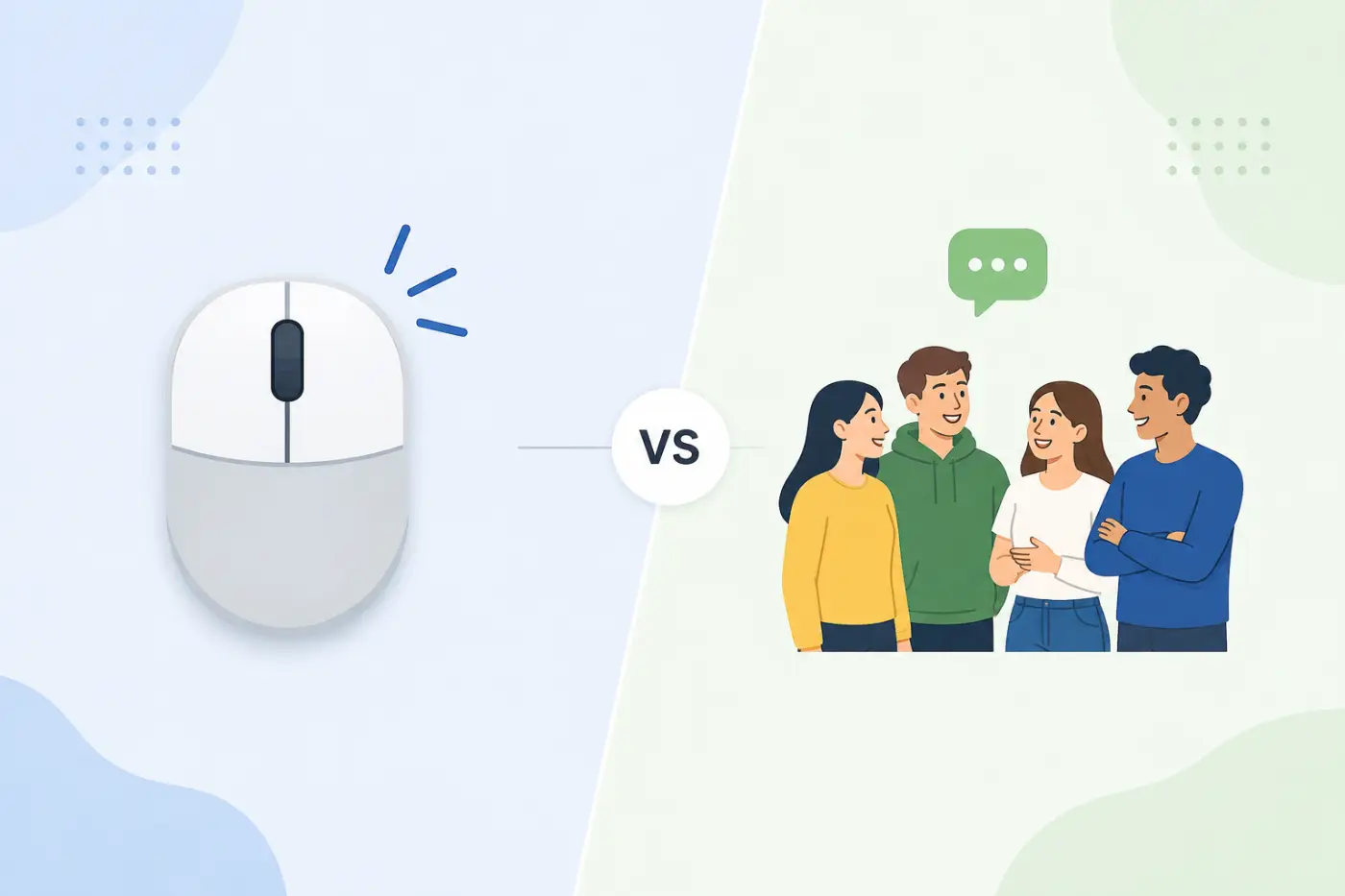
If you’re unsure about click or clique you’re dealing with two real English words that have completely different meanings. They sound alike but they aren’t interchangeable. One is connected to pressing a button or making a sound. The other describes a small group of people who tend to stay together.
The confusion usually comes from pronunciation. Both words sound like click when spoken aloud. That makes it easy to use the wrong spelling when you’re writing from memory. The meaning of the sentence tells you which word you need.
This guide explains the difference in plain English. You’ll learn what each word means how to use it in everyday sentences why the confusion happens and how to remember the spelling. You’ll also see common mistakes and related words that can cause similar problems.
Quick Definition
Click can be a verb or a noun. As a verb it means to press something or make a short sharp sound. As a noun it can describe the sound itself or an act of pressing a button.
Clique is a noun that means a small group of people who spend time together and may not welcome others easily.
Direct Answer
Use click when you’re talking about pressing a button making a sound or getting along with someone. Use clique when you’re talking about a small exclusive group of people.
Comparison Table
| Word | Meaning | Example Sentence | When To Use It |
|---|---|---|---|
| Click | To press something or make a short sharp sound. | Click the button to continue. | Use it for buttons sounds computers and certain relationships. |
| Clique | A small group of people who tend to stay together. | A clique of students always sat together. | Use it when describing a close or exclusive social group. |

Why These Words Cause Confusion
The main reason is simple. Click and clique sound the same in most forms of American English. When two words have the same pronunciation but different spellings and meanings they are called homophones.
You probably already know other examples. See and sea sound alike but one relates to vision while the other refers to a body of salt water. Right and write also sound alike but have different meanings. The same idea applies here.
When you’re speaking you don’t need to think about the spelling. You can say the word and the listener understands it from the context. Writing is different. You have to choose the correct spelling based on what you mean. Imagine saying this sentence aloud.
“The students formed a click.”
A listener might not know what you mean. Did you mean they formed a group. Did you mean they made a sound. Did you mean something worked successfully.
The spelling solves the problem. If you mean a social group the word is clique. If you mean a sound or action the word is click. That small difference matters because the two words belong to completely different areas of language.
What Click Means
Click has several common meanings. The basic idea changes depending on the context but the word often describes a short sound a quick pressing action or a sudden connection.
You probably use this word every day when talking about computers phones websites or other devices.
Click As A Verb
As a verb click means to press a button on a computer mouse or similar device. It can also mean pressing something on a touchscreen. For example:
- Click the blue button to submit the form.
- Click the link at the top of the page.
- Click the photo to make it larger.
- You can click here to see the full menu.
The word is especially common in digital language. Websites often tell visitors to click a button link image or menu. You can also use it for physical objects.
- She clicked the lock into place.
- He clicked the pen closed.
- I clicked the switch and turned on the light.
In these examples the word describes an action that often produces a short sound.
Click As A Noun
As a noun click can refer to the sound itself or to one act of pressing something. For example:
- I heard a click from the kitchen.
- With one click the page opened.
- The lock made a loud click.
- One click is all you need.
The meaning becomes clear from the surrounding words. In a sentence about a website the word probably refers to pressing a button. In a sentence about a door or lock it may refer to a sound.
Click In Digital Language
Modern technology has made click one of the most common action words in everyday English. You may click a link click a button click an icon or click a menu.
Businesses also use the word when talking about website traffic and online advertising. A person who visits a webpage after selecting an online advertisement has made a click. You may hear terms such as click rate or click through rate in digital marketing.
You don’t need to know marketing terms to use the basic word correctly. If you’re telling someone how to use a website you can simply say:
“Click the menu and choose Settings.”
That sentence sounds natural and clear.
What Clique Means
Clique is a noun for a small group of people who spend a lot of time together. The word often suggests that the group is close and somewhat closed to outsiders. For example:
- A clique of students always ate lunch together.
- She didn’t feel welcome in the office clique.
- Several cliques formed during the first year of school.
- He found it difficult to join the popular clique.
The word can describe groups at school work social events or almost any setting where people form tight social circles.
Clique Often Has A Negative Meaning
The word clique isn’t always insulting but it often carries a negative feeling. It can suggest that the group doesn’t easily accept new people. Compare these two sentences.
- “The friends formed a close group.”
- “The friends formed a clique.”
The first sentence sounds neutral or even positive. The second may suggest that the friends keep other people out.
That difference is useful when choosing your words. If you simply mean a group of close friends there are more neutral options such as group circle of friends or social circle.
If you want to point out that a group is exclusive the word clique may be a better fit.
Clique At School
School is one of the most common settings where you’ll hear this word.
Students often form social groups based on shared interests activities friendships or personalities. A group might consist of athletes musicians artists or students who simply enjoy spending time together. For example:
- “The new student noticed several cliques during her first week.”
- This sentence suggests that the school has distinct social groups and that those groups may not mix much.
- The word doesn’t automatically mean the people in the group are mean. It simply draws attention to the group’s close and sometimes exclusive nature.
Clique At Work
You can also use clique when talking about coworkers. For example:
- “The office clique always had lunch together.”
- This sentence suggests that a small group of coworkers regularly spends time together and may not include everyone else.
- The word can describe workplace politics too.
- “If the leadership team becomes a clique it can make other employees feel left out.”
- Here the word points to a tight group that may have too much influence or may keep others outside the circle.
The Difference In One Simple Idea
If you’re trying to remember the difference quickly think about action versus people.
- Click usually relates to an action a sound or a connection.
- Clique relates to people.
- That simple distinction will solve most cases.
- You might click a button.
- You might hear a click from a door.
- You might say two people click because they get along well.
- But you might describe their close group of friends as a clique.
- Once you connect clique with people the spelling becomes much easier to remember.
Click Can Also Describe Getting Along
There is one meaning of click that can make the confusion even more interesting. The word can describe people who naturally get along well. For example:
“We met at college and clicked right away.”
This does not mean anyone pressed a button. It means the two people connected easily and felt comfortable together. You can also say:
“Those two really click.”
That means they have good chemistry or understand each other well.
This meaning can sometimes appear close to the idea of a clique because both words can appear in sentences about relationships. Still they describe different things.
A person can click with someone without joining a clique. For example:
- “I clicked with my new coworker but I don’t belong to the office clique.”
- The first part describes a good personal connection. The second part describes a social group.
Common Mistakes People Make
The most common mistake is choosing the spelling based on sound alone. Since the words sound alike you can’t depend on pronunciation to tell them apart.
Instead ask yourself what the word means in the sentence.
- If the sentence talks about a computer button use click.
- If it talks about a short sound use click.
- If it talks about two people getting along use click.
- If it talks about a small exclusive group use clique.
This simple meaning check works much better than trying to remember two spellings without context.
Mistake With Social Groups
A common error is writing click when you mean a group of people.
Incorrect:
“The popular click sat together during lunch.”
Correct:
“The popular clique sat together during lunch.”
The second sentence clearly describes a social group.
Mistake With Computers
The opposite mistake also happens. Some people use clique when they mean pressing a button.
Incorrect:
“Please clique the link below.”
Correct:
“Please click the link below.”
A website button has nothing to do with a social group. The correct word is click.
Mistake With Relationships
People sometimes get confused when click means getting along. For example:
“We clicked as soon as we met.”
This is correct because the sentence describes an easy personal connection. It doesn’t describe a group of people. You can think of this meaning as a metaphor. Two people click when they fit together naturally like pieces that suddenly fall into place.
How To Remember The Spelling
A good memory trick doesn’t need to be complicated. The easiest method is to connect each spelling with a clear image.
Think Of A Mouse For Click
When you see click think about a computer mouse. Picture yourself pressing a button. Click.
The word is short and quick just like the action.
You can also imagine the sound of a light switch or a camera button. Click.
This mental picture connects the spelling with the meaning.
Think Of A Group For Clique
When you see clique think of a small group standing together at a party.
The unusual spelling helps separate the word from click. The letters que at the end can remind you that this word is the one connected with people and social groups.
You don’t need to force the trick every time. After using the word correctly several times the spelling will become familiar.

Related Words And Phrases
Understanding related vocabulary can help you use both words more naturally.
Social Circle
A social circle is a group of people you know and spend time with. Unlike clique this phrase is usually neutral. For example:
- “Her social circle includes coworkers friends and neighbors.”
- The phrase doesn’t suggest that the group excludes others.
Inner Circle
An inner circle is a small group of people who are especially close to someone or have special access to that person. For example:
“The president’s inner circle met before the announcement.”
This can describe friendship influence or access.
Group
Group is the broadest and most neutral word. It simply refers to several people or things considered together. For example:
“A group of students gathered outside the library.”
Nothing in that sentence suggests that the students are exclusive.
Circle Of Friends
A circle of friends means the people someone regularly spends time with. For example:
“She has a small circle of friends from college.”
This phrase usually sounds warmer and more positive than clique.
Click And Clique In Real Conversations
Knowing dictionary definitions is useful but real conversations make the difference easier to understand. Imagine you’re talking about a new coworker.
“We clicked immediately.”
Here you’re saying that you and the coworker got along well from the start. Now imagine you’re talking about the workplace.
“There is a small clique in the sales department.”
This sentence points to a group of coworkers who tend to stay together. Now imagine you’re explaining how to open a file.
“Click the file and select Open.”
The meaning is completely different again. These examples show why context matters. The words sound alike but the sentence around them tells you which spelling belongs there.
When To Use Click In A Sentence
Use click when the sentence involves an action that produces a click or involves pressing something. Here are some natural examples:
- Click the icon to open the app.
- I heard the door click shut.
- Click the link in the email.
- The camera clicked as she took the photo.
- The button doesn’t click anymore.
- He clicked the remote and changed the channel.
Use it when describing people who connect easily too.
- We clicked as soon as we met.
- I didn’t expect us to click so quickly.
- They clicked after working together for a few weeks.
The common idea is action sound or connection.
When To Use Clique In A Sentence
Use clique when you mean a small social group that tends to stay together. Here are some examples:
- The students formed a clique during their first year.
- She never felt comfortable around that clique.
- Several cliques developed at the company.
- The popular clique controlled most of the social events.
- He left the clique after a disagreement.
- The group looked more like a clique than a team.
The word works best when the group has a strong sense of togetherness and may keep outsiders at a distance.
Is Clique Always Negative
No. The word often has a negative tone but context can change how it feels.
If someone says “a group of close friends” the description sounds friendly. If they say “a clique of close friends” they may be suggesting that the friends exclude other people.
That subtle difference matters in careful writing. For example:
“The teachers formed a close group.”
This sounds neutral.
“The teachers formed a clique.”
This may suggest that the teachers are acting as an exclusive group. A writer can use clique to criticize social behavior without directly saying that the group is unfriendly. The word itself carries some of that meaning.
Is Click Ever Used For A Group
Not in the standard sense of a small social group.
You might see click used in a sentence about people because of the verb meaning to get along. You might also see it in a phrase about online activity. But it doesn’t mean a social group.
So if you’re describing a group of students who spend all their time together don’t use click. Use clique.
If you’re describing two people who get along easily use click.
That distinction is worth remembering because the two ideas can appear in the same conversation.
A Simple Test To Choose The Right Word
When you’re writing and you aren’t sure which spelling to use stop for a second and ask one question.
Am I talking about people as a group.
- If the answer is yes and you mean a small close or exclusive social group use clique.
- If you’re talking about pressing something making a sound or getting along with someone use click.
This test works because it focuses on meaning instead of spelling. Once you know what you want to say the correct word usually becomes obvious.
More Examples To Build Confidence
The fastest way to make the distinction stick is to see the words used naturally in different situations.
Technology Examples
- “Click the icon in the upper corner.”
- “Click the Submit button when you’re finished.”
- “One click will open the document.”
- “The link won’t work when I click it.”
All four examples involve pressing or selecting something.
Sound Examples
- “I heard a click behind me.”
- “The lock made a soft click.”
- “She heard the camera click.”
- “The door clicked shut.”
Here the word describes a short sharp sound.
Relationship Examples
- “We clicked during our first conversation.”
- “My new roommate and I clicked right away.”
- “The two coaches clicked because they shared the same ideas.”
- “She didn’t click with the rest of the team.”
These sentences use the verb to describe connection between people.
Social Group Examples
- “The school had several different cliques.”
- “He never felt comfortable around that clique.”
- “The clique rarely invited new students to their parties.”
- “She eventually became part of the popular clique.”
Every example refers to a social group rather than an action or sound.
A Note About Pronunciation
Both words are usually pronounced the same way in American English. They have the same short sound at the beginning and end with a sound like k.
That shared pronunciation explains why the spelling mistake is so common. If you’ve only heard the word in conversation you have no way to know from sound alone which spelling the speaker means.
Writing requires a different approach. You need to look at the meaning and choose the spelling that matches it.
This is common with English homophones. Sound can tell you how a word is pronounced but context often tells you how it should be spelled.
The History Behind Clique
The spelling clique may look unusual because it comes from French. English borrowed the word from French and kept its French influenced spelling.
In English the word developed the meaning of a small group of people who associate closely. That meaning is still common today.
The unusual spelling is not something you need to analyze every time you write the word. It simply helps explain why the word doesn’t look the way it sounds.
Many English words have entered the language from French Latin Greek and other languages. Their spellings often preserve clues from their original forms. That history is one reason English contains so many words that don’t follow the spelling patterns learners expect.
The History Behind Click
Click has a different history. It is associated with a short sharp sound and has long been used to describe that kind of noise. From there the word developed several related uses.
The modern computer meaning grew naturally from the sound and action of pressing a mouse button. Today the word is so common in digital language that most people use it without thinking about its history.
You can click a button click a link click a menu or click an icon. The word has become a basic part of everyday technology vocabulary.
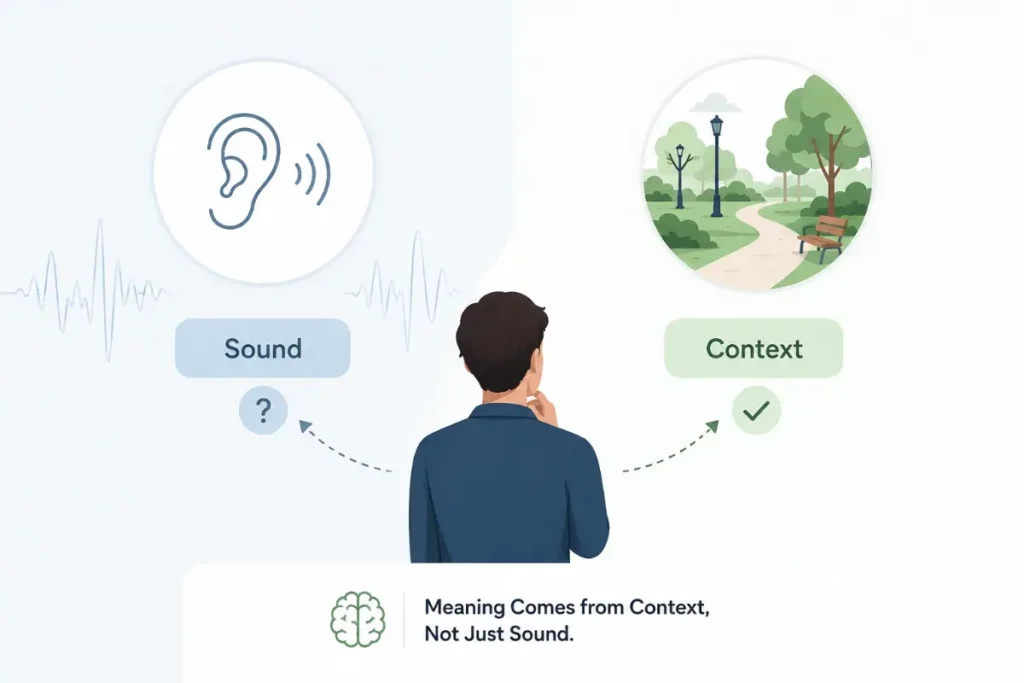
Why Context Is More Important Than Sound
When two words sound alike spelling becomes a meaning problem. You can’t hear the difference between click and clique. You can only understand the difference by looking at what the speaker or writer means. That is why context is so useful. Consider this sentence.
“The group was very close.”
Nothing tells you exactly how that closeness works. Now consider:
“The group was a clique.”
The second sentence adds a stronger idea. It suggests a small group that may be difficult for outsiders to join. Likewise:
“Click the button.”
The word clearly refers to an action because the sentence mentions a button. The surrounding words give you the answer.
A Quick Review
By this point the difference can be reduced to a few simple ideas.
- Click can mean to press something. It can describe a short sharp sound. It can also describe people who get along easily.
- Clique means a small group of people who associate closely. The word often suggests that the group is exclusive.
Both words usually sound the same in American English. Their meanings and spellings are different. If you remember only one thing remember this. Click is for actions sounds and connections. Clique is for groups of people.
FAQs
What is the difference between click or clique?
The two words sound alike but have different meanings. Click can mean to press something make a short sound or connect well with another person. Clique means a small social group that tends to stay together and may exclude outsiders.
Is click or clique the correct spelling for a group?
Use clique when you mean a small group of people. For example you could say “The students formed a clique.” The spelling click is not correct for this meaning.
Is click or clique correct for a computer button?
Use click for a computer button link icon or menu. You can click something with a mouse or tap it on a touchscreen. Clique has nothing to do with computers.
Why do click and clique sound the same?
They are homophones in standard American English. That means they have the same pronunciation but different spellings and meanings. The context tells you which word belongs in a sentence.
Can click describe people?
Yes. As a verb click can mean that two people get along naturally or connect easily. For example you can say “We clicked right away.”
Does clique always mean a bad group?
No. Clique often has a negative tone because it can suggest that a group excludes outsiders. However the exact feeling depends on the context and the writer’s purpose.
How do you remember the spelling of clique?
Connect clique with a small group of people standing together. Save click for buttons sounds and personal connections. That simple meaning based trick makes the spelling much easier to recall.
What are some synonyms for clique?
Depending on the context you can use social circle inner circle group of friends or circle of friends. These alternatives are often more neutral. Clique works best when you want to suggest a close group that may not welcome outsiders.
Conclusion
The difference between these two words becomes much easier once you stop thinking about their pronunciation and focus on their meaning. Click is connected with pressing something making a short sound or getting along with someone. Clique refers to a small social group that tends to stay together.
The words sound the same in most American English speech but their spellings give you an important clue. The short spelling click fits actions sounds and personal connections. The less common spelling clique belongs to the social group meaning.
If you’re writing about a website button use click. If you’re describing a door making a small sound use click. If you’re saying that two people got along immediately use click. If you’re describing an exclusive group of students coworkers or friends use clique.
When you aren’t sure which word belongs in your sentence ask yourself what you’re describing. If you’re talking about an action sound or connection choose click. If you’re talking about a close social group choose clique. That quick check will help you choose the right spelling every time.

Sienna Watson is a veteran copywriter and communications coach who has helped startup founders, marketers, and professionals polish their writing for over a decade. Realizing that most people don’t need a degree in linguistics—just clear, impactful communication—Sienna focuses on practical grammar, business writing etiquette, and eliminating wordiness. She advocates for plain language, strong verbs, and persuasive prose that gets results.