

If you searched for fewer meaning you probably want a simple answer. Fewer means a smaller number of people or things. We use it when we talk about items that can be counted one by one.
For example you can say that a store has fewer customers today. You can also say that you made fewer mistakes this week. In both cases the word points to a number that has gone down.
The word can seem confusing because English has another word that means something similar. That word is less. The two words often overlap in everyday speech but they don’t work in exactly the same way. Knowing the difference can make your writing sound much more natural.
This guide explains the meaning of fewer in plain English. You’ll learn when to use it how it differs from less what common mistakes to avoid and how native speakers use it in real sentences.
Quick Definition
Fewer means a smaller number of people or things that can be counted. Use it with plural countable nouns such as books students cars days and questions.
For example you can say fewer books or fewer students. You generally use less with things that aren’t counted as separate items such as water time money or traffic.
Direct Answer
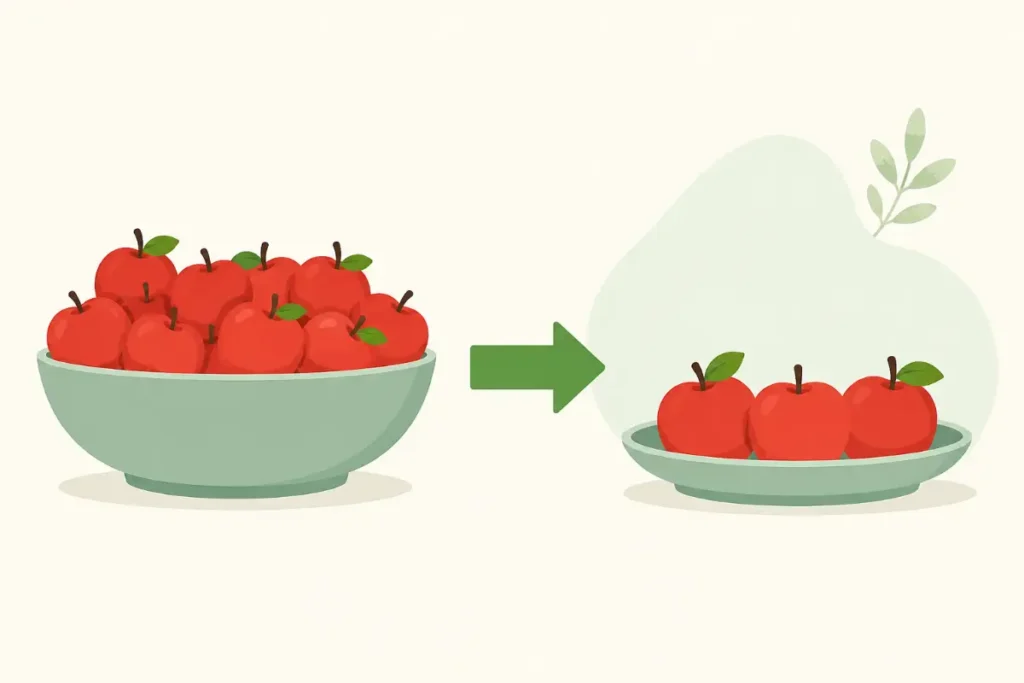
Fewer means a smaller number of countable people or things. For example you can say fewer apples because apples can be counted individually.
Why Fewer Means A Smaller Number
- The basic idea behind fewer is simple. It tells us that one group has a smaller number than another group.
- Imagine that you have ten books on a shelf. Your friend has six books. You can say that your friend has fewer books than you.
- The word doesn’t tell us exactly how many there are. It only shows that the number is smaller.
- That makes fewer useful in comparisons.
You might say that a classroom has fewer students this year. A restaurant might have fewer customers on a rainy night. A website might get fewer visitors after a change to its design. In each example the noun can be counted.
You can count students. You can count customers. You can count visitors. That is the main idea to remember.
Fewer Works With Countable Nouns
A countable noun is something you can count as individual units. You can have one book two books or twenty books. You can have one employee five employees or fifty employees.
These nouns can usually become plural. Here are some common examples.
- Fewer books.
- Fewer people.
- Fewer cars.
- Fewer questions.
- Fewer mistakes.
- Fewer emails.
- Fewer children.
- Fewer houses.
- Fewer appointments.
- Fewer opportunities.
Each noun represents separate items or people. For example you can say:
I made fewer mistakes on my second test.
The word mistakes refers to separate errors. You can count them. You might have made ten mistakes on one test and four on another.
You can also say:
There are fewer cars on the road tonight.
Cars are individual objects. You can count them one by one. Another natural example is:
We received fewer applications this month.
Applications can also be counted. You might receive 100 applications one month and 75 the next. The pattern is consistent. When you can count the individual items you are usually looking at a situation where fewer is the right choice.
Fewer And Less
This is the distinction that causes the most confusion.
Fewer normally goes with plural countable nouns. Less normally goes with uncountable nouns. Compare these examples.
| Word | Used With | Example |
|---|---|---|
| Fewer | Plural countable nouns | We have fewer customers today. |
| Less | Uncountable nouns | We have less traffic today. |
You can count customers. You can have one customer two customers or 100 customers.
You don’t normally count traffic in separate units. Instead you think of traffic as a general amount.
That difference gives you a useful starting point.
- Fewer books.
- Less paper.
- Fewer cars.
- Less fuel.
- Fewer questions.
- Less noise.
The distinction becomes much easier once you stop thinking about the words themselves and start thinking about the noun that follows them.
Ask yourself one simple question.
Can I count these as separate items?
If the answer is yes then fewer will often be the natural choice. If the answer is no then less will usually fit better.
How To Know If A Noun Is Countable
Countable nouns represent separate things that you can number. You can say:
- One apple.
- Two apples.
- Three apples.
You can also use numbers with books.
- One book.
- Two books.
- Three books.
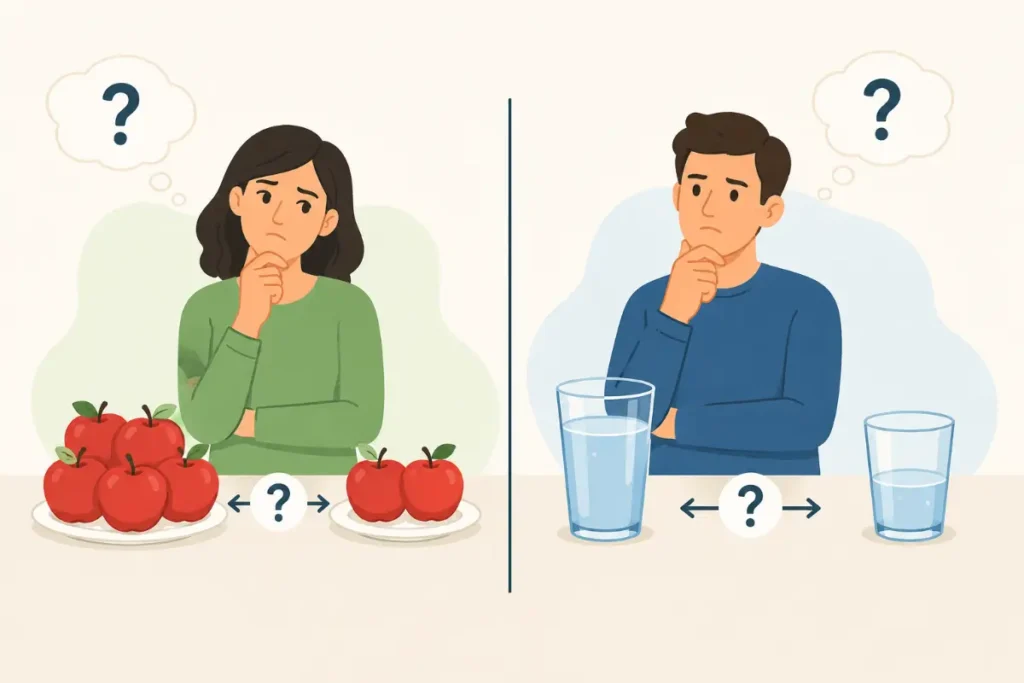
That means apples and books are countable nouns. Now compare them with water. You can say:
- Some water.
- A glass of water.
- Two bottles of water.
But you don’t normally say two waters when you mean the substance itself. Water is treated as an uncountable noun in that sense. So you would usually say:
I need less water.
Not:
I need fewer water.
The same idea applies to many other uncountable nouns.
- Less money.
- Less time.
- Less information.
- Less advice.
- Less patience.
- Less energy.
- Less noise.
- Less stress.
The key is not the size of the thing. The key is how English treats the noun.
Real Examples Of Fewer
The best way to understand a word is to see it doing its normal job in real sentences.
At Work
- Our team has fewer meetings this month.
- Meetings are separate events. You can count them.
- We received fewer applications than expected.
- Applications are individual documents or submissions. You can count them.
- I made fewer errors after reviewing the report twice.
- Errors are separate mistakes. You can count them.
At School
- There are fewer students in the class today.
- Students are people who can be counted.
- I have fewer assignments this week.
- Assignments are separate pieces of work.
- The teacher answered fewer questions during the final ten minutes.
- Questions are individual things that can be counted.
At Home
- We have fewer dishes to wash tonight.
- Dishes are separate objects.
- There are fewer clean towels in the closet.
- Towels can be counted one by one.
- I bought fewer groceries than I did last week.
Groceries can represent separate countable items when the speaker is referring to individual products.
In Everyday Conversation
- I see fewer people here on weekdays.
- We need fewer chairs for this event.
- She has fewer books than her brother.
- I made fewer trips to the store this month.
- There are fewer seats available near the front.
These sentences sound natural because fewer is working with plural nouns that represent separate units.
Fewer In Comparisons
Fewer often appears when two groups are compared. Consider this sentence:
This year we have fewer visitors than last year.
The sentence compares the number of visitors in two different periods. You can also say:
Sarah made fewer mistakes than Mark.
The comparison tells us that Sarah made a smaller number of mistakes. Another example is:
This route has fewer stops than the other one.
Stops are individual locations. The sentence compares their number. The comparison can be direct or implied.
I have fewer emails today.
The comparison is not stated. Still the sentence suggests that the number is lower than usual or lower than at another time. you don’t always need to say than for fewer to make sense.
Fewer Than
The phrase fewer than is common in both everyday and formal English. It means that the number of something is below a certain amount. For example:
Fewer than 20 people attended the meeting.
This tells us that the number of people was below 20. You might also see:
Fewer than 100 homes were affected by the storm.
Homes are countable. The phrase tells us that the number affected was below 100. Here are a few more examples.
- Fewer than ten students submitted the assignment early.
- Fewer than five tickets remain.
- The store had fewer than 50 customers before noon.
- Fewer than 1,000 copies were printed.
This structure is especially useful in reports news writing school work and business writing because it gives a clear number range without stating an exact total.
Fewer Than Or Less Than
This is another common point of confusion. When you are talking about a number of countable things you generally use fewer than.
Fewer than 30 people attended.
When you are talking about an amount of something uncountable you generally use less than.
The bottle contains less than one liter of water.
People are counted. Water is measured as an amount. Compare these sentences.
Fewer than 50 customers visited the store.
The store sold less than 50 gallons of fuel.
The first sentence focuses on the number of customers. The second focuses on an amount of fuel. This simple distinction covers most everyday cases.
Fewer With People
People are countable so fewer works naturally with people. You can say:
- Fewer people are working today.
- Fewer people attended the event this year.
- Fewer people are choosing that option.
- The new policy affects fewer people than the old one.
This is worth remembering because people sometimes use less with people in casual speech. You may hear someone say:
Less people came to the party.
Many speakers use this phrase in everyday conversation. In careful standard English writing the preferred form is:
Fewer people came to the party.
The reason is simple. People can be counted as individuals.
Fewer With Time Expressions
Time creates an interesting area because some time expressions use fewer while others use less. When you are counting separate units of time you can use fewer.
- I have fewer than five days to finish the project.
- She spent fewer weeks preparing for the exam.
- We have fewer hours available this weekend.
Days weeks and hours can be counted as individual units. However when you treat time as a general amount you normally use less.
- I need less time to finish this task now.
- We have less time than we expected.
Here the focus is on the amount of time rather than a count of separate time units. The meaning you want to express can therefore affect the choice.
Fewer With Money
Money is usually treated as an uncountable noun when you mean an amount of money. So you normally say:
I have less money this month.
You wouldn’t normally say:
I have fewer money this month.
But you can use fewer when you are counting separate units such as dollars coins bills or payments. For example:
- I have fewer dollars in my wallet.
- The cashier received fewer bills than expected.
- We made fewer payments this year.
The noun changes the grammar. Money itself is generally uncountable. Dollars bills and payments are countable. That small distinction explains many sentences that seem confusing at first.
Fewer With Food
Food can work with both fewer and less depending on the noun. You can say:
I ate fewer cookies today.
Cookies are individual items. You can say:
I ate less sugar today.
Sugar is treated as an uncountable substance. You can also say:
She bought fewer apples. But:
She bought less fruit.
Apples are individual countable items. Fruit is often treated as a general category or substance. This is why the noun matters more than the general topic. Food isn’t automatically countable or uncountable. Different food words behave differently.
Fewer With Common Plural Nouns
Some nouns almost always make the choice easy because they clearly refer to separate items. These include:
- Fewer books.
- Fewer chairs.
- Fewer tables.
- Fewer phones.
- Fewer messages.
- Fewer calls.
- Fewer visitors.
- Fewer employees.
- Fewer customers.
- Fewer questions.
- Fewer problems.
- Fewer choices.
- Fewer opportunities.
- Fewer appointments.
- Fewer accidents.
If you can point to each item and count it separately then fewer is usually the natural choice. Think of a row of ten chairs. If three chairs are removed you now have fewer chairs. The same idea works with almost anything that exists as separate countable units.
When Fewer And Less Can Feel Confusing
The basic rule is useful but real English has a few gray areas. Some nouns can be countable in one sentence and uncountable in another. The meaning can change depending on how you look at the thing.
Take experience as an example. You can say:
She has less experience than I do.
Here experience means knowledge gained over time. It is treated as an amount. But you can also say:
She has had fewer experiences than I have.
Now experiences means separate events or things that happened to her. Those events can be counted. The same pattern appears with many other words. English speakers don’t simply memorize fewer and less. They look at the noun and the meaning behind it.
Countable And Uncountable Nouns
Understanding countable and uncountable nouns makes this topic much easier. A countable noun names something that can be treated as separate units. It can usually have a singular and plural form. For example:
- One car.
- Two cars.
- One idea.
- Several ideas.
- One question.
- Many questions.
Because these nouns can be counted you can normally use fewer with their plural forms. An uncountable noun works differently. It usually describes a substance an idea an amount or something viewed as a whole.
Common examples include:
- Water.
- Milk.
- Money.
- Advice.
- Information.
- Traffic.
- Furniture.
- Equipment.
- Knowledge.
- Patience.
You don’t normally count these nouns directly. For example you say:
I need less information.
You don’t normally say:
I need fewer information.
However you can make the idea countable by adding a unit.
I need fewer pieces of information.
Now pieces can be counted. You could need three pieces of information instead of five. This is a useful trick when you are unsure. Look at the noun immediately connected to fewer or less.
The Noun After Fewer Matters
Consider these two sentences.
- We have fewer problems now.
- We have less trouble now.
The first sentence uses fewer because problems are separate issues. You can count them. The second uses less because trouble is treated as a general condition or amount. The two sentences can describe a similar situation but the grammar changes because the nouns change. Here are some more examples.
- Fewer mistakes.
- Less confusion.
- Fewer complaints.
- Less noise.
- Fewer delays.
- Less stress.
- Fewer accidents.
- Less damage.
This is why replacing every use of less with fewer won’t solve the problem. You need to look at the noun.
Fewer Meaning In Different Contexts
The meaning of fewer stays connected to a smaller number but the context can change the way that comparison feels.
Fewer At Work
Imagine a manager says:
We have fewer meetings this quarter.
The manager means the number of meetings has dropped. Now imagine the manager says:
We have less meeting time this quarter.
The focus has changed. The second sentence talks about the total amount of time spent in meetings. That difference can matter in professional writing.
Fewer At School
A teacher might say:
Students made fewer spelling mistakes on the second test.
The mistakes are separate errors. The teacher could also say:
Students spent less time on the second test.
Time is treated as an amount. Both sentences can describe improvement but they measure different things.
Fewer In Daily Life
You might tell a friend:
I have fewer errands today.
That means the number of separate tasks is smaller. You might also say:
I have less free time today.
Now you are talking about an amount of time. The difference is easy once you picture what you’re counting.
Common Mistakes With Fewer
Some errors appear again and again because people focus on the general meaning instead of the noun.
Saying Less People
One common mistake is:
Less people attended the concert.
In standard English the better form is:
Fewer people attended the concert.
People are individuals. You can count them. The same rule applies to many plural nouns. Instead of:
Less students joined the club. Write:
Fewer students joined the club.
Instead of:
Less customers came in today.
Write:
Fewer customers came in today.
The difference is small but it makes your writing more precise.
Saying Fewer Money
Another common error is:
I have fewer money this month.
The natural standard form is:
I have less money this month.
Money is normally treated as an amount rather than a group of separate items.
You can use fewer if you name countable units.
- I have fewer dollar bills in my wallet.
- We made fewer payments this year.
The noun tells you which form to choose.
Saying Fewer Information
Information is generally uncountable. So write:
I need less information.
Not:
I need fewer information.
If you want to count individual facts or pieces you can change the structure.
- I need fewer details.
- I need fewer pieces of information.
Both versions are grammatically sound because details and pieces are countable.
Fewer With Numbers
Fewer often appears before numbers when the number refers to countable things. For example:
- Fewer than 100 people attended.
- Fewer than 20 houses were damaged.
- Fewer than ten students missed class.
The word than connects the smaller number with the comparison. This construction is common in news reports research writing business reports and everyday speech. It also gives readers a quick sense of scale. If someone says:
Fewer than 50 customers complained.
You know the number was below 50 even if you don’t know the exact figure. You can use the same pattern with many countable nouns.
Fewer than five minutes remain.
Here minutes are being treated as separate units.
Fewer than three weeks are left.
Weeks are also separate units.
Fewer than 200 pages make up the final report.
Pages are clearly countable.
Fewer Than And More Than
Fewer often appears as the opposite of more. Compare:
- More people attended this year.
- Fewer people attended last year.
The two words describe opposite changes in number. You can also compare quantities in a simple way.
- This box contains more books than that box.
- That box contains fewer books than this one.
Both sentences describe the same comparison from different directions. This makes fewer especially useful when describing reductions. For example:
- The new system produced fewer errors.
- The smaller team needed fewer resources.
- The updated process required fewer steps.
These sentences all suggest that the number has gone down.
Fewer And A Smaller Number
You can often replace fewer with a smaller number of without changing the basic meaning. For example:
We need fewer chairs.
can become:
We need a smaller number of chairs.
The second version is grammatically correct but sounds heavier. In normal conversation and most everyday writing fewer is cleaner. This shows why fewer is useful. It expresses a comparison in one short word. You don’t need a long phrase when a simple word does the job.
Fewer In Formal Writing
Fewer works well in formal writing. You can use it in reports essays business documents academic writing and professional emails. For example:
- The revised process resulted in fewer errors.
- The study included fewer participants than the original trial.
- The company received fewer applications during the second week.
These sentences are direct and easy to understand. Fewer is not a casual word. It belongs to standard English and works comfortably in both everyday and formal settings. That makes it a useful word to learn well. You don’t need a more complicated alternative to sound professional.
Fewer In Everyday Speech
Native speakers often use fewer naturally without thinking about the grammar rule behind it. You might hear:
- I have fewer chores today.
- There are fewer people here now.
- We have fewer options than before.
- She has fewer classes this semester.
The word doesn’t sound formal or unusual. It is part of ordinary English.
At the same time people sometimes use less before plural countable nouns in casual speech. This can be common in conversation but standard edited writing usually follows the countable and uncountable distinction.
For clear writing it is safest to use fewer with plural countable nouns.
A Simple Test You Can Use
If you’re unsure about fewer and less take the noun and imagine counting it. Suppose the noun is chairs.
Can you say one chair two chairs three chairs? Yes. So use:
fewer chairs. Now take water.
Can you normally say one water two waters when talking about the substance? No.
So use:
less water.
Try the same test with questions.
One question. Two questions. Three questions. That gives you:
fewer questions.
Now try patience.
You don’t normally count patience as separate units.
So you say:
less patience.
This quick test won’t solve every unusual case in English but it works for most everyday sentences.
A Useful Memory Trick
- Think of fewer as a word for separate things.
- Picture a row of five apples. Remove two. You now have fewer apples.
- Picture a classroom with 30 students. Ten students leave. The teacher now has fewer students.
- Picture a shelf with 20 books. Remove five. The shelf has fewer books.
- Now picture a glass of water. Pour some out. You have less water rather than fewer water.
- The image is simple. Separate things can be counted. Substances and general amounts are usually measured instead.
- That mental picture can be more useful than memorizing a complicated grammar rule.
When Less Can Replace Fewer
There is one reason you may hear less before a plural noun even though standard grammar usually favors fewer. Certain expressions have become fixed in everyday English. A well known example is:
20 items or less.
You will see this wording on signs in stores. Traditional grammar guidance often recommends:
20 items or fewer.
The reason is that items are clearly countable.
Still 20 items or less is widely used and understood. It has become a familiar expression in American English.
This does not mean the basic rule has disappeared. In careful writing you can use fewer with countable plural nouns. So if you’re writing an article report essay email or other polished content choose:
20 items or fewer.
That version follows the traditional standard.
Fewer And Fixed Expressions
English has some phrases that don’t always follow the simple rule in the way a learner might expect. For example:
No fewer than 100 people attended.
This means at least 100 people attended. It can sound stronger than simply saying:
100 people attended.
The phrase emphasizes that the number did not fall below 100. Another example is:
No fewer than three attempts were needed.
This means three or more attempts were needed. The phrase is common in formal writing and can add emphasis when a minimum number matters. You may also see:
A few fewer mistakes.
This sounds less common but can appear when someone is comparing two small numbers. For example:
I made a few fewer mistakes this time.
The meaning is that the number of mistakes decreased by a small amount.
Fewer And Few
Fewer and few are related but they don’t mean exactly the same thing.
- Few means not many.
- Fewer means a smaller number compared with another number or expected amount.
- Compare these sentences.
- Few people understood the question.
- This means not many people understood it.
- Fewer people understood the second question.
This tells us that the number who understood the second question was smaller than another group or situation. The difference is subtle but useful. You can also say:
A few people stayed after the meeting.
This usually means some people stayed. The phrase a few often has a more positive or neutral feeling than few. Compare:
Few people came.
This suggests that the number was disappointingly small.
A few people came.
This simply tells us that some people came. Adding the letter a changes the tone and meaning.
Fewer And Fewest
If you’re comparing two things you often use fewer. This class has fewer students than the other class.
If you’re comparing three or more groups and identifying the group with the smallest number you can use fewest. For example:
This class has the fewest students in the school.
The pattern works like this:
- Few describes a small number.
- Fewer compares two numbers.
- Fewest identifies the smallest number among several groups.
You can see the same pattern with examples.
- I made few mistakes.
- I made fewer mistakes than before.
- I made the fewest mistakes in the class.
These three forms are closely connected but they perform different jobs.
How Fewer Changes A Sentence
Choosing fewer instead of a longer phrase can make your sentence tighter. Instead of writing:
There are a smaller number of people attending the event this year.
you can write:
Fewer people are attending the event this year.
The second sentence is shorter and easier to read. That doesn’t mean short writing is always better. It means the right word can carry a lot of meaning without unnecessary extra words.
Good editing often comes down to choices like this. When one clear word expresses the idea accurately you don’t need to build a longer sentence around it.
Part 4 finishes the article with the most useful edge cases followed by the FAQ and conclusion. I’ve kept the paragraphs natural and avoided one sentence paragraphs.
Special Cases That Deserve A Closer Look
The basic countable and uncountable rule works in most situations. Still, a few words can change from countable to uncountable depending on what you mean. Understanding these cases will help you avoid forcing the rule where it doesn’t fit.
Work
The word work is usually uncountable when you mean your job or the effort you do.
I have less work today.
But you can talk about separate works when you mean individual pieces of art literature or music.
The museum displayed fewer works by the artist this year.
The noun looks the same but the meaning has changed.
Time
Time is normally uncountable when you mean the general amount available.
I need less time to finish the task.
But specific units of time can be counted.
I need fewer hours to finish the task.
You can also say:
We spent fewer days on the project this year.
The difference is simple. Time is an amount. Hours and days are separate units.
Experience
As discussed earlier experience can work in two ways.
She has less experience than her coworker.
Here experience means knowledge or skill.
She had fewer experiences during her first year abroad.
Here experiences means separate events.
The same idea appears with many nouns. Ask what the word means in that sentence before choosing fewer or less.
Paper
Paper can also change depending on the meaning.
We need less paper for the printer.
Here paper means the material.
But you can say:
The teacher collected fewer papers today.
Now papers means separate documents or assignments.
The word is countable in the second sentence because it refers to individual pieces of paper.
Chicken
Food words can sometimes change meaning too.
I don’t eat much chicken.
Here chicken means the food or meat. But:
There are fewer chickens on the farm this year.
Now chickens means individual birds.
This example shows why meaning matters more than simply memorizing lists of countable and uncountable nouns.
Why Fewer Sometimes Sounds More Natural
Native speakers don’t always consciously think about grammar rules. They choose words based on the meaning they want to express.
Suppose someone says:
There are fewer cars on the street.
You immediately picture individual cars and a smaller number of them. Now compare:
There is less traffic on the street.
The second sentence gives you a different picture. You’re thinking about the overall amount of traffic rather than individual vehicles. Both sentences can describe the same general situation. The speaker simply chooses a different way to describe it.
This is one reason good grammar is closely connected to clear thinking. The choice between fewer and less can help you tell readers exactly what you mean.
How American English Uses Fewer
In American English you will hear fewer often in ordinary conversation. People say things like:
- I have fewer meetings today.
- There are fewer people here than I expected.
- We need fewer boxes.
- She made fewer mistakes this time.
The word isn’t overly formal. You can use it comfortably in a text message or a professional report.
At the same time American speakers sometimes use less with plural countable nouns in casual speech. You may hear less people or less items in conversation.
That doesn’t make those forms the best choice for edited writing. If you’re writing for school work a website a report a resume or a professional audience use the standard distinction.
Choose fewer for plural countable nouns and less for uncountable nouns.
How Fewer Helps With Clear Writing
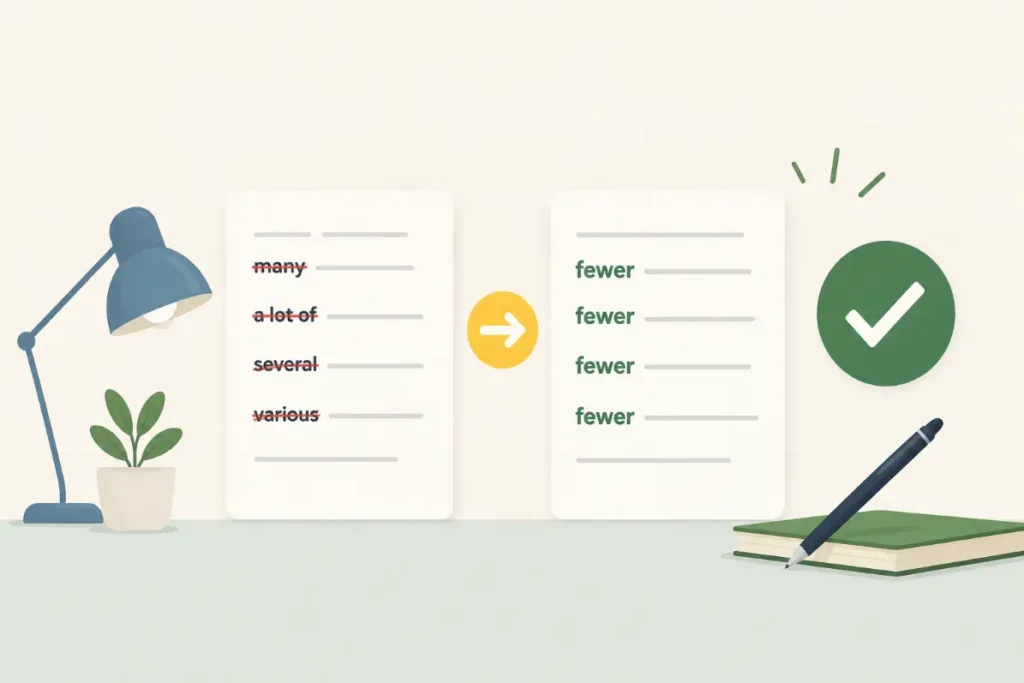
Good word choice doesn’t need to sound fancy. In fact, the clearest writing often uses simple words. Compare these two sentences:
- There was a reduction in the number of customers who visited the store.
- Fewer customers visited the store.
Both sentences can communicate the same basic idea. The second one is shorter and more direct. You can make similar improvements in many sentences.
A smaller number of employees attended the meeting.
becomes:
Fewer employees attended the meeting. Or:
A smaller number of errors appeared in the final version.
becomes:
Fewer errors appeared in the final version.
This doesn’t mean longer sentences are always bad. It simply shows that fewer can express a clear comparison without extra wording.
Common Search Questions About Fewer
People often search for the word because they have seen it in a sentence and want to understand exactly what it means. The questions below cover the most common points of confusion.
FAQs
What is the simple fewer meaning?
Fewer means a smaller number of people or things that can be counted. You use it with plural countable nouns such as books people cars questions and mistakes. For example I made fewer mistakes this time means the number of mistakes was smaller than before.
Is fewer the opposite of more?
Yes. Fewer can describe a smaller number while more describes a larger number. For example fewer students means a smaller number of students while more students means a larger number.
What is the difference between fewer and less?
Use fewer with plural countable nouns and less with uncountable nouns in standard English. You can say fewer apples because apples can be counted. You can say less water because water is normally treated as an amount.
Can I say less people?
You may hear less people in casual speech but fewer people is the standard choice in careful English. People are countable individuals so fewer fits the usual grammar rule. Use fewer people in formal writing and edited content.
Is fewer used with singular nouns?
No. Fewer normally goes with plural countable nouns. You would say fewer books rather than fewer book.
What does fewer than mean?
Fewer than means a number below a stated amount. For example fewer than 20 students attended means the number of students was below 20. The exact number isn’t given.
Is fewer a comparative word?
Yes. Fewer is the comparative form related to few. It shows that one group has a smaller number than another group or than an expected amount. The superlative form is fewest.
What is the difference between few and fewer?
Few means not many. Fewer compares a smaller number with another number or situation. For example few people attended means not many people attended while fewer people attended this year compares this year’s number with another time.
Conclusion
The simplest way to remember fewer meaning is to connect the word with number. Fewer means a smaller number of people things events or units that can be counted. You can count books students cars mistakes meetings and questions so these nouns work naturally with fewer.
The main word to compare it with is less. Use less when you are talking about an amount rather than separate countable items. That gives you useful pairs such as fewer customers and less traffic fewer questions and less information or fewer dollars and less money.
Some nouns can work with both forms because their meaning can change. Experience work paper time and food words can be countable in one context and uncountable in another. When that happens focus on what the noun means in the sentence rather than trying to memorize a fixed rule.
When you’re unsure choose the noun first and ask yourself if you can count the thing as separate units. If you can count it use fewer in standard English. If you’re talking about a general amount or an uncountable substance use less. That quick check will solve most fewer and less questions before they become a problem.

Dr. Elena Vance holds a Ph.D. in Linguistics from Columbia University and has spent over 15 years analyzing the evolution of the English language. A former university professor turned full-time writer and editor, Elena specializes in breaking down high-level grammatical concepts, punctuation nuances, and style guides (APA, Chicago, MLA) into clear, actionable advice. When she isn’t hunting down dangling modifiers, she can be found collecting vintage dictionaries and reading classic literature.