
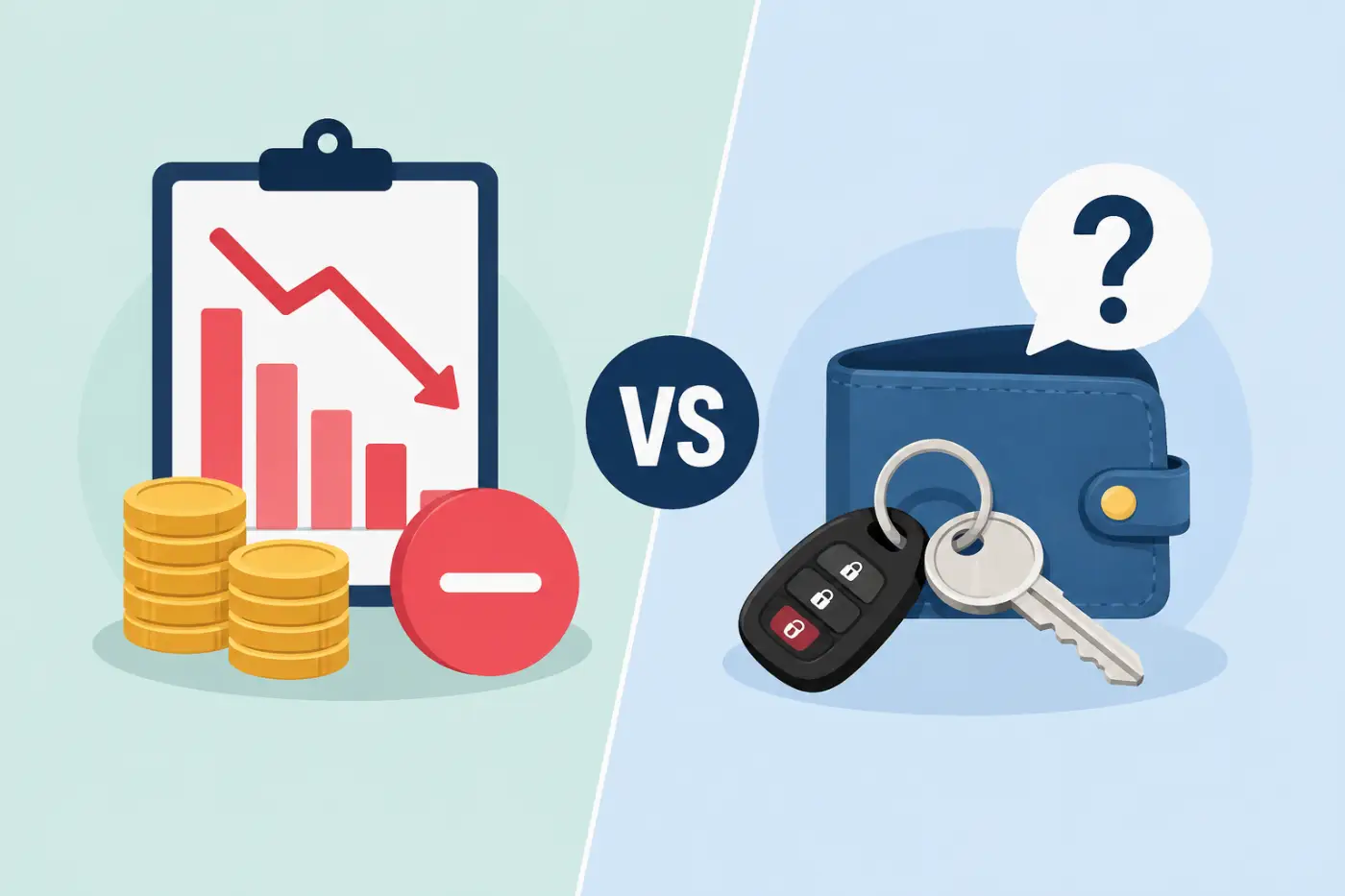
If you’re confused about loss or lost you’re dealing with two real English words that have different jobs in a sentence. They look and sound related because they come from the same word family. Still you can’t swap them freely.
The quick answer is simple. Loss is usually a noun that names something that has been lost or the experience of losing it. Lost is usually a verb form or an adjective that describes something or someone that cannot be found or has gone missing.
That small difference explains most of the confusion. Once you know what role each word plays you can choose the right one without guessing. This guide explains the difference with clear examples from everyday English.
Quick Definition
Loss is a noun. It refers to the act or result of losing something or someone. Lost can be the past tense of lose or an adjective that describes something missing or someone who does not know where to go.
Direct Answer
Use loss when you need a noun and use lost when you need the past form of lose or an adjective. For example you can say The loss was painful but I lost my keys.
Comparison Table
| Word | Meaning | Example Sentence | When To Use It |
|---|---|---|---|
| Loss | The act or result of losing something | The loss of the old building was sad. | Use it as a noun. |
| Lost | The past form of lose or a word that describes something missing | I lost my keys yesterday. | Use it as a verb or adjective. |
| Lose | To fail to keep something or fail to win | Try not to lose your phone. | Use it as the main verb in the present tense. |
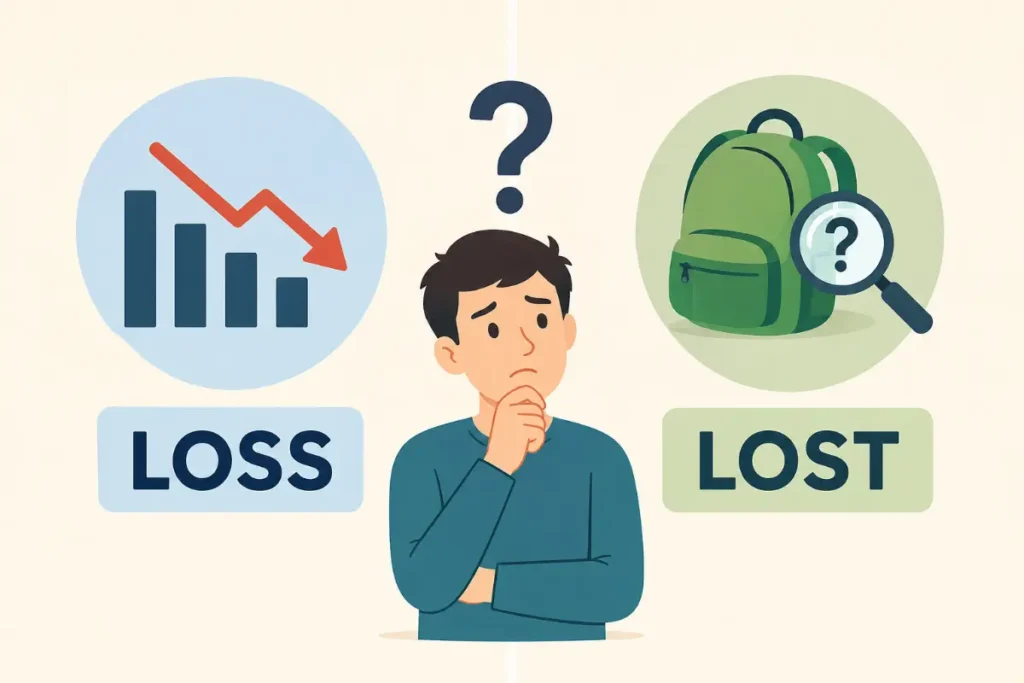
Why These Two Words Cause Confusion
The confusion starts because loss and lost come from the same basic idea. Both connect to the verb lose. When people hear the words quickly they can also seem close in sound.
The grammar is what separates them. Loss names the event or result. Lost describes the action that happened or the condition that exists after something goes missing.
Think about a simple example involving a wallet. You might say that you lost your wallet. In that sentence lost tells us what happened. You could also say that the loss of your wallet caused a problem. Here loss names the event.
The difference becomes much easier when you ask one simple question. Are you naming the thing that happened or describing the action of losing something. If you’re naming the event use loss. If you’re describing what someone did use lost.
How Loss Works As A Noun
A noun can name a person place thing idea event or condition. Loss works as a noun because it names the experience or result of losing something.
For example you might say The loss of my phone was frustrating. The word loss doesn’t describe an action someone is performing in that sentence. Instead it names the situation.
You can use it after words such as the a his her their and our. You can also place it after a possessive phrase.
Consider these examples.
- The loss was difficult for everyone.
- We suffered a major loss.
- Her loss affected the whole family.
- The company reported a financial loss.
- The loss of the game was disappointing.
Each sentence treats loss as a thing or event that can be discussed.
Loss Can Describe Missing Things
The word can refer to something physical that has disappeared.
- The loss of my passport caused a serious problem.
- The loss of the documents delayed the trip.
- The loss of the family photographs was heartbreaking.
It can also refer to something less concrete.
- The loss of trust damaged their friendship.
- The loss of confidence made the task harder.
- The loss of hope changed his attitude.
In these examples the word does not mean simply that someone misplaced an object. It can describe the disappearance or absence of something valuable.
Loss Can Describe Defeat
Sports and competitions use loss often. In this context it means a defeat.
- The team suffered its first loss of the season.
- Their loss came in the final minutes of the game.
- The coach said the loss would help the players improve.
Notice that you wouldn’t say The team suffered its first lost. That doesn’t work because the sentence needs a noun after first. Loss fills that role.
This is one of the easiest ways to recognize the difference. If a word can naturally follow a the his her or their it may need the noun loss.
How Lost Works As A Verb
Lost is the past tense and past participle of lose. The verb lose means to no longer have something or to fail to win something.
When an action happened in the past you use lost.
- I lost my wallet yesterday.
- She lost her phone at the airport.
- We lost the game on Saturday.
- He lost his job last month.
- They lost their way in the city.
In every sentence lost tells us what happened. It is part of the action rather than the name of the event.
The present form is lose.
- I often lose my keys.
- Try not to lose your ticket.
- Teams can lose games for many reasons.
The past form is lost.
- I lost my keys yesterday.
- She lost her ticket this morning.
- They lost the final game.
The basic pattern is easy to remember.
Lose means it happens now or can happen.
Lost means it happened in the past.
How Lost Works As An Adjective
There is another reason this word can be confusing. Lost isn’t only a verb. It can also work as an adjective.
An adjective describes a person or thing. When lost works this way it can mean missing or unable to find the right place or direction.
For example.
- My dog is lost.
- The child looked lost in the crowd.
- We were lost in the city.
- I felt lost after leaving my old job.
In the first sentence, lost tells us about the dog’s condition. the second, it explains how the child looked. In the final two examples, lost can refer to being unsure about where to go or which choices to make in life.
The meaning depends on the sentence.
If you say I lost my dog you’re describing an action that happened. If you say My dog is lost you’re describing the dog’s current condition.
That difference is useful far beyond this one word pair.
Real Examples From Everyday English
The easiest way to master these words is to see how people use them in normal situations. The following examples cover common situations at home work school and in daily conversation.
Talking About Money
Financial writing uses loss very often because it names a negative financial result.
- The business reported a large loss last year.
- The investment resulted in a small loss.
- The company reduced its losses this quarter.
You can use lost when describing what happened to the money.
- We lost money on the investment.
- She lost a lot of money in the deal.
- The store lost money during the slow season.
The grammar changes even though the basic idea remains connected. Loss names the result. Lost describes the action.
Talking About Games
Sports provide another clear example.
- The team suffered a painful loss.
- Their loss ended the winning streak.
- The coach accepted the loss and focused on the next game.
Now compare those sentences with these.
- The team lost the game.
- They lost by three points.
- We lost the championship match.
The noun and verb have different jobs. Once you notice that pattern the choice becomes much easier.
Talking About Missing Items
Imagine you can’t find your keys.
You can say I lost my keys because you’re describing what happened. You can also say The loss of my keys made me late because you’re naming the problem.
If someone asks what happened you might answer I lost them. If you’re explaining the result you might say The loss of my keys caused me to miss my appointment.
The same idea works with phones wallets bags passports tickets and other personal items.
Talking About People
The noun loss can also refer to the death of someone. This is a more serious and emotional use of the word.
- The family suffered a terrible loss.
- Her loss was deeply felt by everyone who knew her.
- He spoke about the loss of his father with great emotion.
You wouldn’t replace loss with lost in these sentences. The noun is needed because the sentence talks about the experience or event.
The verb can appear in a different structure.
- She lost her father when she was young.
- He lost a close friend last year.
These sentences describe what happened to the person. The two forms express related ideas but they serve different grammatical purposes.
A Simple Grammar Test
When you’re unsure which word to use try looking at the words around it. Grammar often gives you the answer. If you need a noun you probably need loss. If you need a past tense verb you probably need lost.
Look at these examples.
- I lost my keys.
- Here lost comes after the subject I and tells us what I did. It is the verb.
- The loss of my keys was frustrating.
- Here loss comes after the and names the situation. It is the noun.
- This test works in many sentences.
- We lost the match.
- The loss hurt the team.
- She lost her job.
- The loss of her job was unexpected.
- They lost their home.
- The loss of their home was devastating.
Notice how changing the word also changes the structure of the sentence.
Common Mistakes With These Words
People often make the same few mistakes when using these words. Understanding those errors can help you avoid them.
Using Lost After An Article
A common mistake is putting lost after a or the when the sentence needs a noun.
Incorrect.
- The lost was difficult for him.
Correct.
- The loss was difficult for him.
There is one important detail here. The lost can appear in English in unusual structures but it doesn’t work as a replacement for the noun loss in ordinary sentences.
Using Loss As A Past Tense Verb
Another mistake is using loss to describe an action.
Incorrect.
- I loss my wallet yesterday.
Correct.
- I lost my wallet yesterday.
The reason is simple. Loss is not the past tense of lose. The correct past form is lost.
Confusing Lose And Lost
People sometimes write lost when the sentence needs the present form lose.
For example.
Incorrect.
- I don’t want to lost my phone.
Correct.
- I don’t want to lose my phone.
After to you normally use the base form of the verb. The base form is lose.
Another example is Try not to lose your keys. You wouldn’t say Try not to lost your keys.

The Difference Between Lose Lost And Loss
Understanding the entire word family makes the distinction much easier.
Lose
Lose is the base verb.
- Don’t lose your ticket.
- I don’t want to lose this opportunity.
- Some people lose focus when they’re tired.
Lost
Lost is the past form of lose. It can also act as an adjective.
- I lost my ticket.
- She lost her chance.
- The dog is lost.
Loss
Loss is a noun.
- The loss was unexpected.
- The company suffered a loss.
- His loss affected the family.
Think of these three words as a small family with different jobs. Lose describes an action that can happen. Lost describes an action that happened or a condition. Loss names the result or experience.
Memory Tricks That Actually Help
Spelling and grammar become easier when you connect a word to a simple idea. You don’t need a complicated rule.
Think Action And Event
- Use lost for the action.
- I lost my phone.
- Use loss for the event or result.
- The loss of my phone was frustrating.
That simple action versus event idea works in many situations.
Look At The Ending
The ending can give you a clue. Loss ends with ss. Lost ends with st.
You can connect ss with the noun idea by remembering words such as success stress and business. This isn’t a formal grammar rule but it can help your memory.
Ask What Job The Word Is Doing
Don’t rely only on how the sentence sounds. Ask what the word is doing.
- If it tells you what someone did use lost.
- If it names the result use loss.
- If you’re talking about the present action use lose.
This approach is much more reliable than trying to memorize dozens of separate examples.
Related Words That Can Cause Confusion
These words often appear near loss and lost in everyday English. Understanding them adds another layer of confidence.
Missing
Missing means something or someone cannot be found or is absent.
- My keys are missing.
- One page is missing from the report.
You can sometimes use missing and lost in similar situations but they aren’t always identical. Lost often suggests that something has been misplaced or that someone doesn’t know where it is. Missing focuses more directly on the fact that something isn’t there.
Misplaced
Misplaced usually means you put something somewhere and now can’t remember where.
- I misplaced my glasses.
- She misplaced the receipt.
This word can sound less final than lost. If you say I misplaced my keys you often suggest that you expect to find them. If you say I lost my keys the situation may sound more uncertain.
Gone
Gone means something or someone is no longer in a particular place or state.
- My keys are gone.
- The opportunity is gone.
- The pain is finally gone.
The word can overlap with lost but the focus is different. Lost often points to the act or condition of losing something. Gone focuses on the absence.
How To Use Loss In Formal Writing
The noun loss appears often in reports essays news articles and business writing. It can make a sentence more precise because it lets you discuss an event or result as a clear idea.
For example.
- The company experienced a significant loss during the first quarter.
- This sounds appropriate in a business report because the sentence treats the financial result as a specific event.
You could also write.
- The company lost money during the first quarter.
- That sentence is simpler and more direct. Both are correct but the grammar is different.
- In academic writing the noun can help when you’re discussing a broader issue.
- The loss of public trust can affect an organization’s reputation.
Here loss allows the writer to discuss the idea as a topic. That makes it useful in analytical writing.
How To Use Lost In Formal Writing
Lost works perfectly well in formal writing when you need the past form of lose or the adjective.
For example.
- The organization lost several major clients during the previous year.
- The word tells us about an action that happened in the past.
- You might also see it used as an adjective.
- The survey included several lost records that could not be recovered.
- Here the meaning depends on context but the word describes records that are no longer available.
- The key is not formality. The key is grammar. Use the word that fits the role you need.

A Quick Way To Check Your Sentence
When proofreading your writing take a few seconds to test the word.
- First ask if you’re describing something someone did. If yes you probably need lost.
- Next ask if you’re naming the event result or experience. If yes you probably need loss.
- Finally ask if you’re talking about an action that can happen now or in the future. If yes you probably need lose.
Try the test with this sentence.
The company ___ money last year.
The answer is lost because the sentence describes an action that happened in the past.
Now look at this sentence.
The company reported a financial ___.
The answer is loss because the sentence needs a noun after a.
And this one.
The company hopes not to ___ money this year.
The answer is lose because the verb follows to.
This three word test is one of the most useful ways to keep the entire word family straight.
FAQs
Is loss or lost the correct word?
Both words are correct but they have different grammatical jobs. Loss is a noun while lost is usually the past form of lose or an adjective. The right choice depends on what the sentence needs.
What is the difference between loss and lost?
Loss names the act result or experience of losing something. Lost describes an action that happened in the past or describes something that cannot be found. For example you can say The loss was painful and I lost my wallet.
Is lost a noun or a verb?
Lost is most commonly a verb form or an adjective. As a verb it is the past tense and past participle of lose. As an adjective it can describe something missing or someone who cannot find the right direction.
Is loss a verb?
No. Loss is a noun. The verb is lose and its past form is lost.
What is the difference between lose and loss?
Lose is a verb that describes the act of no longer having something or failing to win. Loss is the noun that names the result or experience. You can lose a game and then suffer a loss.
What is the past tense of lose?
The past tense of lose is lost. For example you can say I lost my keys yesterday or The team lost the game last night.
Can lost be an adjective?
Yes. Lost can describe a person or thing that is missing or unable to find its location or direction. For example My dog is lost and We felt lost in the unfamiliar city.
How can I remember the difference?
Think of lost as the action and loss as the result. You lost your phone but you experienced a loss when the phone disappeared. If you need the present form of the verb use lose.
Conclusion
The choice between loss or lost becomes much easier once you focus on grammar instead of trying to memorize the words separately. Loss is a noun that names the result or experience of losing something. Lost is the past form of lose and can also describe something that is missing or someone who cannot find the right direction.
Use lost when you’re talking about an action that happened in the past. Say I lost my keys or They lost the game. Use loss when you’re naming the event or result. Say The loss of my keys was frustrating or The team suffered a painful loss.
Keep lose in the same group. It is the base verb used for actions that happen now or can happen in the future. You might say I don’t want to lose my phone or Try not to lose focus during the test.
When you get stuck choose the word based on its job. Action in the past means lost. A noun that names the result means loss. Present or base verb means lose. That quick check will keep your sentence on solid ground.

Sienna Watson is a veteran copywriter and communications coach who has helped startup founders, marketers, and professionals polish their writing for over a decade. Realizing that most people don’t need a degree in linguistics—just clear, impactful communication—Sienna focuses on practical grammar, business writing etiquette, and eliminating wordiness. She advocates for plain language, strong verbs, and persuasive prose that gets results.