
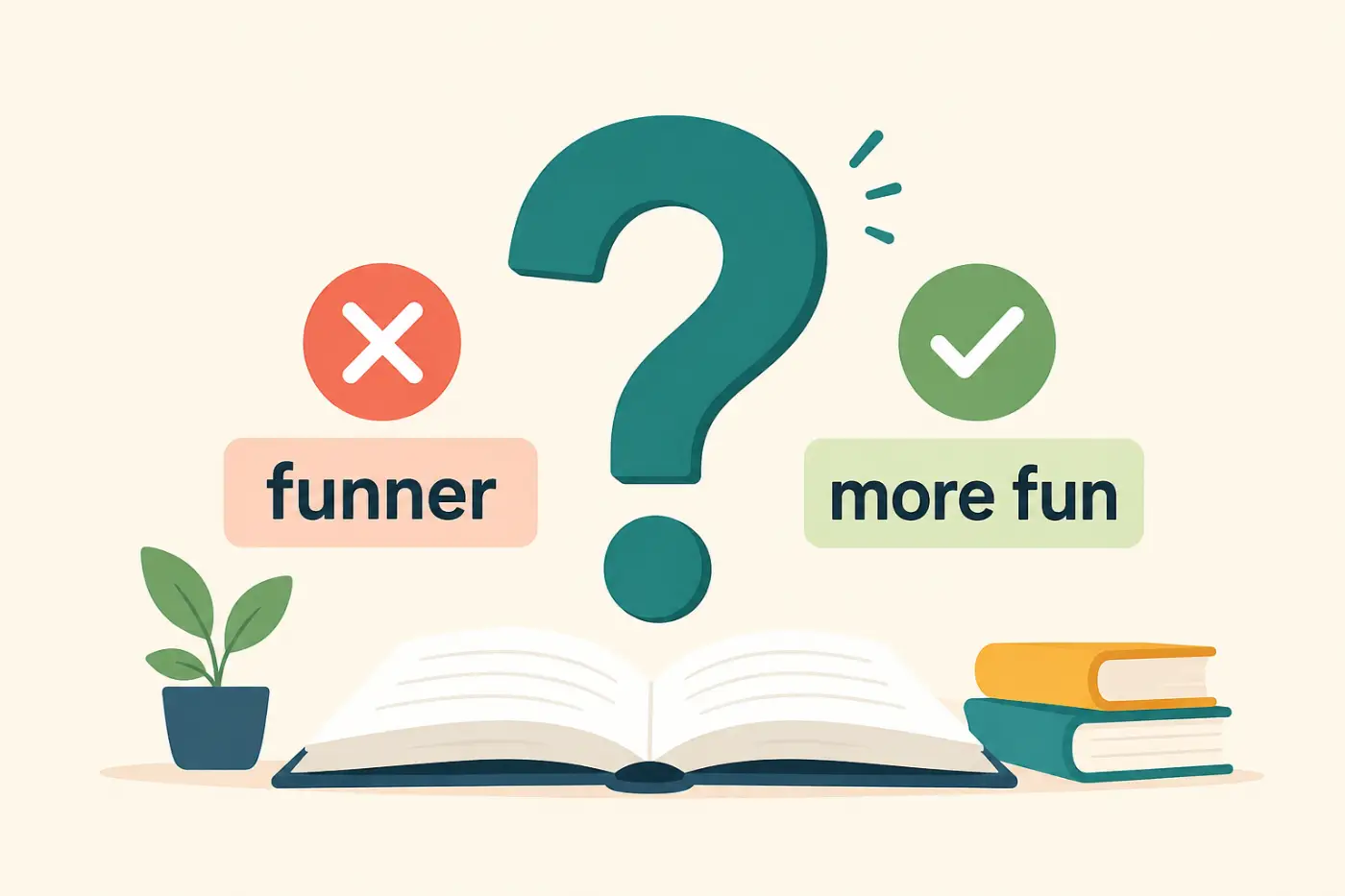
If you’ve ever asked is funner a word you’re not alone. Many people hear funner in everyday conversations but hesitate to use it because they are not sure if it is correct English. Some teachers say it is wrong while others accept it in casual speech.
The short answer is that funner is a real word. Many modern dictionaries include it. Even so it is still considered informal by many writers and editors. In formal writing more fun is usually the better choice.
This difference leaves many English learners and native speakers confused. If dictionaries recognize the word then why do some people still avoid it? The answer comes down to grammar usage and style instead of simple right or wrong.
This guide explains when funner works when more fun sounds better and how to choose the best option for school work professional writing and everyday conversations.
Quick Definition
Funner is the comparative form of fun. People use it to compare two things and say that one is more enjoyable than another.
Many dictionaries recognize funner as a real word. Still more fun remains the preferred choice in most formal situations.
Direct Answer
Yes. Funner is a real word that appears in modern dictionaries. It is widely used in casual English but more fun is still the safer choice for formal writing.
Comparison Table
| Word Or Phrase | Meaning | Example Sentence | Best Time To Use It |
|---|---|---|---|
| Fun | Enjoyable or entertaining. | The party was fun. | Everyday writing and speech. |
| Funner | Comparative form of fun. | This game is funner than the last one. | Casual conversations and informal writing. |
| More Fun | Comparative phrase showing greater enjoyment. | This game is more fun than the last one. | Formal writing school work and professional communication. |
| Funnest | Superlative form of fun. | That was the funnest trip of my life. | Casual conversations. |
| Most Fun | Superlative phrase showing the highest level of enjoyment. | That was the most fun trip of my life. | Formal writing and careful editing. |
Why This Question Confuses So Many People
English has plenty of words that seem simple until you compare them. Fun is one of those words. Most adjectives become comparative by adding er while longer adjectives usually use more. Since fun is only one syllable many people naturally expect funner to follow the usual pattern.
The confusion starts because fun did not always behave like a regular adjective. For many years it was used mainly as a noun. As its use changed people began treating it as an adjective too. That shift opened the door for forms like funner and funnest.
Different teachers also give different advice. Some learned grammar from older style guides that discouraged these forms. Others follow modern dictionaries that list them as accepted informal words. That mixed advice makes it hard for students and writers to know which version to trust.
The good news is that you do not have to guess. Once you understand how the word developed and how people use it today choosing the right form becomes much easier.
How Fun Became An Adjective
Today almost everyone uses fun as an adjective.
You might hear people say.
- That movie was fun.
- The concert was fun.
- Our vacation was fun.
This sounds completely natural to modern English speakers. Still that was not always the case.
Originally fun was mainly a noun. People talked about having fun or enjoying fun activities. Over time speakers began using it to describe people places and experiences. That change became so common that dictionaries accepted the adjective form.
Once fun started working as an adjective many speakers naturally created comparative and superlative forms. That is how funner and funnest became part of everyday English.
Language changes because people use it in new ways. Dictionaries often reflect those changes instead of creating them. They record how real speakers communicate over time.
What Dictionaries Say About Funner
One reason this topic creates so much debate is that many people assume dictionaries decide which words are correct. In reality dictionaries describe how English is used by real speakers.
Several respected dictionaries include funner as a valid comparative form of fun. At the same time they often label it as informal. That label does not mean the word is wrong. It simply tells readers that the word fits better in relaxed situations than in formal writing.
Many editors still prefer more fun because it has been accepted for a longer time and sounds more natural in professional communication. Even so seeing funner in a dictionary confirms that it is a real English word instead of a mistake.
Understanding that difference helps clear up much of the confusion. A word can be correct and still fit some situations better than others.
Funner Vs More Fun
The biggest question is not if funner exists. The real question is which form sounds better in a given situation.
In everyday conversations both forms are easy to understand. Most people will know exactly what you mean. The difference comes down to tone and the setting where you are speaking or writing.
More fun has been the standard choice for a long time. It sounds natural in almost every situation and rarely attracts attention. That is why teachers editors and professional writers usually recommend it.
Funner has become more common over the years. You will hear it in casual conversations movies television shows social media posts and everyday speech. Many native speakers use it without giving it a second thought.
If you are writing something important such as an essay business email or article more fun is usually the safer option. If you are chatting with friends or writing in a relaxed style funner often sounds perfectly natural.
Quick Comparison
| Feature | Funner | More Fun |
|---|---|---|
| Accepted by dictionaries | Yes | Yes |
| Common in casual speech | Very common | Very common |
| Best for formal writing | Less preferred | Preferred |
| Natural in conversation | Yes | Yes |
| Recommended by many editors | Sometimes | Yes |
When You Can Use Funner
There are many situations where funner feels completely natural. Casual conversations are the best example because people often choose the version that comes to mind first instead of thinking about grammar rules.
Imagine two friends talking about weekend plans.
- The beach was fun but the lake was funner.
- This board game is funner than the last one.
- Summer vacation is always funner with friends.
Most people would not stop the conversation to point out the word choice. The meaning is clear and the sentences sound natural in relaxed speech.
Writers also use funner in dialogue because it reflects how real people talk. If a character sounds too formal every time they speak the conversation may feel less realistic. Children use funner quite often because it follows a pattern they already know. They learn words like smaller faster and stronger then naturally form funner in the same way.
When More Fun Is The Better Choice
Some situations call for a more polished style. That is where more fun has the advantage. Academic writing is one example. Teachers often expect students to choose the more traditional form because it has been accepted in formal English for many years.
Professional communication also benefits from using more fun. For example.
- This activity is more fun than the previous one.
- The updated program makes learning more fun.
- Our new event is more fun for families of all ages.
These sentences sound smooth and professional without feeling stiff.
The same advice applies to books reports research papers business documents and published articles. Choosing more fun keeps the writing clear and avoids distracting readers who still dislike funner.
Why Some Teachers Still Say Funner Is Wrong
Many people first hear that funner is incorrect in school. That advice comes from older grammar traditions instead of modern usage.
Years ago many style guides treated fun as a noun instead of an adjective. Since nouns do not normally take comparative endings teachers encouraged students to write more fun instead.
English has changed since then. Dictionaries now recognize fun as an adjective and include funner as a comparative form. Even so many teachers continue teaching the older recommendation because it produces more formal writing.
That does not make their advice bad. It simply reflects a different goal. Schools often prepare students for academic writing where the more traditional form remains the safer choice.

Why Native Speakers Use Funner
Language follows patterns. People naturally apply familiar grammar rules to new words. Think about these examples.
- Small becomes smaller.
- Bright becomes brighter.
- Fast becomes faster.
Many speakers see fun as another short adjective so funner feels like the next logical step. That is one reason the word keeps appearing in conversations across the United States. It follows a pattern that already exists in English. Native speakers also value simplicity. Saying funner uses one word instead of two. In quick conversations that often feels easier and more natural.
Language changes because people use words in ways that make sense to them. Over time some of those changes become widely accepted while others fade away. Funner has remained in use for decades which explains why major dictionaries now include it.
Real Examples From Everyday Life
Looking at real situations makes the difference much easier to understand. A child talking to a friend might say.
- Recess is funner than math class.
A parent might say.
- This park is more fun for younger children.
Someone writing a travel review could write.
- The second hotel was more fun because it offered more activities.
Friends planning a weekend trip may say.
- Camping is funner than staying home.
Each sentence communicates the same basic idea. The choice depends on the tone the writer wants to create and the audience reading the message.
What Grammar Experts Say
Grammar experts do not all agree on funner but their views are much closer today than they were in the past.
Older grammar books often discouraged the word because more fun had been the standard form for many years. As English changed many dictionaries updated their entries to include funner and funnest as accepted forms.
Modern editors usually take a practical approach. They recognize that the word is real but still recommend choosing the version that best fits the situation. For casual conversations funner is perfectly acceptable. For formal writing more fun is usually the stronger choice.
Is Fun An Adjective Or A Noun
Part of the confusion comes from the fact that fun can play more than one role in a sentence. As a noun it refers to enjoyment or amusement. Examples.
- We had a lot of fun at the beach.
- The party was full of fun activities.
As an adjective it describes something enjoyable. Examples.
- The game was fun.
- It was a fun weekend.
- Science can be fun for children.
Since fun now works as an adjective many people naturally form the comparative funner. That change in usage explains why the word has become more common over time.
Common Mistakes To Avoid
Even people who understand the difference sometimes make small grammar mistakes. These are the ones you will see most often.
Thinking Funner Is Always Wrong
Many people still believe the word is never correct. That is no longer true. Modern dictionaries recognize it as a real word used mainly in informal English.
Using Funner In Formal Writing
The word is accepted but it may not fit every situation. If you are writing for school work business or professional publishing more fun usually sounds smoother.
Mixing Comparative Forms
Do not combine two comparative forms in the same phrase.
Incorrect.
- This game is more funner than that one.
Correct.
- This game is funner than that one.
- This game is more fun than that one.
Using both forms together creates unnecessary repetition.
Choosing The Wrong Superlative
The same idea applies when comparing more than two things. Informal.
- That was the funnest vacation ever.
More formal.
- That was the most fun vacation ever.
Both forms appear in everyday English but most fun is still the preferred choice in formal writing.
Funner In Real Conversations
If you pay attention to everyday conversations you will probably hear funner more often than you expect.
Friends compare restaurants.
- The new café is funner than the old one.
Families talk about vacations.
- Last year’s trip was funner because everyone came along.
Children compare games.
- Tag is funner than hide and seek.
These examples sound natural because the setting is relaxed. Nobody stops to think about grammar during a casual conversation. People simply choose the words that come naturally.
Similar Words That Follow The Same Pattern
English has many short adjectives that add er to make comparisons.
Here are a few familiar examples.
| Base Word | Comparative | Example Sentence |
|---|---|---|
| Small | Smaller | This bag is smaller than mine. |
| Fast | Faster | My brother runs faster than I do. |
| Bright | Brighter | Today’s sky looks brighter. |
| Kind | Kinder | She became kinder over time. |
| Loud | Louder | The music became louder. |
Because speakers already know these patterns many naturally expect fun to become funner. That expectation makes sense even though more fun remains the traditional choice.
Easy Ways To Remember Which Form To Use
You do not need to memorize a long grammar rule. A simple habit is enough.
If you are talking with friends or writing something casual use the form that sounds natural to you. Most people will understand either version without any confusion.
If you are writing something important pause for a moment and choose more fun. It works in every formal setting and is unlikely to raise questions from teachers editors or employers.
- You can also remember this simple idea.
- Casual conversation gives you more freedom.
- Formal writing rewards consistency.
Keeping that difference in mind will help you make the right choice almost every time.

Does It Really Matter
For most conversations the answer is no.
Nobody is going to misunderstand your message because you said funner instead of more fun. Both expressions communicate the same idea. The difference is mainly about style and audience.
That said good writers think about their readers. Choosing words that match the situation makes your writing feel more polished and more natural.Instead of asking which form is always right ask which form fits the moment. That small shift makes English much easier to use with confidence.
FAQs
Is funner a real word?
Yes. Is funner a word has a simple answer. Yes it is. Modern dictionaries recognize funner as the comparative form of fun. Even so many editors still prefer more fun in formal writing.
Is funner grammatically correct?
Yes. Funner is grammatically correct in modern English. It is most common in casual conversations and informal writing. For school papers business documents and other formal work more fun is still the preferred choice.
Is more fun better than funner?
It depends on the situation. More fun is the safer option because it sounds natural in every setting. Funner works well in relaxed conversations and is widely understood by native speakers.
Do dictionaries include funner?
Yes. Several respected dictionaries list funner as a real English word. Most also note that it is informal which means it fits casual language better than formal writing.
Why do some teachers say funner is wrong?
Many teachers learned grammar from older style guides that recommended more fun instead. That advice is still useful for formal writing even though modern dictionaries now accept funner.
Can I use funner in an essay?
You can but it is usually better to choose more fun. Most teachers and editors expect a more formal style in academic writing. Using more fun helps your writing sound polished and avoids unnecessary criticism.
What is the superlative form of fun?
In casual English many people say funnest. In formal writing most fun is still the preferred choice because it is more widely accepted.
Is funner common in American English?
Yes. Many people in the United States use funner in everyday conversations. You will also hear it in movies television shows social media posts and casual speech.
Conclusion
If you have been wondering is funner a word the answer is yes. It is a real English word that appears in modern dictionaries and is commonly used in everyday conversations.
The bigger question is not if the word is correct but when it fits best. Funner sounds natural in casual speech while more fun remains the preferred choice for formal writing school assignments and professional communication.
Understanding that difference makes choosing the right form much easier. Instead of thinking about strict grammar rules think about your audience and the situation. That simple habit will help your writing sound natural and confident.
The next time someone asks is funner a word you can answer with confidence. Yes it is. Just remember that more fun is still the better option when you want a polished and formal style.

Dr. Elena Vance holds a Ph.D. in Linguistics from Columbia University and has spent over 15 years analyzing the evolution of the English language. A former university professor turned full-time writer and editor, Elena specializes in breaking down high-level grammatical concepts, punctuation nuances, and style guides (APA, Chicago, MLA) into clear, actionable advice. When she isn’t hunting down dangling modifiers, she can be found collecting vintage dictionaries and reading classic literature.