
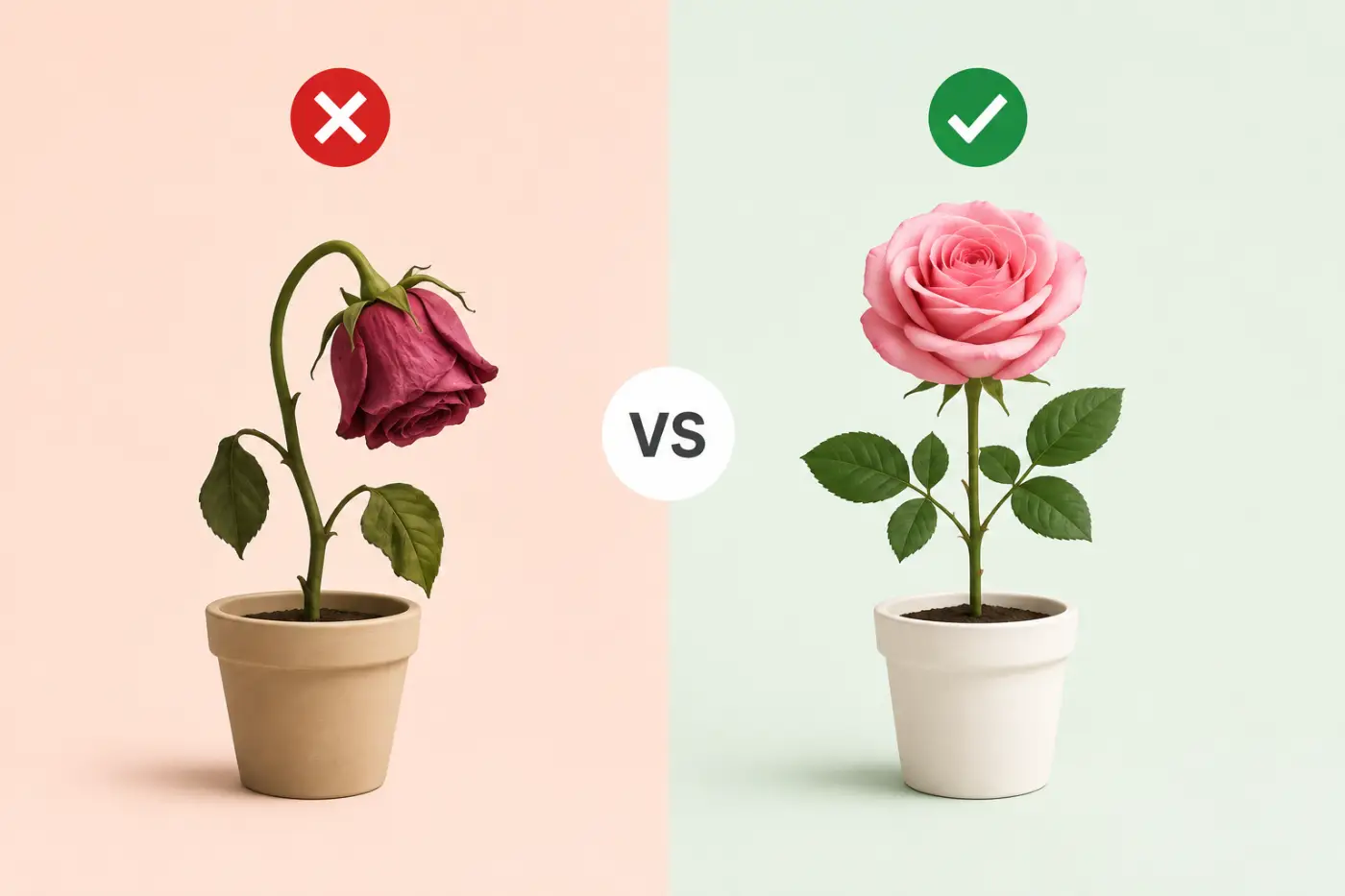
If you’re wondering about rosey or rosy the correct spelling is rosy. The form rosey is usually a misspelling when you mean something pink or hopeful. You may still see Rosey used as a name or as part of a proper name. In standard English writing though rosy is the spelling you want for the adjective.
The word can describe a pink or reddish color such as rosy cheeks. It can also describe something cheerful hopeful or likely to turn out well. That’s why you might hear someone talk about a rosy smile in one sentence and a rosy outlook in another.
The spelling can feel confusing because the word rose is spelled with an e. It seems natural to add a y and write rosey. English does not work that way here. The adjective drops the final e before adding y.
This guide explains the spelling rule in simple terms. You’ll also see how rosy is used in everyday English what it means in different contexts and how to avoid similar spelling mistakes.
Quick Definition
Rosy is the standard English spelling of the adjective. It can mean pink or reddish in color and it can also mean cheerful hopeful or optimistic. Rosey is generally not the standard spelling of the adjective.
Direct Answer
Rosy is the correct spelling when you mean pinkish or hopeful. Rosey is normally incorrect as an adjective although it can appear as a personal name or part of a proper name.
Comparison Table
| Word or form | Meaning | Example sentence | When to use it |
|---|---|---|---|
| Rosy | Pinkish reddish cheerful hopeful or optimistic | She had rosy cheeks after the walk. | Use this as the standard adjective. |
| Rosey | Usually a misspelling of rosy | The spelling is incorrect in standard writing. | Avoid it unless it is a name or proper name. |
| Rose | A flower or the past tense of rise | He gave her a red rose. | Use it for the flower or the verb form. |
Why The Correct Spelling Is Rosy
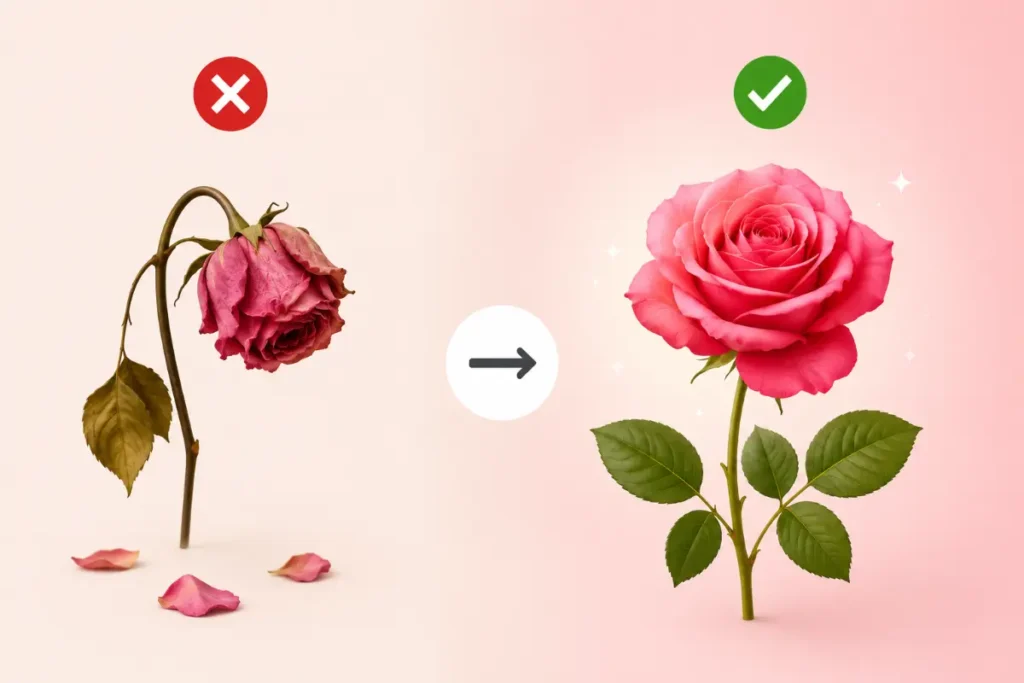
The easiest way to understand rosy is to look at the base word rose. When English forms this adjective the final e is removed before the letter y is added.
Rose becomes rosy.
This pattern appears in many English words. A final silent e often disappears when a suffix beginning with a vowel is added. The change keeps the spelling cleaner and follows established English spelling patterns.
You can see the same kind of change in other words.
- Noise becomes noisy.
- Ice becomes icy.
- Spice becomes spicy.
- Grease becomes greasy.
Those examples make the spelling of rosy easier to understand. The base word is rose but the adjective is rosy. You don’t simply attach y to the unchanged word.
The same idea explains why rosey looks tempting but isn’t the standard adjective. Your brain sees rose and naturally wants to add y. That works in some words but not in this one.
What Does Rosy Mean
Rosy has several related meanings. The most common meaning describes a pink or reddish color.
If someone has rosy cheeks their cheeks have a healthy pink or red color. This can happen after exercise because of cold weather embarrassment or simply because of a person’s natural complexion.
For example:
- She came inside with rosy cheeks after playing in the snow.
- The baby had soft rosy cheeks.
- His face turned rosy after the long run.
The word can also describe something that looks cheerful or positive. In this use rosy doesn’t describe a color at all. Instead it describes an optimistic view of a situation.
For example:
- She has a rosy view of the future.
- The report paints a rosy picture of the company’s finances.
- He remains rosy about the team’s chances of winning.
The two meanings are connected by the idea of something pleasant and positive. A rosy color can suggest health and warmth. A rosy outlook suggests hope and confidence.
The Difference Between Rose And Rosy
The words rose and rosy are related but they don’t do the same job in a sentence.
Rose is most commonly a noun. It names a type of flower.
For example:
- She bought a dozen roses for her mother.
- There was a beautiful rose in the garden.
- Rose can also be the past tense of the verb rise.
For example:
- The sun rose above the trees.
- He rose from his chair when the guests arrived.
- Rosy is an adjective. It describes a noun.
This difference matters because adding a letter can change the role of a word. Rose names something or describes an action that happened in the past. Rosy describes a person thing color feeling or situation.
Why Rosey Looks Correct At First
The incorrect spelling is understandable. It follows a pattern that seems logical.
- You start with rose. Then you add y.
- Rose plus y appears to give you rosey.
The problem is that English spelling doesn’t always work by simply adding a letter to the end of a word. Some suffixes cause a change in the base word. In this case the final e disappears.
Think of the process like this.
Rose becomes rosy.
The e isn’t pronounced as a separate sound in the adjective. The spelling changes to make the new word.
This is also why seeing the correct form often helps. Once rosy becomes familiar to you it starts to look natural. After enough exposure the extra e in rosey can begin to look strange.
The Spelling Pattern Behind Rosy
The spelling of rosy connects to a useful pattern involving words that end in silent e. When the adjective ending y is added the final e often drops away.
Here are some common examples.
| Base word | Adjective | Example |
|---|---|---|
| Ice | Icy | The road is icy. |
| Noise | Noisy | The classroom became noisy. |
| Spice | Spicy | The soup is spicy. |
| Grease | Greasy | The pan feels greasy. |
| Haste | Hasty | That was a hasty decision. |
| Taste | Tasty | The meal was tasty. |
| Rose | Rosy | She has rosy cheeks. |
This pattern isn’t something you need to memorize as a complicated grammar rule. It is more useful as a spelling clue.
When you see a word ending in silent e and want to form an adjective with y check to see if the e should be removed. Many common words follow this pattern.
How To Use Rosy In Everyday Writing
Rosy is a flexible adjective. You can use it in casual conversation as well as polished writing. The meaning depends on the noun or idea it describes.
Rosy Cheeks
This is one of the most familiar uses.
Rosy cheeks are pink or slightly red cheeks. The phrase often suggests health warmth youth or activity.
For example:
- The cold air left her with rosy cheeks.
- The little boy had rosy cheeks after running around the park.
- You can also use rosy to describe someone’s face.
- Her rosy face made her look cheerful.
Rosy Lips
Rosy can describe lips that have a soft pink or reddish color.
For example:
She wore a light shade that gave her lips a rosy look.
The phrase often appears in descriptions of appearance. It can sound gentle and positive when used in creative writing.
Rosy Glow
A rosy glow is a warm pink or reddish light.
For example:
The setting sun cast a rosy glow across the mountains.
The phrase can describe natural light from a sunset. It can also describe a person’s skin after exercise or time outdoors.
Rosy Color
Rosy can simply describe a color.
For example:
- The walls have a soft rosy shade.
- She chose rosy fabric for the curtains.
In this sense the word is close to pinkish or reddish. The exact shade can vary depending on the context.
Rosy Can Also Mean Hopeful
Color is only one part of the story. Rosy also has a figurative meaning that comes up often in news reports conversations and business writing.
When people describe an outlook as rosy they mean it looks positive or promising.
For example:
- The company has a rosy outlook for the next year.
- The coach has a rosy view of the team’s future.
- The latest numbers give investors a more rosy picture of the economy.
This use comes from the positive associations of the color rose. A rosy picture sounds pleasant and encouraging.
However the phrase can sometimes carry a hint of doubt. If someone says a person has a rosy view of a difficult situation they may mean that the person is more optimistic than the facts justify.
That subtle meaning is useful to understand.
Consider these two sentences.
The doctor gave the family a rosy outlook for recovery.
She has a rosy view of the company’s future despite its recent losses.
The first sentence sounds plainly positive. The second may suggest that her optimism is unrealistic.
What Does A Rosy Outlook Mean
A rosy outlook is a hopeful view of what will happen in the future.
If someone has a rosy outlook they expect good results. They may believe a problem will improve or that a plan will succeed.
For example:
- The business has a rosy outlook after a strong quarter.
- The students have a rosy outlook about their chances of getting into college.
- After several successful projects the manager has a rosy outlook for the team.
- The opposite would be a gloomy or pessimistic outlook. A pessimistic person expects problems or poor results.
This makes rosy useful when talking about expectations. It doesn’t always mean the future will actually be good. It describes how someone sees the future.
What Does A Rosy Picture Mean
A rosy picture is a description of a situation that emphasizes the positive parts.
For example:
- The advertisement paints a rosy picture of life at the resort.
- The manager painted a rosy picture of the company’s financial position.
- The phrase can be positive or skeptical depending on context.
If a friend tells you that everything is going perfectly you might say that they have a rosy picture of the situation. You could mean they are hopeful. You could also mean they are ignoring some obvious problems.
This is why context matters. The word itself does not always tell you how the speaker feels about the situation.
Rosy In Descriptive Writing
Writers often use rosy because it gives a description more life than a plain color word.
Compare these sentences.
- The sky was pink.
- The sky had a rosy glow.
Both sentences describe a similar color. The second creates a warmer image. It can make the scene feel softer and more vivid.
Another example is the difference between these sentences.
- Her cheeks were pink.
- Her cheeks were rosy after the walk.
The second sentence gives the reader a stronger sense of warmth and health.
Still you don’t need to use rosy every time you describe something pink. Good writing depends on choosing the word that fits the scene. Rosy works best when you want a soft warm or pleasant image.
Common Mistakes With Rosy
The most common mistake is adding the final e from rose.
For example:
- Incorrect: She had rosey cheeks.
- Correct: She had rosy cheeks.
Another common mistake is assuming that every word ending in e keeps that e when you add y. English has many spelling patterns that require a change.
For example:
Noise becomes noisy.
- Ice becomes icy.
- Laze becomes lazy.
- Rose becomes rosy.
Learning these pairs can help you notice the pattern more quickly.
There is another kind of confusion worth mentioning. Some people see rose and rosy as different forms of the same word and assume they can be used in the same places. They cannot.
You would say:
She picked a rose.
You would not say:
She picked a rosy.
You would say:
She has rosy cheeks.
You would not normally say:
She has rose cheeks.
The endings matter because they affect the word’s meaning and grammatical role.
When Rosey Can Be Correct
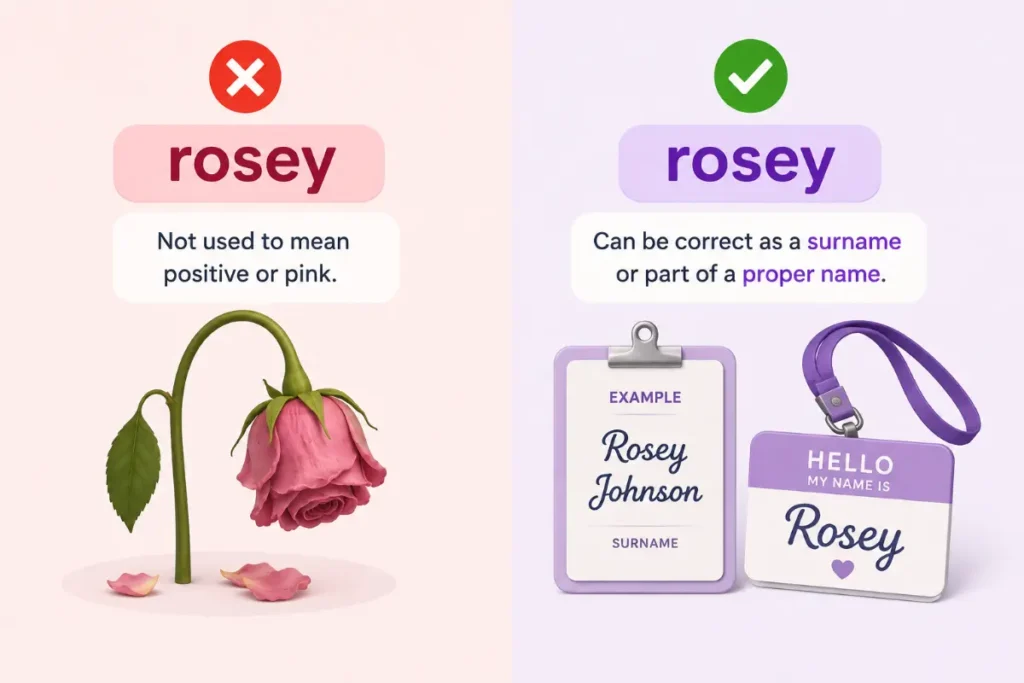
There is one important detail. Rosey can appear as a name.
Names do not always follow standard spelling patterns. A person may be named Rosey or may use Rosey as a nickname. A business product character or place could also use that spelling as part of its official name.
For example:
- Rosey is my aunt’s nickname.
- If Rosey is someone’s chosen name then you should spell it exactly that way.
This does not make rosey the standard adjective. It simply means proper names can have their own spelling.
The same principle applies to many unusual names. You shouldn’t change someone’s name to match a spelling rule. If a person’s legal or affirming name is Rosey then Rosey is correct for that name.
Context tells you which form you need.
Rosy And Rose Colored
The phrase rose colored can also describe something pinkish or reddish. It has a slightly different feel from rosy.
For example:
- She wore rose colored glasses.
- The artist used rose colored paint.
Rose colored glasses can also have a figurative meaning. Someone who sees life through rose colored glasses tends to focus on positive things and ignore problems.
For example:
- He looks at the situation through rose colored glasses.
- This expression often suggests unrealistic optimism.
Rosy and rose colored overlap in some contexts but they aren’t identical. Rosy can directly describe a color or an optimistic outlook. Rose colored often appears when describing a specific shade or the figurative way someone views a situation.
Rosy And Pink
Rosy and pink are close but not always interchangeable.
Pink is a basic color word. It can describe a wide range of shades.
Rosy usually suggests a warmer pink with red or rose tones. It can also carry a feeling of health warmth or softness.
Compare these examples.
- She painted the room pink.
- She painted the room a soft rosy shade.
The first sentence simply identifies the color. The second gives the reader a more specific impression.
- The same difference appears with skin.
- His face was pink from the cold.
- His cheeks were rosy from the cold.
Both sentences work. Rosy sounds a little more descriptive and often has a warmer tone.
Rosy And Optimistic
When rosy describes an outlook it is closely related to optimistic.
Optimistic means expecting good things to happen.
Rosy can suggest the same idea but often sounds more descriptive or conversational.
For example:
- She is optimistic about her chances.
- She has a rosy outlook on her chances.
The meaning is similar. The second sentence creates a stronger image of someone seeing the future in a positive light.
Rosy can also suggest that the optimism may be too strong.
For example:
- His rosy expectations didn’t match the facts.
- That sentence hints that his hopes were not realistic.
Optimistic does not always carry that suggestion. It can simply describe a positive attitude.
A Simple Memory Trick
If you keep forgetting the spelling use one small connection.
Think of rose and rosy as a pair. When rose becomes an adjective the final e disappears.
Rose becomes rosy.
You can also connect rosy with icy noisy and spicy. Each word starts with a base form that changes slightly before y is added.
Another useful trick is to remember that the adjective has only one e. That e belongs inside the word rather than at the end.
Rosy.
Not rosey.
Write the correct form a few times in real sentences and it will become much easier to recall.
Practice With Real Sentences
The best way to build spelling confidence is to use the word in context. Read these sentences and notice how the meaning changes.
- The baby had rosy cheeks.
- The morning sky had a rosy tint.
- She gave him a rosy smile.
- The company has a rosy outlook for the coming year.
- The report presents a rosy picture of the project’s future.
- His rosy expectations were not supported by the evidence.
- The sunset left a rosy glow over the lake.
- She chose a rosy shade of lipstick.
- The cold weather made his cheeks rosy.
- The team remains rosy about its chances of reaching the final.
These examples show why context matters. Rosy can describe color appearance mood expectations or a view of the future.
A Quick Test To Check Your Spelling
If you aren’t sure which form to use pause and ask yourself what you mean.
If you’re talking about a person’s name check the person’s preferred spelling. Rosey may be correct if it is the actual name.
This quick check removes most of the confusion.
Why Correct Spelling Matters
A single spelling mistake usually won’t stop a reader from understanding you. Still repeated mistakes can make your writing look less polished. This matters in school assignments applications emails articles and professional documents.
The good news is that this is an easy mistake to fix. Once you understand why the final e disappears the correct form becomes much easier to remember.
Good spelling also makes your writing easier to trust. Readers don’t have to stop and wonder if a word is intentional or accidental. Clear writing keeps their attention on your message.
You don’t need to memorize hundreds of complicated rules. Learning common patterns and seeing words used correctly gives you a strong foundation.

A Useful Way To Think About Rose And Rosy
- Picture a rose in a garden.
- The flower itself is a rose.
- The color of someone’s cheeks can be rosy.
- A hopeful view of the future can also be rosy.
- That simple connection covers the main uses.
- The rose is the thing. Rosy describes something.
Once you make that distinction the spelling becomes much easier. You are no longer trying to remember two random spellings. You’re connecting two related words that have different jobs.
FAQs
Is rosy the correct spelling?
Yes. Rosy is the standard spelling of the adjective that means pinkish reddish cheerful hopeful or optimistic. Rosey is normally a misspelling of that adjective.
Is Rosey ever spelled correctly?
Yes. Rosey can be correct when it is a person’s name or part of a proper name. Names can have spellings that differ from standard English words.
Why is rosy spelled without the e?
The word comes from rose but the final e is dropped before the adjective ending y is added. This creates the standard form rosy.
What does rosy mean?
Rosy can mean pink or reddish in color. It can also mean hopeful cheerful or optimistic when describing a person’s attitude or view of the future.
What is the difference between rose and rosy?
Rose is usually a noun that names a flower or the past tense of rise. Rosy is an adjective that describes color appearance mood or an optimistic outlook.
What does a rosy outlook mean?
A rosy outlook means someone expects a positive future. The phrase can describe genuine confidence or can suggest that someone is being overly optimistic depending on the context.
Is rosy the same as pink?
Not exactly. Both words can describe color but rosy usually suggests a warm pink or reddish shade. Rosy can also describe optimism while pink cannot normally be used that way.
Is rosy a real word?
Yes. Rosy is a common standard English adjective. It appears in everyday speech as well as descriptive writing news reports and discussions about future expectations.
Conclusion
If you’ve been stuck on rosey or rosy the answer is simple. Use rosy when you’re describing a pinkish color a warm appearance or a hopeful outlook. The spelling with an extra e is not the standard adjective.
The easiest way to remember it is to connect rose with rosy. When the adjective is formed the final e disappears before y is added. The same kind of spelling change appears in words such as icy noisy and spicy.
Keep in mind that Rosey can still be correct as a personal name. Names can follow their own spelling choices. In ordinary English writing though rosy is the form you should choose.
So the next time you need this word don’t stop to guess. Think of the rose and remember that its adjective drops the final e. Write rosy and move on with confidence.

Dr. Elena Vance holds a Ph.D. in Linguistics from Columbia University and has spent over 15 years analyzing the evolution of the English language. A former university professor turned full-time writer and editor, Elena specializes in breaking down high-level grammatical concepts, punctuation nuances, and style guides (APA, Chicago, MLA) into clear, actionable advice. When she isn’t hunting down dangling modifiers, she can be found collecting vintage dictionaries and reading classic literature.