
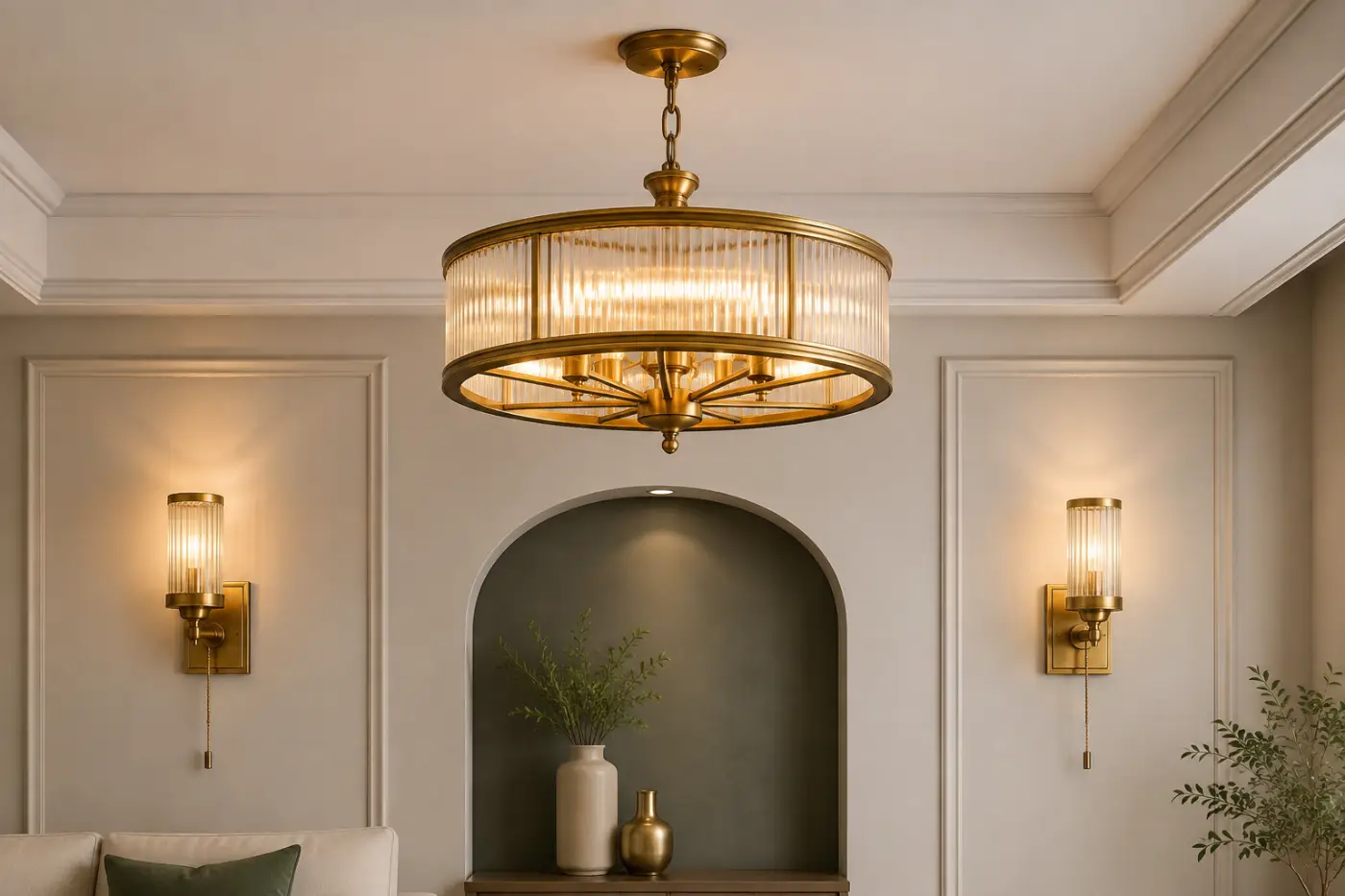
Choosing antique gold ceiling lights and switched wall lights can completely change the look and feel of a room. The right combination adds warmth style and practical lighting without making your space feel crowded. Still many people struggle to find fixtures that match each other and fit their home’s design.
If you’re planning a renovation or simply replacing old light fixtures you’ve probably asked questions like which finish looks best where should wall lights go and can you mix ceiling lights with switched wall lights. Those questions are common because lighting affects both the appearance and function of every room.
This guide answers those questions in plain English. You’ll learn what antique gold lighting is where it works best how to choose matching fixtures and what mistakes to avoid before you buy. By the end you’ll feel confident picking lights that look beautiful and work well for years.
Quick Definition
Antique gold ceiling lights are ceiling mounted light fixtures with a warm aged gold finish that creates a timeless and elegant look. Switched wall lights are wall mounted fixtures with a built in switch so you can turn them on or off without using a wall switch.
When paired together they create layered lighting that improves both the style and comfort of a room.
Why This Lighting Combination Is So Popular
Antique gold has become one of the most loved finishes for home lighting because it feels warm instead of flashy. Unlike shiny polished gold it has a softer appearance that blends with many decorating styles.
Switched wall lights are popular for a different reason. They give you light exactly where you need it without requiring you to walk across the room to reach a switch. That makes them practical beside beds reading chairs sofas and hallway mirrors.
Together these fixtures offer both beauty and convenience. One lights the entire room while the other adds focused light exactly where it helps the most.
Comparison Table
| Fixture Type | Main Purpose | Best Location | Main Benefit |
|---|---|---|---|
| Antique Gold Ceiling Light | General room lighting | Living room bedroom dining room hallway kitchen | Lights the entire space with a stylish finish. |
| Switched Wall Light | Task or accent lighting | Bedside reading corner hallway bathroom living room | Easy to control without using the main wall switch. |
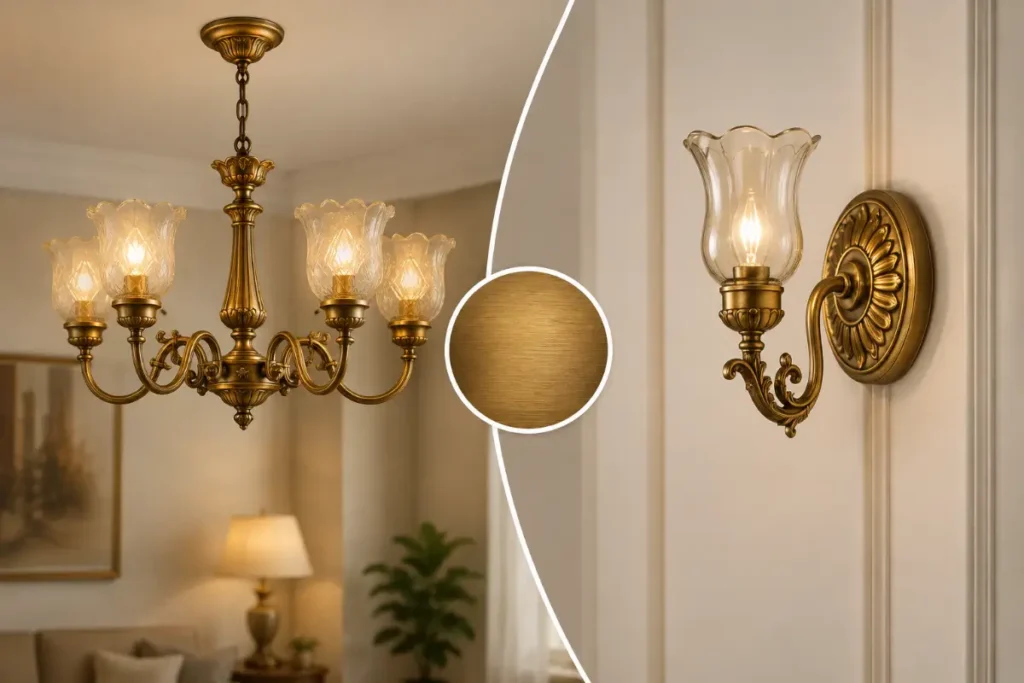
What Makes Antique Gold Different
Many people think every gold finish looks the same. That is not true. The finish changes how the fixture feels inside a room.
Antique gold has a slightly aged appearance with soft warm tones. It looks refined without attracting too much attention. Instead of becoming the center of the room it complements the furniture wall colors and décor around it.
This finish also hides fingerprints dust and small scratches better than highly polished metals. That makes it a practical choice for busy households.
Here are a few common gold finishes and how they compare.
| Finish | Appearance | Best Style |
|---|---|---|
| Antique Gold | Warm soft aged look | Traditional farmhouse vintage transitional |
| Polished Gold | Bright reflective shine | Glam luxury classic |
| Brushed Gold | Smooth matte texture | Modern contemporary minimalist |
| Satin Brass | Soft yellow gold | Modern traditional Scandinavian |
Each finish has its place. Antique gold stands out because it fits both classic and modern homes without looking outdated.
Why Switched Wall Lights Are Worth Considering
A switched wall light includes its own switch on the fixture. You simply reach for the switch instead of walking to the wall every time you want light. That small feature makes daily life much easier.
Imagine reading before bed. Instead of getting up to switch off the ceiling light you simply turn off the wall light beside you. The same convenience helps in guest rooms children’s bedrooms and cozy reading corners.
These fixtures also work well in homes where adding new electrical wiring would be expensive or difficult.
Rooms Where This Combination Works Best
The great thing about antique gold ceiling lights and switched wall lights is their flexibility. They can work in almost every room when chosen carefully.
Living Room
The ceiling light provides overall brightness while wall lights create a softer atmosphere during the evening. For example you might use a decorative chandelier above the seating area and matching wall lights beside a fireplace or bookshelf.
This layered approach makes the room feel warm instead of flat.
Bedroom
Bedrooms benefit more than almost any other room.
A ceiling fixture brightens the whole space for cleaning dressing and everyday tasks. Wall lights beside the bed give each person their own reading light without disturbing someone else. Many homeowners replace table lamps with wall lights to free up space on bedside tables.
Dining Room
An antique gold pendant or chandelier becomes a beautiful focal point above the dining table.
Matching wall lights on nearby walls help soften shadows and create a welcoming atmosphere during family meals and dinner parties. The result feels balanced instead of relying on one bright light overhead.
Hallway
Hallways often receive little natural light.
A ceiling fixture keeps the path bright while wall lights highlight artwork mirrors or architectural details. Even a narrow hallway feels more inviting with layered lighting.
Choosing The Right Size Ceiling Light
A beautiful light fixture will not look right if it is too large or too small. A common guideline is to add the room’s length and width in feet. The total gives you an approximate fixture diameter in inches. For example a room that measures 12 feet by 14 feet adds up to 26. A ceiling fixture around 26 inches wide usually looks well balanced.
This rule is only a starting point. Ceiling height furniture layout and room style also affect the final choice. Large open spaces often benefit from bigger fixtures while smaller bedrooms usually look better with something simple and compact.
Match The Style Instead Of The Finish Alone
Many people focus only on matching the metal finish. That matters but style matters even more. For example an antique gold chandelier with curved arms pairs naturally with wall lights that share similar curves and detailing.
A modern ceiling fixture with clean lines works better alongside wall lights that have the same simple design. When shapes materials and proportions work together the room feels intentional instead of looking like each fixture came from a different store.
How To Create Layered Lighting
One ceiling light rarely gives a room everything it needs. Some areas end up too bright while others feel dark. That is why designers often recommend layered lighting.
Layered lighting simply means using different types of light for different purposes. Each fixture has its own job and together they create a space that feels comfortable throughout the day.
When you combine antique gold ceiling lights and switched wall lights you create a balanced lighting plan instead of depending on a single source.
Ambient Lighting
Ambient lighting is the main source of light in a room. It fills the space so people can move around comfortably.
Ceiling lights usually provide this type of lighting. A flush mount fixture pendant light or chandelier spreads light across the room and reduces dark corners. Without good ambient lighting even a beautiful room can feel gloomy.
Task Lighting
Task lighting helps you perform specific activities.
Reading cooking applying makeup working at a desk and sewing all require brighter focused light than general room lighting. Switched wall lights work well for these tasks because you can turn them on only when needed. For example a wall light beside the bed makes reading much easier than relying on a ceiling fixture across the room.
Accent Lighting
Accent lighting adds depth and highlights features you want people to notice.
You might use wall lights to draw attention to artwork a fireplace decorative shelves or textured walls. Even a simple hallway feels more inviting when light gently washes across the walls instead of shining only from above.
Choosing The Right Brightness
The style of a fixture matters but brightness is just as important.
A beautiful light that is too dim will make the room feel dull. One that is too bright can make the space uncomfortable. Think about how you actually use the room before choosing a bulb.
Living Room
Living rooms usually need moderate brightness because people watch television read entertain guests and relax there. Warm white bulbs often create the most comfortable atmosphere.
Bedroom
Bedrooms should feel calm instead of overly bright. Many people prefer soft lighting from bedside wall lights while using the ceiling fixture only when they need full room brightness.
Kitchen
Kitchens need brighter light because cooking and food preparation require good visibility. A ceiling light provides the main illumination while wall fixtures can brighten smaller work areas.
Bathroom
Bathrooms need clear lighting around mirrors without creating harsh shadows. Wall lights placed on each side of a mirror usually provide more even light than a single fixture above it.
Picking The Right Bulb Color
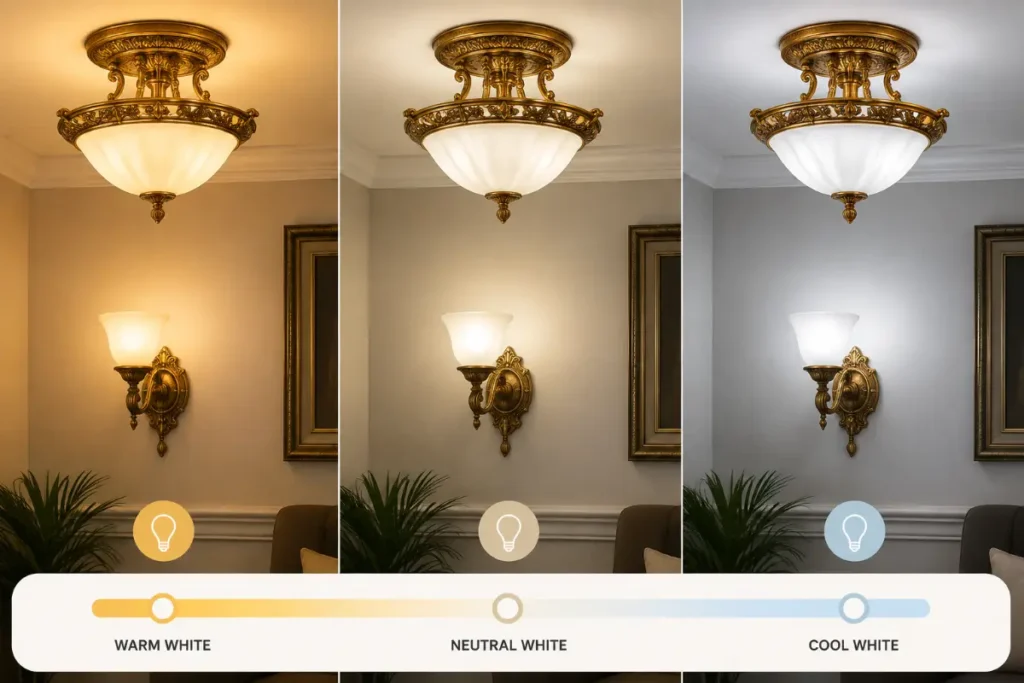
Bulb color changes how every room feels. Warm white light creates a cozy welcoming atmosphere. It works beautifully with antique gold because both have warm tones. Cool white light feels brighter and cleaner. Many people prefer it in kitchens laundry rooms and workspaces.
Daylight bulbs produce a crisp appearance that closely resembles natural daylight. They are useful in craft rooms garages and home offices but may feel too bright in bedrooms or living rooms. Keeping the same color temperature throughout connected spaces helps the home feel more consistent.
Best Decorating Styles For Antique Gold Lighting
One reason antique gold remains popular is its versatility. It fits far more decorating styles than many people expect.
Traditional Homes
Traditional interiors often include detailed furniture rich wood finishes and classic fabrics.
Antique gold lighting blends naturally with these elements because it has a timeless appearance that never feels out of place. Crystal chandeliers decorative sconces and elegant pendants all work beautifully.
Farmhouse Style
Farmhouse interiors combine comfort with simple rustic details.
Antique gold pairs well with natural wood stone linen and painted furniture. The finish adds warmth without overpowering the relaxed look. Glass shades and simple metal frames often suit this style best.
Modern Homes
Many people assume antique gold belongs only in traditional homes. That is no longer true.
Modern interiors often use warm metallic finishes to soften clean lines and neutral color palettes. A simple pendant light with an antique gold finish can become a striking focal point without making the room feel busy.
Transitional Style
Transitional design mixes classic and modern elements. This style may be the easiest place to use antique gold lighting because the finish connects old and new details beautifully. Simple ceiling fixtures paired with matching wall lights create a polished and balanced appearance.
Choosing The Right Shade Material
The shade affects both the appearance of the fixture and the quality of light it produces. Glass shades spread light evenly and suit almost every decorating style. Fabric shades soften the light and create a cozy atmosphere. They work especially well in bedrooms and living rooms.
Metal shades direct light downward making them useful above dining tables kitchen islands and reading areas. Clear glass creates a brighter appearance while frosted glass reduces glare and softens shadows.
Think about both function and style before choosing a shade material.
Common Mistakes To Avoid
Buying attractive fixtures is only part of the process. Small mistakes can keep even expensive lighting from looking its best. One common mistake is choosing fixtures that are too small. Tiny lights often disappear in larger rooms and fail to provide enough brightness.
Another mistake is placing wall lights too high or too low. Fixtures installed around eye level usually create the most comfortable lighting. Some homeowners mix too many metal finishes in one room. A little contrast can look intentional but too many finishes make the space feel disconnected. Ignoring bulb brightness is another frequent problem. Even the most attractive fixture cannot perform well with the wrong bulb.
Finally many people forget to think about the room as a whole. Ceiling lights wall lights furniture and natural daylight should work together instead of competing for attention.
Can You Mix Antique Gold With Other Finishes
Yes. Mixing finishes can make a room feel more interesting when done thoughtfully. Antique gold pairs especially well with matte black. The contrast creates a balanced look that works in both modern and farmhouse interiors.
It also complements warm wood finishes because both share natural earthy tones. White walls help antique gold stand out without making the room feel heavy. Soft gray navy green and cream also create attractive combinations.
The key is consistency. Repeat each finish at least a few times around the room so the design feels planned instead of random.
How To Choose Quality Light Fixtures
Not every light fixture offers the same level of quality. Two fixtures may look almost identical in photos but perform very differently after installation.
A well made fixture lasts longer feels sturdier and keeps its finish looking attractive for years. Spending a little more on quality often saves money because you will not need to replace the fixture as quickly.
Here are a few details worth checking before buying.
Finish Quality
The finish is one of the first things people notice.
A high quality antique gold finish should look smooth and even across the entire fixture. The color should stay consistent without blotchy areas or rough spots. Good finishes also resist fading and everyday wear much better than cheaper coatings.
Material
Solid metal fixtures generally last longer than lightweight plastic alternatives that simply imitate metal.
Iron steel brass and aluminum are all common choices. Each material has its own appearance and weight but all can provide years of reliable use when made well.
Glass And Shades
Look closely at the shades if your fixture includes them. Clear glass should look smooth without bubbles or visible imperfections. Frosted glass should have an even finish that spreads light softly across the room.
Fabric shades should sit straight without wrinkles or loose edges.
Electrical Components
The wiring and sockets matter just as much as the outside appearance. Choose fixtures that meet recognized electrical safety standards. Quality wiring helps reduce future problems and gives you greater peace of mind.
Where To Place Switched Wall Lights
Placement affects both comfort and appearance.
A beautiful wall light installed in the wrong location may not provide useful light or could even create glare.
Beside The Bed
Wall lights are an excellent replacement for bedside lamps. They free up space on nightstands and direct light exactly where you need it for reading.
Installing one on each side of the bed creates a balanced appearance while allowing each person to control their own light.
Next To A Sofa
Many people enjoy reading or relaxing on the sofa during the evening. A switched wall light beside the seating area provides focused light without making the entire room bright.
Hallways
Hallways often become more welcoming with wall lights spaced evenly along the walls. They also help reduce dark spots that a single ceiling light might leave behind.
Near Mirrors
Wall lights beside mirrors provide more even lighting than fixtures placed only above the mirror. This arrangement reduces shadows on the face and makes daily tasks much easier.
How High Should Wall Lights Be
There is no single measurement that works for every room. The right height depends on ceiling height furniture placement and the purpose of the light. In most homes wall lights look best when installed around eye level. This usually places the center of the fixture about five and a half to six feet above the floor.
If the fixture sits beside a bed or reading chair you may need to adjust the height slightly so the light falls comfortably onto your book instead of shining directly into your eyes. Always think about how the fixture will be used instead of relying only on measurements.
Cleaning And Maintaining Antique Gold Fixtures
Regular cleaning keeps your lighting looking beautiful without much effort. Dust the fixtures every few weeks using a soft microfiber cloth. Removing dust regularly prevents buildup that can dull the finish over time. For deeper cleaning use a cloth that is slightly damp with water. Dry the fixture immediately after cleaning so moisture does not remain on the surface.
Avoid abrasive cleaners rough sponges or harsh chemicals. These products can damage the finish and reduce its lifespan. Glass shades should also be cleaned occasionally because dust blocks light and makes the room appear darker than it really is.
Should Every Room Have Matching Fixtures
Not necessarily.
Many homeowners believe every fixture in the house must come from the same collection. That approach can actually make a home feel repetitive. Instead focus on creating a consistent style.
For example your dining room chandelier and hallway ceiling light do not need identical shapes. They simply need similar finishes proportions or design details so they feel connected. Think of your lighting as members of the same family rather than identical twins.
Energy Saving Tips
Beautiful lighting should also be efficient.
LED bulbs use much less electricity than older incandescent bulbs while lasting far longer. That means lower energy bills and fewer bulb replacements. Choose bulbs with the brightness that fits the room instead of automatically buying the highest wattage available.
Turning off lights when they are not needed also saves energy and extends bulb life. Some homeowners install dimmers with compatible ceiling fixtures. Dimmers allow you to adjust brightness throughout the day while reducing electricity use.
Is Antique Gold Still In Style
Yes. Antique gold continues to be one of the most popular lighting finishes because it balances classic charm with modern warmth. Design trends change every few years but antique gold has remained relevant because it works with many decorating styles instead of belonging to only one.
Interior designers often pair it with natural wood soft neutral colors black accents marble and textured fabrics. Those combinations create spaces that feel elegant without looking overly formal.
If you want lighting that is likely to stay attractive for many years antique gold remains a dependable choice.
Signs You Chose The Right Lighting
Good lighting feels natural. You should not notice dark corners harsh glare or areas that feel uncomfortable.
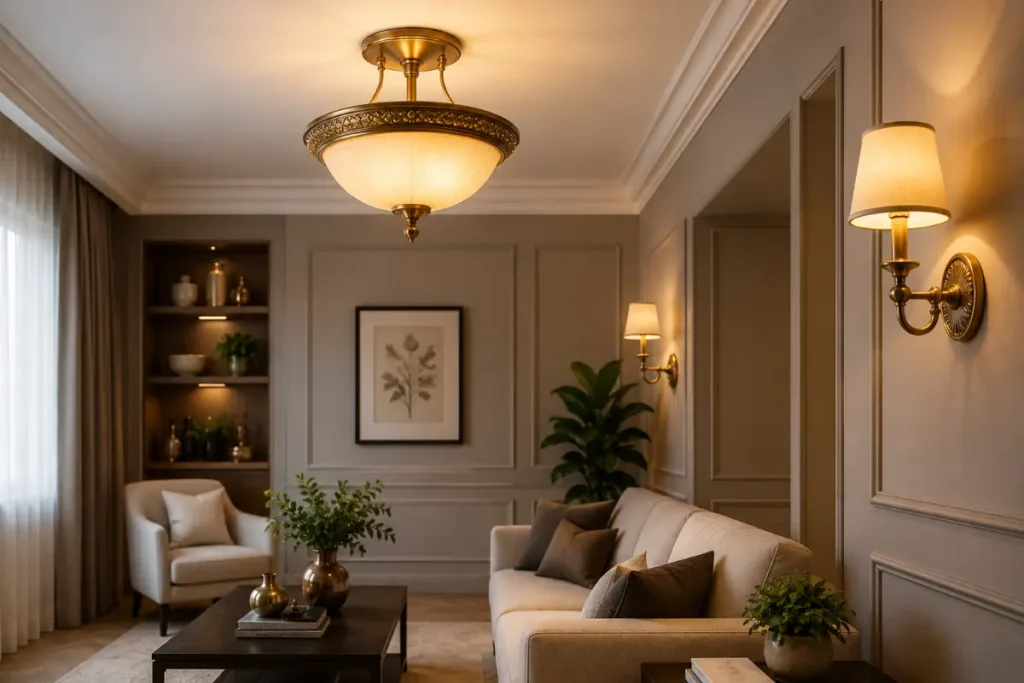
Your ceiling light should provide enough brightness for everyday activities while your wall lights add comfort exactly where you need it. The finish should complement your furniture flooring and wall colors instead of competing with them.
When guests walk into the room they may compliment the overall atmosphere before they even notice the fixtures themselves. That is usually a sign your lighting choices work together successfully.
FAQs
Are antique gold ceiling lights still popular?
Yes. Antique gold remains one of the most popular lighting finishes because it works with both classic and modern interiors. Its warm appearance adds character without feeling too bold or outdated.
Where should switched wall lights be installed?
Switched wall lights work well beside beds sofas reading chairs mirrors and hallway walls. Place them where you need extra light without relying on the main ceiling fixture.
Can I mix antique gold lighting with black fixtures?
Yes. Antique gold and matte black create a timeless combination. The warm gold softens the bold look of black while black adds contrast that makes the gold finish stand out.
Do antique gold ceiling lights and switched wall lights need to match exactly?
No. They should share a similar style or finish but they do not have to be identical. Matching proportions colors and design details usually creates a more natural and collected look than buying the exact same collection for every room.
Which bulb color works best with antique gold fixtures?
Warm white bulbs are the most popular choice because they complement the rich tones of antique gold. They also create a comfortable atmosphere in living rooms bedrooms and dining spaces.
Are switched wall lights easy to use?
Yes. They have a built in switch on the fixture so you can turn them on or off without reaching for the room’s main wall switch. This makes them especially useful beside beds and reading areas.
Can antique gold lighting work in modern homes?
Absolutely. Modern interiors often use antique gold to add warmth and contrast. Simple fixtures with clean lines fit beautifully into contemporary spaces while preventing the room from feeling too cold.
How do I keep antique gold light fixtures looking new?
Dust them regularly with a soft microfiber cloth and wipe them gently with a slightly damp cloth when needed. Avoid harsh cleaners or abrasive materials because they can damage the finish over time.
Conclusion
Choosing antique gold ceiling lights and switched wall lights is about more than buying attractive fixtures. It is about creating a home that feels comfortable functional and welcoming every day.
Antique gold brings warmth and timeless character while switched wall lights add convenience exactly where you need it. Together they create layered lighting that works just as well in a cozy bedroom as it does in a stylish living room or elegant dining area.
As you shop pay attention to fixture size finish quality brightness and placement instead of focusing only on appearance. Those details make a big difference in how your lighting performs after installation.
If you choose fixtures that suit your space and complement your home’s style your investment will continue to look beautiful for years. A thoughtful lighting plan is one of the easiest ways to make every room feel brighter more inviting and truly complete.

Dr. Elena Vance holds a Ph.D. in Linguistics from Columbia University and has spent over 15 years analyzing the evolution of the English language. A former university professor turned full-time writer and editor, Elena specializes in breaking down high-level grammatical concepts, punctuation nuances, and style guides (APA, Chicago, MLA) into clear, actionable advice. When she isn’t hunting down dangling modifiers, she can be found collecting vintage dictionaries and reading classic literature.