
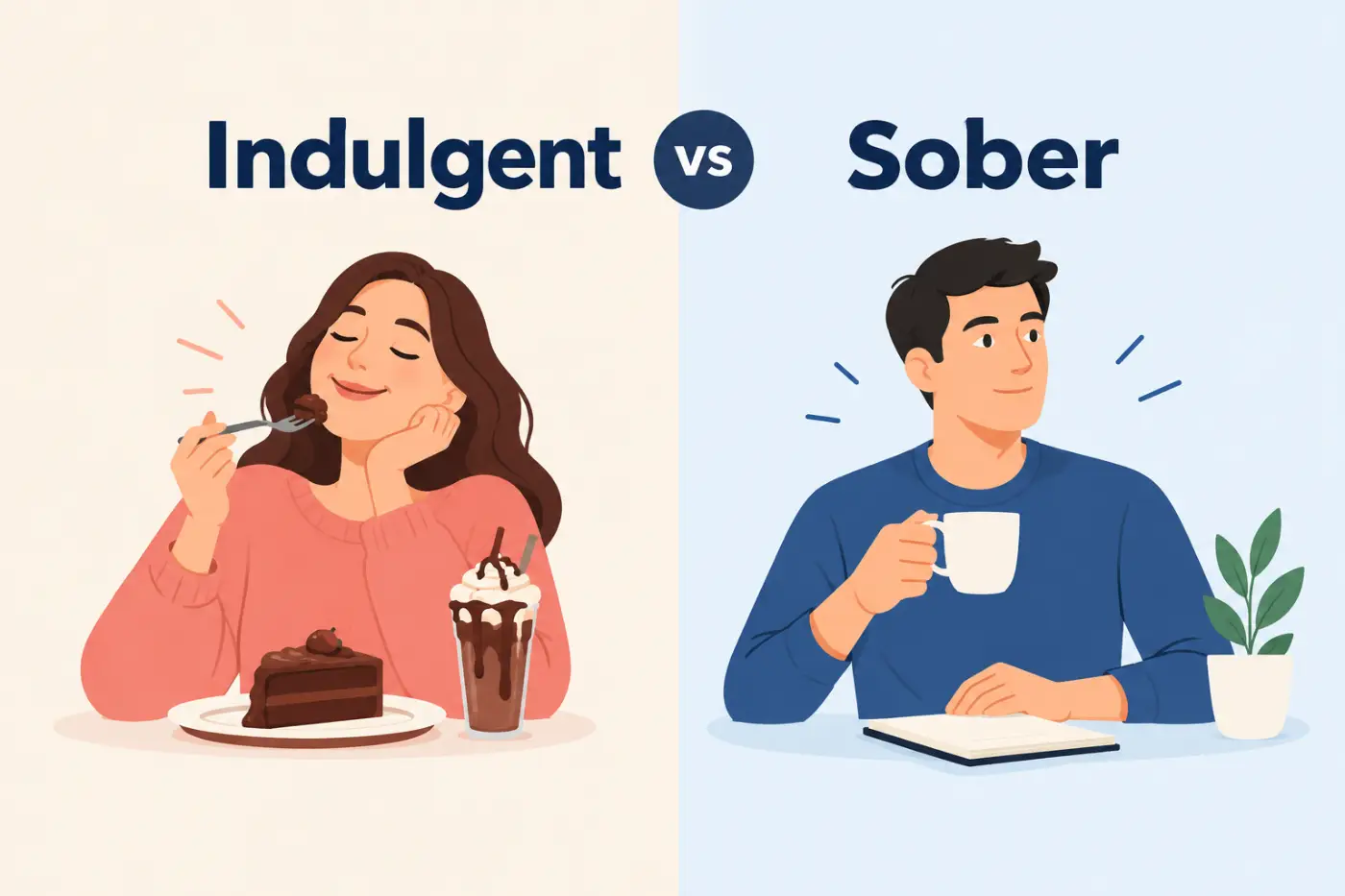
When you see indulgent vs sober you might wonder how two words with such different meanings can appear together. The answer is simple once you look at what each word describes.
Indulgent usually describes someone who allows too much pleasure or gives people more freedom than usual. Sober can mean serious and restrained. It can also mean not affected by alcohol or drugs.
These words can describe a person’s behavior, mood, lifestyle, or attitude. They can also appear in very different situations. This guide explains the main meanings, shows how to use each word naturally, and clears up some common points of confusion.
Quick Definition
Indulgent describes a person or action that allows extra pleasure, comfort, freedom, or enjoyment. It can also describe something rich or luxurious that gives you a lot of pleasure.
Sober commonly describes someone who is not drunk. It can also describe a serious, calm, restrained, or practical attitude.
Direct Answer
Indulgent suggests allowing or enjoying more pleasure than usual. Sober suggests restraint, seriousness, or freedom from alcohol or drugs. The two words describe very different ideas and aren’t interchangeable.
Comparison Table
| Word | Meaning | Example Sentence | When To Use It |
|---|---|---|---|
| Indulgent | Allowing extra freedom or pleasure. | Her parents were indulgent with their children. | Use it for generous or permissive behavior. |
| Sober | Serious, restrained, or not affected by alcohol. | He gave a sober response to the news. | Use it for serious behavior or a person who isn’t intoxicated. |

What Does Indulgent Mean
Indulgent usually describes someone who is willing to give extra freedom, attention, comfort, or pleasure. The word often suggests that a person allows something that might normally be limited.
For example, an indulgent parent might let a child stay up late, eat extra dessert, or skip a usual rule. The parent may be loving and generous, but the word can also suggest that the parent gives the child too much freedom.
You can also use indulgent for things that give you pleasure. An indulgent meal might contain rich food that you don’t eat every day. An indulgent afternoon might involve sleeping late, watching movies, and doing very little work.
The word doesn’t always carry a negative meaning. Context matters. Sometimes it simply suggests treating yourself or someone else generously.
Indulgent As A Personality Trait
When indulgent describes a person, it often points to a generous or permissive nature.
Consider this sentence.
- Her grandmother was indulgent and always gave the children an extra cookie.
The sentence suggests that the grandmother was willing to bend the usual rules. The tone could be warm and affectionate.
Now look at another example.
- His indulgent attitude made it hard for the children to follow rules.
Here the meaning is less positive. The speaker suggests that giving too much freedom created a problem.
So indulgent can praise someone’s generosity or criticize their lack of limits. The surrounding words usually make the meaning clear.
Indulgent As An Action
The word can also describe something you do for pleasure.
- I had an indulgent breakfast on Sunday.
- She took an indulgent afternoon off from work.
- They planned an indulgent weekend at a luxury hotel.
In these examples, the idea is comfort and pleasure. The activity may be something you normally limit or save for special occasions.
An indulgent breakfast might include pancakes, bacon, eggs, pastries, and other rich foods. An indulgent weekend might include expensive meals, spa treatments, or plenty of time to relax.
The word often carries the idea of giving yourself permission to enjoy something.
What Does Sober Mean
Sober has several important meanings. The most common meaning relates to alcohol or drugs. A sober person has not consumed alcohol or is not currently affected by alcohol.
For example:
- She stayed sober at the party.
- He has been sober for five years.
- I drove home because I was sober.
In these sentences, sober has a direct connection to alcohol use.
But that’s only one meaning. The word can also describe someone’s mood, tone, or way of thinking.
A sober person can be serious and calm. A sober assessment looks at facts without excitement or exaggeration. A sober mood is quiet and serious.
For example:
- The news put everyone in a sober mood.
- She gave a sober assessment of the situation.
- His speech had a sober tone.
Here the word has nothing to do with drinking. It describes seriousness and restraint.
Sober As The Opposite Of Drunk
This is the meaning people often learn first.
If someone is sober, they aren’t currently intoxicated. If someone is drunk, alcohol has affected their behavior, speech, judgment, or coordination.
For example:
- Mark was sober when he drove home.
- Lisa decided to remain sober during the celebration.
- The driver must be sober before getting behind the wheel.
In this sense, the word describes a physical and mental state.
It can also describe a person who chooses not to drink alcohol. For example, someone might say:
- I’ve been sober for two years.
That sentence can mean the person has stopped drinking and has maintained that choice for two years. The exact meaning depends on the speaker and context.
Sober As Serious Or Restrained
The second major meaning is more abstract.
When sober describes an idea, tone, or attitude, it often means serious, calm, realistic, or free from excitement.
For example:
- The report gave a sober view of the economy.
- We need a sober discussion about the problem.
- She took a sober look at her finances.
None of these sentences involves alcohol. Instead, sober means the person is thinking carefully and realistically.
This meaning often appears in news writing, formal speech, books, and serious conversations. It suggests that someone isn’t getting carried away by emotion or excitement.
Indulgent And Sober Describe Different Ideas
The easiest way to understand the difference is to focus on the central idea behind each word.
Indulgent is connected to pleasure, permission, comfort, or generosity. It often suggests that normal limits have been relaxed.
Sober is connected to restraint, seriousness, calm thinking, or freedom from intoxication.
For example, imagine someone planning a vacation.
An indulgent vacation might include expensive meals, a luxury hotel, long spa sessions, and plenty of free time.
A sober approach to vacation spending would focus on a realistic budget and avoid unnecessary costs.
The two words aren’t direct opposites in every situation. They simply point in different directions.
That distinction matters because people sometimes assume that every pair of contrasting words must have opposite meanings. English doesn’t work that way. Two words can appear in contrast because they describe different attitudes without being true opposites.
Examples Of Indulgent In Real Sentences
Understanding the word becomes easier when you see it in natural situations.
Indulgent Parenting
Parents can be indulgent when they give children more freedom or treats than usual.
- My aunt is very indulgent with her grandchildren.
- His indulgent parents rarely said no to him.
- She was indulgent about bedtime during the holidays.
These sentences focus on allowing behavior that might normally have limits.
Indulgent Food
Food can also be indulgent when it is rich, luxurious, or especially enjoyable.
- We ordered an indulgent chocolate dessert.
- Sunday brunch was an indulgent treat.
- She made an indulgent pasta dish with cream and cheese.
Here the word doesn’t mean careless or unhealthy by itself. It simply suggests something rich or pleasurable.
Indulgent Spending
People can also describe spending as indulgent when they buy things mainly for pleasure rather than necessity.
- Buying a new watch was an indulgent purchase.
- He treated himself to an indulgent weekend away.
- The dinner was expensive but wonderfully indulgent.
The word can suggest that the person knows the purchase isn’t necessary but chooses it anyway.
Indulgent Behavior
The word can describe general behavior too.
- Her indulgent attitude made everyone feel welcome.
- His coach was indulgent about small mistakes during practice.
- The manager was unusually indulgent with new employees.
In each case, the person allows more than they normally might.
Examples Of Sober In Real Sentences
The word sober also works in many everyday situations.
Sober And Alcohol
- She remained sober throughout the evening.
- He has chosen to live a sober lifestyle.
- The group made sure they had a sober driver.
These examples use the word in connection with alcohol.
Sober And Serious Thinking
- We need a sober discussion before making a decision.
- The committee took a sober look at the numbers.
- His sober judgment helped the team avoid a costly mistake.
Here the word means calm and realistic rather than intoxicated.
Sober And Serious Moods
- The room became sober after the announcement.
- She had a sober expression on her face.
- The ceremony had a quiet and sober tone.
These examples describe mood or appearance. They have nothing to do with alcohol.
Why Context Matters With Sober
The word sober can cause confusion because one word has several related meanings.
Imagine someone says:
- He is sober.
That could simply mean he isn’t drunk. But if someone says:
- He gave a sober response.
The meaning changes. Now the word describes a serious and thoughtful response.
Consider another example:
- The movie has a sober tone.
That doesn’t mean the characters aren’t drinking. It means the movie has a serious or restrained mood.
This is a good example of why context matters in English. A single word can carry several meanings while remaining easy to understand when you look at the sentence around it.
How Indulgent Differs From Permissive
Indulgent and permissive are close in meaning when they describe a person’s behavior. Both can suggest that someone allows more freedom than usual. Still, they aren’t exact matches.
Permissive focuses mainly on rules and limits. A permissive parent may allow a child to stay out late or make choices without much control.
Indulgent adds an idea of pleasure or generosity. An indulgent parent may give extra treats, overlook small mistakes, or spoil a child.
Compare these examples.
- Her parents are permissive about screen time.
- Her grandmother is indulgent and always brings her favorite dessert.
The first sentence focuses on a rule. The second focuses on special treatment and pleasure.
This small difference helps you choose the right word when you want to describe someone’s behavior clearly.
How Indulgent Differs From Self Indulgent
These words look almost identical but they don’t always carry the same tone.
Indulgent can describe how someone treats another person or themselves. It often sounds neutral or positive.
- She was indulgent with her young children.
- We had an indulgent meal after the wedding.
Self indulgent focuses on someone giving themselves too much pleasure or attention. It often has a critical tone.
- Spending all weekend playing video games felt self indulgent.
- His speech became self indulgent and focused too much on his own achievements.
The key difference is the target. Indulgent can describe generosity toward another person. Self indulgent points back toward the person doing the indulging.
How Sober Differs From Serious
Sober and serious overlap when they describe a mood or attitude. However, sober can add the idea of restraint and calm judgment.
Someone can be serious because they don’t want to joke around. Someone can be sober because they are carefully considering facts or dealing with something difficult.
For example:
- She gave me a serious answer.
- She gave me a sober assessment of the situation.
The first sentence simply tells you that she wasn’t joking. The second suggests a careful and realistic view.
You can also describe a person’s expression as serious without using sober.
- He had a serious expression during the meeting.
A sober expression usually creates a stronger sense of gravity or restraint.
How Sober Differs From Somber
This pair causes a lot of confusion because the words look and sound similar.
Sober can mean serious calm or not affected by alcohol.
Somber describes something dark serious sad or gloomy.
For example:
- The speaker gave a sober assessment of the crisis.
- The funeral had a somber atmosphere.
The first sentence focuses on a careful and serious assessment. The second focuses on sadness and gloom.
A person can also be sober without feeling sad.
- I stayed sober at the party because I was driving.
That sentence has nothing to do with a gloomy mood.
Remembering this distinction can save you from a common spelling and meaning mistake. If you mean serious and restrained you may need sober. If you mean dark or sad you may need somber.
How Sober Differs From Temperate
Temperate can describe someone who avoids excess. It often appears in discussions about food drink habits or behavior.
A temperate person tries to keep things moderate. A sober person may simply not drink alcohol or may approach a serious matter calmly.
For example:
- He follows a temperate diet and rarely eats rich food.
- She took a sober approach to the problem.
The first sentence focuses on moderation. The second focuses on a serious and careful attitude.
This distinction becomes useful when discussing lifestyle choices. Temperate emphasizes balance. Sober can emphasize abstinence or seriousness depending on context.
When Indulgent Has A Positive Meaning
The word indulgent isn’t automatically negative. In many sentences it expresses warmth generosity and enjoyment.
Consider this example:
- Her grandfather was indulgent with the children.
The sentence may suggest that he spoiled them a little because he loved spending time with them. There is no strong criticism.
You can also use the word to describe something enjoyable.
- We had an indulgent dinner after finishing the project.
Here indulgent suggests that the meal was richer or more luxurious than usual. The writer may be saying that the meal was a special treat.
Another example is:
- She spent an indulgent afternoon reading by the pool.
The phrase suggests that she allowed herself plenty of leisure. It doesn’t necessarily mean she did anything wrong.
Context controls the tone.
When Indulgent Has A Negative Meaning
The same word can become critical when it suggests too much freedom or pleasure.
For example:
- His indulgent parenting left the children without clear boundaries.
Now the word points to a problem. The parent may have allowed too much and failed to set useful limits.
Another example is:
- Her indulgent spending created serious debt.
Here the word suggests that she spent too much on things she wanted rather than needed.
You can often tell the tone by looking at what follows the word. If the result is positive the word may sound warm or approving. If the result causes problems it may sound critical.
When Sober Has A Positive Meaning
Sober often carries a positive sense when it describes careful judgment.
For example:
- She made a sober decision after reviewing all the facts.
The sentence suggests that she didn’t act on impulse. She considered the situation carefully.
You might also say:
- His sober advice helped us avoid a bad decision.
Here sober suggests wisdom calmness and restraint.
This meaning is especially useful when you want to contrast careful thinking with excitement or emotional reactions.
When Sober Describes A Difficult Mood
The word can also describe a serious mood after something troubling happens.
For example:
- The announcement left the office in a sober mood.
The sentence doesn’t necessarily mean everyone was sad. It suggests that people became quiet serious and thoughtful.
You could also write:
- The team held a sober meeting after the accident.
The word tells readers that the meeting had a serious tone. People were likely focused on the situation rather than casual conversation.
This use appears often in news reports essays and formal writing because it communicates seriousness without using overly emotional language.
Indulgent Vs Sober In Different Contexts
The difference becomes clearer when you place both words into everyday situations.
Food And Eating
An indulgent meal is rich satisfying or more special than your usual food.
- We enjoyed an indulgent dinner with steak and chocolate cake.
A sober meal isn’t a common phrase in everyday English. If someone uses it this way they may mean a meal without alcohol but alcohol free or without alcohol would usually be clearer.
This is an important point. You shouldn’t force a word into a sentence just because it seems like an opposite.
Parenting
An indulgent parent tends to allow extra freedom or give extra treats.
- His indulgent mother let him choose dessert before dinner.
Sober doesn’t normally describe parenting in this sense. You might use it to describe a parent’s serious or realistic approach to a difficult issue.
- She took a sober approach to her son’s financial problems.
Spending
An indulgent purchase is something bought mainly for pleasure or luxury.
- The designer bag was an indulgent purchase.
Sober spending suggests careful and restrained spending.
- After losing his job he took a sober approach to his finances.
This creates a useful contrast between treating yourself and exercising restraint.
Lifestyle
An indulgent lifestyle may include frequent luxury meals expensive trips and plenty of comfort.
A sober lifestyle can mean living without alcohol or drugs. It can also suggest a simple restrained way of living depending on context.
For example:
- She enjoys an indulgent lifestyle filled with travel and fine dining.
- He chose a sober lifestyle after deciding to stop drinking.
The meanings are clear because the surrounding details tell the reader what kind of behavior you’re describing.
Common Mistakes With These Words
One of the biggest mistakes is treating indulgent and sober as direct opposites in every sentence. They aren’t.
An indulgent person may enjoy luxury or give others extra freedom. A sober person may avoid alcohol or approach serious matters calmly. Those ideas can contrast in some situations but they belong to different meaning groups.
Another mistake is assuming that sober always refers to alcohol. It doesn’t. The word has a long established meaning connected to seriousness and restraint.
A third mistake is assuming that indulgent always means selfish or excessive. It doesn’t. The word can describe loving generosity or a pleasant treat.
Context gives both words their exact shade of meaning.
A Simple Way To Choose The Right Word
Ask yourself what idea you want to express.
If you mean extra pleasure special treatment or too much freedom then indulgent may fit.
If you mean not drunk serious calm or restrained then sober may fit.
For example:
- She was indulgent with her grandchildren.
- She was sober during the celebration.
- He bought an indulgent dessert.
- He gave a sober response to the news.
Each word works because it matches the meaning of the sentence.
How To Use Indulgent Correctly
The best way to use indulgent is to connect it with the idea of giving extra pleasure freedom or attention. It often describes something that goes beyond what is necessary or usual.
For example you can call a meal indulgent because it is rich and special. You can call a parent indulgent because they allow their child extra freedom. You can also describe a person as indulgent when they are generous with treats or forgiveness.
The word works best when the sentence gives readers a clear reason for the extra pleasure or freedom.
Indulgent With People
When indulgent describes a person it often tells us how that person treats someone else.
- Her mother was indulgent with her youngest child.
- The teacher was indulgent when the students made small mistakes.
- My uncle is indulgent with his nieces and nephews.
These sentences suggest patience generosity or a willingness to overlook small problems.
The word can become critical if the behavior goes too far.
- The coach was too indulgent with players who ignored the rules.
Here the writer isn’t simply praising the coach. The sentence suggests that too much tolerance created a problem.
Indulgent With Things
The word can also describe experiences or objects that provide a lot of pleasure.
- We enjoyed an indulgent dessert after dinner.
- She booked an indulgent weekend at a luxury resort.
- He treated himself to an indulgent breakfast.
These examples show a common use of the word. The person allows themselves something special instead of sticking to their normal routine.
How To Use Sober Correctly
The word sober needs a little more care because it has several meanings. Start by checking the context.
If the sentence concerns alcohol or drugs the word usually refers to a person who isn’t intoxicated. If the sentence concerns an opinion mood or attitude it often means serious calm or restrained.
For example:
- She stayed sober at the wedding.
- He offered a sober opinion about the plan.
The first sentence relates to alcohol. The second describes a thoughtful opinion.
Sober As A Physical State
This is the most direct meaning.
- I was sober when I drove home.
- He has remained sober for several years.
- She decided to stay sober at the party.
The word can also appear when talking about recovery from alcohol addiction. In that setting a person may describe themselves as sober to explain that they no longer drink.
For example:
- He has been sober since 2021.
The exact meaning can depend on the person’s own use of the term. Some people use it simply to mean they don’t drink. Others use it as part of a recovery journey.
Sober As A Mental Attitude
A second meaning relates to careful thinking.
- We need a sober discussion before making a final choice.
- She gave a sober evaluation of the risks.
- The report offers a sober view of the situation.
Here the word suggests a lack of excitement or exaggeration. The person is looking at the facts carefully.
This use can be especially helpful when describing someone who avoids emotional reactions and focuses on what is realistic.
Sober As A Mood
You can also use sober to describe an atmosphere or emotional tone.
- The room fell silent and sober after the announcement.
- The ceremony had a sober atmosphere.
- His expression became sober when he heard the news.
This meaning is close to serious or solemn. It doesn’t automatically mean sad. A sober mood can simply be quiet and serious.
Indulgent Vs Sober In Writing
When you are writing an article essay email or story the choice depends on the exact idea you want to communicate.
Use indulgent when the focus is on extra pleasure generosity or freedom.
Use sober when the focus is on seriousness restraint or a lack of intoxication.
Consider these two sentences.
- She took an indulgent approach to the holiday and spent freely.
- She took a sober approach to the holiday and followed a strict budget.
The first sentence emphasizes enjoyment. The second emphasizes restraint.
Now consider a different pair.
- His indulgent attitude allowed his children to ignore small rules.
- His sober attitude helped his children understand the seriousness of the situation.
The contrast is easy to see. One person gives more freedom. The other takes a serious approach.
Are Indulgent And Sober Opposites
Not in the strict dictionary sense.
People can place the words side by side when they want to contrast pleasure with restraint. However the words don’t form a standard opposite pair like hot and cold or early and late.
The meaning of indulgent changes based on what it describes. It can refer to food behavior parenting spending or personal pleasure.
The meaning of sober also changes based on context. It can refer to alcohol use mood tone judgment or a serious attitude.
So a sentence can contrast the two ideas without claiming that one word is the direct opposite of the other.
For example:
- Her indulgent spending contrasted with her husband’s sober approach to money.
This sentence creates a clear contrast. One person spends freely on pleasure. The other takes a careful approach to finances.
Related Words For Indulgent
Knowing related words can help you understand the range of meaning.
Generous
Generous means willing to give more than expected. It doesn’t always involve pleasure or luxury.
- She was generous with her time.
Someone can be generous without being indulgent.
Permissive
Permissive means allowing a lot of freedom and few restrictions.
- His parents were very permissive.
This word focuses more strongly on rules and limits.
Lenient
Lenient means not strict when dealing with mistakes or rule breaking.
- The teacher was lenient with late assignments.
A lenient person may forgive a mistake. An indulgent person may also give extra comfort or pleasure.
Lavish
Lavish means giving or using a lot of something.
- They held a lavish wedding.
This word often describes spending or abundance. It doesn’t usually describe someone’s attitude toward rules.
Excessive
Excessive means more than is reasonable or necessary.
- His excessive spending caused problems.
This word usually carries a negative meaning. Indulgent can be positive neutral or negative depending on the context.
Related Words For Sober
The word sober also has several useful relatives.
Serious
Serious describes something that matters or isn’t playful.
- We need to have a serious conversation.
It overlaps with one meaning of sober but doesn’t refer to alcohol.
Solemn
Solemn describes something serious formal or deeply emotional.
- The ceremony was solemn.
A solemn event often has a formal or respectful tone.
Restrained
Restrained describes someone who keeps emotions actions or spending under control.
- She gave a restrained response to the criticism.
This can overlap with the serious side of sober.
Temperate
Temperate suggests moderation and self control.
- He follows a temperate lifestyle.
This word is useful when talking about avoiding excess.
Clearheaded
Clearheaded means able to think clearly and make sensible decisions.
- She stayed clearheaded during the crisis.
This can describe a quality associated with being sober but doesn’t carry all of the same meanings.
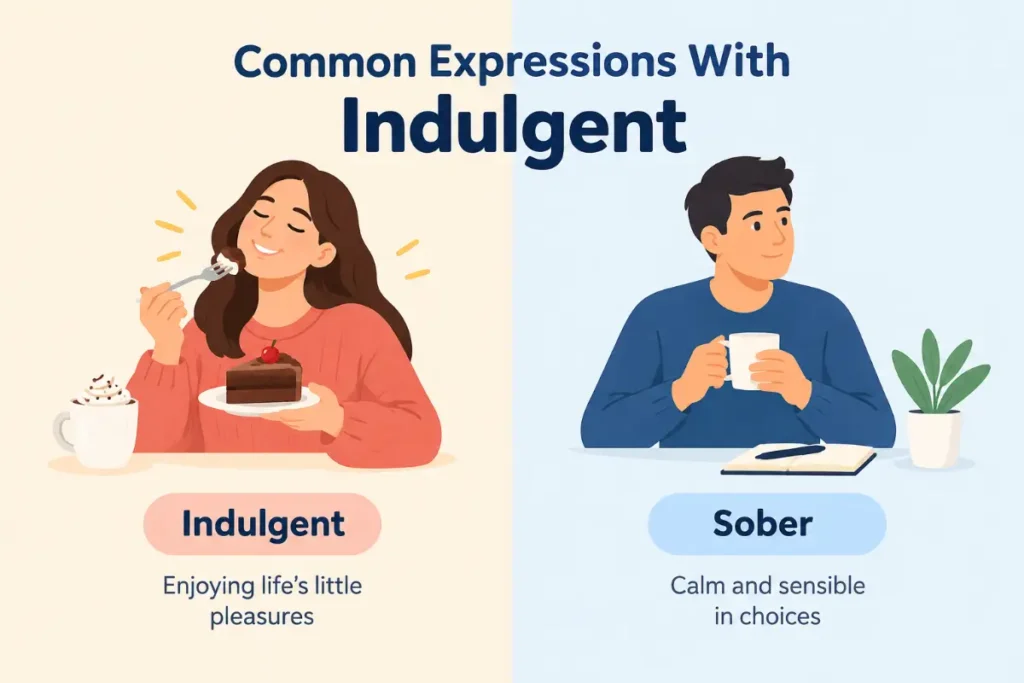
Common Expressions With Indulgent
Learning common word combinations can help you sound more natural.
Indulgent Meal
An indulgent meal is rich special or luxurious.
- We planned an indulgent meal for our anniversary.
Indulgent Treat
An indulgent treat is something enjoyable that you don’t have every day.
- The ice cream sundae was an indulgent treat.
Indulgent Parent
An indulgent parent gives a child plenty of freedom treats or special attention.
- Her indulgent father rarely refused her requests.
Indulgent Lifestyle
An indulgent lifestyle includes plenty of comfort luxury or pleasure.
- The novel describes the actor’s indulgent lifestyle.
Indulgent Purchase
An indulgent purchase is something bought mainly because it feels good to own or enjoy rather than because it is necessary.
- The new watch was an indulgent purchase.
Common Expressions With Sober
The most useful combinations of sober depend on which meaning you want.
Sober Driver
A sober driver is someone who hasn’t consumed enough alcohol or drugs to be impaired.
- We chose a sober driver before the party started.
Sober Living
Sober living can refer to a lifestyle without alcohol or drugs. It can also refer to structured homes that support people who are recovering from substance use.
- He decided that sober living was the right choice for him.
Sober Assessment
A sober assessment is a serious and realistic evaluation.
- The report provides a sober assessment of the costs.
Sober Judgment
Sober judgment means careful and sensible thinking.
- She used sober judgment before signing the agreement.
Sober Mood
A sober mood is serious quiet or restrained.
- The news left the entire office in a sober mood.
A Quick Memory Trick
You don’t need a complicated trick to remember the difference.
Think of indulgent as extra pleasure or extra permission.
Think of sober as clear thinking or serious restraint.
Picture two people at a restaurant.
One orders a huge dessert even though they’re already full. That choice is indulgent.
The other person skips alcohol because they’re driving home. That person is sober.
The examples are simple but they give each word a clear mental picture. A strong mental picture often makes vocabulary easier to remember than a dictionary definition alone.
Indulgent Vs Sober In A Sentence
If you’re still unsure which word fits your sentence consider the purpose of the description.
Ask what you want the reader to notice.
If you want the reader to notice pleasure generosity luxury or relaxed limits choose indulgent.
If you want the reader to notice seriousness restraint clear judgment or freedom from alcohol choose sober.
For example:
- The restaurant offered an indulgent dessert menu.
- The manager gave a sober response to the complaint.
The first sentence highlights pleasure. The second highlights seriousness.
This simple test works in most everyday situations.
FAQs
What is the difference between indulgent and sober?
Indulgent usually describes extra pleasure generosity or freedom. Sober can describe someone who isn’t affected by alcohol or drugs. It can also describe a serious calm and restrained attitude.
Is indulgent the opposite of sober?
Not exactly. The words can contrast ideas such as pleasure and restraint but they aren’t direct opposites in every situation. Their meanings depend on the context of the sentence.
Can indulgent describe a person?
Yes. An indulgent person is often generous permissive or willing to give extra comfort or freedom. For example a grandparent might be indulgent with a child by allowing an extra dessert or overlooking a small rule.
Can sober mean serious?
Yes. Sober can mean serious calm and thoughtful when it describes a person’s mood tone judgment or approach. For example a sober discussion focuses on a serious matter without excitement or exaggeration.
Does sober always mean not drinking alcohol?
No. That’s one of its main meanings but it isn’t the only one. You can also use sober to describe serious thinking a restrained attitude or a quiet and serious mood.
Does indulgent always have a negative meaning?
No. The word can be positive neutral or negative depending on the context. An indulgent dessert can sound appealing while an indulgent parent may be criticized for allowing too much freedom.
What does an indulgent lifestyle mean?
An indulgent lifestyle usually involves a lot of comfort pleasure luxury or spending. It might include expensive meals frequent travel or other experiences that feel special rather than necessary.
What does a sober lifestyle mean?
A sober lifestyle commonly means living without alcohol or other intoxicating substances. The phrase can also suggest a restrained way of living depending on the context.
Conclusion
The easiest way to remember indulgent vs sober is to focus on the main idea behind each word. Indulgent points toward pleasure generosity luxury or relaxed limits. Sober points toward restraint seriousness clear judgment or freedom from intoxication.
Think about an expensive dessert. Calling it indulgent suggests that it’s rich special and enjoyable. Now think about someone carefully reviewing their finances before making a purchase. Calling their approach sober suggests that they’re being realistic and restrained.
The words can create a useful contrast in a sentence but they don’t always work as opposites. A person can be indulgent about food and sober about alcohol. Someone can also be sober and still enjoy an indulgent meal. The meaning depends on the part of life you’re describing.
When you’re writing choose the word that matches your exact idea. Use indulgent when you want to show extra pleasure generosity or freedom. Use sober when you mean serious calm restrained or free from intoxication.
A quick mental check can help. Ask yourself if the sentence focuses on enjoying more or controlling more. Extra pleasure points toward indulgent. Serious restraint points toward sober. If you’re talking about alcohol use then sober usually means the person isn’t intoxicated.

Dr. Elena Vance holds a Ph.D. in Linguistics from Columbia University and has spent over 15 years analyzing the evolution of the English language. A former university professor turned full-time writer and editor, Elena specializes in breaking down high-level grammatical concepts, punctuation nuances, and style guides (APA, Chicago, MLA) into clear, actionable advice. When she isn’t hunting down dangling modifiers, she can be found collecting vintage dictionaries and reading classic literature.