

Shoyu vs tonkotsu can be confusing when you’re looking at a Japanese ramen menu. Both are popular ramen styles. Both have a deep savory taste. However, they differ in one important way. Shoyu refers to soy sauce seasoning while tonkotsu refers to a rich broth made from pork bones.
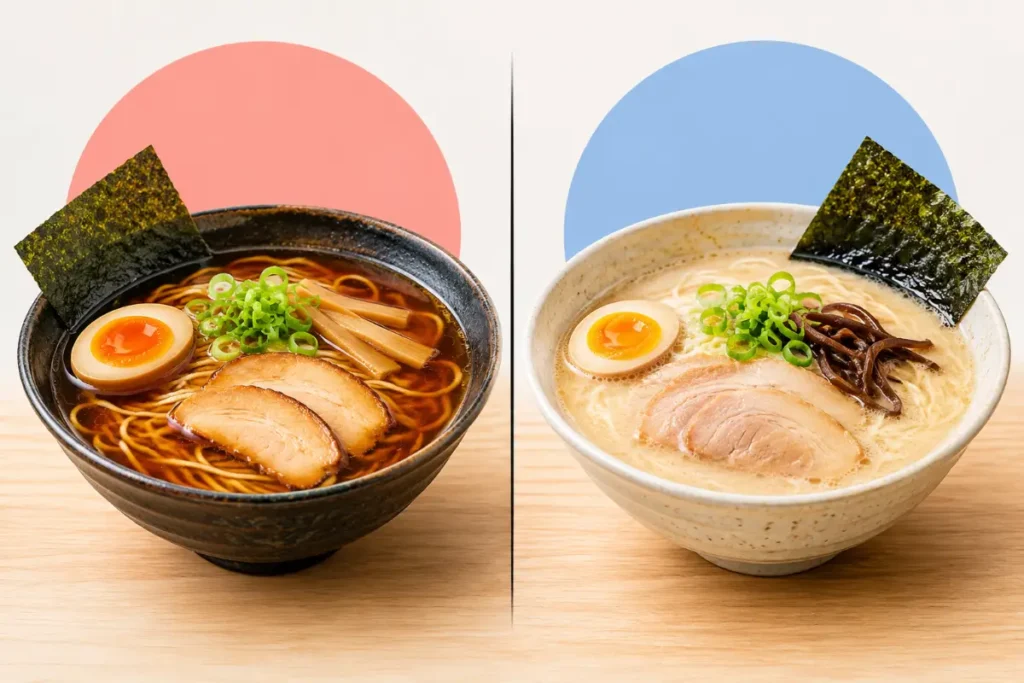
This difference affects the flavor color and texture of your ramen. A bowl of shoyu ramen often has a clear brown broth with a savory and slightly salty taste. Tonkotsu ramen usually has a thick cloudy broth with a creamy feel and a deep pork flavor.
But there’s something many ramen beginners don’t know. These two styles aren’t complete opposites. You can actually enjoy them together in one bowl. A restaurant can make tonkotsu broth and season it with soy sauce to create tonkotsu shoyu ramen.
So which one should you order? That depends on the taste and texture you enjoy. If you like a lighter soup with a strong soy sauce flavor then shoyu may be a good choice. If you prefer a rich and creamy soup with a full pork flavor then tonkotsu might suit you better.
This guide explains how each style is made and what makes it different. You’ll also learn about their ingredients their taste their appearance and the best way to choose between them. By the end you’ll understand ramen menus much better and know what to expect from your next bowl.
Quick Definition
Shoyu ramen is Japanese noodle soup seasoned with soy sauce. It often has a clear brown broth made from chicken pork seafood or a mix of stocks.
Tonkotsu ramen is noodle soup made with a rich pork bone broth. The bones simmer for hours and create a cloudy white soup with a thick and creamy texture.
Direct Answer
Shoyu describes the soy sauce seasoning used in ramen while tonkotsu describes a broth made from pork bones. Shoyu ramen usually tastes savory and balanced while tonkotsu ramen tastes richer and creamier. A ramen bowl can use both styles at the same time.
Shoyu vs Tonkotsu at a Glance
| Feature | Shoyu Ramen | Tonkotsu Ramen |
|---|---|---|
| Main meaning | Soy sauce seasoning | Pork bone broth |
| Main ingredient | Soy sauce | Pork bones |
| Broth color | Usually clear brown or amber | Usually cloudy white or cream |
| Texture | Often light and smooth | Thick and creamy |
| Main flavor | Savory salty and slightly sweet | Rich meaty and deeply savory |
| Cooking method | Often uses a prepared stock with soy sauce seasoning | Pork bones are boiled for hours |
| Common stock | Chicken pork seafood or vegetables | Mainly pork bones |
| Typical noodles | Straight or wavy noodles | Often thin straight noodles |
| Common toppings | Pork slices egg bamboo shoots and green onions | Pork slices egg mushrooms and green onions |
| Best for | People who enjoy balanced soy sauce flavor | People who enjoy rich pork broth |
Understanding Shoyu Ramen
Shoyu is the Japanese word for soy sauce. In ramen it describes a seasoning style that uses soy sauce as the main flavoring ingredient.
This style is one of the best known types of Japanese ramen. It has a long history and is especially linked with Tokyo style ramen. Its appeal comes from a simple idea. A good stock provides the base while soy sauce adds depth and character.
The result is a bowl that tastes savory without always feeling heavy. You can enjoy the flavor of the broth and still notice the noodles and toppings.
What Makes Shoyu Ramen Different
The main feature of shoyu ramen is its soy sauce seasoning. Ramen cooks often use a concentrated seasoning mixture called tare. They add this mixture to the bowl before pouring in the hot stock.
Tare gives the soup its main flavor. It can include soy sauce along with other ingredients such as dried fish seaweed sake mirin or other seasonings. Each restaurant has its own recipe.
The stock itself doesn’t have to come from soy sauce. It may use chicken bones pork bones seafood vegetables or a combination of these ingredients.
This is an important detail because many people assume shoyu ramen always uses a chicken broth. Chicken stock is common but it isn’t the only option.
For example a restaurant might prepare a clear chicken stock and season it with soy sauce. Another shop might use pork and dried fish stock. Both can serve shoyu ramen.
The seasoning gives these bowls a shared identity even though their stocks differ.
How Shoyu Ramen Is Made
Making shoyu ramen involves preparing the stock and seasoning separately. This gives the cook more control over the final flavor.
First the cook prepares a stock. Chicken bones are a common choice. Some recipes also use pork bones dried fish kelp or vegetables. The ingredients release flavor into the water as they simmer.
Many traditional shoyu recipes use gentle cooking to keep the stock clear. The cook removes unwanted foam and keeps the heat under control. This creates a clean soup rather than a thick cloudy one.
Next the cook prepares the soy sauce tare. This concentrated mixture brings saltiness and depth to the bowl. Some cooks add dried seafood or other ingredients to build a more complex taste.
When it’s time to serve the cook places the tare in a bowl. Hot stock goes in next. The cooked noodles follow. Finally the cook adds toppings such as sliced pork green onions and bamboo shoots.
The exact recipe changes from one ramen shop to another. That’s why two bowls of shoyu ramen can look similar but taste quite different.
What Does Shoyu Ramen Taste Like
Shoyu ramen has a savory taste with a clear soy sauce character. It can also have mild sweetness and a gentle salty edge.
The broth often feels lighter than a traditional pork bone soup. However light doesn’t mean bland. A well made bowl can have plenty of depth.
Think of the difference between a clear homemade chicken soup and a rich cream based soup. Both can have strong flavor but they feel different in your mouth. Shoyu ramen often sits closer to the first example.
Some bowls have a sharper soy sauce taste. Others are mild and balanced. The stock and tare recipe decide the final result.
You may notice hints of chicken seafood or vegetables behind the soy sauce. These flavors give the soup more depth and keep it from tasting like plain soy sauce mixed with water.
A good bowl should taste balanced. The salt shouldn’t overpower the stock and the soy sauce shouldn’t hide every other flavor.
What Does Shoyu Broth Look Like
Shoyu broth is usually clear and brown or amber in color. Its shade can range from light golden brown to a deeper reddish brown.
The color comes mainly from the soy sauce. A darker broth doesn’t always mean a stronger or saltier flavor. Different soy sauces and stock recipes can produce different shades.
You can often see the noodles and other ingredients through the soup. This clear appearance is one of the easiest ways to recognize a traditional shoyu bowl.
Still don’t judge every bowl by its color alone. Some restaurants add oils or other ingredients that make the soup look darker or slightly cloudy.
Common Ingredients in Shoyu Ramen
Shoyu ramen uses several ingredients to create its familiar taste. Each one plays a different role.
- Soy sauce. This is the main seasoning. It adds saltiness color and a deep savory taste.
- Chicken stock. Many recipes use chicken stock as the soup base. It provides a smooth savory flavor that works well with soy sauce.
- Pork stock. Some restaurants use pork stock or mix it with chicken stock. This can make the soup fuller and richer.
- Seafood ingredients. Dried fish and kelp can add a deeper taste. They also bring natural umami which is the savory flavor found in foods such as mushrooms and aged cheese.
- Ramen noodles. These are wheat noodles made with an alkaline ingredient called kansui. It gives them their familiar springy texture.
- Chashu pork. This is a common ramen topping made from seasoned pork. It adds a meaty flavor to the bowl.
- Green onions. These bring a fresh taste that balances the savory soup.
- Menma. These are seasoned bamboo shoots. They add a pleasant crunch.
- Soft boiled egg. A seasoned egg adds a creamy center and more flavor.
Not every restaurant uses all these ingredients. Some shops keep their bowls simple while others offer a long list of toppings.
Is Shoyu Ramen Always Light
No. Shoyu ramen often has a lighter feel than tonkotsu but this isn’t a fixed rule.
The final texture depends on the stock fat and cooking method. A shoyu bowl made with pork stock and plenty of aromatic oil can feel rich. A clear chicken based bowl may feel much lighter.
The soy sauce seasoning can also vary. Some restaurants use a strong salty tare while others create a softer and slightly sweet flavor.
So don’t assume every shoyu bowl is low in fat or mild in taste. Ask the restaurant about its stock if you want a lighter meal.
Where Shoyu Ramen Comes From
Shoyu ramen is strongly connected with Tokyo and the development of classic Japanese ramen. Soy sauce has been a common part of Japanese cooking for centuries. It became a natural choice for seasoning noodle soup.
Tokyo style shoyu ramen often uses a clear chicken based stock with soy sauce seasoning. Some versions include seafood ingredients that add another layer of flavor.
Over time ramen shops developed their own recipes. Regional styles grew from local ingredients and cooking methods.
Today you can find shoyu ramen throughout Japan and in ramen shops across the United States. Some restaurants follow traditional recipes while others add their own twist.
The basic idea remains the same. Soy sauce provides the main seasoning and the stock supports it.
Understanding Tonkotsu Ramen
Tonkotsu is made from two Japanese words. Ton means pork and kotsu means bone. Together they describe pork bones which are the main ingredient in this ramen broth.
Unlike shoyu ramen which gets its name from its seasoning tonkotsu gets its name from the soup itself. Cooks boil pork bones for many hours to create a rich and cloudy broth.
The result looks very different from a clear shoyu soup. Tonkotsu broth is usually white or pale cream. It has a thick mouthfeel and a deep savory taste.
This style is especially famous in Fukuoka and the wider Kyushu region of Japan. Hakata ramen is one of its best known forms.
What Makes Tonkotsu Ramen Different
The pork bone broth gives tonkotsu its identity. Cooks use pork bones such as leg bones and other parts that contain marrow connective tissue and fat.
The bones release flavor as they cook. Long cooking at high heat helps fat and other components mix into the liquid. This process is called emulsification. In simple terms it means that tiny drops of fat spread through the soup instead of sitting in a separate layer.
That mixture gives tonkotsu broth its cloudy appearance and creamy texture.
The broth can taste rich and meaty without needing cream or milk. Its creamy look comes from the cooking process and the ingredients in the bones.
Different ramen shops use different bones and cooking methods. Some make a very thick broth while others serve a smoother and lighter version.
How Tonkotsu Ramen Is Made
Tonkotsu takes time and careful preparation. It isn’t usually a quick soup that a cook can prepare in a few minutes.
First the cook selects pork bones. The bones may be cleaned or blanched before the main cooking process. This helps remove blood and other unwanted material.
Next the bones go into a large pot of water. The cook boils them for several hours. Some restaurants cook their broth for most of the day.
During this process the bones release fat collagen and other flavorful compounds. The steady high heat helps create the cloudy soup that makes tonkotsu famous.
The cook may add ingredients such as garlic ginger onions or other vegetables. These ingredients can improve the aroma and balance the pork flavor.
After the broth reaches the desired texture the cook strains it. This removes the larger bone pieces and other solids.
The restaurant then seasons the soup. Many shops use a salt or soy sauce based tare. This step matters because pork bone broth alone doesn’t provide the full balanced flavor of a finished ramen bowl.
Finally the cook adds noodles and toppings. Thin noodles are common in Hakata style ramen because they work well with the rich soup.
The process takes patience. A good tonkotsu broth needs time to develop its deep flavor and smooth texture.
What Does Tonkotsu Ramen Taste Like
Tonkotsu ramen has a rich savory pork flavor. Its broth often feels creamy and full in your mouth.
The taste can be deep and slightly sweet. Some versions have a strong pork aroma while others are more delicate. Garlic sesame oil and other toppings can change the flavor even more.
The broth coats the noodles and gives each bite a full taste. This is one reason many people enjoy tonkotsu on a cold day or when they want a filling meal.
However not every tonkotsu bowl tastes the same. Some restaurants make a thick soup with a strong pork flavor. Others prepare a smoother broth that feels less heavy.
The seasoning also plays a role. A salt based tare can let the pork flavor stand out. A soy sauce tare can add more saltiness and depth.
Why Is Tonkotsu Broth White
The cloudy white color comes from the way cooks prepare the pork bones.
When pork bones boil at high heat for a long time fat and other compounds mix into the water. This creates a cloudy mixture rather than a clear liquid.
The process is known as emulsification. It helps create the smooth and creamy appearance that people often associate with tonkotsu ramen.
The broth doesn’t need dairy to look white. Milk and cream aren’t what give traditional tonkotsu its signature appearance.
The exact color can vary. Some bowls look bright white while others have a pale beige or ivory shade. The ingredients and cooking method affect the final result.
Common Ingredients in Tonkotsu Ramen
Tonkotsu ramen has a rich base but the other ingredients help complete the bowl.
- Pork bones. These create the main broth and give it its deep pork flavor.
- Water. The bones simmer in water for several hours to release their flavor and fat.
- Aromatic vegetables. Garlic ginger and onions may help improve the aroma and balance the broth.
- Tare. This is the concentrated seasoning added to the bowl. It may use salt soy sauce or other ingredients.
- Aromatic oil. Some shops add garlic oil or other flavored oils. These give the soup another layer of taste.
- Thin ramen noodles. Hakata style tonkotsu often uses thin straight noodles. They cook quickly and pair well with the rich broth.
- Chashu pork. Thin slices of seasoned pork are a common topping.
- Wood ear mushrooms. These mushrooms add a light crunch and a different texture.
- Green onions. Their fresh flavor helps balance the richness.
- Soft boiled egg. The creamy yolk adds more depth and makes the meal feel complete.
Restaurants can add other toppings based on their own recipes. You may also find sesame seeds pickled ginger or spicy seasonings.
Is Tonkotsu Ramen Heavy
Tonkotsu often feels heavier than a clear shoyu bowl. Its thick texture and rich pork flavor make it a filling meal.
However the word heavy can mean different things. Some people mean the soup feels thick. Others mean it contains more fat or makes them feel full.
A creamy texture doesn’t tell you the exact amount of fat or calories in the bowl. The recipe and serving size matter. Toppings such as extra pork and flavored oil can also increase the meal’s richness.
If you want a lighter experience you can ask for a smaller portion or choose a restaurant that makes a thinner tonkotsu broth. You can also leave some soup in the bowl instead of drinking all of it.
Where Tonkotsu Ramen Comes From
Tonkotsu ramen is closely linked with Fukuoka in southern Japan. It became especially popular in the Kyushu region.
Hakata ramen is a famous regional style that uses tonkotsu broth. It often comes with thin straight noodles and simple toppings.
The style became popular because its rich soup and quick cooking noodles worked well together. Many shops also offer extra noodles called kaedama. Diners can order another serving of noodles after finishing the first portion.
Today tonkotsu ramen is popular far beyond Japan. You can find it in restaurants throughout the United States and in many other countries.
The Main Differences Between Shoyu and Tonkotsu
Now that you understand both styles you can see why they don’t taste or look the same. Their main difference comes from the ingredients and cooking methods.
Shoyu gets its character from soy sauce seasoning. Tonkotsu gets its character from pork bone broth. This affects almost everything about the finished bowl.
Let’s compare the details that matter most when you’re choosing ramen.
1. Ingredients
The first difference is the main ingredient behind each style.
Shoyu ramen uses soy sauce as its main seasoning. Its stock may come from chicken pork seafood or vegetables. The restaurant chooses the stock based on the flavor it wants to create.
Tonkotsu ramen uses pork bones to make its main broth. The bones cook for hours until the soup develops its familiar rich texture. The cook then adds seasoning to balance the pork flavor.
This means the two styles don’t use completely separate ingredient lists. A tonkotsu bowl can contain soy sauce as a seasoning. A shoyu bowl can also use pork stock.
The main difference is the role each ingredient plays.
2. Taste and Flavor
Shoyu ramen has a savory soy sauce taste. It may have salty sweet and slightly smoky notes depending on the recipe. The stock adds another layer of flavor without always making the soup feel heavy.
Tonkotsu has a stronger pork based flavor. Its broth feels rich and creamy. It can also have a deep savory taste that stays on your tongue after each spoonful.
Think of shoyu as a balanced savory soup and tonkotsu as a rich pork soup. That’s a useful starting point when deciding what to order.
However the restaurant’s recipe can change the final taste. Some shoyu bowls have a strong flavor while some tonkotsu bowls taste mild and smooth.
3. Broth Color
The color is another easy way to tell these styles apart.
Traditional shoyu broth is usually clear and brown. It may look amber or reddish brown depending on the soy sauce and stock.
Tonkotsu broth is usually cloudy and white. It can also look cream or pale beige.
The reason for this difference is the cooking process. Soy sauce gives shoyu broth its brown color. High heat and long cooking help create the cloudy appearance of tonkotsu broth.
Keep in mind that color alone doesn’t tell the whole story. A tonkotsu bowl with soy sauce seasoning may look darker than a plain tonkotsu bowl.
4. Texture and Mouthfeel
Shoyu broth usually has a thinner texture. It feels smooth and flows easily around the noodles. Many versions leave a clean feeling after each spoonful.
Tonkotsu broth often feels thicker. It coats the noodles and gives the soup a creamy mouthfeel.
This difference comes from the fat and other components released during the cooking of pork bones. They create a fuller texture than many clear stocks.
Still a thick soup isn’t always better than a thin one. It comes down to what you enjoy. Some people like a clean broth while others want something rich and filling.
5. Cooking Time
Both styles need careful preparation but tonkotsu usually requires more time for its main broth.
A shoyu ramen cook can prepare a chicken or seafood stock and make the soy sauce tare separately. The two components come together when the bowl is served.
Tonkotsu requires long cooking to extract flavor from the pork bones and create its cloudy texture. Some restaurants keep large pots of broth cooking for many hours.
The cooking time varies from one shop to another. There isn’t one fixed recipe that every restaurant must follow.
6. Noodle Type
Noodles also play a role in the experience.
Shoyu ramen can use thin medium or slightly wavy noodles. The choice depends on the stock and the restaurant’s style. Some noodles hold the broth well while others provide a firmer bite.
Tonkotsu ramen often uses thin straight noodles. Hakata style ramen is especially known for this pairing.
Thin noodles work well with the rich pork broth. They cook quickly and allow diners to enjoy the soup and noodles together.
Some restaurants let customers choose the firmness of their noodles. You may see options such as soft regular firm or extra firm on the menu.
If you like noodles with a firm bite you can ask for a firmer serving. The available choices depend on the restaurant.
7. Common Toppings
Both styles can use similar toppings. The difference is often in how those toppings work with the broth.
Shoyu ramen commonly comes with sliced pork bamboo shoots green onions and a soft boiled egg. Some restaurants also add seaweed.
Tonkotsu ramen often includes sliced pork green onions mushrooms and a soft boiled egg. Some Hakata style shops also serve pickled ginger and sesame seeds.
These are common choices rather than strict rules. A restaurant can use almost any topping that works with its recipe.
The broth should remain the main feature. Toppings add flavor texture and color but they shouldn’t hide the character of the soup.
8. Richness and Fullness
Tonkotsu usually feels richer and more filling because of its thick pork bone broth. It can be a satisfying choice when you want a hearty meal.
Shoyu often feels lighter and more balanced. Its thinner broth can make it easier to enjoy the full bowl without feeling overwhelmed.
However a rich shoyu bowl can be heavier than a lighter tonkotsu bowl. The ingredients and portion size matter more than the name alone.
If richness is your main concern ask the restaurant about its soup. The staff can often explain how thick or oily a particular bowl feels.
9. Saltiness
Both styles can taste salty but they get their saltiness from different parts of the recipe.
Shoyu ramen gets much of its salt from soy sauce. The type of soy sauce and the amount of tare affect the final taste.
Tonkotsu gets its main flavor from pork bones but the cook still needs to season the soup. The tare may use salt soy sauce or another seasoning blend.
A tonkotsu bowl can therefore be quite salty. Its creamy texture doesn’t mean it contains less sodium.
If you’re watching your sodium intake ask about the broth and consider leaving some soup behind. Restaurant recipes vary widely so the name alone can’t tell you the exact sodium content.
10. Aroma
The smell of each style can also be different.
Shoyu ramen often has a savory soy sauce aroma. Depending on the stock you may notice chicken seafood or roasted notes.
Tonkotsu usually has a stronger pork aroma. Some bowls smell mild and rich while others have a more noticeable pork scent.
Garlic oil and other toppings can change the aroma. A bowl with roasted garlic may smell very different from a simple pork broth.
This is another reason to avoid judging an entire ramen style by one restaurant’s recipe.
Can Shoyu and Tonkotsu Be Used Together
Yes. In fact this combination is a great example of how ramen works.
Shoyu and tonkotsu describe different parts of the soup. One describes seasoning and the other describes broth. They can work together without any problem.
A restaurant can prepare a pork bone broth and season it with soy sauce tare. The result is called tonkotsu shoyu ramen.
The pork bones provide a creamy base. The soy sauce adds saltiness and depth. Together they create a bowl with a rich texture and a strong savory flavor.
What Is Tonkotsu Shoyu Ramen
Tonkotsu shoyu ramen combines pork bone broth with soy sauce seasoning.
Its soup often has a cloudy tan or brown appearance. It may be less white than a bowl of plain tonkotsu because the soy sauce changes its color.
The taste combines the rich pork flavor with the savory character of soy sauce. Some restaurants make the soy flavor strong while others use it more gently.
This style can be a good choice if you enjoy both flavors. You get the body of pork bone soup with the extra depth of soy sauce.
How Is It Different From Regular Tonkotsu
Regular tonkotsu ramen focuses on pork bone broth. The seasoning may use salt or soy sauce but the menu often highlights the pork flavor.
Tonkotsu shoyu gives more attention to the soy sauce seasoning. The broth remains rich and creamy but the soy flavor becomes a bigger part of the taste.
The exact difference depends on the restaurant. One shop may use only a small amount of soy sauce tare while another may create a much stronger soy flavor.
Is Tonkotsu Shoyu Better Than Plain Shoyu
Neither style is automatically better. They simply offer different experiences.
Plain shoyu ramen can have a clean and balanced taste. Tonkotsu shoyu is usually richer because it uses pork bone broth.
Choose plain shoyu if you want a soy sauce based bowl with a lighter texture. Choose tonkotsu shoyu if you want the richness of pork broth along with soy sauce flavor.
You can also ask the restaurant to describe its soup before ordering. That small question can help you avoid getting a bowl that feels too heavy or too mild for your taste.
Shoyu vs Tonkotsu for Different Types of Ramen Lovers
Your personal taste is one of the best ways to choose between the two styles. You don’t need to know every cooking detail to order a bowl you’ll enjoy.
Here are a few simple ways to decide.
If You Prefer Light and Balanced Food
Shoyu is often a good starting point.
Its clear broth and soy sauce seasoning can create a balanced meal. You can taste the stock without getting the same thick mouthfeel found in many pork bone soups.
It’s a good choice if you enjoy chicken soup or other clear savory broths.
Just remember that some shoyu bowls contain plenty of oil or rich pork stock. Ask about the soup if you want something especially light.
If You Love Rich and Creamy Soup
Tonkotsu is likely to suit your taste.
Its pork bone broth has a thick texture and deep flavor. The soup coats the noodles and makes the bowl feel hearty.
It’s a good choice if you enjoy creamy soups and rich meat based dishes.
However the strong pork flavor may not appeal to everyone. If you’re trying it for the first time you can choose a restaurant known for a smoother version.
If You Enjoy Strong Soy Sauce Flavor
Shoyu is the natural choice.
Its seasoning gives the soup a clear soy sauce character. You may notice salty and slightly sweet notes along with the flavor of the stock.
Tonkotsu can also use soy sauce but the pork broth often remains the main feature. Ask for a tonkotsu shoyu bowl if you want both flavors.
If You Want a Hearty Meal
Tonkotsu is often the better fit.
The thick broth and rich pork flavor make it feel filling. Many restaurants also serve it with thin noodles and several toppings.
You can make it even more filling by adding an egg or extra pork.
Shoyu can also be a complete and satisfying meal. It simply tends to have a lighter mouthfeel in its traditional form.
If You Are New to Japanese Ramen
Start with the flavor you already enjoy.
If you like soy sauce and clear chicken soup then try shoyu. If you enjoy rich pork soup then try tonkotsu.
You can also order a small bowl or share a serving with someone. This lets you compare the two styles without committing to a full portion of each.
There isn’t a wrong choice. The best ramen is the one you enjoy eating.
Are Shoyu and Tonkotsu Healthier Than Each Other
Neither style is automatically healthier. The nutritional value depends on the ingredients portion size and cooking method.
A shoyu bowl may have a thinner broth but it can still contain plenty of sodium and oil. Tonkotsu may have more fat because of its rich pork bone broth but recipes vary.
The toppings also matter. Extra pork eggs oil and noodles can change the total calories and nutrients in your meal.
Calories and Fat
Tonkotsu often has a richer broth with more fat. This can make it higher in calories than a simple clear shoyu soup.
However you can’t know the exact calorie count just by looking at the bowl. Some shoyu recipes use fatty pork stock or generous amounts of oil.
If calories matter to you check the restaurant’s nutrition information. You can also choose fewer toppings or a smaller noodle portion.
Sodium
Both styles can contain a lot of sodium.
Soy sauce is naturally salty so shoyu ramen can have a high sodium level. Tonkotsu also needs seasoning and may contain soy sauce or salt based tare.
The broth is a major source of sodium in many ramen bowls. Drinking every drop can add a lot to your total intake.
You can leave some soup behind if you want to reduce how much sodium you consume. This doesn’t remove the sodium from the noodles or toppings but it may help.
Protein
Both styles can provide protein from their meat toppings and broth ingredients.
Pork slices and eggs are common sources. The amount depends on how much the restaurant serves.
A bowl with extra pork or an egg may provide more protein than one with only a small topping portion.
Can You Eat Ramen on a Balanced Diet
Yes. Ramen can fit into a balanced diet when you pay attention to portions and ingredients.
You can add vegetables and choose a reasonable amount of meat. You can also avoid drinking all the broth if you want to limit sodium.
If you have a medical reason to restrict sodium or fat ask a qualified health professional for advice. Restaurant ramen can vary a lot from one bowl to another.
How to Order Shoyu or Tonkotsu at a Ramen Restaurant
Ordering ramen becomes much easier when you know what the names mean. Still restaurant menus can use different terms and combinations that may seem confusing at first.
The good news is that you don’t need to understand every Japanese food term. A few simple questions can help you find the right bowl.
Read the Menu Carefully
Look for words that describe the broth and seasoning.
If you see shoyu you can expect soy sauce seasoning. If you see tonkotsu you can expect a pork bone broth.
Some menus list both terms together. This usually means the restaurant combines pork bone broth with soy sauce seasoning.
You may also see shio or miso. Shio means salt and refers to salt based seasoning. Miso refers to fermented soybean paste used to season the soup.
These names help you understand the main flavor of the bowl before you order.
Ask About the Soup Base
If the menu doesn’t explain the ingredients ask the staff.
You can say something simple like:
“Is this ramen made with chicken broth or pork bone broth?”
This question helps you understand the soup base. It’s especially useful if you want to avoid pork or prefer a lighter soup.
You can also ask how rich the broth is. Restaurant staff can usually describe its texture and flavor.
Choose Your Noodle Firmness
Some ramen shops let you choose how firm you want your noodles.
This is especially common in Hakata style tonkotsu restaurants. You may see several options on the menu.
- Soft noodles have a tender texture.
- Regular noodles have a balanced bite.
- Firm noodles feel springier.
- Extra firm noodles have a harder bite.
Your choice depends on personal taste. If you don’t know what to pick then regular is a safe starting point.
Choose Your Toppings
Toppings can make a simple bowl feel like a complete meal.
Chashu pork is a popular choice for both styles. It adds a savory meat flavor that works well with the broth.
A soft boiled egg brings a creamy texture. Green onions add freshness while bamboo shoots give the bowl a pleasant crunch.
If you order tonkotsu you may also enjoy wood ear mushrooms and sesame seeds. They add texture and complement the rich soup.
You don’t need every topping. Start with a few ingredients and see what you enjoy.
Try a Combination Bowl
If you’re unsure about choosing one style then look for tonkotsu shoyu ramen.
This bowl combines both ideas. It gives you a rich pork bone base with soy sauce seasoning.
It’s a useful choice if you enjoy strong savory flavors. You can experience the difference between broth and seasoning in one meal.
Other Ramen Styles You Should Know
Shoyu and tonkotsu aren’t the only types of Japanese ramen. Several other styles use different seasonings and soup bases.
Learning a few more names will help you understand restaurant menus.
Shio Ramen
Shio means salt in Japanese. Shio ramen uses a salt based seasoning called shio tare.
It often has a clear and pale broth. The flavor can be clean and delicate which allows the stock to stand out.
Chicken and seafood stocks are common choices. Some restaurants also use vegetables or pork.
Shio ramen can be a good option if you want a bowl without a strong soy sauce flavor.
Miso Ramen
Miso is a fermented soybean paste used in Japanese cooking. It gives ramen a deep savory taste with a slightly sweet and earthy character.
Miso ramen often has a thicker and heartier soup than traditional clear shoyu ramen. Many versions include vegetables such as corn cabbage and bean sprouts.
This style is strongly associated with Sapporo in Hokkaido. It became popular as a warming meal in the region’s cold weather.
Miso can also be combined with different stocks. Some restaurants use chicken broth while others choose pork or seafood.
Chicken Paitan Ramen
Chicken paitan uses chicken bones to create a cloudy and creamy broth.
The cooking process is similar to tonkotsu. The bones cook at high heat until fat and other components mix into the liquid.
However the main broth ingredient is chicken rather than pork.
This style is a good choice if you enjoy creamy soup but want a chicken based alternative. It can also use shoyu or shio seasoning.
Shoyu Tonkotsu Ramen
This style combines a pork bone broth with soy sauce seasoning.
It has a richer texture than many traditional shoyu bowls. At the same time the soy sauce gives it more depth than a plain pork bone soup.
The broth may look tan or light brown instead of pure white.
It’s one of the clearest examples of how ramen styles can work together.
Vegetarian Ramen
Vegetarian ramen uses a broth made without meat or fish ingredients.
Restaurants may prepare the soup with mushrooms kelp vegetables or other plant based ingredients. Some use soy sauce or miso for seasoning.
However don’t assume that a bowl is vegetarian just because it contains vegetables. Many traditional ramen soups use pork chicken or seafood stock.
Ask the restaurant about the broth and tare if you follow a vegetarian diet. If you eat strictly plant based food also ask about eggs and other animal products.
Common Mistakes People Make When Comparing These Styles
The names can make ramen seem more complicated than it really is. A few common mistakes cause most of the confusion.
Thinking Both Names Describe the Same Thing
This is the biggest mistake.
Shoyu describes the main seasoning. Tonkotsu describes the main broth.
They don’t answer the same question. One tells you how the soup is seasoned while the other tells you what makes the soup rich and cloudy.
Once you understand this difference the menu becomes easier to read.
Assuming All Shoyu Ramen Uses Chicken Stock
Chicken stock is common in shoyu ramen but it isn’t a requirement.
Some restaurants use pork stock or seafood stock. Others combine several ingredients to make their soup.
The soy sauce seasoning is what gives the bowl its shoyu identity.
So if you want chicken based ramen check the ingredients instead of relying on the name alone.
Assuming Tonkotsu Contains Cream
Traditional tonkotsu broth gets its creamy appearance from the pork bones and cooking process.
The long high heat cooking helps fat and other compounds mix into the liquid. This creates a cloudy and smooth soup.
Cream and milk aren’t needed to make traditional tonkotsu broth.
Some restaurants may create their own variations but the classic style depends on pork bones.
Believing Tonkotsu Is Always More Salty
A thick broth doesn’t automatically mean a salty broth.
Tonkotsu can have a strong pork flavor while using a mild seasoning. Shoyu can taste quite salty because soy sauce provides much of its character.
The amount of tare determines much of the final saltiness. Each restaurant uses its own recipe.
Thinking Shoyu Is Always Healthier
A clear soup may look lighter but appearance doesn’t tell you everything about its nutritional value.
Shoyu ramen can contain plenty of sodium and oil. Tonkotsu can have more fat but its exact nutritional content depends on the recipe.
Look at the ingredients and serving size instead of judging by the name.
Assuming You Must Pick Only One
You don’t have to choose between soy sauce seasoning and pork bone broth.
A bowl can use both. Tonkotsu shoyu is a common example of this combination.
This is why ramen names are better understood as descriptions of different parts of the dish rather than separate boxes.
How to Make a Simple Choice at Home
You don’t need to visit a Japanese restaurant to enjoy these styles. You can make ramen at home using store bought noodles and a homemade or packaged soup base.
The best method depends on how much time you have.
Making a Simple Shoyu Style Bowl
Start with chicken stock or another stock you enjoy.
Add soy sauce in small amounts until the soup reaches the flavor you like. You can also add a little ginger garlic or dried mushrooms for more depth.
Prepare the ramen noodles according to the package instructions. Add them to a bowl and pour the hot soup over them.
Finish with green onions sliced pork bamboo shoots or a soft boiled egg.
The main thing is to keep the seasoning balanced. Add soy sauce slowly so the soup doesn’t become too salty.
Making a Simple Tonkotsu Style Bowl
Traditional tonkotsu broth takes several hours to prepare. You need pork bones and enough cooking time to create its familiar texture.
For a simpler meal you can buy prepared tonkotsu broth from a store or use a good quality ramen soup base.
Heat the broth according to the package instructions. Cook your noodles separately and prepare toppings such as sliced pork green onions and mushrooms.
Add the noodles to a bowl and pour the hot soup over them.
You can finish with sesame seeds or garlic oil if you enjoy those flavors.
A packaged soup base won’t always taste like a restaurant’s long cooked broth. Still it can give you a useful introduction to the style.
Making Tonkotsu Shoyu at Home
If you want to combine both styles then prepare a pork bone soup and season it with soy sauce.
The important part is to add the soy sauce gradually. You want it to complement the pork flavor rather than cover it.
Start with a small amount of soy sauce tare. Taste the soup and add more if needed.
Serve it with noodles and your favorite toppings.
This is a simple way to understand how broth and seasoning work together in ramen.
Can You Use Instant Ramen
Yes. Instant ramen can give you a quick way to enjoy these flavors.
Many brands sell soy sauce flavored and pork bone flavored varieties. Some also offer creamy tonkotsu style soup bases.
However instant ramen doesn’t always follow the same preparation methods as traditional restaurant ramen.
The flavor and texture can be different. Still it’s a convenient option when you want a quick bowl at home.
Check the package ingredients if you want to know the main seasoning or avoid specific ingredients.
FAQs
What Is the Main Difference Between Shoyu and Tonkotsu?
Shoyu refers to soy sauce seasoning while tonkotsu refers to pork bone broth. Shoyu ramen usually has a clear brown soup while tonkotsu usually has a cloudy and creamy soup. A restaurant can combine both styles in one bowl.
Is Shoyu Ramen Made With Pork?
It can be. Shoyu describes the soy sauce seasoning rather than the meat used in the stock. Some recipes use chicken while others use pork seafood or a combination of ingredients.
Is Tonkotsu Ramen Made With Soy Sauce?
It can be. Tonkotsu describes the pork bone broth and not the seasoning. Many restaurants use soy sauce tare to give their pork broth more depth and saltiness.
Which Ramen Is Creamier?
Tonkotsu is usually creamier because its pork bones cook for many hours at high heat. This process creates a cloudy broth with a smooth and thick texture. Traditional shoyu ramen usually has a clearer and thinner soup.
Which Ramen Is Better for Beginners?
Both are good choices for beginners. Shoyu may suit people who enjoy clear savory soups while tonkotsu may appeal to people who like rich and creamy broths. Start with the flavor you already enjoy.
Is Tonkotsu Ramen Always White?
Traditional tonkotsu broth is usually cloudy white or cream colored. However its shade can change when a restaurant adds soy sauce seasoning or other ingredients. A tonkotsu shoyu bowl may look tan or light brown.
Does Shoyu Mean Soy Sauce?
Yes. Shoyu is the Japanese word for soy sauce. In ramen it refers to a seasoning style that uses soy sauce as the main flavoring ingredient.
Can Shoyu and Tonkotsu Be Mixed?
Yes. A restaurant can combine soy sauce seasoning with pork bone broth to make tonkotsu shoyu ramen. The result has the rich texture of tonkotsu with the savory taste of soy sauce.
Conclusion
The biggest difference between shoyu and tonkotsu comes down to seasoning and broth. Shoyu means soy sauce and describes the main seasoning in the soup. Tonkotsu means pork bones and describes the rich broth made by cooking those bones for hours.
Shoyu ramen is often clear and brown with a savory balanced taste. Tonkotsu ramen is usually cloudy and creamy with a deep pork flavor. Both can have delicious toppings and different noodle styles depending on the restaurant.
You don’t have to treat them as two competing choices. They can work together in the same bowl. Tonkotsu shoyu ramen combines the richness of pork bone broth with the savory depth of soy sauce seasoning.
The easiest way to choose is to think about the soup you enjoy most. Pick shoyu if you prefer a clear broth with a soy sauce flavor. Go for tonkotsu if you enjoy a creamy and rich pork soup. If you like both then try their combination.
Next time you look at a ramen menu remember one simple rule. Shoyu tells you about the seasoning while tonkotsu tells you about the broth. That small difference can make ordering your favorite bowl much easier.

Sienna Watson is a veteran copywriter and communications coach who has helped startup founders, marketers, and professionals polish their writing for over a decade. Realizing that most people don’t need a degree in linguistics—just clear, impactful communication—Sienna focuses on practical grammar, business writing etiquette, and eliminating wordiness. She advocates for plain language, strong verbs, and persuasive prose that gets results.