

If you’ve searched for armor or armour you’ve probably noticed both spellings appear online. That can make it hard to know which one is correct. The good news is that both spellings are right. The only difference is the type of English being used.
In American English the correct spelling is armor. In British English Canadian English Australian English and several other varieties of English the preferred spelling is armour. The meaning stays exactly the same.
This spelling difference is similar to words like color and colour or favor and favour. Once you know which version matches your audience the choice becomes simple.
This guide explains the difference between the two spellings when to use each one common examples related words and easy tips to help you remember the right choice every time.
Quick Definition
Armor and armour are different spellings of the same noun. They refer to protective clothing equipment or a protective covering that keeps a person vehicle or object safe from harm.
The spelling changes based on the variety of English you are using. The meaning does not change.
Direct Answer
Both spellings are correct. Use armor in American English and armour in British English and other English varieties that follow British spelling conventions.
Comparison Table
| Word | Meaning | Example Sentence | When To Use It |
|---|---|---|---|
| Armor | Protective clothing or a protective covering. | The knight wore heavy armor into battle. | American English. |
| Armour | Protective clothing or a protective covering. | The knight wore heavy armour into battle. | British English Canadian English Australian English and similar varieties. |
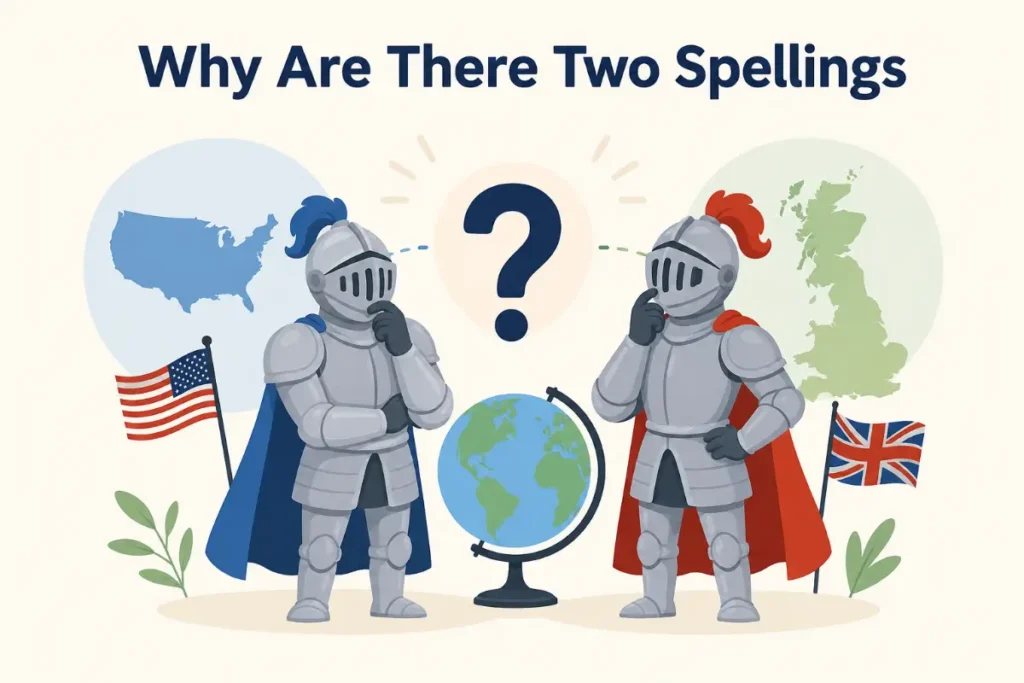
Why Are There Two Spellings
English has developed differently in different parts of the world. Over time some words kept their older spellings while others were simplified. That is why American English and British English sometimes spell the same word in different ways.
The word armor follows the spelling style commonly used in the United States. The spelling armour keeps the traditional our ending that is still preferred in Britain Canada Australia New Zealand and many other countries.
This is not a grammar rule. It is simply a spelling preference based on regional English. People on both sides understand the word without any confusion.
You will notice the same pattern in many everyday words.
| American English | British English |
|---|---|
| Color | Colour |
| Favor | Favour |
| Honor | Honour |
| Neighbor | Neighbour |
| Labor | Labour |
| Harbor | Harbour |
If you already know these spelling pairs then understanding armor and armour becomes much easier.
What Does Armor Mean
The word refers to something that protects a person animal vehicle or object from damage or injury. It can describe physical protection or be used in a figurative way to talk about emotional strength.
For example a medieval knight wore metal plates to protect against swords arrows and other weapons. Today soldiers police officers and athletes also wear different kinds of protective gear. Military vehicles often have reinforced metal coverings that protect people inside from attacks.
The word is also common in science. Some animals have natural protective coverings that people describe as armor. Turtles have hard shells. Armadillos have bony plates. Even certain fish have protective scales that work like armor.
People also use the word in everyday conversation as a metaphor. Someone might say they put on emotional armor before having a difficult conversation. In that case the word does not describe real equipment. Instead it represents mental or emotional protection.
Common Types Of Armor
The meaning of the word has expanded over time. It now covers many forms of protection beyond what knights wore hundreds of years ago.
Body Armor
Body armor protects the person wearing it. Modern versions are made from strong materials that help reduce injuries from bullets sharp objects or impacts. Examples include.
- Police officers wear body armor during dangerous situations.
- Some security guards receive body armor as part of their equipment.
Medieval Armor
This is the type most people picture first. Medieval knights wore helmets breastplates shields gauntlets and other metal pieces that covered much of the body. For example,
- The museum displayed a full suit of medieval armor from the fifteenth century.
- Every piece was carefully restored before the exhibition opened.
Vehicle Armor
Many military vehicles include thick protective layers that help defend against attacks. Tanks armored trucks and some aircraft use special materials designed for strength and durability. Example,
- The vehicle’s armor protected the crew during the mission.
Natural Armor
Nature has its own forms of protection. Some animals have evolved hard outer coverings that help them survive. Examples include,
A turtle carries its armor everywhere it goes.
- An armadillo depends on its natural armor for protection.
These examples show that the word is much broader than many people realize. It applies to history science sports law enforcement the military and even everyday conversations.
Armor As A Verb
Many people know armor as a noun but it can also be used as a verb. As a verb it means to protect someone or something by adding a defensive layer or making it stronger against harm. For example,
- Engineers armored the vehicle before testing it.
- The company armored its computer systems against cyberattacks.
- Parents try to armor their children with knowledge and confidence.
In British English the verb follows the same regional spelling pattern. Writers normally use armour as the verb as well. This makes the spelling consistent throughout a sentence and helps match the style guide being used.
Armor Or Armour In Different Types Of English
The choice depends on the audience you are writing for. The meaning stays the same but the spelling changes from one region to another. If you write for readers in the United States use armor. This is the standard spelling in schools newspapers books government documents and business writing.
If your audience is in the United Kingdom Canada Australia New Zealand or Ireland use armour. Readers in those countries expect the traditional spelling and may notice the American version as unusual. Neither spelling is better than the other. The important thing is staying consistent. Switching between the two in the same article or document can distract readers and make your writing look less polished.
Here is a quick guide.
| Audience | Preferred Spelling |
|---|---|
| United States | Armor |
| United Kingdom | Armour |
| Canada | Armour |
| Australia | Armour |
| New Zealand | Armour |
| Ireland | Armour |
If you are writing for an international audience choose the spelling that matches your publication or brand style guide. Then use that spelling throughout the entire piece.
Real World Examples
Seeing both spellings in context makes the difference much easier to understand.
American English Examples
- Soldiers wear body armor during combat.
- The museum displayed ancient armor from Europe.
- Modern armor protects against many types of attacks.
- The game lets players upgrade their armor before each battle.
These sentences follow standard American spelling.
British English Examples
- Soldiers wear body armour during combat.
- The museum displayed ancient armour from Europe.
- Modern armour protects against many types of attacks.
- The game lets players upgrade their armour before each battle.
Notice that the meaning and sentence structure stay exactly the same. Only the spelling changes.
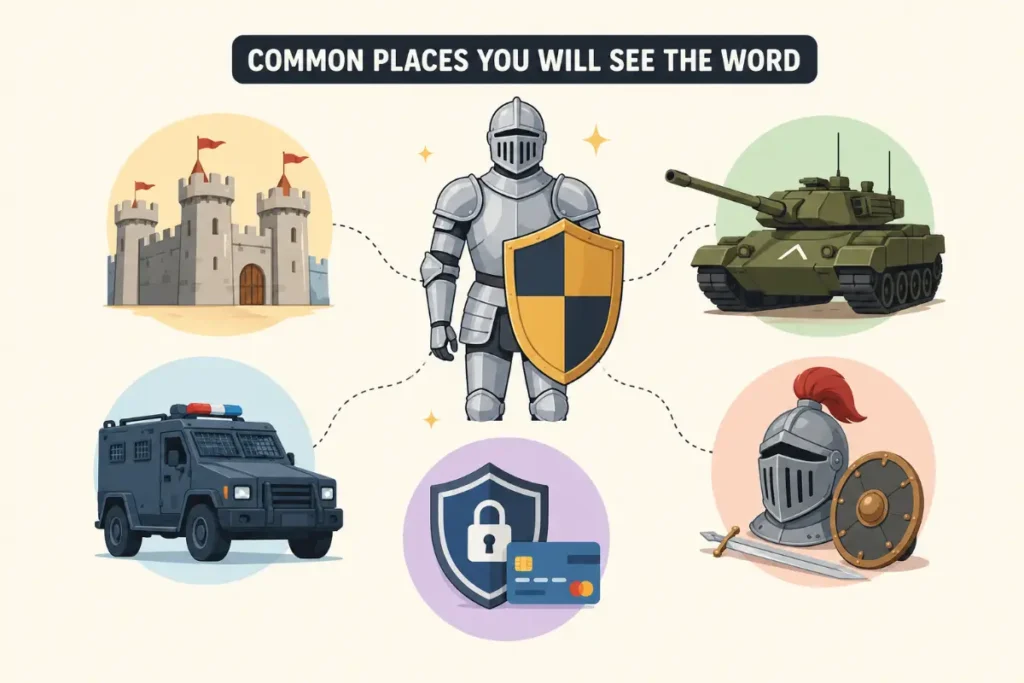
Common Places You Will See The Word
This word appears in many subjects. It is not limited to history books or military discussions.
History
History books often describe the protective clothing worn by knights samurai and ancient warriors. Examples include,
- Roman soldiers wore different kinds of protective equipment.
- Medieval blacksmiths spent weeks making a complete suit of armor.
Military
Modern armed forces use advanced protective equipment made from lightweight but strong materials. For example,
- The new vehicle includes stronger armor for better protection.
- Soldiers train while wearing protective gear designed for difficult conditions.
Sports
Athletes wear protective equipment in many sports. While people often call it protective gear some sports also use the word armor in product names or descriptions. For example,
- Hockey players wear equipment that protects the chest shoulders and legs.
- Baseball catchers use protective gear during every game.
Video Games
Gamers see this word almost every day. Many games include equipment that improves defense and reduces damage. Examples include,
- This armor gives your character extra protection.
- Players can collect rare armor after defeating powerful enemies.
Technology
The word is sometimes used as a brand name or as part of a product description to suggest strength or durability. For example,
- The phone case provides armor like protection against drops.
- Some software products use the word to suggest stronger security.
In these situations the word often has a symbolic meaning instead of describing actual protective clothing.
Common Mistakes People Make
Most mistakes happen because people focus on the spelling instead of the audience.
Mixing Both Spellings
- This is the most common mistake.
- For example someone may write armor in one paragraph and armour in the next. That creates an inconsistent style and can confuse readers.
- Choose one spelling before you begin writing and use it from start to finish.
Thinking One Spelling Is Wrong
Many people believe only one version is correct. That is not true. Both spellings are accepted by dictionaries and style guides. The correct choice depends on the type of English you are using.
Changing Quotes
- If you quote a book article or another source keep the original spelling.
- For example a quote from an American source should keep armor. A quote from a British source should keep armour.
- Changing the spelling inside a quotation can make the quote inaccurate.
Forgetting Related Words
People sometimes remember the spelling of one word but accidentally change related words. For example,
- Armored vehicle is American English.
- Armoured vehicle is British English.
The same regional spelling pattern should be used throughout the document.
Related Words You Should Know
Understanding related words helps you build a stronger vocabulary and recognize the spelling pattern more quickly.
Armored
This adjective describes something protected by armor. Examples include,
- The armored truck carried valuable cargo.
- The armored vehicle crossed rough terrain safely.
Armoured
This is the British English spelling of the same adjective. Examples include,
- The armoured vehicle entered the base.
- The armoured division moved forward before sunrise.
Armory And Armoury
- These words describe a place where weapons or military equipment are stored.
- American English usually prefers armory.
- British English commonly uses armoury.
- Although the spelling changes the meaning stays the same.
- Recognizing these word families makes it easier to remember which spelling belongs with each variety of English.
Easy Ways To Remember The Difference
The good news is that you do not need to memorize a complicated spelling rule. A few simple tricks can help you remember the correct version every time.
Think About Your Audience
- The easiest method is to ask yourself who will read your writing.
- If your readers are in the United States use the American spelling. If your readers are in the United Kingdom Canada Australia New Zealand or another country that follows British English use the British spelling.
- This habit works for many other words too. Once you know your audience the spelling choice becomes much easier.
Remember Other Similar Words
Many words follow the same American and British spelling pattern.
| American English | British English |
|---|---|
| Color | Colour |
| Honor | Honour |
| Favor | Favour |
| Labor | Labour |
| Harbor | Harbour |
If you already remember these word pairs it becomes much easier to remember armor and armour.
Stay Consistent
One spelling is not more correct than the other. The real mistake is switching between them in the same piece of writing. For example an article that begins with American spelling should keep using American spelling from beginning to end. The same idea applies to British English.
Readers notice consistency even if they do not think about it. A consistent style makes your writing feel more polished and professional.
Which Dictionaries Use Each Spelling
Trusted dictionaries recognize both spellings. The difference comes from regional preference rather than correctness. American dictionaries list armor as the standard spelling. British dictionaries list armour as the preferred form.
Many dictionaries also include the other spelling and explain that it belongs to a different variety of English. This helps readers understand that both versions are accepted.
If you are ever unsure check the style guide or dictionary used by your school employer publisher or client. Following one standard keeps your writing consistent.
Does The Meaning Ever Change
No. The meaning stays the same regardless of the spelling. Both words describe something that protects a person animal vehicle or object from harm. They can also be used in a figurative sense to describe emotional or mental protection. For example these sentences all express the same idea.
- The soldier wore protective gear during the mission.
- The turtle relies on its shell for protection.
- Years of experience became her emotional armor during difficult conversations.
Only the spelling changes from one variety of English to another. The definition does not.
Modern Uses Beyond History
Many people connect this word with knights castles and ancient battles. Today it appears in many other situations.
Personal Protection
Police officers security professionals and members of the military wear protective equipment designed for different situations. For example,
- The officer checked his protective vest before starting his shift.
- The rescue team wore extra protective gear in dangerous conditions.
Cars And Military Vehicles
Modern vehicles often include reinforced materials that improve safety. For example,
- Engineers designed the vehicle with stronger protective panels.
- The military upgraded the vehicle to improve its defense.
Sports Equipment
Athletes use protective gear in many sports to reduce the risk of injury. Examples include,
- Catchers wear protective equipment during every game.
- Football players wear padding to help protect their bodies.
Technology And Marketing
- Many companies use this word to suggest strength durability and reliability.
- You might see it in product names for phone cases backpacks watches outdoor equipment or computer security software.
- In these cases the word creates the idea of protection even if no actual metal covering exists.
Common Expressions That Use Armor
The word appears in several everyday expressions. Most of them use the idea of protection in a figurative way.
Shining Armor
People often use this phrase to describe someone who arrives to help during a difficult situation. Example,
- She joked that her brother arrived in shining armor to fix her broken car.
Emotional Armor
This expression describes emotional strength or the ability to protect your feelings. Example,
- Years of experience became his emotional armor during stressful meetings.
Thick Armor
People sometimes use this expression to describe someone who is not easily hurt by criticism. Example,
- Public speakers often develop thick armor after years of speaking before large audiences.
These expressions show how the word has become part of everyday English instead of staying limited to history.

Should You Ever Change The Spelling
Sometimes yes.
- If you are writing for an American company publication or website use American spelling throughout the document.
- If you are writing for a British publisher school newspaper or business use British spelling instead.
- There is one important exception. Never change the spelling inside a direct quotation unless you clearly mark it as an editorial change. Quotes should stay exactly as they appeared in the original source.
- Following the spelling style your audience expects makes your writing feel natural and helps build credibility.
FAQs
Is armor or armour correct?
Yes. Armor or armour are both correct spellings. Armor is the standard spelling in American English. Armour is the standard spelling in British English and several other English varieties.
Which spelling should I use in the United States?
Use armor if you are writing for an American audience. It is the spelling used in US schools newspapers books websites and style guides.
Is armour used in Canada?
Yes. Canadian English usually follows British spelling for this word so armour is the preferred choice. You may still see armor in some Canadian publications because American English has influenced many industries.
Is there any difference in meaning between armor and armour?
No. Both words have exactly the same meaning. They describe protective clothing equipment or a protective covering that helps prevent injury or damage.
Is armor a noun or a verb?
It can be both. As a noun it refers to protective gear. As a verb it means to protect someone or something by making it stronger or adding protection.
What is the adjective form of armor?
In American English the adjective is armored. In British English it is armoured. The spelling changes to match the variety of English being used.
Why are there two spellings?
The difference comes from the way English developed in different parts of the world. American English simplified the spelling of many words ending in our while British English kept the traditional form.
Are armor and armour accepted by dictionaries?
Yes. Major dictionaries recognize both spellings. They simply label each one according to the variety of English where it is commonly used.
Conclusion
If you’ve been wondering about armor or armour the answer is simple. Both spellings are correct. The right choice depends on the audience you are writing for.
Use armor in American English. Use armour in British English Canadian English Australian English and other English varieties that follow British spelling. The meaning never changes. Only the spelling does.
The easiest way to avoid mistakes is to choose one spelling before you start writing and use it consistently from beginning to end. That small habit makes your writing look more polished and professional.
The next time you see armor or armour you will know there is no trick behind it. Pick the version that matches your audience and write with confidence.

Dr. Elena Vance holds a Ph.D. in Linguistics from Columbia University and has spent over 15 years analyzing the evolution of the English language. A former university professor turned full-time writer and editor, Elena specializes in breaking down high-level grammatical concepts, punctuation nuances, and style guides (APA, Chicago, MLA) into clear, actionable advice. When she isn’t hunting down dangling modifiers, she can be found collecting vintage dictionaries and reading classic literature.