
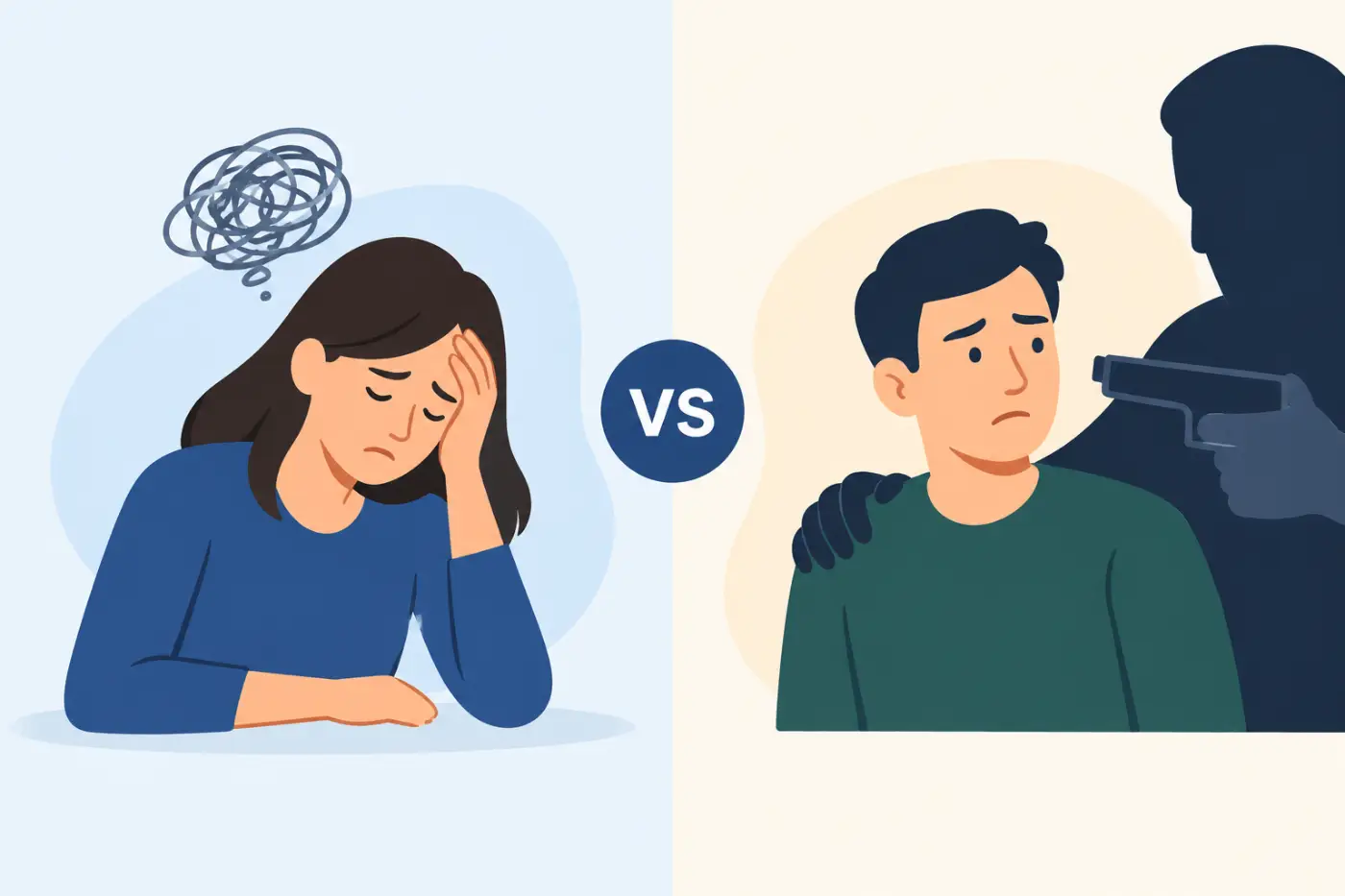
The difference between distress vs duress comes down to the kind of pressure or suffering you mean. Distress usually describes strong emotional or physical suffering. Duress describes pressure or threats that force someone to do something against their wishes.
The two words look and sound similar enough to cause confusion. They can both appear in serious situations involving fear pain pressure or difficult circumstances. Still they don’t mean the same thing.
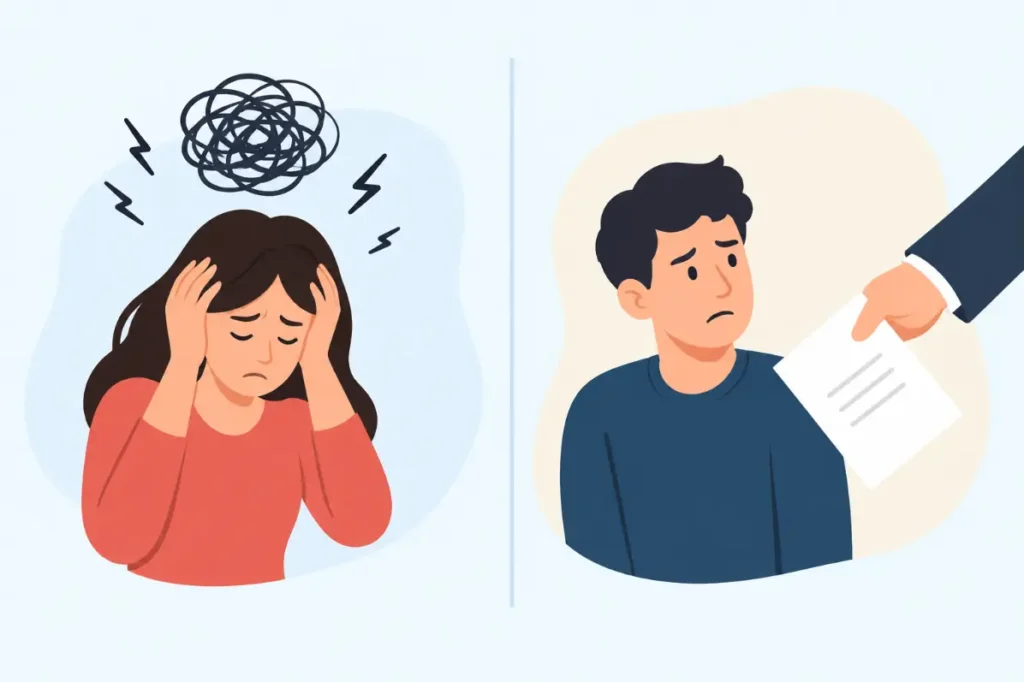
If someone is upset after receiving bad news they may be in distress. If someone threatens a person and forces them to sign a document that person may have acted under duress.
This guide explains the meanings differences and uses of both words. You’ll also see clear examples common mistakes memory tips and answers to questions people often ask.
Quick Definition
Distress means severe worry sadness pain or suffering. It can describe an emotional state or physical discomfort.
Duress means pressure or threats used to force someone to act. The word often appears in legal and formal writing.
Direct Answer
Use distress when you mean suffering fear worry or pain. Use duress when someone faces threats or pressure that force them to do something they don’t freely want to do.
Comparison Table
| Word | Meaning | Example Sentence | When To Use It |
|---|---|---|---|
| Distress | Severe emotional or physical suffering. | The news caused her great distress. | Use it for pain worry sadness fear or suffering. |
| Duress | Pressure or threats that force someone to act. | He signed the agreement under duress. | Use it for forced actions especially in legal situations. |
What Distress Means
Distress describes a state of serious suffering. The suffering can be emotional physical or sometimes financial. The exact meaning depends on the situation.
Someone may feel distress after losing a loved one. A child may show distress after becoming separated from a parent. A patient may experience physical distress because of an illness.
The word can also describe something that causes suffering.
For example you might say that a family experienced financial distress after losing a major source of income. In that case the word points to a difficult condition rather than one specific emotion.
Distress is often connected with words such as pain anxiety fear sadness discomfort hardship and worry. It can range from a temporary reaction to a serious condition that needs help.
Distress As An Emotional State
Emotional distress happens when a person feels overwhelmed by difficult emotions. The person may feel deeply worried frightened sad or upset.
For example:
- The sudden news caused him great distress.
- She was clearly in distress after the argument.
- The child cried in distress when she couldn’t find her mother.
- Many people experience emotional distress after a major loss.
These sentences describe how someone feels. No outside person needs to force the person to do anything.
That point helps separate this word from duress. Distress focuses on suffering. Duress focuses on coercion or forced action.
Distress As Physical Suffering
Distress doesn’t only describe emotions. It can also refer to physical trouble or discomfort.
A doctor might describe a patient as being in respiratory distress. This means the person is having serious trouble breathing. The phrase is common in medical settings.
You may also see expressions such as physical distress or signs of distress.
For example:
- The patient showed signs of respiratory distress.
- The injured animal appeared to be in distress.
- The runner stopped because of severe physical distress.
The meaning changes slightly with the setting but the central idea stays the same. Something is causing serious suffering or difficulty.
Distress In Everyday Speech
You don’t need a medical or formal setting to use this word. It appears in ordinary conversations too.
Someone might say:
- I was in distress after hearing the news.
- The long delay caused a lot of distress.
- Her face showed clear signs of distress.
In casual speech people often choose simpler words such as upset worried hurt or stressed. Distress sounds stronger and can make the seriousness of the situation clearer.
What Duress Means
Duress has a more specific meaning. It describes a situation where pressure threats or intimidation force someone to act.
Imagine someone threatens another person and says they will cause harm unless that person signs a contract. The person signs it because they fear the threat. That person may have signed the contract under duress.
The key idea is lack of free choice.
Duress often appears in legal discussions because the law sometimes considers the circumstances behind a person’s action. If someone agrees to something because of serious threats the agreement may raise legal questions.
You can also use duress outside the courtroom. Still the word has a formal tone and is much less common in everyday conversation than distress.
Duress And Forced Decisions
Duress can involve threats against a person. It can also involve threats against someone the person cares about or pressure connected to serious harm.
For example:
- She claimed that she signed the document under duress.
- He said he made the payment under duress.
- The witness testified that the agreement was made under duress.
In each example the person did something because of pressure or threats. That is the central feature of the word.
Duress In Legal Writing
Legal writing uses duress in a specific way. A person may claim that another party forced them to enter a contract or take some other action through improper threats or pressure.
For example a contract might be challenged if one party argues that they agreed only because of serious threats.
The exact legal standard for duress depends on the facts and the law involved. Courts may consider the type of threat the circumstances the relationship between the people and the person’s available choices.
That means you shouldn’t assume that every stressful situation qualifies as legal duress. Ordinary pressure disagreement or regret isn’t automatically duress.
The Main Difference Between The Two Words
The easiest way to separate these words is to ask one simple question.
Is the main idea suffering or forced action.
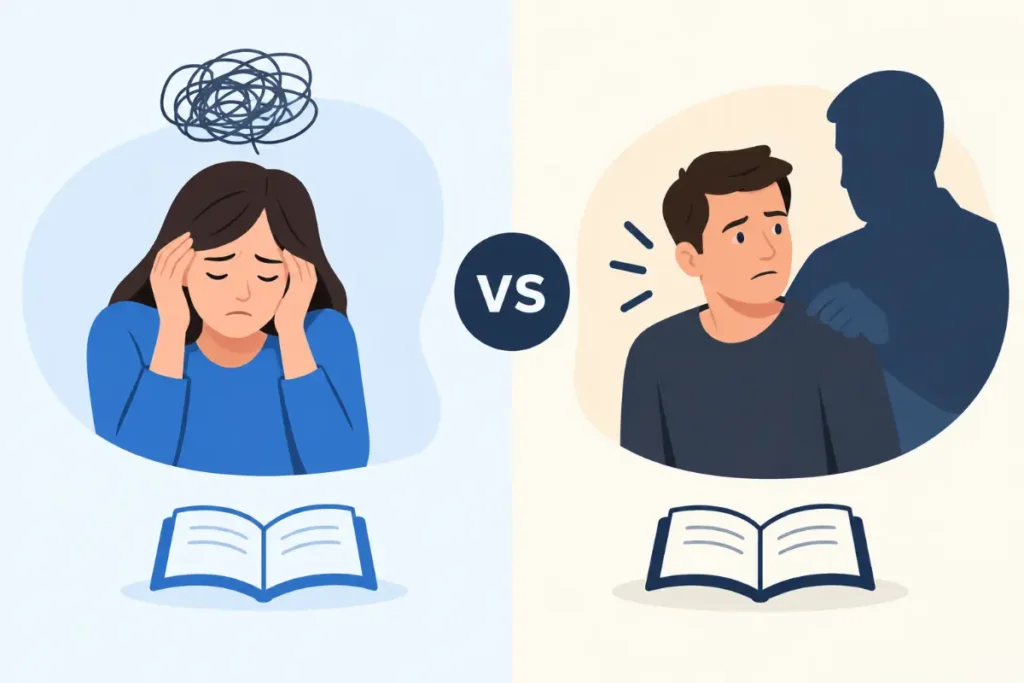
If the main idea is suffering use distress. If the main idea is pressure that forces someone to act use duress.
Consider these two examples.
- The accident caused the family emotional distress.
- The employee signed the document under duress.
The first sentence describes suffering. The second describes a forced decision.
That distinction is small but powerful. Once you focus on it the words become much easier to tell apart.
Distress Can Happen Without Duress
A person can be in distress without anyone forcing them to do anything.
Someone may feel distressed after getting bad medical news. A student may feel distress after failing an important exam. A parent may feel distress after hearing that their child has been injured.
None of these situations require threats or coercion.
The person is suffering because of a difficult event. That makes distress the natural choice.
Duress Can Cause Distress
The relationship can also work in the other direction.
A person under duress may feel distress because of the threats or pressure they face. In that situation both words can describe different parts of the same event.
For example someone threatens a business owner and forces the owner to sign a document. The owner may experience emotional distress because of the threat. The owner may also sign the document under duress.
The words aren’t competing descriptions of exactly the same thing. One describes the person’s suffering. The other describes the pressure behind the person’s action.
Why These Words Are Easy To Mix Up
The confusion comes partly from their similar appearance. Both words begin with d and contain similar sounds. Both can also appear in serious situations involving fear pressure or hardship.
Another reason is that people sometimes use pressure and suffering as if they were the same idea. They aren’t.
Suppose your boss asks you to finish a difficult project by Friday. You might feel stressed or distressed. That doesn’t automatically mean you’re under duress.
Now imagine someone threatens you with serious harm unless you finish the project. The situation has changed. The threat may create a case of duress depending on the facts and applicable law.
The difference is the force behind the action.
A Simple Way To Remember The Difference
Think of distress as suffering.
Think of duress as force.
You can feel distress. You can act under duress.
That small contrast makes the two words much easier to remember.
Another useful memory trick is to connect duress with the idea of a decision being taken away. When someone acts under duress they aren’t acting with the same level of free choice because serious pressure or threats are involved.
Distress is broader. It describes the pain or suffering a person experiences.
Once you remember those two ideas you won’t need to rely on the spelling alone.
How To Use Distress In A Sentence
The noun distress often follows words such as emotional physical mental financial or severe. These combinations make the meaning clear without requiring a long explanation.
For example:
- The accident caused severe emotional distress.
- The family faced financial distress after the business closed.
- The patient was treated for respiratory distress.
- The child showed signs of emotional distress.
- The news caused considerable distress among local residents.
You can also use distress as part of the phrase in distress.
For example:
- The hiker was found in distress.
- The animal appeared to be in distress.
- She called for help after seeing someone in distress.
The phrase means someone is experiencing serious trouble or suffering.
Distress As A Verb
Distress can also work as a verb. In that form it means to cause someone to feel very upset or troubled.
For example:
- The news distressed his family.
- It distressed her to see the injured animal.
- The sudden change distressed many employees.
The verb is less common in casual speech. People often say upset or worried instead.
Still it is useful in formal writing when you want to describe a strong emotional reaction.
Distressed As An Adjective
The adjective distressed describes someone who is suffering or deeply upset.
For example:
- The distressed passenger asked for help.
- She looked distressed after the phone call.
- The child became distressed when the lights went out.
The word can also describe someone in serious difficulty.
You might hear about distressed businesses or distressed properties in financial and real estate contexts. There the word refers to financial trouble rather than emotional pain.
How To Use Duress In A Sentence
Duress usually appears in the phrase under duress. This is the most common construction and one worth remembering.
For example:
- He signed the contract under duress.
- She gave the information under duress.
- The witness said he had acted under duress.
- They claimed that the payment was made under duress.
You can also use the word after phrases such as subject to or through.
However the phrase under duress is by far the most familiar form in standard writing.
Why Under Duress Is So Common
The phrase works because duress describes the condition surrounding an action. Someone is under pressure that limits free choice.
Compare it with another common expression.
- She was in distress.
- She acted under duress.
The prepositions help show the difference. You are in distress because you are suffering. You act under duress because pressure or threats are forcing your action.
That is a useful pattern to remember.
Distress vs Duress In Real Situations
The best way to understand the difference is to look at situations that could cause confusion.
A Person Receives Bad News
Imagine someone receives news that a close family member is seriously ill. The person becomes upset and struggles to cope.
The correct word is distress because the focus is emotional suffering.
You could write:
- The news caused him considerable distress.
There is no forced action in this example.
A Person Signs A Contract After A Threat
Now imagine someone threatens another person and demands that they sign a contract. The person signs because they fear the consequences of refusing.
The correct term is duress because the focus is coercive pressure.
You could write:
- He claimed that he signed the contract under duress.
The person may also experience distress. Still duress describes the reason the person acted.
A Patient Has Trouble Breathing
A patient arrives at a hospital with severe breathing problems.
The correct word is distress.
A medical professional might describe the condition as respiratory distress. This is a standard medical term for serious difficulty breathing.
Duress has no place in this example because nobody is forcing the patient to do anything.
An Employee Faces An Unfair Demand
Imagine a manager tells an employee to work late. The employee feels anxious and unhappy about the request.
That situation may cause stress or distress. It does not automatically amount to duress.
For duress to fit the situation there would need to be a much stronger form of pressure or threat. The exact legal meaning can depend on the facts and local law.
Someone Gives Money After A Threat
Suppose a person threatens someone and demands money. The victim hands over the money because of the threat.
The action may have happened under duress.
The victim may also suffer emotional distress. Again the two words describe different parts of the situation.
Common Mistakes With These Words
A few mistakes appear again and again when people use these terms.
Using Duress For Ordinary Stress
This is probably the most common mistake.
Duress does not simply mean stress. A busy schedule can cause stress. A difficult exam can cause stress. A demanding job can cause stress.
Those situations may cause distress if they lead to serious emotional suffering. They don’t automatically involve duress.
Duress points to coercion or serious pressure that affects a person’s freedom to act.
Using Distress For A Forced Action
Another mistake is using distress when the main point is that someone was forced to do something.
For example:
- He signed the contract in distress.
This sentence says that he was suffering emotionally when he signed it. It doesn’t clearly say that someone forced him to sign.
If the intended meaning involves threats or coercion you might instead say:
- He signed the contract under duress.
That wording makes the reason for the action much clearer.
Treating Every Threat As Legal Duress
A threat does not automatically establish legal duress.
Legal questions are more complicated than everyday definitions. Courts may look at the seriousness of the threat and the circumstances surrounding the decision. The applicable law also matters.
So use legal language carefully. If you’re writing about a real legal dispute the safest approach is to describe the facts clearly and avoid making a legal conclusion without proper legal guidance.
Distress And Stress Are Not The Same
People often use stress and distress as if they mean exactly the same thing. They are related but they can show different levels or types of difficulty.
Stress usually describes pressure or tension caused by demanding circumstances.
Distress often suggests a stronger or more harmful level of suffering.
For example:
- I feel stressed about tomorrow’s meeting.
- The accident caused severe emotional distress.
The first sentence describes ordinary pressure. The second describes a much more serious reaction.
Context matters. The line between stress and distress isn’t always exact in everyday speech.
Distress And Anxiety Are Not The Same
Anxiety and distress can overlap but they are not identical.
Anxiety often involves worry fear or nervousness about something that may happen. Distress is a broader term for serious emotional suffering.
Someone can experience distress because of grief anger fear pain or uncertainty. Anxiety is one possible part of that experience.
For example:
- The uncertainty caused her anxiety.
- The situation caused her severe emotional distress.
The first sentence points to worry and fear. The second focuses on the overall suffering.
Duress And Coercion
Duress is closely related to coercion. Both words involve forcing or pressuring someone to act against their wishes.
Coercion is the broader term. It can describe the act of using threats or pressure to control another person’s behavior.
Duress often describes the condition created by that pressure. This is why legal and formal writing frequently uses the phrase under duress.
For example:
- The victim was subjected to coercion.
- The victim acted under duress.
The two sentences are closely related but focus on different parts of the situation.
Duress And Undue Influence
Another related legal term is undue influence. It can sound similar to duress but it describes a different idea.
Undue influence generally involves taking advantage of a position of trust or power to influence another person’s decision. It does not always involve an obvious threat.
For example an older person might rely heavily on a trusted caregiver. If the caregiver improperly pressures that person into changing a financial arrangement the situation could raise questions about undue influence.
Duress usually involves threats or coercive pressure. Undue influence can involve manipulation or exploitation of a relationship.
The exact legal definitions depend on the jurisdiction and circumstances.
Distress In The Phrase Emotional Distress
The phrase emotional distress is common in everyday speech as well as legal and medical contexts.
It describes serious emotional suffering. A person may experience it after an accident loss traumatic event relationship problem or other difficult experience.
For example:
- The accident caused emotional distress for the family.
- She sought help because of ongoing emotional distress.
- The event left him in severe emotional distress.
The phrase can also appear in legal discussions. Some US legal claims involve the concept of emotional distress. However the legal requirements differ by state and by the type of claim.
That distinction matters. A person can experience emotional distress without automatically having a legal claim for damages.
Distress In Medical Language
Medical professionals use distress in several important phrases.
Respiratory distress means serious difficulty breathing.
Cardiac distress can refer broadly to serious heart related trouble though medical professionals may use more specific terms for particular conditions.
Fetal distress has traditionally been used to describe signs that a fetus may not be tolerating labor well. Modern medical writing often uses more specific descriptions because the phrase can be vague.
The general idea remains the same. Something is not going well and the person or patient is showing signs of serious difficulty.
Distress In Financial Writing
Distress can also describe financial trouble.
A person may experience financial distress when they cannot keep up with debts or essential expenses. A company may enter financial distress when it struggles to meet its financial obligations.
For example:
- The family sought help because of financial distress.
- The company entered a period of financial distress.
- Rising costs pushed the business into financial difficulty.
This meaning has nothing to do with threats or forced decisions. It describes hardship.
That makes distress a much broader word than duress.
The Difference In Tone
Another useful distinction is tone.
Distress works comfortably in everyday writing. You can use it in a personal story a news article a school assignment or a medical context.
Duress sounds more formal. It appears often in legal writing official statements and serious discussions about coercion.
That doesn’t make duress a difficult word. It simply means you may hear it less often in casual conversation.
Someone might say:
- I’m really upset about this.
They are less likely to say:
- I’m under duress.
The second sentence carries a much more specific and formal meaning.
More Examples To Make The Difference Clear
A few side by side examples can make the distinction stick.
Example one.
- The patient was in distress after suffering severe pain.
- The witness gave the statement under duress.
The first sentence describes suffering. The second describes forced action.
Example two.
- The family experienced emotional distress after the accident.
- The driver claimed that he acted under duress.
Again the first sentence focuses on emotional suffering. The second focuses on pressure that influenced someone’s action.
Example three.
- The child cried in distress.
- The suspect claimed that he made the confession under duress.
The child is suffering. The suspect claims that pressure forced his action.
Example four.
- The company is facing financial distress.
- The owner said that he signed the agreement under duress.
Financial trouble has nothing to do with coercion. The agreement example does.
When To Use Each Word
If you’re unsure which word belongs in your sentence ask yourself what you’re trying to describe.
Use distress for:
- Emotional suffering.
- Physical suffering.
- Severe worry.
- Pain.
- Financial hardship.
- Serious difficulty.
- A visible state of trouble.
Use duress for:
- Threats.
- Coercion.
- Forced decisions.
- Lack of free choice.
- Pressure connected with an action.
- Formal or legal discussions of forced agreements.
This simple test works in most everyday situations.
If you can replace the word with suffering then distress is probably the better choice.
If you can replace it with forced pressure then duress may be the better choice.
A Quick Memory Trick
Remember these two short phrases.
In distress.
Under duress.
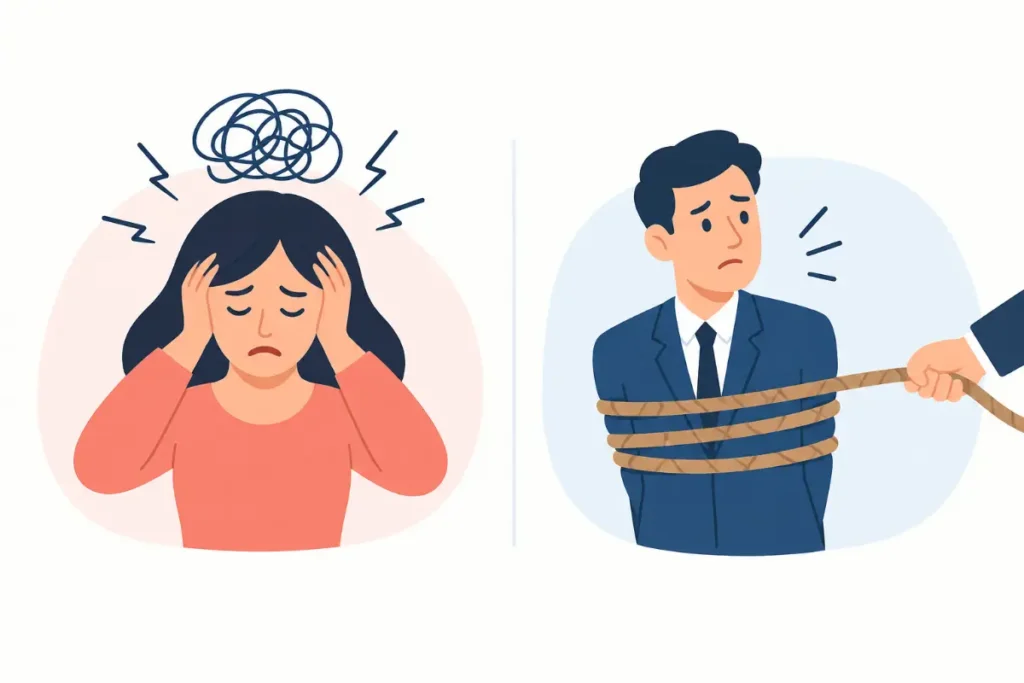
You can be in distress because you’re suffering. You can act under duress because someone is using serious pressure or threats against you.
The first describes a condition. The second describes the circumstances behind an action.
That distinction is simple enough to remember even when you’re writing quickly.
Related Words To Know
Understanding related terms can help you choose the right word with more confidence.
Stress
Stress is pressure or tension caused by demanding circumstances. It is common in everyday speech.
- I’m stressed about my exam tomorrow.
Distress
Distress usually points to more serious suffering or trouble.
- The accident caused severe distress.
Duress
Duress refers to coercive pressure or threats that force someone to act.
- He signed the agreement under duress.
Coercion
Coercion means using pressure or threats to control someone’s actions.
- The investigation focused on possible coercion.
Anxiety
Anxiety involves worry fear or nervousness. It can contribute to emotional distress but the words don’t have the same meaning.
- She felt anxiety before the interview.
Hardship
Hardship describes difficult living or financial conditions.
- The family faced financial hardship after the move.
These words overlap in some situations but they each have their own job. Choosing the right one makes your meaning much clearer.
FAQs
What is the difference between distress vs duress?
Distress means serious emotional physical or financial suffering. Duress means pressure or threats that force someone to act against their wishes. A person can experience distress while also acting under duress.
Is it correct to say under distress?
The usual phrase is in distress. For example you can say that someone was in emotional distress or that a person was found in distress. The phrase under duress is used for forced action caused by serious pressure or threats.
What does it mean to act under duress?
To act under duress means to do something because of serious pressure threats or coercion. The person may not have made the decision freely. The exact legal meaning can depend on the facts and the applicable law.
Can someone be in distress and under duress at the same time?
Yes. A person can suffer emotional distress because someone is threatening or pressuring them. In that situation distress describes the person’s suffering while duress describes the pressure behind the person’s action.
Is duress only a legal word?
No. Duress can be used outside legal settings but it has a formal tone. You’ll most often see it in legal writing official statements and serious discussions about coercion.
Does distress always mean emotional pain?
No. Distress can describe physical suffering financial trouble or other serious difficulty. Medical phrases such as respiratory distress show how the word can describe physical problems.
Is duress the same as stress?
No. Stress means pressure or tension caused by demanding circumstances. Duress involves serious coercive pressure or threats that can force someone to act.
Can a difficult boss put an employee under duress?
A difficult or demanding boss does not automatically put an employee under duress. The situation would need facts that support the idea of serious coercive pressure or threats. Legal conclusions depend on the specific circumstances and applicable law.
Conclusion
The difference between distress vs duress becomes much easier once you focus on the main idea behind each word. Distress describes suffering. Duress describes pressure or threats that force someone to act.
Use distress when you mean emotional pain physical difficulty worry or hardship. You might describe someone as being in distress or say that an event caused emotional distress.
Use duress when the important point is that someone acted because of coercive pressure. The phrase under duress is especially common and works well when describing a forced decision or agreement.
A quick memory trick can help. Think in distress for suffering and under duress for forced action. If you remember that contrast you can choose the right word quickly and write with confidence.

Sienna Watson is a veteran copywriter and communications coach who has helped startup founders, marketers, and professionals polish their writing for over a decade. Realizing that most people don’t need a degree in linguistics—just clear, impactful communication—Sienna focuses on practical grammar, business writing etiquette, and eliminating wordiness. She advocates for plain language, strong verbs, and persuasive prose that gets results.