
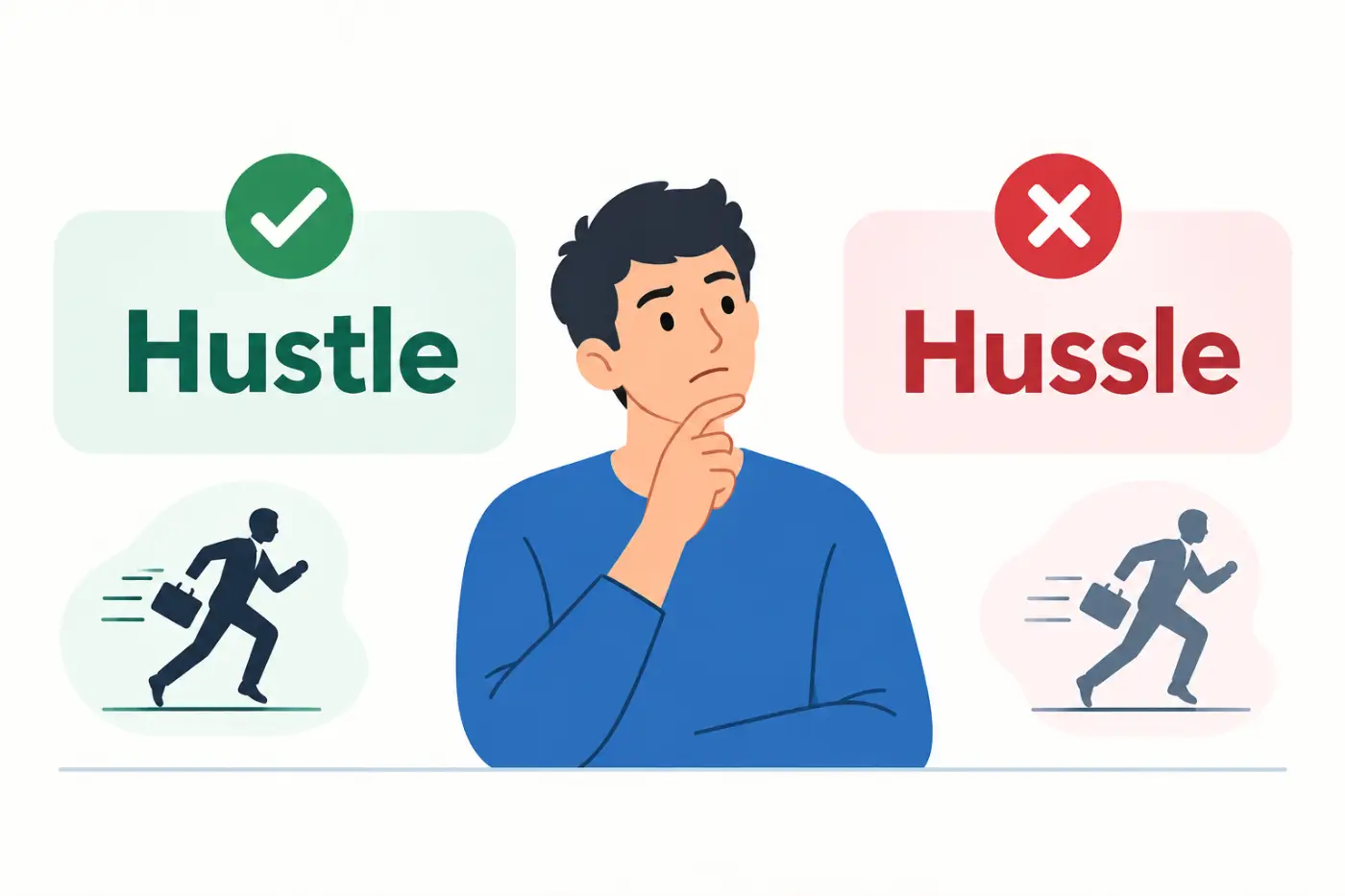
If you’re unsure about hustle or hussle you’re dealing with a very common spelling mistake. The correct spelling is hustle. The word hussle is not the standard English spelling.
You may see hustle in phrases such as hustle culture hustle and bustle side hustle and hustle for success. It can describe working hard moving quickly or finding creative ways to earn money. In some contexts it can also mean pushing someone aggressively or getting involved in dishonest activity.
The spelling can feel confusing because the word is pronounced with a strong s sound. That sound may make it tempting to write an extra s. English spelling does not always match pronunciation closely though. In this case the correct form has only one s.
This guide explains the meaning of the word its different uses common mistakes related words and easy ways to remember the spelling. You’ll also see plenty of natural examples so you can use it correctly in your own writing.
Quick Definition
Hustle is the correct spelling. It can mean to work hard and move quickly toward a goal. It can also mean to push or move someone forcefully or to get money through aggressive or dishonest methods depending on the context.
Hussle is an incorrect spelling in standard English.
Direct Answer
Hustle is the correct spelling. Hussle is a misspelling and should not be used in standard English writing.
Comparison Table
| Word | Meaning | Example Sentence | When to Use It |
|---|---|---|---|
| Hustle | To work hard move quickly or push someone. | She hustles every day to grow her business. | Use this spelling in standard English. |
| Hussle | Incorrect spelling of hustle. | The team hussles to finish the project. | Do not use this spelling in standard English. |

What Does Hustle Mean
The word hustle has several meanings. Its exact meaning depends on the sentence and the situation.
One common meaning is to work hard and stay focused on getting something done. This use often suggests energy effort and determination. Someone who hustles does not sit around waiting for things to happen.
For example:
- She hustles to build her small business.
- He has been hustling to save money for college.
- They hustle every weekend to finish their renovation.
In casual American English hustle can also describe working hard to make money. This is where phrases such as side hustle come from. A side hustle is work that someone does in addition to their main job to earn extra income.
The word can also describe fast movement.
- We need to hustle or we’ll miss the bus.
- Hustle over here and help me carry these boxes.
- The players hustled back to the field after halftime.
In another context hustle can mean to push or move someone quickly.
- The staff hustled the guests toward the exits.
- She hustled the children into the car before the rain started.
There is also a less positive meaning. Hustle can describe tricking someone or getting money from them through dishonest methods. The meaning becomes clear from the context.
- The stranger tried to hustle tourists outside the station.
- He was known for hustling people out of their money.
So the word isn’t always positive or negative. The surrounding words tell you what the writer means.
Why The Spelling Causes Confusion
The biggest spelling problem comes from the sound of the word. When you say hustle the s sound is easy to hear. Some people naturally assume that the word needs two s letters.
English has many words where pronunciation can lead you in the wrong direction. A sound that seems strong does not always need repeated letters in writing.
Think about the spelling of hustle as a simple pattern.
H U S T L E
There is only one s.
The word does not contain ss in the middle. Once you learn that visual pattern it becomes much easier to spot the mistake.
Another reason for the confusion is that English has many words with double consonants. Words such as message address and across contain ss. That can make a spelling like hussle look believable at first glance.
It is not correct though. Standard English uses hustle.
The Correct Spelling Rule
There is no special rule that tells you to add another s to this word. The safest approach is to remember the standard spelling as a whole.
The word begins with hus and continues with tle.
Hus + tle = hustle.
The single s sits between the u and t. There is no second s.
This is a useful example of why spelling by sound can cause problems. If you hear the word and try to write every sound exactly as it feels you may add an extra letter. Instead focus on the written form you know is correct.
Once you have seen the correct spelling often enough your brain will recognize it quickly.
Hustle As A Verb
Hustle is commonly used as a verb. A verb describes an action and hustle can describe several different kinds of action.
The most common modern use involves working hard with energy and purpose.
For example:
- I need to hustle if I want to finish this project today.
- She hustled to get her online store ready for launch.
- They hustled all summer to save enough money for a new car.
In these sentences the word suggests effort. It can also suggest speed. The person isn’t simply working. They are putting in serious effort and trying to get results.
Hustle can also mean moving quickly.
- We have five minutes left so hustle.
- He hustled across the parking lot when he saw the bus leaving.
- The kids hustled inside when the storm began.
The tone can be friendly or urgent. A parent might tell a child to hustle when they are running late. A coach might use the word to encourage players to move faster.
Hustle As A Noun
Hustle can also work as a noun. In this form it often refers to energetic activity effort or the drive to succeed.
For example:
- Her daily hustle keeps the business growing.
- He respects the hustle it took to build the company.
- The city has a constant hustle that never seems to stop.
The noun can also refer to a side business or extra source of income in casual speech.
You might hear someone say:
- My side hustle brings in extra money each month.
- She turned her hobby into a profitable hustle.
This use is especially common in American conversations about work business and personal goals.
The meaning depends on context. Hustle can suggest honest hard work or it can describe a scheme to make money. The surrounding sentence usually makes the intended meaning clear.
Common Uses Of Hustle
The word appears in many everyday expressions. Understanding these phrases can help you recognize its meaning quickly.
Hustle And Bustle
Hustle and bustle describes busy activity and movement. It often refers to crowded places where people are moving around and doing many things.
For example:
- I love the hustle and bustle of downtown Chicago.
- The market was full of holiday hustle and bustle.
- She moved away from the hustle and bustle of the city.
Here hustle does not mean dishonest behavior. The phrase simply describes a lively and busy environment.
Side Hustle
A side hustle is extra work that someone does outside their main job. It can involve selling products freelancing tutoring driving or offering a service.
For example:
- His side hustle is photography.
- She started a side hustle making handmade candles.
- My side hustle helps me pay for college.
The phrase has become common in everyday American English because many people have more than one source of income.
Hustle Culture
Hustle culture refers to the belief that people should work constantly and push themselves hard to achieve success.
For example:
- She decided to step away from hustle culture and protect her free time.
- Social media often makes hustle culture look more glamorous than it really is.
This phrase can have a positive or negative meaning. Some people use it to praise ambition and hard work. Others use it when criticizing the pressure to work nonstop.
Hustle For Money
The phrase can describe working hard to earn money.
For example:
- He hustles for every dollar he earns.
- They hustle during the summer to save for the winter.
Depending on context this use can suggest honest work or a more questionable way of making money. The sentence and situation provide the clue.
Natural Examples With Hustle
The best way to understand a word is to see how real people use it. Here are examples from several everyday situations.
At Work
- We need to hustle if we’re going to meet the deadline.
- Maria hustled all morning to finish the report.
- The new manager respects employees who hustle and take initiative.
In Business
- He built his company through years of hard work and hustle.
- Her side hustle eventually became her full time business.
- The team has the hustle needed to compete with larger companies.
In Sports
The spelling stays the same in every example. Only the meaning changes based on how the word is used.
Common Mistakes With Hustle
The most common mistake is adding a second s. Since the word has a strong s sound many writers assume it should look like other words that use ss. That leads to the incorrect spelling hussle.
The correct spelling has only one s and one t after it. The full spelling is h u s t l e. If you remember the middle as stle instead of ssle you’ll have an easier time writing it correctly.
Another mistake happens when people type quickly. A person may know the correct spelling but still add an extra letter without noticing. This happens often in casual messages and social media posts because people rarely stop to proofread short sentences.
For example these sentences contain the common error.
- I need to hussle to finish this today.
- She has a great side hussle.
- The players showed a lot of hussle.
- We had to hussle to catch the train.
Each one should use the same standard spelling.
How To Remember The Spelling
A good memory trick should be simple enough to use without thinking. With this word you don’t need a complicated rule.
Remember that hustle contains st in the middle. Picture the word as hus + tle rather than trying to spell it from its sound.
You can also connect it with words that start with hust.
- Hustle.
- Hustled.
- Hustling.
- Hustler.
Once you remember the base spelling the other forms become much easier.
Think Of The T
The t is easy to overlook when you say the word quickly. Yet it plays an important role in the spelling.
Think of the word as hus + tle. The t stays in the word even when you change its form.
For example:
- hustle.
- hustled.
- hustling.
- hustler.
This small spelling detail can help separate the correct form from the common mistake.
Connect It With Hustling
The word hustling is another useful memory aid. When you add ing to hustle the spelling changes slightly because the final e drops.
So you get:
hustle → hustling
You don’t get hussle → hussling.
Seeing the word family together makes the correct spelling easier to recognize.
Hustle In American English
Hustle is especially common in casual American English. You may hear it in conversations about work sports business music and everyday life.
The meaning can change quite a bit from one situation to another. A coach may praise a player’s hustle. A friend may tell you to hustle because you’re running late. A business owner may talk about their side hustle. Someone discussing crime may use hustle to describe making money through dishonest means.
That range of meanings can seem strange at first. The word is flexible because its basic idea involves active effort movement or getting something done.
Consider these examples.
- That player has incredible hustle.
- Hustle up because the movie starts in ten minutes.
- My side hustle pays for my car.
- The scammer tried to hustle an elder people customer.
The word stays the same but the meaning changes with the situation.
Hustle In Sports
Sports are one of the clearest places to see this word in action. Coaches often use hustle to describe effort that goes beyond natural talent.
A player might hustle by chasing a loose ball running back on defense or diving to make a difficult play. The player may not score but their effort can still help the team.
For example:
- The coach praised Jake for his hustle during the fourth quarter.
- Her hustle on defense changed the game.
- The team won because every player kept hustling until the final whistle.
In this context hustle has a positive meaning. It suggests energy determination and a willingness to work hard for the team.
You’ll also hear show some hustle or play with hustle in sports conversations. Both phrases encourage someone to put in more effort.
Hustle In Work And Business
In work settings hustle often refers to strong effort and a willingness to take action. Someone described as a hustler may be ambitious resourceful and energetic.
For example:
- She has the hustle needed to grow a new business.
- He hustled to find new customers after opening his store.
- The young entrepreneur built the company through persistence and hard work.
Still the word can carry different shades of meaning. Calling someone a hustler can sound like a compliment when you’re talking about ambition. In another setting it can suggest someone who tricks people or uses dishonest methods.
That difference matters.
If someone says She has a great hustle they may be praising her ability to make money or build a business. If someone says He tried to hustle me they usually mean he tried to trick or cheat them.
The verb pattern gives you a useful clue.
When Hustle Means Trick Or Cheat
The word has an older informal meaning that can be negative. To hustle someone can mean to deceive them or get money from them through dishonest methods.
For example:
- The man tried to hustle tourists near the stadium.
- Don’t let anyone hustle you into paying more than the agreed price.
- She realized that the seller was trying to hustle her.
This meaning often appears when someone is being pressured or manipulated for money.
The noun hustle can also describe a scheme or dishonest way of making money.
For example:
- The whole thing looked like a hustle.
- He knew the deal was a hustle and walked away.
Context is especially important here. You cannot decide the meaning simply by seeing the word alone.
Hustle And Bustle Meaning
Hustle and bustle is one of the most familiar expressions containing this word. It describes a place filled with busy movement activity and noise.
You might use it to describe a busy downtown street a crowded market an airport or a shopping district during the holidays.
For example:
- We enjoyed the hustle and bustle of New York City.
- The hotel sits close to the hustle and bustle of downtown.
- After living in the country for years she missed the hustle and bustle of city life.
This expression does not suggest cheating or dishonest behavior. It simply paints a picture of a busy active place.
The two words work together as a fixed expression. You will usually see them written as hustle and bustle.
Side Hustle Meaning
A side hustle is a way to earn money outside your main job or regular source of income. It may be a small business freelance work a service or another paid activity.
For example a teacher might tutor students after school. A graphic designer might take freelance projects on weekends. A person who enjoys baking might sell cakes from home.
You could describe all of these as side hustles.
Here are some natural examples:
- My side hustle started as a weekend hobby.
- She uses her side hustle to build her savings.
- His side hustle brings in enough money to cover his monthly bills.
A side hustle does not have to become a full time business. Many people keep it small because they simply want extra income or enjoy the work.
Hustle Culture Explained
Hustle culture is a phrase used to describe a strong focus on constant work and achievement. It often promotes the idea that people should work harder for longer hours and always chase the next goal.
The phrase became especially common in discussions about careers business entrepreneurship and social media.
Some people use hustle culture positively. They may see hard work discipline and ambition as important parts of success.
Others criticize the idea because constant work can leave little room for rest family hobbies or personal health.
For example:
- He enjoys the ambition that comes with hustle culture.
- She became tired of hustle culture and wanted more balance.
- Social media can make hustle culture look easier than it really is.
The phrase itself does not tell you how the speaker feels. The surrounding words show the writer’s opinion.
Hustle Versus Work Hard
Hustle and work hard are similar but they aren’t always exact replacements.
Work hard simply means putting effort into something. It can describe careful steady effort over a long period.
Hustle often adds a sense of speed energy or urgency.
Compare these examples.
- She works hard at her job.
- She hustles to finish the job before the deadline.
The first sentence focuses on effort. The second suggests effort plus speed and urgency.
That small difference gives hustle a more energetic tone. It is common in casual speech but may sound too informal for some formal writing.
Hustle Versus Hurry
Hustle and hurry can also overlap. Both can describe moving quickly but hustle often sounds more active or forceful.
If someone says Hurry up they simply want you to move faster.
If someone says Hustle up the message is similar but often feels more energetic or demanding.
For example:
- Hurry up or we’ll miss the bus.
- Hustle up or we’ll miss the bus.
Both sentences work. The second has a stronger casual tone.
You might hear hustle from a coach a parent a coworker or a friend. In formal writing hurry or move quickly may sound more natural.
Is Hustle Formal Or Informal
Hustle is a standard English word but some of its uses are informal.
The basic verb is perfectly legitimate in writing.
- The workers hustled to complete the repairs.
However phrases such as side hustle and hustle culture have a casual modern tone. They work well in blogs conversations interviews social media and many forms of general writing.
In highly formal writing you may want a more precise word. Instead of saying someone hustled to complete the report you might write that they worked quickly to complete the report.
The best choice depends on your audience and the tone you want.
Common Phrases With Hustle
Learning common phrases can help you understand how native speakers use the word.
Hustle Up
This means to move or act faster.
- Hustle up or we’ll be late for dinner.
Hustle Hard
This casual phrase means to work with strong effort and determination.
- She hustles hard to grow her business.
Show Some Hustle
This phrase is common in sports and work settings. It tells someone to put in more effort.
- The coach told the players to show some hustle.
On The Hustle
This can describe someone who is actively looking for opportunities or trying to make money. The meaning depends on context.
- He’s always on the hustle looking for new clients.
Hustle For A Living
This means working actively to earn enough money to support yourself.
- She hustles for a living as a freelance photographer.
These phrases show why context matters so much with this word. The same basic idea of effort or activity appears in several different situations.
How To Use Hustle In A Sentence
The easiest way to understand a word is to see how it behaves in real sentences. Hustle can describe physical movement hard work business activity or an attempt to get money from someone. The surrounding words usually make the intended meaning clear.
When It Means Work Hard
Use hustle when you want to show energy effort and determination.
- She hustles every morning to grow her business.
- He hustled for years before his company became successful.
- They hustle hard because they want to reach their savings goal.
- I need to hustle today because I have several deadlines.
In these examples the word has a positive or neutral meaning. It suggests that someone is putting in serious effort.
When It Means Move Quickly
You can also use hustle when someone needs to move fast.
- We need to hustle if we want to catch the train.
- She hustled across the street before the light changed.
- The kids hustled inside when the rain started.
- He told us to hustle because the doors were closing.
This use is common in casual American speech. A friend might tell you to hustle when you’re running late. A coach might say the same thing to players who need to get into position.
When It Means Make Money
Hustle can describe active efforts to earn money. This use is common when people talk about freelance work small businesses or extra income.
- She hustles on weekends by selling handmade jewelry.
- He started hustling to earn extra money after work.
- Their online store became a successful side hustle.
This meaning does not automatically suggest anything dishonest. It can simply describe someone who works hard to create extra income.
When It Means Trick Someone
The word can also have a negative meaning. If someone tries to hustle you they may be trying to trick you cheat you or get your money unfairly.
- The seller tried to hustle me into buying a damaged phone.
- Be careful because someone may try to hustle tourists in that area.
- He realized the deal was a hustle and walked away.
This use is usually clear from the situation. If someone is being pressured or deceived the word has a negative sense.
Hustle As A Noun And Verb
Understanding the difference between noun and verb forms can make your writing more accurate.
As a verb hustle describes an action.
- She hustles every day.
- We hustled to the airport.
- He tried to hustle me.
As a noun hustle describes the activity effort or scheme itself.
- Her hustle paid off.
- I respect his hustle.
- The whole deal was a hustle.
The same word can move between these roles without changing its spelling. You can usually tell which form you need by looking at its place in the sentence.
Hustle And Hustling
The present participle form is hustling. It is formed by dropping the final e and adding ing.
So the spelling changes like this.
Hustle → hustling.
For example:
- She is hustling to finish the project.
- They are hustling for new customers.
- He has been hustling all week.
Don’t add another s when forming this word. The correct form is hustling.
The past tense is simpler.
Hustle → hustled.
For example:
- She hustled to get home before dark.
- He hustled to find a new client.
- The team hustled throughout the game.
Learning the word family together makes the spelling much easier to remember.
Hustler Meaning
A hustler is a person who hustles. The exact meaning depends on context.
The word can describe someone who works hard and finds opportunities. In this sense it can be positive.
- She’s a talented hustler who built her business from scratch.
It can also describe someone who makes money through aggressive or dishonest methods.
- The tourist realized the man was a hustler trying to take his money.
Because of this double meaning the word can sound complimentary in one sentence and insulting in another. Pay attention to the surrounding language before deciding what the speaker means.
Words Related To Hustle
Learning related words can help you understand the full meaning and use the word naturally.
Hustling
Hustling describes the action of working hard moving quickly or trying to make money.
- He’s been hustling to find more customers.
Hustled
Hustled is the past tense form.
- She hustled across town to make the appointment.
Hustler
A hustler is someone who hustles. The word can describe an ambitious worker or a person who uses dishonest methods to make money.
- Everyone respects her as a hardworking hustler.
Hustle And Bustle
This expression describes a busy place filled with activity and movement.
- I enjoy the hustle and bustle of downtown Boston.
Side Hustle
A side hustle is extra work done outside someone’s main job.
- His side hustle brings in enough money to cover his rent.
These forms all come from the same base word. Learning them together gives you a better feel for how the word works.
Common Spelling Mistakes To Avoid
Knowing the correct spelling is only part of the job. You also need to recognize the mistakes that commonly appear around it.
The most obvious error is adding a second s.
- Wrong: hussle.
- Right: hustle.
Another mistake is leaving out the t.
- Wrong: husle.
- Right: hustle.
Some people also write the ending incorrectly.
- Wrong: hustel.
- Right: hustle.
These mistakes happen because people often spell the word based on how it sounds. English spelling requires more than listening carefully. You also need to remember the written form.
A useful visual pattern is HUS TLE. The letters st sit together in the middle. Keeping that pattern in mind can prevent several common errors.
How To Remember Hustle
You don’t need a complicated spelling trick. A simple visual reminder works well.
Think of the word in three parts.
HUS + TLE
The middle contains ST. There is no second S.
You can also connect the word with hustled and hustling. When you see the word family together the single s becomes easier to remember.
Another useful trick is to connect hustle with bustle. The two words appear together in the familiar phrase hustle and bustle. Both words contain only one s after the first vowel.
For example:
- The city was full of hustle and bustle.
- Her daily hustle keeps the business moving.
This association can make the spelling stick.

Hustle And Bustle Versus Hustle Culture
These two phrases contain the same word but describe very different ideas.
Hustle and bustle refers to busy activity. It often describes crowded streets shops airports markets and city centers.
Hustle culture refers to a mindset that places strong value on constant work ambition and productivity.
Compare these examples.
- I miss the hustle and bustle of downtown.
- She decided to leave hustle culture behind.
The first sentence describes a busy environment. The second discusses an attitude toward work.
Understanding these differences helps you avoid using the word too broadly.
Is Hustle A Positive Word
Hustle can be positive negative or neutral. The context decides the tone.
When someone says I admire her hustle they usually mean they respect her hard work ambition or determination.
When someone says He tried to hustle me they usually mean he tried to deceive or cheat them.
That flexibility is one reason the word appears in so many kinds of conversation. It can describe effort movement ambition or dishonest behavior depending on how people use it.
When To Use Hustle In Formal Writing
Hustle is acceptable in standard English but some uses are more casual than others. In an informal article blog post interview or personal essay it can sound natural and lively.
For formal business or academic writing you may sometimes want a more precise alternative.
Instead of:
- The employees hustled to complete the assignment.
You could write:
- The employees worked quickly to complete the assignment.
Instead of:
- She has a strong hustle.
You could write:
- She has a strong work ethic.
The best word depends on your purpose. Hustle adds energy and personality. More formal alternatives can sound clearer in professional or academic contexts.
Better Alternatives To Hustle
Sometimes another word will express your meaning more precisely.
If you mean work hard you could use:
- Work.
- Strive.
- Labor.
- Push.
- Apply yourself.
If you mean move quickly you could use:
- Hurry.
- Rush.
- Move quickly.
- Speed up.
These alternatives are useful when you need a specific meaning. Hustle is broader and more casual so it does not always provide the same level of detail.
Examples Of Hustle In Different Situations
Context can completely change the feeling of the word. Look at these examples side by side.
A Positive Meaning
- I admire how she hustles to support her family.
Here the word suggests determination and hard work.
A Neutral Meaning
- We had to hustle to catch our flight.
Here it simply means moving quickly.
A Business Meaning
- His side hustle became his main source of income.
Here it refers to extra work that earns money.
A Negative Meaning
- The man tried to hustle tourists outside the stadium.
Here it suggests deception or dishonest money making.
The spelling stays the same in all four sentences. Only the context changes the meaning.
FAQs
Is hustle or hussle correct?
Hustle is the correct spelling. Hussle is a misspelling and isn’t used as the standard spelling in English. If you’re writing an email school assignment article or business document use hustle.
What does hustle mean?
Hustle can mean to work hard move quickly or make money through active effort. It can also mean to trick someone or get money from them through dishonest methods. The meaning depends on the context.
Is hustle a real English word?
Yes. Hustle is a standard English word that works as both a noun and a verb. It has been part of English for centuries and now has many common uses in everyday American English.
What is the difference between hustle and hussle?
There is no standard spelling hussle. The correct form is hustle with one s and one t in the middle. The extra s in the incorrect form often appears because the strong s sound makes the spelling seem natural.
How do you remember the spelling of hustle?
Think of the middle of the word as st rather than ss. You can picture it as hus plus tle. Another useful reminder is the phrase hustle and bustle because both words use a single s in that part of the spelling.
What is a side hustle?
A side hustle is extra work that someone does outside their main job. It can include freelance work online sales tutoring photography delivery work or running a small business. People often start one to earn extra money or turn a hobby into income.
Is hustle a positive or negative word?
It can be either. If someone says they admire your hustle they usually mean they respect your effort ambition and determination. If someone says you tried to hustle them they may mean you tried to cheat or deceive them.
Is hustle informal?
Hustle is a standard English word but many of its modern uses are casual. Phrases such as side hustle hustle culture and hustle up are common in everyday American speech. In formal writing you may sometimes prefer a more exact word such as work strive hurry or deceive.
Conclusion
If you’re deciding between hustle or hussle the answer is simple. Hustle is the correct spelling. Hussle is a common misspelling and should be avoided in standard English writing.
Remember the middle of the word as st. The spelling is hustle not hussle. You can also connect it with words such as hustled and hustling or the familiar expression hustle and bustle.
The meaning changes with context. Hustle can mean working hard moving quickly earning extra money or trying to trick someone. In modern American English it also appears in phrases such as side hustle and hustle culture.
The practical trick is simple. When you’re about to type the word check the middle letters. If you see ss you’ve added an extra letter. Change it to st and you’re good to go.

Sienna Watson is a veteran copywriter and communications coach who has helped startup founders, marketers, and professionals polish their writing for over a decade. Realizing that most people don’t need a degree in linguistics—just clear, impactful communication—Sienna focuses on practical grammar, business writing etiquette, and eliminating wordiness. She advocates for plain language, strong verbs, and persuasive prose that gets results.