
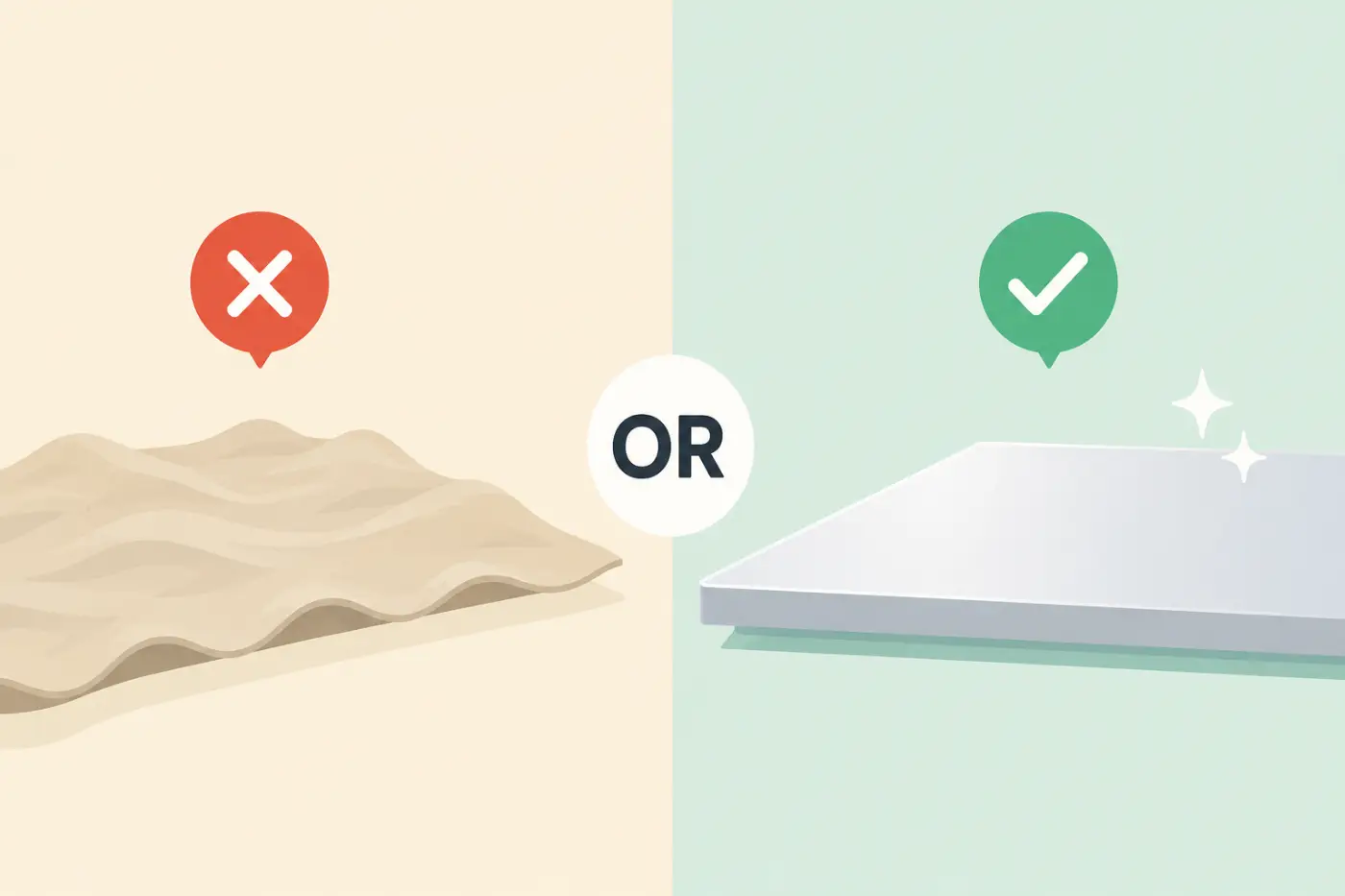
If you’re wondering about smoothe or smooth you’re probably dealing with a spelling mistake that looks surprisingly believable. Both forms may seem possible at first glance. English has many words that add an ending such as e to change their form so it’s easy to wonder if the same thing happens here.
The correct spelling is smooth. The spelling smoothe isn’t the standard English form used in modern American English. If you mean something even flat or pleasant with no rough parts then smooth is the word you want.
The confusion doesn’t stop with spelling. Smooth can work as an adjective verb noun and sometimes part of a larger expression. Its meaning can change slightly depending on how you use it. This guide explains the correct spelling the meanings common uses related words and mistakes that often cause confusion.
Quick Definition
Smooth describes something that has an even surface or movement without roughness bumps or sudden changes. It can also describe a person action voice or experience that feels calm easy or polished.
Smoothe isn’t the standard spelling for these uses. In normal American English writing use smooth.
Direct Answer
Smooth is the correct spelling. Smoothe is not the standard spelling in modern American English.
Comparison Table
| Word or Phrase | Meaning | Example Sentence | When to Use It |
|---|---|---|---|
| Smooth | Even soft calm or without problems. | The table has a smooth surface. | Use this spelling in normal English. |
| Smoothe | Nonstandard spelling. | Avoid this spelling in standard writing. | Do not use it as the normal form. |
Why The Spelling Causes Confusion
The confusion often comes from the way English forms verbs. Many verbs end in a silent e. Words such as move change and improve have an e at the end. When people see smooth they may assume it needs the same ending.
That assumption makes sense at first. The word already ends with a sound that can feel as if another letter might belong there. Yet spelling depends on the history and form of each word. You can’t always add an e just because another English word uses one.
Another source of confusion is pronunciation. Smooth ends with a soft th sound followed by a clear vowel sound. When people say the word quickly they may imagine an extra sound or letter at the end. Writing and speech don’t always line up perfectly.
Online writing can add to the problem. A misspelled form can appear in comments social posts product descriptions or casual messages. Seeing an error often enough can make it look familiar. Familiarity isn’t proof that a spelling is correct.
The simplest solution is to remember the word as one complete unit. Think smooth rather than trying to build it from a shorter form. That removes the temptation to add an extra letter.
What Smooth Means
The basic meaning of smooth is easy to understand. It describes something that feels even and free from rough spots. Think about a polished wooden table. If you run your hand across it and feel no splinters bumps or sharp spots the surface is smooth.
The same idea applies to many other things.
- The road was smooth after the repairs.
- This fabric feels smooth against your skin.
- The stone has a smooth surface.
- She spread the frosting into a smooth layer.
Smooth can also describe movement. A smooth movement happens without sudden stops jerks or awkward changes.
- The dancer made a smooth turn.
- The car gave us a smooth ride.
- The machine runs smoothly.
The word can move beyond physical things too. English speakers often use smooth to describe speech behavior relationships and experiences.
- He gave a smooth presentation.
- The meeting went smoothly.
- She handled the problem with a smooth response.
- The checkout process was smooth.
In these examples the word carries the same basic idea. Something feels even easy controlled or free from rough spots.
Smooth As An Adjective
The most common use of smooth is as an adjective. An adjective describes a person place thing or idea. When smooth describes a physical object it usually means the object has an even surface.
- The glass is smooth.
- The lotion leaves your hands smooth.
- We walked across a smooth floor.
- The baby has smooth skin.
It can also describe liquids and foods.
- Blend the soup until it becomes smooth.
- The sauce has a smooth texture.
- Stir the mixture until it looks smooth.
Here the word tells the reader about texture. Something smooth doesn’t have large lumps rough patches or sharp changes.
Smooth Can Describe Movement
Smooth can also describe how something moves.
A smooth movement is steady and controlled. It doesn’t feel rough or sudden.
- The boat made a smooth turn.
- The elevator ride was smooth.
- She moved through the room with smooth steps.
This use is common in sports dance driving and physical activity.
A basketball player might make a smooth jump shot. A driver might have a smooth ride. A dancer might perform a smooth transition from one move to another.
Smooth Can Describe Sound
Smooth can describe a voice or sound that feels pleasant and even.
- He has a smooth speaking voice.
- The singer has a smooth tone.
- The radio host has a calm smooth delivery.
The word doesn’t mean the sound has a physical surface. Instead it creates a comparison. A smooth voice feels easy to listen to because it doesn’t sound harsh rough or jarring.
Smooth Can Describe Experiences
This is one of the most common modern uses.
If something goes smoothly it happens without major problems.
- The trip went smoothly.
- Everything went smoothly at the event.
- The move went more smoothly than we expected.
- The interview went smoothly.
In these sentences smooth describes the lack of trouble. Nothing feels rough or difficult along the way.
Smooth As A Verb
Smooth can also work as a verb. In this form it means to make something even flat calm or less rough.
For example you might smooth a piece of paper with your hand.
- She smoothed the wrinkles from her dress.
- He smoothed the paper across the desk.
- I smoothed the frosting with a knife.
The verb can also have a more abstract meaning. You can smooth a problem or disagreement by making the situation calmer.
- She tried to smooth things over after the argument.
- He apologized to smooth the situation.
- The manager stepped in to smooth the disagreement.
The phrase smooth things over is especially common. It means to reduce tension and help people get along again.
Smooth As A Noun
The word can also appear as a noun in some contexts. This use is less common than the adjective and verb forms.
For example someone might talk about the smooth in a specialized context. In everyday American English you will usually encounter smooth as an adjective or verb.
Another familiar noun form appears in phrases connected with texture or movement. Still you don’t need to force the noun use into ordinary writing. Choose the form that fits the sentence.
How To Use Smooth In Everyday Sentences
Learning a word becomes easier when you see it in situations that feel familiar. Smooth appears in ordinary conversations far more often than you might think.
Talking About Food
Smooth often describes texture.
- The mashed potatoes are smooth and creamy.
- The peanut butter has a smooth texture.
- Blend the fruit until the mixture is smooth.
- This soup becomes smooth after you puree it.
Here smooth means the food doesn’t have unwanted lumps or rough pieces.
Talking About Skin
People often use smooth to describe skin.
- This lotion makes my hands feel smooth.
- Her skin felt smooth after the treatment.
- The cream leaves your face feeling soft and smooth.
Smooth and soft can appear together but they don’t mean exactly the same thing. Soft describes how something feels in terms of firmness. Smooth describes the surface and the absence of roughness.
Talking About Roads
Smooth is also common when discussing roads and driving.
- The new road is much smoother.
- We had a smooth ride home.
- The highway was smooth for most of the trip.
A smooth road has few bumps cracks or rough sections. A smooth ride means the vehicle moves comfortably without many jolts.
Talking About Work
People often describe a task or process as smooth when it happens without trouble.
- The project went smoothly.
- Everything was smooth from start to finish.
- We had a smooth handoff between teams.
- The event ran smoothly.
This use has become common in workplaces. Still you don’t need business language to use it. The meaning is simple. Things worked well without major problems.
Smooth And Smoothly
These forms are related but they don’t always belong in the same place in a sentence.
Smooth is commonly an adjective.
- The ride was smooth.
- She has a smooth voice.
- The surface feels smooth.
Smoothly is an adverb. It often describes how an action happens.
- The ride went smoothly.
- The machine is running smoothly.
- The meeting ended smoothly.
A useful test is to look at what the word describes.
If it describes a person thing or experience use smooth when the grammar calls for an adjective.
If it describes an action use smoothly when an adverb is needed.
Compare these two sentences.
- The presentation was smooth.
- The presentation went smoothly.
Both are correct. The first describes the presentation. The second describes how it happened.
Smooth And Smoothing
When you add ing to smooth the spelling stays simple.
Smoothing means making something smoother or reducing roughness.
- She is smoothing the frosting.
- He spent the afternoon smoothing the wood.
- The treatment helps with smoothing the surface.
Notice that you don’t add an extra e before ing. The base word is already smooth.
This is another useful reason to learn the word as a complete spelling. Trying to guess the form from pronunciation can create unnecessary confusion.
Smooth And Smoothed
The past form is smoothed.
- She smoothed her dress before the photo.
- He smoothed the paper with his hand.
- They smoothed the rough surface before painting it.
Again the spelling stays based on smooth. You don’t need an extra e.
The same pattern appears in the present participle.
- smooth
- smoothed
- smoothing
These forms are easy once you remember the base spelling.
Common Mistakes With Smooth
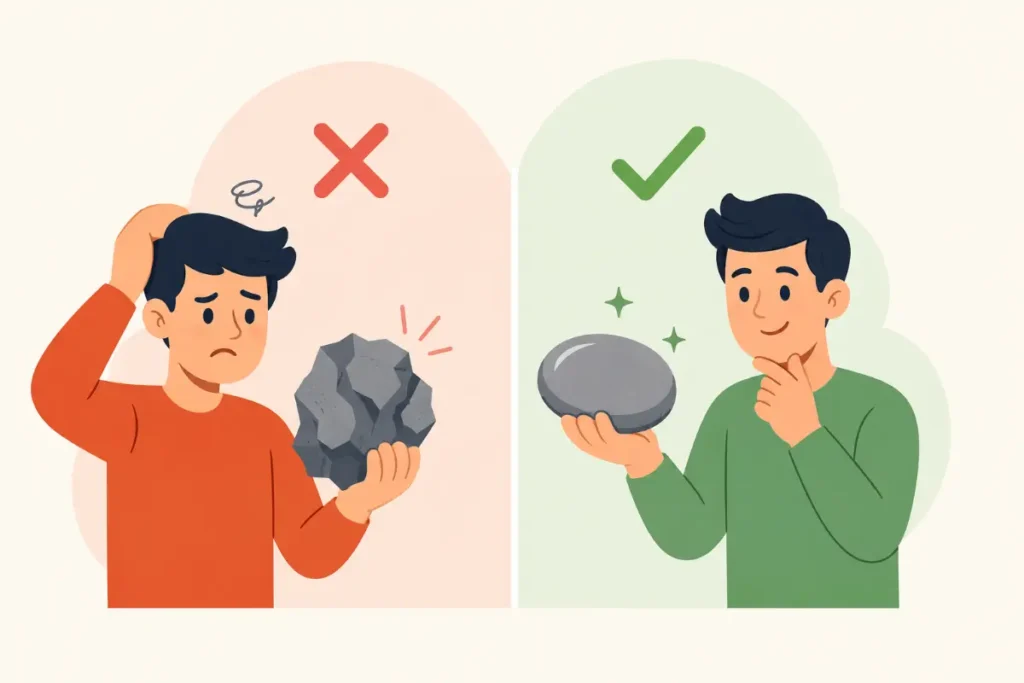
Most mistakes happen when writers try to change the spelling based on a familiar pattern. The best way to avoid them is to understand the correct forms instead of guessing.
Adding An Extra E
The most common mistake is adding an e to the end of the base word.
The standard form is smooth. Adding another letter changes it into a nonstandard form.
Confusing Smooth With Smoother
The comparative form is smoother.
- This fabric is smoother than the other one.
- The new road is smoother than the old road.
You don’t need to add an extra e before er.
Confusing Smooth With Smoothest
The superlative form is smoothest.
- This is the smoothest road in the area.
- That was the smoothest presentation of the day.
Again the base spelling stays the same.
Using Smooth When Smoothly Is Needed
Sometimes the problem isn’t spelling at all. It’s grammar.
Consider these examples.
- The process was smooth.
- The process moved smoothly.
The first sentence uses an adjective after the verb was. The second uses an adverb to explain how the process moved.
Both forms are correct. The choice depends on the job the word performs in the sentence.
Smooth Compared With Similar Words
Understanding related words helps you choose the right term. Smooth has several close synonyms but each one carries a slightly different meaning.
Smooth And Soft
Soft usually describes something that isn’t hard or firm.
- The pillow is soft.
- The blanket feels soft.
Smooth describes the surface.
- The stone is smooth.
- The silk feels smooth.
Something can be soft and smooth at the same time. A silk scarf is a good example. It can feel soft because it isn’t rough and smooth because its surface has few bumps.
Smooth And Flat
Flat means a surface has no major raised or lowered areas.
- The table is flat.
- The paper lies flat on the desk.
Smooth means the surface lacks roughness.
A surface can be flat but rough. A flat concrete floor might still feel rough under your hand. A smooth surface can also have a curve and therefore not be flat.
Smooth And Even
Even can mean consistent or level.
- The surface is even.
- The paint has an even finish.
Smooth often focuses on texture or movement. Even can focus more on consistency or balance.
The words sometimes overlap.
- The road is smooth and even.
That sentence tells us the road has a comfortable surface and doesn’t have major changes in level.
Smooth And Slick
Slick can mean smooth and slippery. It can also describe a polished style that seems carefully designed.
- The floor was slick after the rain.
- He gave a slick presentation.
Smooth usually sounds more positive and neutral. Slick can sometimes suggest that something looks impressive but may feel overly polished or even dishonest depending on the context.
Is Smooth An Adjective Or A Verb
It can be both.
As an adjective it describes something.
- The surface is smooth.
As a verb it describes an action.
- She smoothed the surface.
Context tells you which role the word has. This is common in English. Many words can change their grammatical role without changing their basic spelling.
The History Behind The Word
You don’t need to know the history of a word to spell it correctly but the background can explain why its spelling looks the way it does.
Smooth has been part of English for many centuries. It developed from older forms of the language and has kept a spelling that reflects its long history. Modern English spelling often preserves older patterns even after pronunciation changes.
That is why guessing a spelling from sound can sometimes lead you astray. English spelling isn’t a perfect sound map. The letters we write can reflect history as well as modern pronunciation.
For everyday writing the practical lesson is simple. Learn the standard form smooth and recognize its common forms.
How To Remember The Correct Spelling
A good memory trick doesn’t need to be complicated. In fact the simpler it is the easier it is to use.
Think of smooth as a word that already feels complete. It ends with th and doesn’t need an extra letter.
You can also connect the spelling to familiar words such as smoothly smoother and smoothest. All three keep the same base.
Try writing a few natural sentences.
- The table feels smooth.
- The car has a smooth ride.
- The meeting went smoothly.
- This road is smoother.
- That was the smoothest landing.
Seeing the same spelling across several forms makes the pattern easier to remember.
Another useful trick is to think about the meaning. When you picture a smooth surface imagine a clean simple word with no extra letter at the end. It sounds silly but visual memory can help.
When To Use Smooth In Formal Writing
Smooth is completely acceptable in formal writing. You can use it in reports essays business documents instructions and academic work.
The best choice depends on what you’re trying to describe.
For physical texture you could write:
- The table has a smooth wooden surface.
The dancers moved smoothly across the stage.
- The car provides a smoother ride.
For a process you could write:
- The change happened smoothly with very few problems.
For an action you could write:
- The new system helps everything run smoothly.
None of these uses are too casual. Smooth is a normal English word that works across many levels of writing.
When To Avoid Overusing Smooth
Although the word is useful it can become vague if you use it to describe everything.
For example a sentence such as The whole project was smooth doesn’t tell the reader much. Did the team meet the deadline? Did the software perform as expected? Do the project stay within budget?
Specific language often makes the sentence stronger.
Instead of:
- The project went smoothly.
You might write:
- The team finished the project on time with no major delays.
The shorter sentence isn’t always the better one. Good writing gives readers the detail they need.
Smooth works best when its meaning is clear from the context.
Phrases With Smooth
English speakers use smooth in many familiar expressions. Learning these phrases can help you understand the word beyond its basic dictionary definition.
Smooth Ride
A smooth ride is comfortable and free from sudden bumps or jolts.
- The new car gives you a smooth ride.
The phrase can also describe an experience that happens without major problems.
- The application process was a smooth ride from start to finish.
Smooth Sailing
Smooth sailing is an idiom. It means something is going easily without serious trouble.
- Once we fixed the main problem it was smooth sailing.
The phrase comes from sailing. Calm water makes a boat easier to control. Today people use it for many kinds of situations.
Smooth Things Over
To smooth things over means to reduce tension after a disagreement.
- I called my brother to smooth things over after our argument.
The phrase suggests that you are making a rough situation calmer. It doesn’t necessarily mean that every problem has disappeared.
Smooth Operator
A smooth operator is someone who handles people or situations with confidence and skill. Depending on the context the phrase can sound positive playful or slightly suspicious.
- He’s a smooth operator who knows how to negotiate a good deal.
The phrase often describes someone who seems charming and comfortable in social situations.
What Is The Opposite Of Smooth
The opposite depends on what you’re describing.
For a physical surface the opposite might be rough.
- The first stone is smooth but the second one is rough.
For movement the opposite might be jerky or uneven.
- The old elevator ride was jerky.
An experience the opposite might be difficult rough or problematic.
- The launch wasn’t smooth because several systems failed.
This is a useful reminder that smooth has several meanings. Its opposite changes with the context.
Smooth In American English
Smooth is the standard spelling in American English. It is also widely used in other forms of English.
The spelling does not need an extra e in ordinary usage. You will see the same base spelling in common forms such as smoother smoothest smoothly smoothed and smoothing.
American English also uses smooth in many informal expressions. Phrases such as smooth ride smooth sailing and smooth things over are common in everyday speech.
A Simple Proofreading Trick
When you’re unsure about a spelling don’t stare at the word for too long. Put it into a sentence.
For example try:
The surface is smooth.
Then compare it with the spelling you were considering.
You can also check related forms.
- The surface became smoother.
- The machine runs smoothly.
- She smoothed the paper.
If the base form looks right in all of these sentences you’ve probably got the spelling firmly in mind.
A second useful habit is to look for the extra letter. If you see an unnecessary e at the end of the base word stop and check it. This takes only a second and can prevent a simple mistake.
Why Context Helps With Spelling
Context doesn’t directly tell you how to spell a word but it helps your brain remember it.
Suppose you repeatedly read sentences such as The road is smooth and The machine runs smoothly. Your brain begins to store the word together with its meaning and surrounding words.
- Later when you need to write the word you don’t have to build it letter by letter. You recognize the familiar pattern.
- This is one reason regular reading helps spelling. You’re constantly seeing words used correctly in real sentences.
- Writing also strengthens that memory. The more often you use a word correctly the easier it becomes to retrieve its spelling.
A Quick Guide To The Main Forms
- The base word is smooth.
- The comparative form is smoother.
- The superlative form is smoothest.
- The adverb is smoothly.
- The past tense is smoothed.
- The present participle is smoothing.
These forms keep the same basic spelling. You don’t need to create a new spelling when the word changes form.
Here are the forms in natural sentences.
- The surface is smooth.
- This surface is smoother.
- That is the smoothest finish.
- The machine works smoothly.
- She smoothed the fabric.
- He is smoothing the rough edges.
Learning this small group together is more useful than memorizing one spelling in isolation.
Why Smoothe Looks Like It Could Be Correct
The incorrect form looks believable because English has many words ending in silent e. Words such as breathe bathe clothe and move all use an e at the end.
That pattern can create a false expectation. You may think the word needs the same ending because it has a similar sound.
But spelling doesn’t work by one universal formula. Some words end with e and some don’t. The correct form simply has to be learned and recognized.
In this case the standard form is short and simple. Smooth already contains everything you need.
A Note About Older Or Unusual Usage
You may occasionally find unusual forms in historical texts dictionaries or specialized sources. English has changed over time and writers have sometimes used spellings that aren’t standard today.
That doesn’t make those forms appropriate for ordinary modern writing. If you’re writing for a US audience use the standard modern spelling.
This matters most in practical writing. A school paper a professional email a website article or a business document should use the accepted current form.
How Teachers Can Explain Smooth To Students
For younger learners the best explanation is often the simplest one.
Tell students that the correct word is smooth and that it doesn’t need an extra e. Then connect it to familiar forms such as smoothly smoother and smoothest.
Use pictures and real objects when possible. A smooth stone a rough piece of wood and a soft piece of cloth can help students understand the difference between texture words.
Then use the word in short sentences.
- The stone is smooth.
- The road is smooth.
- Her voice is smooth.
Once students understand the meaning the spelling is easier to retain.
How English Learners Can Practice
English learners can practice this word in several useful ways.
Start with the basic meaning. Connect smooth with an even surface or an easy movement.
Then learn common phrases. Smooth ride smooth voice smooth surface and smooth transition appear often in everyday English.
Next practice the related forms. Use smoother when comparing two things. Used smoothest when comparing three or more things. Use smoothly when describing how an action happens.
Finally write your own examples. Personal sentences are easier to remember because they connect the word to something you already know.
When Smooth Means Calm Or Easy
The word can describe more than texture. It can also suggest that something feels calm controlled and free from trouble.
For example:
- She had a smooth interview.
- The event had a smooth start.
- The conversation went smoothly.
- We had a smooth transition between activities.
Here there is no physical surface involved. Smooth is being used figuratively. The experience is being compared to a surface without bumps.
This kind of figurative language is very common in English. A rough day doesn’t mean the day has a rough physical texture. It means the day was difficult. A smooth process doesn’t have a physical surface either. It means the process happened with little trouble.
Smooth And Rough As Opposites
One of the easiest ways to understand the broader meaning is to compare smooth with rough.
- A smooth road has few bumps. A rough road has many.
- A smooth voice sounds calm and pleasant. A rough voice may sound harsh or strained.
- A smooth process has few problems. A rough process has delays or difficulties.
This contrast makes the meaning easy to remember. When you see smooth think even easy or pleasant. When you see rough think uneven difficult or harsh.

Common Search Questions About Smooth
People often search for this spelling because they have seen the word used in different forms. Most of the confusion can be solved by focusing on the base word and its meaning.
- If you’re writing The surface is smooth use the standard spelling with no extra e.
- If you’re writing The surface is smoother keep the same base.
- If you’re writing The machine runs smoothly add ly to the base.
- If you’re writing She smoothed the paper add ed.
The spelling stays predictable once you know the base form.
FAQs
Is smoothe or smooth correct?
Smooth is the correct standard spelling. Smoothe is not the normal modern English spelling for the word. Use smooth in everyday writing school work professional documents and online content.
Is smooth a real word?
Yes. Smooth is a very common English word. It can describe a surface texture movement voice experience process or action.
How do you spell smooth?
The correct spelling is smooth. It contains one set of letters ending in th and doesn’t need an extra e after them.
Is smooth an adjective?
Yes. Smooth is commonly used as an adjective to describe something even calm pleasant or free from roughness. It can also work as a verb in sentences such as She smoothed the paper.
What is the past tense of smooth?
The past tense is smoothed. For example you can say She smoothed the fabric before folding it.
What is the difference between smooth and smoothly?
Smooth is usually an adjective while smoothly is an adverb. You can say The ride was smooth but The car moved smoothly.
What is the opposite of smooth?
For a physical surface the most common opposite is rough. For movement or an experience the opposite could be jerky uneven or difficult depending on the meaning.
Can smooth describe a person?
Yes. Smooth can describe someone who is confident charming or skilled at handling people. For example He’s a smooth speaker suggests that he speaks in an easy confident way.
Conclusion
If you’ve been stuck on smoothe or smooth the answer is simple. Use smooth. The extra e isn’t part of the standard spelling in modern American English.
Remember that smooth can do several jobs in a sentence. It can describe an even surface a pleasant voice controlled movement or an experience that happens without major problems. It can also work as a verb when you make something even or calm.
The related forms are easy to build once you know the base. Use smoother for a comparison. Use smoothest for the highest degree. When you need the word in your next email article school assignment or message don’t add an extra letter. Write smooth and move on with confidence.

Sienna Watson is a veteran copywriter and communications coach who has helped startup founders, marketers, and professionals polish their writing for over a decade. Realizing that most people don’t need a degree in linguistics—just clear, impactful communication—Sienna focuses on practical grammar, business writing etiquette, and eliminating wordiness. She advocates for plain language, strong verbs, and persuasive prose that gets results.