
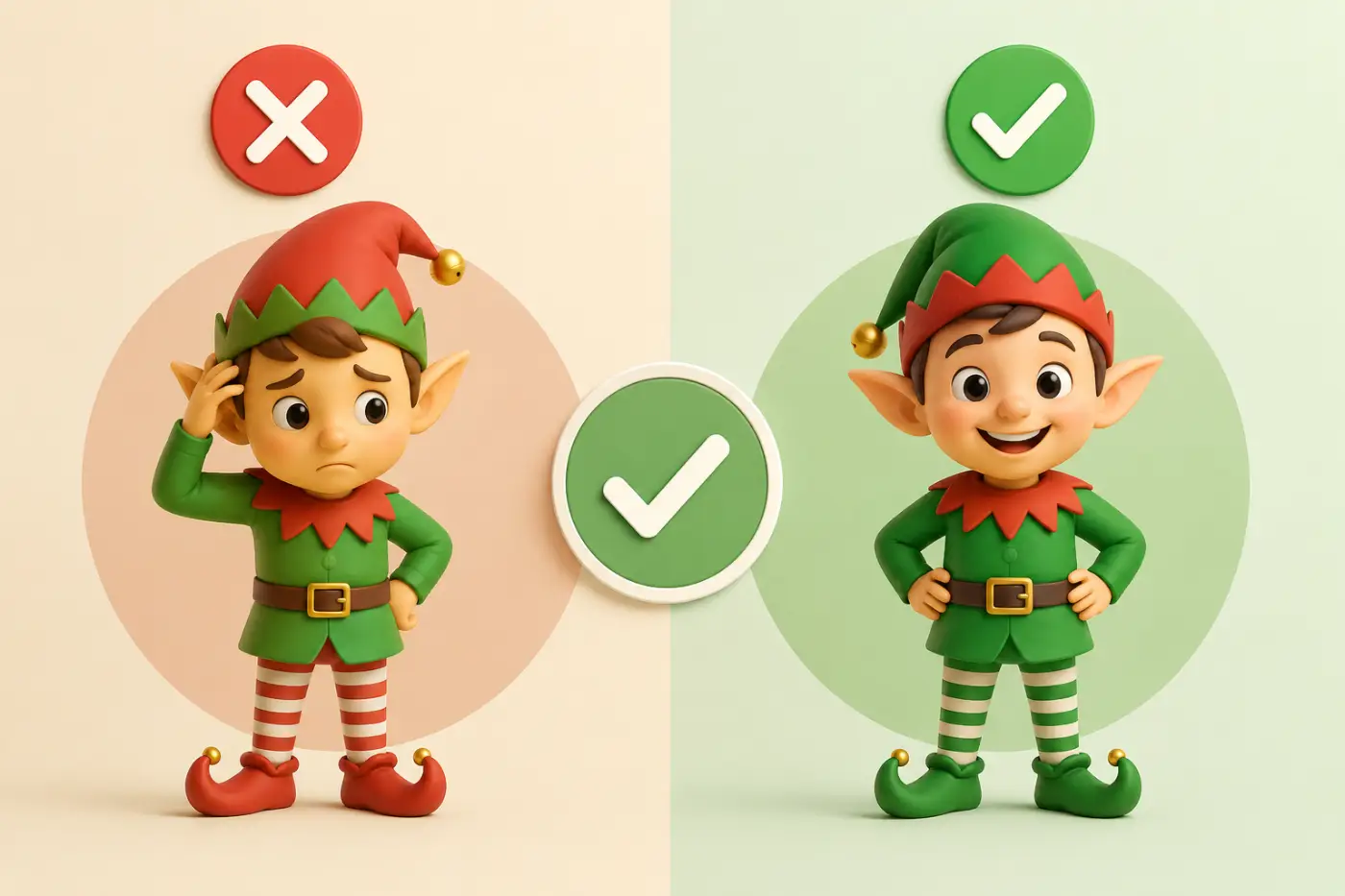
If you’re wondering about elfs or elves the standard plural form is elves. The singular noun is elf and the usual plural is elves.
You may still see elfs from time to time. It isn’t the form most readers expect in standard modern English. In normal writing you should choose elves when you mean more than one elf.
The spelling can feel strange at first because most nouns simply add s or es to make a plural. English has a small group of words that change their spelling when they become plural. Elf belongs to that group.
Once you understand that pattern the spelling becomes much easier to remember. This guide explains why elves is the standard form how the change from f to v works and how to use the word naturally in everyday writing and fantasy stories.
Quick Definition
An elf is a mythical being found in many traditional European stories and later fantasy literature. The standard plural form is elves.
Elfs can appear as a less common variant but elves is the normal plural form used in modern English.
Direct Answer
Elves is the standard plural of elf. Use elves when you’re talking about two or more of these mythical beings.
Comparison Table
| Word | Meaning | Example Sentence | When to Use It |
|---|---|---|---|
| Elf | One mythical being. | An elf appeared in the forest. | Use for one. |
| Elves | More than one elf. | The elves lived in the forest. | Use for two or more. |
| Elfs | A rare or less common plural form. | The old text used elfs. | Avoid it in normal modern writing. |
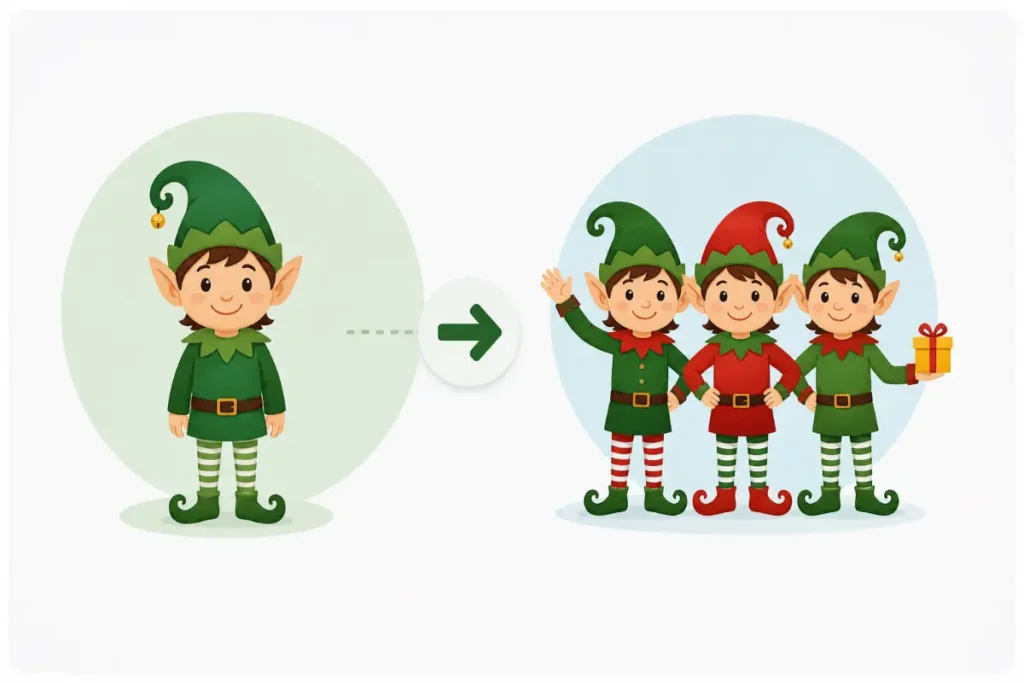
Why Elf Becomes Elves
The main reason people hesitate over this plural is the spelling change. Instead of simply adding s to elf we change the ending from f to v and then add es.
So the pattern is simple.
Elf becomes elves.
The same kind of change appears in several other English nouns. For example leaf becomes leaves and knife becomes knives. The final f changes to v before the plural ending is added.
This can seem odd if you’re learning English because there isn’t one rule that works for every word ending in f. Some words keep the f and simply take s. Others change the spelling.
That means you can’t always look at the final letter and know exactly what the plural will be. You need to learn common word patterns and remember the exceptions.
The F To V Spelling Pattern
The change from f to v is one of the older patterns found in English spelling. Several common nouns use it when they become plural.
Consider these examples.
| Singular | Plural |
|---|---|
| Elf | Elves |
| Leaf | Leaves |
| Knife | Knives |
| Wife | Wives |
| Life | Lives |
| Wolf | Wolves |
| Half | Halves |
| Calf | Calves |
| Loaf | Loaves |
| Shelf | Shelves |
The pattern is easy to spot. A final f becomes v and the word usually takes es.
You don’t need to memorize every word on this list at once. Start with the words you use most often. Elf and elves is especially easy to remember because the plural form appears constantly in Christmas stories fantasy books movies and games.
Why The Plural Is Not Elfs
A common mistake is to treat elf like a regular noun and simply add s. That produces elfs.
The problem is that elf normally belongs to the group of nouns that change their ending in the plural. The standard form developed as elves and that is the form most readers recognize today.
Think about the word knife. You wouldn’t normally write knifes when talking about several knives. You change the spelling to knives.
The same idea applies to elf. You write:
- One elf.
- Two elves.
- Three elves.
- Several elves.
- A group of elves.
The plural ending changes the spelling rather than simply adding one letter.
Examples Of Elves In Real Sentences
The easiest way to understand the difference is to see the words in context. These examples show how elf and elves work naturally in sentences.
One Elf
Use elf when you’re talking about one being.
- An elf was standing near the old tree.
- The story follows a young elf who leaves his village.
- I saw an elf in the holiday display.
- The elf carried a small green bag.
- A friendly elf helped the children find their gifts.
Each sentence refers to one individual. That is why the singular form elf works.
Two Or More Elves
Use elves when the sentence refers to more than one.
- The elves returned to the village before sunset.
- Three elves were waiting outside the workshop.
- The children dressed as elves for the school play.
- The elves worked together to prepare the gifts.
- A group of elves gathered around the fire.
The important detail is the number. One gives you elf. More than one gives you elves.
Using Elves In Fantasy Writing
Fantasy stories use the plural form frequently because they often describe entire groups or races of elves.
For example:
- The elves lived deep inside the ancient forest.
- The young elves trained with bows and swords.
- The kingdom formed an alliance with the elves.
- The elves guarded the northern border.
- Many elves could speak the old language.
In this type of writing elves is the natural choice.
Elves In Christmas Writing
The word is also common in American Christmas traditions. Santa Claus is often described as working with a group of elves who make toys and help prepare gifts.
You might write:
- Santa’s elves worked late into the night.
- The children watched the elves make toys.
- The elves helped Santa load the sleigh.
- A group of cheerful elves welcomed the visitors.
- The story tells how the elves prepare for Christmas.
Notice that the same plural spelling works in both fantasy writing and Christmas stories. The meaning changes with the context but the plural spelling stays the same.
Elves In Traditional Folklore
The modern image of an elf is strongly connected to fantasy books movies games and Christmas stories. The older idea of elves is much broader.
In traditional European folklore an elf was a supernatural being. Different cultures described these beings in different ways. Some stories portrayed them as helpful. Others presented them as mysterious or dangerous.
Over time the word developed many associations. Modern fantasy often presents elves as graceful long lived beings connected with forests magic or ancient knowledge. Christmas stories often portray them as small cheerful helpers who make toys for Santa.
These different meanings don’t change the spelling. One is an elf and several are elves.
Why English Has Strange Plurals
The spelling of elves makes more sense when you understand that English has several types of plural forms.
The most common pattern is simple. Add s to the singular noun.
- Book becomes books.
- Car becomes cars.
- Tree becomes trees.
- House becomes houses.
Some words need es.
- Bus becomes buses.
- Box becomes boxes.
- Dish becomes dishes.
Then there are irregular or changing plurals. These words don’t follow the simple pattern.
- Child becomes children.
- Man becomes men.
- Woman becomes women.
- Mouse becomes mice.
- Tooth becomes teeth.
- Foot becomes feet.
Elf falls into another group where the ending changes.
- Elf becomes elves.
- Leaf becomes leaves.
- Knife becomes knives.
- Wolf becomes wolves.
This is why adding a simple s doesn’t work.
Common Words Like Elf
Learning related words can make the spelling easier to remember. Several everyday nouns follow a similar pattern.
Leaf And Leaves
A leaf is one part of a plant or tree. The plural is leaves.
- One leaf fell from the tree.
- The ground was covered with leaves.
This is one of the easiest words to connect with elf and elves because the spelling change is almost identical.
Knife And Knives
A knife is a cutting tool. The plural is knives.
- I need a sharp knife.
- The chef placed the knives on the table.
Again the f changes to v and the plural ending is added.
Wolf And Wolves
A wolf is a wild animal related to dogs. Its plural is wolves.
- A wolf stood at the edge of the forest.
- The wolves moved through the snow.
This word is especially useful for remembering the pattern because its ending sounds similar to elves.
Wife And Wives
The singular noun wife becomes wives in the plural.
- His wife works at the local library.
- Their wives attended the event together.
The spelling change is the same basic pattern.
Life And Lives
The noun life becomes lives.
- He lived a quiet life.
- Their lives changed after the move.
Be careful with pronunciation here. The singular and plural forms don’t sound exactly the same.
Words Ending In F That Keep The F
Here’s where English can get tricky. Not every noun ending in f changes to v in the plural.
Some simply add s.
For example:
- Roof becomes roofs.
- Chief becomes chiefs.
- Chef becomes chefs.
- Belief becomes beliefs.
- Cliff becomes cliffs.
- Proof becomes proofs.
- Safe becomes safes.
So you shouldn’t assume that every word ending in f must change to v.
That is one reason spelling rules can only take you so far. They help you make a good guess but common words still need to be learned through reading and practice.
The good news is that elves is a very established plural. You don’t need to guess when you see elf. The standard form is easy to learn and widely recognized.
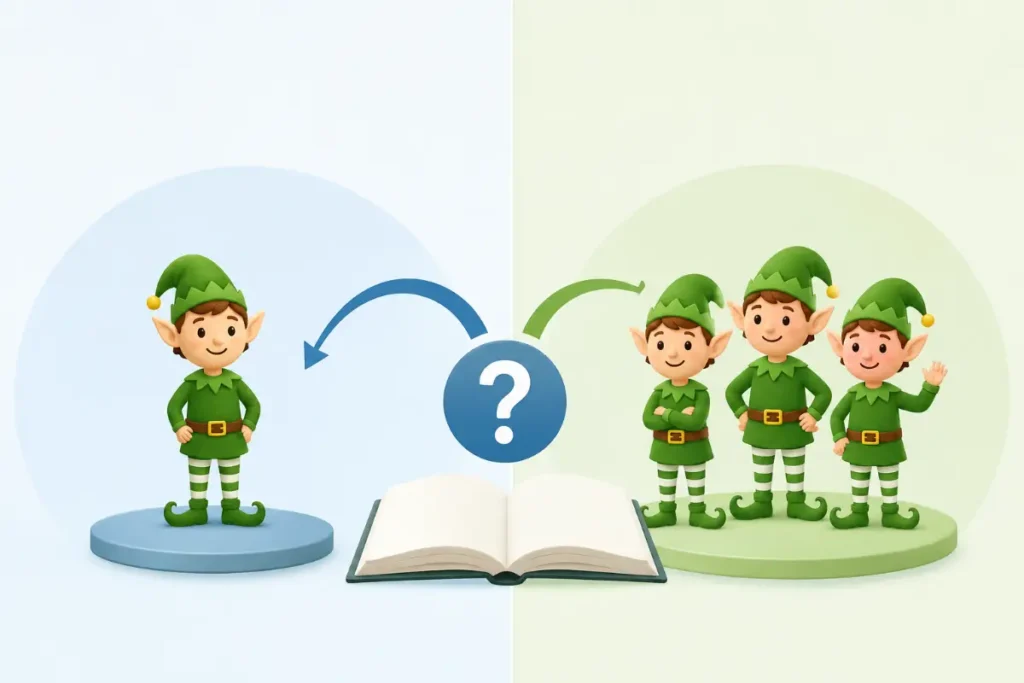
Words With More Than One Plural Form
English has some nouns that can have two accepted plural forms. This is another reason learners may come across unusual spellings.
For example dwarf can be pluralized as dwarfs or dwarves depending on the context and style. In fantasy writing dwarves is especially common.
The word scarf can also have scarfs and scarves as plural forms.
These examples show why English plural rules aren’t completely predictable. Still that doesn’t mean every spelling is equally common. Some forms are far more natural in modern standard English.
For elf the form most readers expect is elves.
Is Elfs Ever Used
You may encounter elfs in older texts specialized writing or unusual uses. Some dictionaries record it as a rare variant. That doesn’t make it the best choice for ordinary modern writing.
If you’re writing an essay an article a school assignment a story or a business document you should use elves for the plural of elf.
There is little benefit in choosing the less common form. Readers may stop and wonder if it is a spelling error. The standard form avoids that distraction.
The safest rule is simple. Use elves unless you have a specific reason to reproduce an unusual historical or stylistic form.
Elves Or Elfs In Fantasy Stories
Fantasy writers almost always use elves when referring to more than one elf. The word has become a familiar part of fantasy vocabulary through novels role playing games movies television and video games.
You might read sentences such as:
- The elves built their city among the trees.
- The elves had lived there for thousands of years.
- A group of elves arrived at the castle.
- The king asked the elves for help.
- The forest was home to hundreds of elves.
The plural form feels natural because readers have seen it so many times.
Using elfs in a fantasy story would stand out. Unless the author deliberately created a special language or historical style it would usually look like a spelling mistake.
The Difference Between Elf And Elves
The easiest way to remember the difference is to focus on number.
- Elf means one.
- Elves means more than one.
For example:
- One elf entered the room.
- Two elves entered the room.
The meaning changes only because the number changes. The spelling changes with it.
You can use the same approach with other singular and plural pairs.
- One leaf becomes several leaves.
- One knife becomes several knives.
- One wolf becomes several wolves.
- One elf becomes several elves.
Seeing the words as pairs makes the pattern easier to remember.
How To Remember The Spelling
A simple memory trick can save you from second guessing yourself. Connect elf with leaf.
An elf becomes elves just as a leaf becomes leaves.
Both words change f to v before taking the plural ending. If you already know how to spell leaves then you have a useful model for remembering elves.
You can also group these words together.
- Elf becomes elves.
- Leaf becomes leaves.
- Wolf becomes wolves.
- Knife becomes knives.
- Wife becomes wives.
The pattern becomes much easier to recognize when you see several examples together.
Another useful trick is to say the singular and plural aloud.
Elf. Elves.
The ending changes slightly in pronunciation too. The final sound in elves is a v sound followed by a z sound. Hearing that difference can help reinforce the spelling.
Pronunciation Of Elf And Elves
The singular and plural forms sound slightly different.
- Elf has one syllable and ends with an f sound.
- Elves also has one syllable but ends with a vz sound.
- The plural is commonly pronounced like elvz.
That pronunciation can actually help you remember the spelling because the v sound matches the written v.
For example:
- One elf.
- Two elves.
When you say the pair aloud you can hear that the plural has changed.
Using Elves As A Possessive
The plural form also appears in possessive constructions. If you are talking about something belonging to several elves you usually write elves’ with an apostrophe after the s.
For example:
- The elves’ workshop was full of toys.
- The elves’ leader spoke to the visitors.
- We visited the elves’ village.
- The elves’ clothing was bright and colorful.
This works because elves is already plural and ends in s.
If you are talking about something belonging to one elf you use elf’s.
- The elf’s hat was green.
- We found the elf’s workshop.
- The elf’s story was fascinating.
So the pattern is:
- One elf. The elf’s home.
- Several elves. The elves’ home.
That small distinction matters in polished writing.
Elves As A Subject
When elves performs an action in a sentence it works as the subject.
- The elves built a new workshop.
- The elves traveled across the mountains.
- The elves helped the villagers.
- The elves guarded the forest.
The plural subject takes a plural verb.
Compare these sentences.
- The elf is ready.
- The elves are ready.
The singular form pairs with is. The plural form pairs with are.
Another example makes the difference clear.
- The elf works at night.
- The elves work at night.
Knowing the plural spelling also helps you choose the right verb.
Elves As An Object
The word can also receive an action in a sentence.
- The children saw the elves.
- The king invited the elves to dinner.
- The villagers thanked the elves.
- The wizard warned the elves about the storm.
In each sentence elves refers to more than one elf.
This is useful to remember because the plural form isn’t limited to the subject position. You can use it anywhere the sentence needs a plural noun.
Common Mistakes With Elves
The most obvious mistake is writing elfs when you mean several elves. Another common problem is using the wrong possessive form.
For example:
- Incorrect: The elfs helped Santa.
- Correct: The elves helped Santa.
Another example:
- Incorrect: The elves’s workshop was large.
- Correct: The elves’ workshop was large.
The second mistake happens because people know the singular possessive uses ‘s and try to apply the same pattern to the plural. Since elves already ends in s the plural possessive normally needs only an apostrophe.
A third mistake is using a singular verb with the plural noun.
- Incorrect: The elves is ready.
- Correct: The elves are ready.
Small grammar details like these can make a big difference in polished writing.
Elves In Modern American English
In American English elves is the normal plural form. You’ll see it in dictionaries children’s books fantasy novels holiday writing news articles and everyday conversations.
The word is familiar to most readers. It doesn’t need special explanation when used in a normal context.
For example:
- The children wrote letters to Santa and his elves.
- The fantasy novel features a kingdom ruled by elves.
- The museum displayed artwork showing elves from old folklore.
- The game lets players create human characters or elves.
In all of these sentences elves is the natural choice.
Elves And The Christmas Tradition
Christmas is one of the most common contexts in which Americans see the word elves. Stories about Santa Claus often describe elves as his helpers.
This tradition has influenced how many people picture elves today. They may imagine small figures wearing colorful clothes and pointed hats who make toys or prepare gifts.
Common phrases include:
- Santa’s elves.
- Christmas elves.
- Santa’s workshop elves.
- Helpful elves.
- Toy making elves.
These expressions all use the same plural form.
If you’re writing holiday content the standard spelling is still elves. The Christmas context doesn’t change the grammar.
Elves In Fantasy Literature
Fantasy literature gives the word another major meaning. In many fantasy settings elves are presented as a distinct people or race with their own culture language history and traditions.
Authors may describe elves as ancient graceful intelligent or closely connected to nature. Other writers create completely different versions. There is no single fictional definition that every fantasy story follows.
The plural spelling remains the same.
- The elves spoke an ancient language.
- The elves lived beyond the mountains.
- The hero traveled with three elves.
- The elves formed an alliance with the humans.
The word works naturally across many different fictional worlds.

Why Reading Helps With Spelling
One of the best ways to improve spelling is simply to read good writing. Every time you see elves used correctly your brain gets another reminder of the spelling.
This works because familiar words become stored as patterns. You don’t need to sound out every letter each time you read. You recognize the whole word.
That is why reading fantasy novels children’s stories holiday books and other material can reinforce the spelling naturally.
Writing helps too. If you use the word several times in your own sentences you’ll start to remember the pattern without stopping to think about it.
A Simple Test
- If you’re still unsure about the plural try this quick test.
- Ask yourself how many you mean.
- If you’re talking about one mythical being write elf.
- If you’re talking about two or more write elves.
- Then check the ending. The plural has v rather than f.
For example:
- One elf.
- Two elves.
- Many elves.
That simple contrast is enough for most everyday situations.
FAQs
Is elves the correct plural of elf?
Yes. Elves is the standard plural form of elf in modern English. Use it when you’re referring to two or more elves.
Is elfs ever correct?
Elfs can appear as a rare or less common variant in some sources. However elves is the standard form expected in normal modern writing. For school work articles stories and everyday communication use elves.
Why does elf change to elves?
The word follows a spelling pattern found in several English nouns. The final f changes to v and the plural ending is added. Similar examples include leaf and leaves and wolf and wolves.
How do you spell the plural of elf?
The plural is spelled elves. The letters are e l v e s. The f in the singular changes to v in the plural.
What is the difference between elf and elves?
Elf refers to one mythical being. Elves refers to two or more. For example you could write that one elf entered the room and then say that several elves followed.
Is Santa’s helpers spelled elves?
Yes. The usual phrase is Santa’s elves. It refers to the group of mythical helpers traditionally associated with Santa Claus.
What is the possessive form of elves?
For something belonging to several elves use elves’. The example you could write the elves’ workshop. For something belonging to one elf use elf’s.
Do elves always mean Christmas characters?
No. Elves appear in many forms of folklore and fantasy. Christmas elves are only one familiar type and fantasy literature often gives elves very different traits and roles.
Conclusion
If you’ve been stuck on elfs or elves the answer is simple. Elves is the standard plural form of elf. Use elf for one and elves for two or more.
The spelling changes because the final f becomes v in the plural. You can remember the pattern by connecting elf and elves with familiar pairs such as leaf and leaves or wolf and wolves.
You may occasionally see elfs in older or specialized writing but it isn’t the form most readers expect today. In ordinary American English elves is the safe and natural choice.
So the next time you write about Santa’s helpers a fantasy kingdom or a group of mythical beings remember one simple pair. One elf. Two elves. That small pattern is all you need to get the spelling right.

Sienna Watson is a veteran copywriter and communications coach who has helped startup founders, marketers, and professionals polish their writing for over a decade. Realizing that most people don’t need a degree in linguistics—just clear, impactful communication—Sienna focuses on practical grammar, business writing etiquette, and eliminating wordiness. She advocates for plain language, strong verbs, and persuasive prose that gets results.