
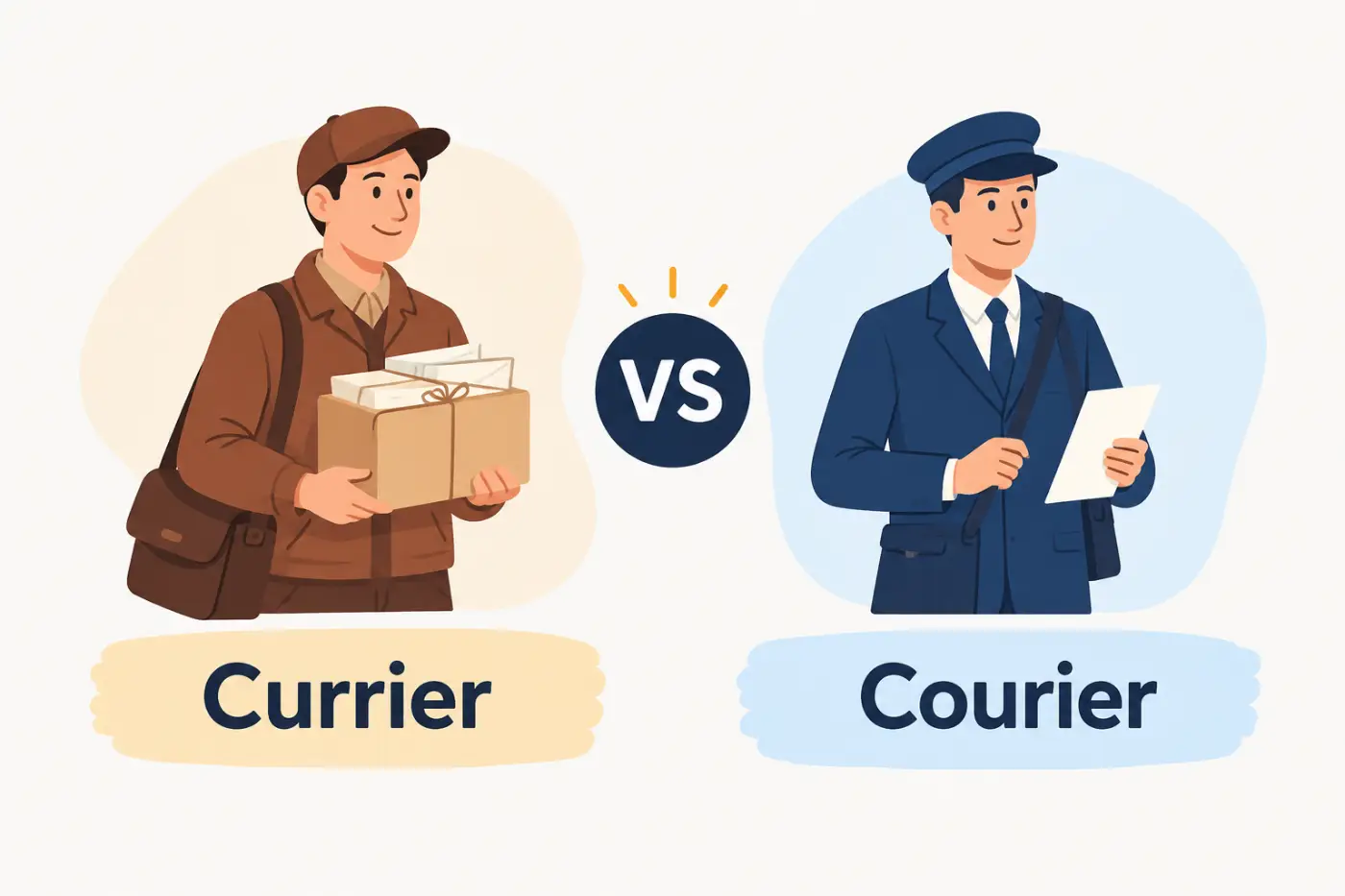
If you’ve searched for currier vs courier you may have wondered if these two words mean the same thing. They look almost identical and both connect to the idea of moving something from one place to another. But they have very different meanings.
Courier is the word you need when you mean a person or company that carries letters packages or other items from one place to another. Currier is a much less common word. It refers to a person who prepares and finishes leather after it has been tanned.
That small spelling difference changes the meaning completely. One word belongs to shipping and delivery. The other belongs to leather work.
This guide explains the difference in plain English. You’ll see clear examples of each word learn where the confusion comes from and get simple ways to remember the correct spelling. We’ll also look at related words such as delivery messenger carrier and courier service.
Quick Definition
A courier is a person or company that delivers messages packages documents or other items. A currier is a person who prepares finished leather by treating and working it after the tanning process.
The two words sound similar but they describe completely different jobs.
Direct Answer
Courier is the correct word for someone who delivers packages documents or messages. Currier refers to a worker who prepares and finishes leather and isn’t the word you want for a delivery service.
Comparison Table
| Word | Meaning | Example Sentence | When To Use It |
|---|---|---|---|
| Courier | A person or company that delivers packages documents or messages. | The courier delivered my package before noon. | Use it when talking about delivery or transport. |
| Currier | A person who prepares and finishes leather. | The currier worked the leather until it had a smooth finish. | Use it when talking about traditional leather work. |
Why These Words Cause Confusion
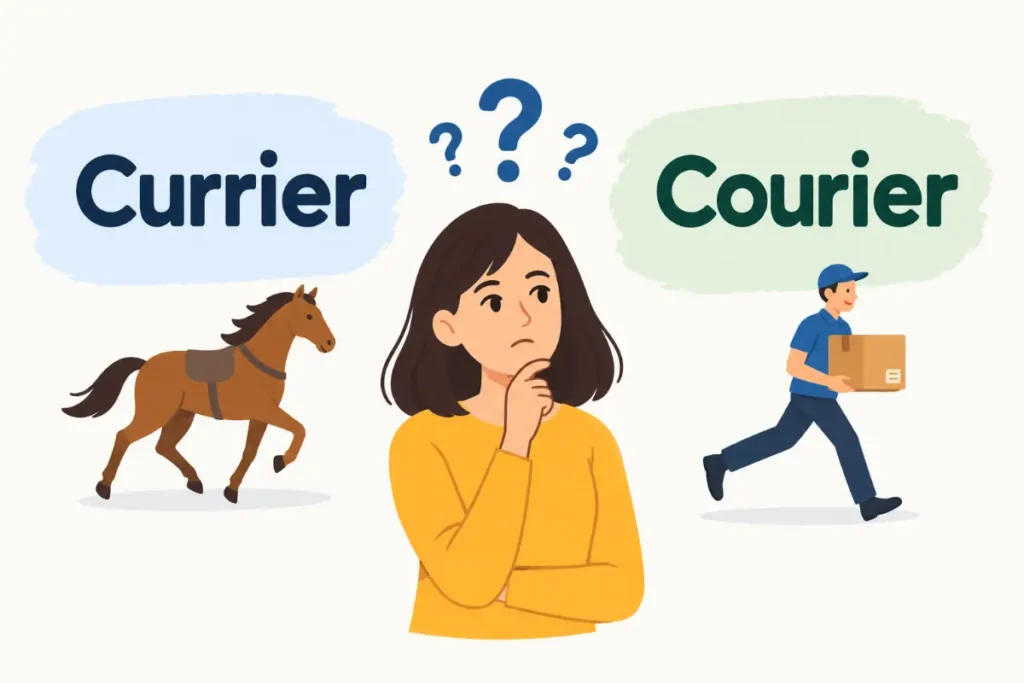
The confusion comes from more than one source. First the words look almost the same. Both contain the letters cur and end with ier. Only one vowel separates them.
Sound also plays a part. In many accents the words can sound close enough that someone who has only heard them spoken may not know which spelling belongs to which meaning.
There is another reason this mix up happens. Most people know the word courier because package delivery is part of everyday life. The word currier is much less common. Unless you’ve read about leather making or studied an older trade you may rarely see it.
That creates a strange situation. You may recognize the spelling of the delivery word but still hesitate when you need to write it. You might remember that it sounds like something related to carrying an item but accidentally leave out the ou.
The best solution is to connect each spelling with its meaning. Don’t try to remember the letters alone. Think about the job each word describes.
A courier carries things from one place to another. A currier works with leather.
Once you make that connection the difference becomes much easier to recall.
What Does Courier Mean
A courier is a person who transports something from one location to another. In modern English the word most often refers to someone who delivers packages documents letters or other goods.
Courier services operate in many settings. A business may use a courier to send contracts to a client. A hospital may use a courier to move medical supplies between locations. An individual may hire a courier to deliver a package across town.
The word can describe both the worker and the service.
For example you could say that a courier delivered your package. You could also talk about a courier company that handles deliveries for businesses and customers.
The basic idea stays the same. Something needs to move from one place to another and a courier handles that delivery.
Courier Examples
Here are some natural examples.
- The courier arrived at my office just before lunch.
- I received a message saying the courier was on the way.
- The company hired a local courier to deliver the documents.
- Please give the package to the courier when they arrive.
- Our courier service delivers packages throughout the city.
- She works as a courier and spends most of her day making deliveries.
These sentences show how flexible the word can be. It can refer to a person who makes the delivery or to the service that provides it.
What Does Currier Mean
A currier is a person who prepares and finishes leather after it has gone through the tanning process.
Leather making involves several stages. Animal hides need treatment before they become usable leather. Tanning helps preserve the hide and turns it into a durable material. After tanning the leather can go through additional work to improve its texture appearance flexibility and usefulness.
A currier performs this finishing work.
Traditional currying could involve cleaning smoothing stretching coloring and treating leather. The exact methods depended on the type of leather and the period in history.
Today the word currier is uncommon in everyday American English. You are more likely to see it in historical writing leather trade discussions dictionaries or descriptions of traditional crafts.
That doesn’t make the word incorrect. It simply belongs to a much narrower area of language.
Currier Examples
- The currier prepared the leather for the next stage of production.
- The village once had several skilled curriers.
- Historical records mention a currier who worked near the old market.
- The currier treated the leather to improve its texture.
The museum exhibit explains how a traditional currier prepared leather.
These examples make the difference clear. A currier works with leather. A courier delivers things.
Courier And Delivery Services
The word courier is especially common in modern shipping. Online shopping has made delivery language part of everyday conversation. People order products online and then track their packages as they move through different stages.
A courier may collect a package from a sender and deliver it directly to the recipient. Some services focus on local deliveries while others operate across states or countries.
Businesses also depend on courier services for time sensitive deliveries. A law office might send legal documents to another office. A medical facility might need supplies delivered quickly. A store may use a courier to deliver an order to a customer on the same day.
The term can apply to many kinds of items.
Documents
Couriers often deliver important documents. These may include contracts forms applications records or signed paperwork.
For example a company might send a courier to deliver a signed contract to another office.
Packages
Package delivery is one of the most familiar uses of the word.
You might receive a tracking notification that says your package has been handed to a courier. In that context the word refers to the delivery worker or company handling the shipment.
Food And Local Orders
Some local services use couriers to deliver meals groceries flowers and other goods.
For example a restaurant may use a courier to bring an order directly to a customer. A florist might also use a courier to deliver flowers across town.
Business Deliveries
Businesses often use courier services when timing matters.
A company might need a document delivered across the city within a few hours. Instead of using regular mail it can hire a courier service for faster local delivery.
How Courier Is Used In A Sentence
The word usually works as a noun. It identifies the person or service responsible for carrying something to its destination.
Consider this sentence.
The courier delivered the package to my front door.
Here courier is the person who made the delivery.
Now consider this example.
We hired a courier for the same day delivery.
Here the word refers to the delivery service rather than one specific person.
You can also use the word in phrases such as courier service courier company courier driver and courier delivery.
These combinations are common because they clearly connect the word with transportation and delivery.
Courier As A Verb
The word courier can also appear as a verb although this use is less common in everyday conversation.
As a verb it means to send or deliver something by courier.
For example you might see a sentence such as this in formal business writing.
The documents were couriered to the client.
The meaning is clear. Someone sent the documents through a courier service.
In everyday American English many people would simply say that they sent or delivered the documents. Still couriered is a valid form and you may encounter it in business or shipping contexts.
The History Of The Word Courier
The word courier has a long history. It comes from French and is related to words connected with running and carrying messages. Historically couriers were messengers who traveled from one place to another to deliver information.
Long before modern package delivery services people depended on messengers to carry letters and important news. A courier might travel by horse or on foot depending on the distance and time period.
The modern meaning grew from this older idea of carrying messages and items from one place to another.
That history gives the word a useful mental image. Picture someone carrying a message from one location to another. That person is a courier.
Today the job may involve a bicycle a car a van or another form of transportation rather than a horse. The basic idea remains the same.
The History Of Currier
Currier comes from an old trade connected with leather preparation. A currier worked with hides after tanning and helped turn them into finished leather suitable for different uses.
Leather was an important material for centuries. People needed it for shoes saddles belts bags clothing book covers harnesses and many other goods.
Because leather played such a large role in daily life curriers were skilled tradespeople in many communities.
The word still exists in English but its everyday use has declined. Modern industrial leather production uses specialized equipment and processes. As a result most people don’t encounter the traditional job title in normal conversation.
That difference in frequency explains part of the confusion. Courier is a common modern word while currier is a specialized and historical term.
A Simple Way To Remember The Difference
Think about the extra letters in courier.
The word contains our after the first letter. You can connect that spelling with the idea of moving something out from one place to another.
Another useful trick is to remember the job rather than the letters.
- A courier carries.
- A currier conditions leather.
The two words describe two different kinds of work. One moves goods. The other prepares hides.
- You don’t need a complicated spelling rule. A clear mental picture is enough.
- Picture a delivery driver standing at your door with a package. That’s your courier.
- Now picture a craft worker treating a piece of leather in a workshop. That’s a currier.
- Those two images give you a quick way to choose the right word when you’re writing.
How To Spell Courier Correctly
The spelling courier can look unusual at first. The tricky part is the group of vowels in the middle. People sometimes leave out the u or rearrange the letters and end up with a spelling that doesn’t match the standard word.
The safest approach is to remember the complete spelling as c o u r i e r. The word has our after the first letter and ends with ier. Breaking it into smaller parts can make the pattern easier to recognize when you’re typing quickly.
A useful mental image can help too. Think of a courier carrying a package on a route from the sender to the recipient. Connect that delivery image with the spelling and the word becomes easier to recall.
How To Spell Currier Correctly
Currier has a different spelling because it describes a different occupation. It begins with cur and contains a double r before the final ier.
The word is much less common than its delivery related counterpart. If you’ve never studied leather making or read about historical trades you may have little reason to encounter it.
That rarity can actually make the spelling harder to remember. When a word appears only occasionally your brain doesn’t get enough exposure to build a strong visual memory.
If you do need to use the word remember its connection with leather. A currier prepares and finishes leather after tanning. That meaning gives the unusual spelling a clear place in your memory.
Currier vs Courier In Real Sentences
Seeing both terms in context makes the difference much easier to understand. The words may look similar on a page but their meanings become obvious when you place them in natural sentences.
Consider these examples.
- The courier delivered the package before noon.
- The currier prepared the leather for use in making saddles.
Those sentences describe completely different jobs. The first involves delivery. The second involves leather work.
Here are a few more examples.
The courier called to confirm that the package had arrived.
- The currier inspected the leather before beginning the finishing process.
- The company hired a courier to move important documents across town.
- The old records describe a skilled currier who worked near the marketplace.
- The courier loaded the parcels into the delivery van.
- The museum display explains how a currier worked with leather in earlier centuries.
Context gives you a strong clue. If the sentence mentions packages mail documents tracking delivery or transportation then courier is almost certainly the word you need. If it talks about hides tanning leather saddles or traditional crafts then currier fits the meaning.
Common Mistakes With Courier
The most common problem isn’t confusing the meaning of the two words. It’s simply spelling the delivery word incorrectly.
Because courier contains several vowels in a row people may write it based on how they think it sounds. That can lead to missing letters or putting them in the wrong order.
Leaving Out The U
A writer may see the word as corier instead of courier.
That spelling is incorrect. The u belongs after the first o.
Correct example.
The courier picked up the package at 10 a.m.
Incorrect example.
The corier picked up the package at 10 a.m.
Switching The Vowels
Another common problem comes from moving the vowels around.
The correct spelling contains oui near the middle. When people spell from memory they may rearrange those letters.
Reading the correct form often is the easiest fix. Your eyes gradually become familiar with the proper pattern.
Adding An Extra Letter
Some people also add letters because the word sounds longer than it looks. This can happen when writing quickly or trying to spell the word phonetically.
English spelling doesn’t always match pronunciation one letter at a time. That’s why it helps to remember the written form rather than trying to build the word entirely from its sound.
Common Mistakes With Currier
The word currier creates a different problem. Since most people know courier much better they may automatically use that spelling even when discussing leather work.
For example someone writing about an old leather trade might accidentally call the worker a courier. That changes the meaning completely.
- A courier delivers something.
- A currier prepares leather.
The easiest way to avoid this error is to identify the subject before choosing the spelling. Ask yourself what the person actually does.
If the person carries packages or messages use courier.
If the person prepares and finishes leather use currier.
Courier And Carrier Are Not The Same
Another word that often appears alongside courier is carrier. The two words are related but they don’t always mean exactly the same thing.
A carrier is generally a person company or organization that transports something. The term can describe businesses that move packages passengers goods or other items.
A courier usually focuses on delivering messages documents packages or other items to a particular destination.
For example a shipping company can act as a carrier. A local delivery worker may act as a courier.
The words can overlap in some situations. Still carrier is broader while courier often suggests direct delivery from one location to another.
Consider these sentences.
- The carrier transported the shipment across the country.
- The courier delivered the contract to the client’s office.
The first sentence focuses on transportation. The second focuses on delivery to a specific recipient.
Courier And Messenger Are Similar
A messenger is someone who carries a message from one person or place to another. A courier can also perform this role.
The difference comes down to usage and context. Messenger often focuses on the act of carrying a message. Courier can refer to messages but also commonly describes package and document delivery.
For example.
- The messenger delivered the letter before sunset.
- The courier delivered the legal documents to the office.
Both sentences describe someone carrying something to another person. The second sounds more connected to a professional delivery service.
Historically the line between messenger and courier could be even less clear. Couriers often carried important messages over long distances. Today the word courier has a strong connection with package delivery.
Courier And Delivery Driver
A delivery driver and a courier can perform similar work. The difference often comes from how the job is described.
A delivery driver usually drives a vehicle to transport goods. The term can apply to someone delivering restaurant orders packages groceries or other products.
A courier may travel by car van bicycle motorcycle or even on foot. The focus is more on the delivery service than on the specific vehicle used.
For example a company might advertise for a courier to make same day document deliveries. A grocery store might hire a delivery driver to bring orders to customers.
There is plenty of overlap. The exact job title depends on the company and the type of delivery.
Is Courier Always A Person
No. Courier can refer to a person or to a business or service that handles deliveries.
When someone says the courier left a package at the door they usually mean the delivery worker.
When someone says the package was sent by courier they may mean the delivery company or service.
The context tells you which meaning applies.
For example.
The courier rang the doorbell.
Here the word most likely means the person who made the delivery.
Now consider this sentence.
- We sent the documents by courier.
- Here it refers to the delivery method or service.
This flexible use is common in English. The same noun can describe both the person performing a service and the service itself when the context makes the meaning clear.
Is Currier Still A Common Job
Not in ordinary modern conversation.
A currier is a real occupation but the term has become uncommon because traditional leather trades are less visible in daily life. Modern leather production often takes place in large industrial settings with specialized processes and job titles.
You may still encounter the word in historical books museums articles about leather craftsmanship and discussions of traditional trades.
The word can also appear in family names and place names because occupations often became surnames in English speaking communities.
That doesn’t mean every person named Currier has a connection to the old trade. A surname can survive long after the occupation itself becomes rare.
Why The Extra O Matters
The spelling difference between the two words gives you a useful visual clue.
- Courier contains our.
- Currier contains urr.
Those middle letters point to two very different meanings.
You can think of the extra o in courier as part of the word’s connection with going outward. A courier takes something from one place and moves it toward another.
For currier think of cur as the start of a leather trade word. The double r helps separate it visually from the delivery term.
These aren’t formal spelling rules. They’re memory aids. The goal is simply to give your brain something concrete to hold onto.
When To Use Courier
Use courier when you mean a person service or company that delivers something.
Common situations include packages documents letters food flowers medical supplies and business materials.
For example.
- I need a courier to deliver these documents today.
- The courier should arrive within an hour.
- We use a local courier for urgent business deliveries.
- The package was sent by courier.
- The courier service offers same day delivery.
All of these sentences involve moving an item to a recipient. That is the central meaning you need to remember.
When To Use Currier
Use currier only when you are referring to the person or trade involved in preparing and finishing leather.
For example.
- The currier treated the leather before it was used to make the boots.
- A skilled currier could improve the texture and flexibility of leather.
- The book describes the daily work of a nineteenth century currier.
- The museum has tools once used by curriers.
This word isn’t something you’ll need in most everyday writing. If you’re talking about shipping a package then it almost certainly isn’t the word you want.
A Quick Memory Trick
Think of two pictures.
- First picture a delivery worker holding a box. That’s a courier.
- Now picture a craft worker working on a piece of leather. That’s a currier.
The meanings are so different that the spelling becomes easier to separate.
You can also remember the simple contrast.
- Courier delivers.
- Currier works with leather.
That short association is enough for most people. You don’t need to memorize a complicated grammar rule.
Common Phrases With Courier
Some phrases appear so often that learning them as complete expressions can make the word easier to remember.
Courier Service
A courier service is a business or operation that transports and delivers items.
Example.
The company uses a local courier service for urgent documents.
Courier Company
A courier company provides delivery services to customers and businesses.
Example.
We chose a courier company that offers local delivery.
Courier Driver
A courier driver is someone who drives while making deliveries for a courier service.
Example.
The courier driver arrived earlier than expected.
Courier Delivery
Courier delivery refers to an item being delivered by a courier service.
Example.
The store offers courier delivery within the city.
Send By Courier
This phrase means to use a courier service to send something.
Example.
We need to send these documents by courier today.
These expressions all connect the word with transportation and delivery. Seeing them together reinforces the correct meaning.
Common Phrases With Currier
Currier appears in far fewer everyday expressions because the word describes a specialized occupation.
You might see phrases such as skilled currier traditional currier leather currier or currier trade in historical and craft related writing.
For example.
- The skilled currier prepared the leather for a local saddle maker.
- The museum explains the tools once used by a traditional currier.
- The book describes the currier trade in an old American town.
These phrases make sense because they all connect the word with leather preparation.
A Useful Spelling Test
When you see a sentence with one of these words try replacing it with a simple description.
If the sentence still means delivery person then courier is the right choice.
If it means leather worker then currier is the right choice.
For example.
The ___ delivered my package.
The phrase delivery person fits naturally. That tells you to use courier.
Now try this sentence.
The ___ finished the leather before it was made into a saddle.
The phrase leather worker fits. That points to currier.
This test focuses on meaning instead of spelling. That’s often easier when two words look almost identical.
What To Say Instead If Currier Feels Unfamiliar
In everyday writing you usually don’t need to use currier unless you’re specifically discussing leather work. If your audience isn’t familiar with the traditional trade you can explain the term the first time you use it.
For example you could write that a currier is a worker who prepares and finishes leather.
After that you can use currier normally if the subject continues.
This approach helps readers understand specialized vocabulary without slowing down the rest of the article.
You don’t need to avoid less common words. You just need to give readers enough context to understand them.
What To Say Instead Of Courier
Courier is already a common word but other terms can fit depending on the situation.
- Delivery driver works when you want to focus on the person driving a vehicle.
- Messenger works when the main task involves carrying a message.
- Carrier is useful when talking about transportation on a broader level.
- Delivery service works when you mean the business or system rather than an individual worker.
These words overlap but they aren’t perfect substitutes. Choose the one that best matches the job you’re describing.
The Biggest Mistake To Avoid
The biggest mistake is treating these words as spelling variants.
They aren’t.
Changing one letter changes the word and its meaning. If you write about a package delivery and use currier your reader may wonder why leather work suddenly entered the discussion.
That kind of error can make otherwise clear writing look careless.
The fix is simple. Don’t memorize the two spellings as a pair without their meanings. Memorize each word with its job.
- Courier means delivery.
- Currier means leather work.
That distinction is more useful than any complicated spelling trick.
Part 4 completes the article with practical usage guidance, FAQs, the conclusion, and the meta description.
Currier vs Courier In Everyday Writing
The difference becomes easier to understand when you place both words in everyday situations. Most people will use courier when they talk about packages, documents, deliveries, or business services. Currier is much less likely to appear unless the topic involves leather making or older trades.
Imagine that your company needs to send an important contract to another office. You might arrange for a courier to collect the document and deliver it safely. The person making the delivery is a courier, and the service can also be called a courier service.
Now imagine a book describing traditional leather workers. It might explain how a currier cleaned, softened, stretched, and finished leather after it had been tanned. The word fits because the subject is leather work rather than delivery.
This simple context test can prevent most spelling mistakes. Think about the job before you think about the spelling. If the job involves carrying something to another place, courier is almost certainly the word you need. If the job involves preparing leather, currier is the better choice.
Currier vs Courier In Business Writing
Business writing uses courier far more often than currier. Companies regularly send contracts, invoices, samples, legal papers, products, and other items between locations. A courier can handle these deliveries for a business.
For example, a company might say that a courier collected a package from its office at nine in the morning. It could also say that the company hired a courier service for important documents. Both uses are natural and common.
Currier has a very different place in professional writing. You might see it in a history book, a museum description, a craft article, or a discussion about the leather industry. It would be unusual to see the word in an ordinary business email about shipping.
This difference in frequency can help you make a quick choice. If your sentence is about modern delivery, courier will usually fit. If the sentence discusses leather production, currier may be correct.
Examples That Make The Difference Clear
Here are some examples that show how the two words work in context.
The courier brought the package to our office before lunch.
We asked a courier to deliver the signed documents.
- The courier service collects parcels from our warehouse every afternoon.
- A courier delivered the replacement part to the customer.
- The company uses a local courier for urgent documents.
- The currier prepared the leather before it was used to make shoes.
- The museum display explains the work of a traditional currier.
- The old workshop employed several skilled curriers.
- The currier softened the leather and gave it a smooth finish.
The book describes how curriers worked with hides in earlier centuries.
Notice how the surrounding words give you a clue. Packages, documents, customers, offices, and deliveries point toward courier. Leather, hides, tanning, finishing, and workshops point toward currier.
Why Context Matters More Than Spelling
It can be tempting to focus only on the letters because the two words look so similar. That approach makes the problem harder. English has many words that look alike but have completely different meanings.
A better method is to ask what the sentence is actually describing. You can often identify the correct word before you even think about its spelling.
- Suppose you write, “The _____ delivered my passport.” The sentence clearly describes a person who transports something. Courier fits naturally.
- Now consider, “The _____ prepared the hide for use.” This sentence describes leather work. Currier makes sense.
The meaning gives you the answer first. The spelling comes second.
This is also useful when proofreading. If you see one of these words in your writing, don’t just check the letters. Read the full sentence and ask what role the person is performing. That extra step can catch an error that a simple spell checker might miss.
Can Courier Refer To A Company
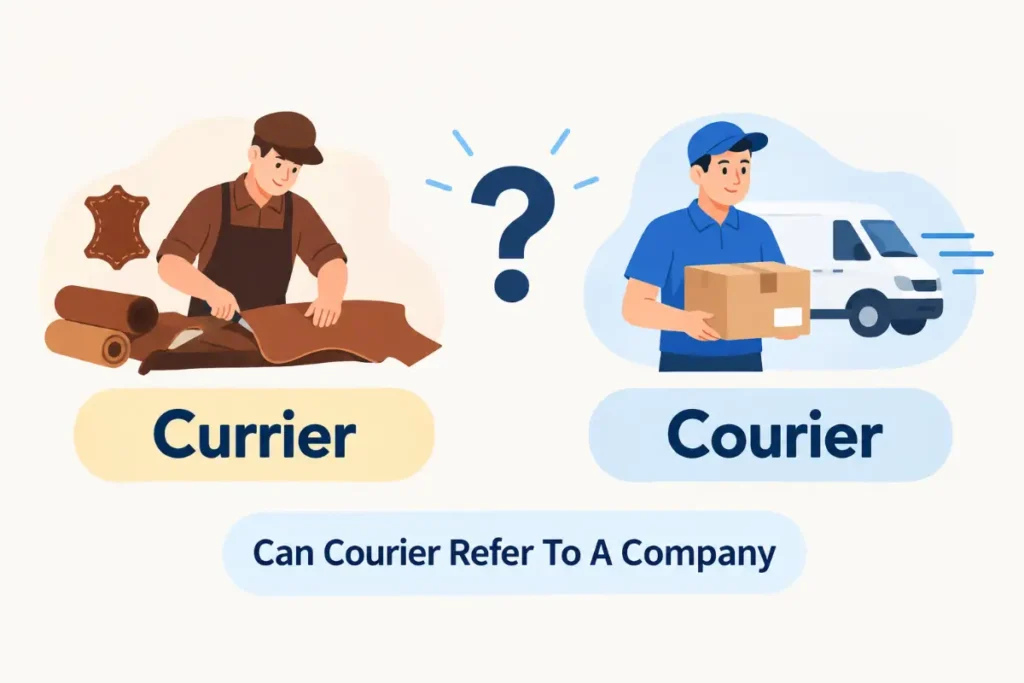
Yes. Courier can refer to a person who makes deliveries, but it can also describe a delivery company or service.
For example, someone might say, “The courier called to confirm the delivery.” Here, courier most likely means the delivery worker.
Someone could also say, “We use a courier for all our local shipments.” In this context, the word may refer to the company or service rather than one specific worker.
The exact meaning comes from the sentence. This flexible use is one reason courier appears so often in modern English.
If you want to be more specific, you can use phrases such as courier company, courier service, delivery company, or delivery service. These expressions make the business meaning especially clear.
Can Currier Refer To A Company
Currier can describe a person who works with leather, but modern readers are unlikely to use the word for an ordinary company. The occupation is specialized and is often discussed in historical or craft settings.
A business connected to this trade could describe itself using terms related to leather tanning, leather finishing, or leather production. The word currier may still appear when the company or craft specifically uses the traditional term.
For most general writing, you won’t need this word very often. If you do use it, make sure the surrounding sentence makes the leather related meaning clear.
Currier And Courier In Historical Texts
Historical writing can make these words especially confusing. Older texts often discuss occupations that are not common today. A reader may encounter currier while reading about a town, guild, workshop, or trade from centuries ago.
Courier also has a long history. People have used the word for individuals who carried messages or traveled with important information. Its modern meaning expanded naturally into the delivery of packages and documents.
Currier developed in connection with the leather trade. A currier worked on leather after the initial tanning stage and helped prepare it for practical use.
The two words therefore have separate histories even though their spellings look related. They didn’t become different versions of the same job. Each word developed around a different type of work.
How To Proofread These Words
Proofreading becomes simple when you use a meaning check. Start by locating the word in your sentence. Then ask what the person or service is doing.
If the sentence describes carrying, delivering, transporting, or bringing something to another location, check for courier.
If the sentence describes treating, smoothing, coloring, stretching, or finishing leather, check for currier.
You can also replace the word with a simpler phrase. For example, replace courier with delivery worker. If the sentence still makes sense, courier is probably right.
For currier, replace the word with leather worker. If the sentence describes someone preparing leather, currier may be correct.
This method works well because it checks meaning rather than appearance. It also helps you catch errors that come from typing quickly.
A Short Practice Test
Try choosing the correct word in each sentence.
- The _____ delivered the parcel to my office.
- The _____ prepared the leather for the shoemaker.
- We called a _____ when the documents had to arrive that afternoon.
- The museum explained how a _____ worked with leather.
- The company hired a _____ service for local deliveries.
- The old workshop was operated by a skilled _____.
The answers are courier, currier, courier, currier, courier, and currier.
The pattern is easy once you connect each word to its job. Courier belongs to delivery. Currier belongs to leather work.
What Does Courier Mean In Simple English
Courier means a person or service that takes something from one place to another. That item can be a letter, package, document, parcel, food order, or other delivery.
The word is especially common when the delivery needs to be handled by a specific person or service. Businesses often use couriers for documents and packages that need direct delivery.
A courier can work locally or travel between different areas. The exact service depends on the company and type of delivery.
In simple terms, think of courier as a delivery word.
What Does Currier Mean In Simple English
Currier means a person who prepares and finishes leather after it has gone through tanning. The work can involve making the leather softer, smoother, cleaner, or more suitable for its final purpose.
The word comes from a traditional trade. Modern readers may not see it often because the occupation is specialized.
In simple terms, think of currier as a leather work word.
Is Currier A Common Word
No. Currier is a relatively uncommon word in modern everyday English. Most people don’t need it in ordinary conversation or basic business writing.
You are more likely to find it in historical material, leather craft discussions, museum descriptions, or writing about traditional occupations. That doesn’t make the word incorrect. It simply means that its use is limited.
If you are writing about a leather worker, using currier can be precise and useful. If you are talking about someone delivering a package, use courier instead.
Is Courier A Common Word
Yes. Courier is a common word in modern English. It appears in conversations about deliveries, online shopping, business shipments, documents, and local transport services.
You may hear someone say that a courier is coming to collect a package. You may also see courier used in business names and service descriptions.
Because the word is so common, its spelling is worth learning correctly. Adding or removing a letter can change the meaning completely.
Can A Courier Deliver Documents
Yes. Couriers often deliver documents, especially when the documents need direct or timely transport.
A company might use a courier to send signed contracts, legal papers, application forms, certificates, or other important documents. The service can be local or cover a larger area.
The word doesn’t mean that the item must be a package. A document can also be carried by a courier.
Can A Courier Deliver Food
Yes. The word can also describe someone who transports food orders. In some settings, a business may use courier to describe a delivery worker who brings food from a restaurant or kitchen to a customer.
The exact term used can vary by company. You may also hear delivery driver or delivery worker.
The key idea stays the same. The person is transporting something from one place to another.
Does Currier Have Anything To Do With Delivery
No. Currier does not mean a delivery worker. It refers to the traditional occupation of preparing and finishing leather.
This is the most important distinction to remember. The similar spelling does not create a shared meaning.
If you write that a currier delivered a package, your reader may understand the sentence literally as saying that a leather worker made the delivery. That may not be what you intended.
Can Spell Check Catch The Difference
A basic spell checker may not catch this mistake because both words are valid English words. If you type currier when you mean courier, the software may see a correctly spelled word and leave it unchanged.
That is why meaning based proofreading matters. A spell checker can tell you that a word looks like a valid English word. It cannot always tell you that the word doesn’t belong in your sentence.
When two valid words are easy to confuse, read the sentence for meaning. This is especially useful with pairs such as accept and except, advice and advise, and affect and effect.
FAQs
What Is The Difference Between Currier And Courier?
The main difference is the job each word describes. A courier delivers packages, documents, messages, or other items. A currier prepares and finishes leather after tanning.
The words look similar, but they are not interchangeable. The easiest memory rule is simple. Courier means delivery, while currier means leather work.
Which Spelling Is Correct For A Delivery Worker?
Courier is the correct spelling for a delivery worker. It has the letters c o u r i e r and refers to someone who carries or delivers items.
For example, you can say, “The courier delivered my package this morning.” Currier would not be correct in that sentence.
Is Currier A Real Word?
Yes. Currier is a real English word. It refers to a person who prepares and finishes leather.
The word is uncommon in everyday speech, but it still has a clear meaning. It may appear in historical writing or discussions about traditional leather crafts.
Is Courier The Same As Delivery Driver?
Not always. A courier is a person or service involved in delivering items, while delivery driver is a more specific term for someone who drives to deliver goods.
A courier may travel by car, motorcycle, bicycle, or another method depending on the service. The word courier focuses on the delivery role rather than one specific form of transportation.
Why Do Currier And Courier Look So Similar?
The words have similar spellings, but they developed with different meanings and histories. Their visual similarity can make them easy to confuse.
The best solution is to connect each spelling with its meaning. Courier is connected with carrying and delivery. Currier is connected with leather work.
How Can I Remember The Correct Spelling Of Courier?
Think of courier as the word connected with carrying something to another place. It contains the letters our and ends with ier.
You can also connect courier with courier service. If your sentence involves packages, documents, or deliveries, courier is the spelling you want.
How Can I Remember Currier?
Think of currier as a person working with leather. The word begins with cur and has a double r before the final ier.
The meaning is the strongest memory aid. Currier means a leather worker who prepares and finishes leather.
Should I Use Courier Or Currier For A Package?
Use courier. A package is delivered by a courier or courier service.
For example, “The courier delivered the package before noon” is correct. Currier would give the sentence a completely different meaning.
Should I Use Courier Or Currier For Leather?
Use currier when you mean a person who prepares and finishes leather. This is the specialized meaning of the word.
For example, “The currier prepared the leather for the workshop” uses the word correctly.
Is Courier Used As A Verb?
Yes. Courier can also be used as a verb, although the noun is more common in everyday use.
As a verb, courier means to send or deliver something using a courier. The noun is still the form most people encounter when talking about delivery services.
Is Currier Used As A Verb?
Currier is mainly used as a noun for the person who works with leather. It isn’t normally used as a common modern verb.
If you are writing about the leather trade, you will usually see currier used to name the worker or occupation.
Which Word Should I Use In A Business Email?
Use courier when your email discusses sending or receiving packages, documents, or other items. It is the natural modern term for this type of service.
Currier would only fit if your email is specifically about the leather trade or someone working as a leather specialist.
Can A Courier Carry A Letter?
Yes. A courier can carry letters and other written messages. Historically, the word was strongly connected with carrying messages.
Today, courier can refer to the delivery of many different items. Letters, documents, packages, and parcels can all be transported by couriers.
Is Currier Related To Leather?
Yes. Leather is the key idea behind currier. A currier traditionally works on leather after tanning to prepare and finish it.
If you see the word in a historical or craft context, look for other leather related terms nearby. Words such as hide, tanning, leather, finishing, and workshop can help confirm the meaning.
Conclusion
The difference between these two words becomes simple once you connect each spelling to its meaning. Courier refers to a person or service that delivers items. Currier refers to a person who prepares and finishes leather.
If you’re talking about packages, documents, parcels, messages, or delivery services, courier is the word you need. If you’re discussing traditional leather work, currier is the correct choice.
The easiest way to remember the distinction is to focus on the job. A courier carries and delivers. A currier works with leather. Keeping those two ideas together will help you avoid the spelling mistake.
When you come across currier vs courier again, don’t focus only on the extra letter. Look at the meaning of the sentence first. Once you know what the person is doing, choosing the right word becomes much easier.

Sienna Watson is a veteran copywriter and communications coach who has helped startup founders, marketers, and professionals polish their writing for over a decade. Realizing that most people don’t need a degree in linguistics—just clear, impactful communication—Sienna focuses on practical grammar, business writing etiquette, and eliminating wordiness. She advocates for plain language, strong verbs, and persuasive prose that gets results.