
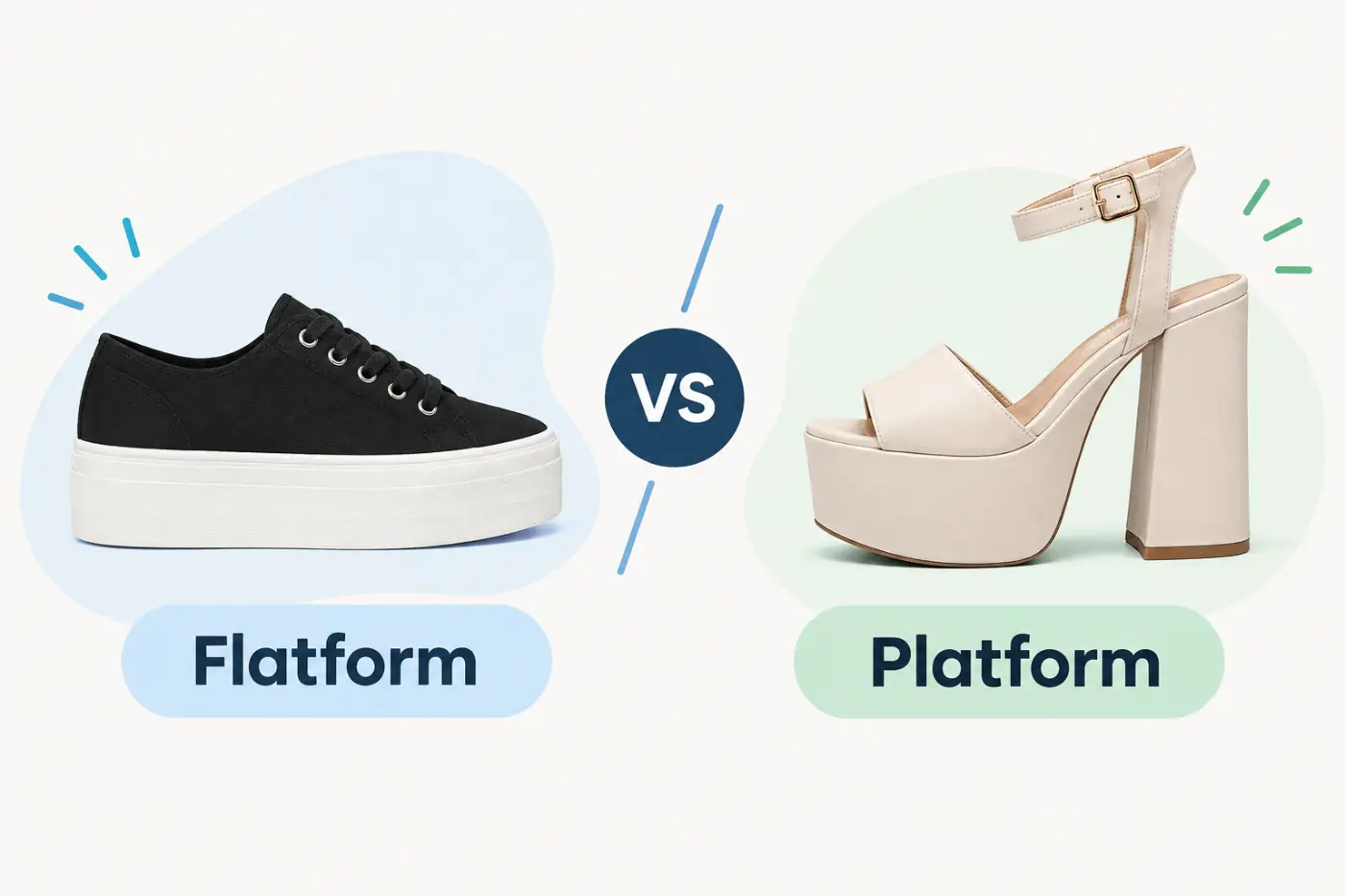
If you’re searching flatform vs platform you may wonder if both spellings are correct. The answer depends on what you’re trying to describe. Platform is the standard English word for a raised surface a base or a system that supports an activity. Flatform is also a real word but it has a much narrower use. It mainly describes a type of shoe with a thick flat sole.
That small spelling difference can cause a lot of confusion. You may see flatform in shoe stores and fashion articles while platform appears in everyday writing and many other fields. They aren’t simply two spellings of the same word.
The difference becomes easy once you connect each word with its meaning. This guide explains what both terms mean how they developed where you’ll see them and how to use each one naturally. You’ll also get clear examples that show the difference in real sentences.
Quick Definition
Platform is the standard word for a raised base or surface. It can also mean a system or service that allows people to perform an activity such as communicating selling products or sharing content.
Flatform is a fashion term for a shoe with a thick sole that stays mostly flat from the heel to the toe. It combines the idea of a flat shoe with the look of a platform shoe.
Direct Answer
Platform is the correct general word. Flatform is also correct when you’re talking about a particular style of shoe with a thick flat sole.
Comparison Table
| Word | Meaning | Example Sentence | When To Use It |
|---|---|---|---|
| Platform | A raised surface base or system used for a purpose. | The speaker stood on the platform. | Use it for the general word and for systems or services. |
| Flatform | A shoe with a thick mostly flat sole. | She wore black flatform sandals. | Use it when describing this specific shoe style. |

Where The Confusion Comes From
The confusion starts with the fact that both words contain platform sounds and ideas. A flatform shoe looks like a platform shoe at first glance. Both can have a thick sole that adds height. The key difference is the shape of that sole.
A traditional platform shoe can have a noticeably raised sole under the front of the foot. It may also have a higher heel. A flatform keeps the sole much flatter from front to back. The shoe still gives the wearer extra height but it doesn’t create the same strong slope found in many platform styles.
The spelling makes the distinction even more noticeable. Flatform starts with flat rather than plat. That isn’t an accidental typo. The name reflects the flat sole that defines the shoe style.
So if you see flatform on a fashion website you aren’t looking at a misspelled version of platform. You’re seeing a specific fashion term.
What Platform Means
Platform has several common meanings in English. Its basic meaning is a raised or level surface that supports people or objects.
You might stand on a platform at a train station. A speaker might stand on a platform during an event. Workers might use a raised platform to reach a higher area.
For example:
- The passengers waited on the train platform.
- The singer walked onto the stage platform.
- Workers built a temporary platform above the ground.
The word can also describe a base that supports equipment.
- The machine sits on a strong metal platform.
- The camera was mounted on a stable platform.
In each case the word refers to something that provides support.
Platform As A Digital Service
The word has another very common meaning today. A platform can be a website or service that allows people to do something online.
For example:
- The company sells products through an online platform.
- Students use the platform to complete their assignments.
- The video platform lets users upload and share clips.
- The company created a platform for independent sellers.
Here the word doesn’t describe a physical surface. Instead it describes a system that gives people the tools or space they need to carry out an activity.
This meaning appears often in technology business education and social media. It has become a normal part of everyday English.
Platform As A Political Program
You may also hear platform in politics. A political platform is a set of ideas goals and policies that a candidate or political party supports.
For example:
- The candidate announced her education platform.
- Voters reviewed the party’s platform before the election.
This meaning has nothing to do with shoes. It comes from the broader idea of a platform as a base that supports a person’s position or plans.
What Flatform Means
Flatform is mainly used in fashion. It describes a shoe that has a thick sole with little difference in height between the front and back.
Think of a sneaker with a chunky sole that adds two inches of height without giving you a raised heel. That is the basic idea behind a flatform.
You can find this style in many types of footwear. Designers make flatform sandals sneakers loafers boots and other shoes.
For example:
- She bought a pair of white flatform sneakers.
- These flatform sandals add height without a high heel.
- The black flatform boots have a thick rubber sole.
- I like flatform shoes because they feel more stable than high heels.
The word is especially common in fashion writing product descriptions and retail listings.
Why Flatform Is A Separate Word
The word flatform was created to describe something that sits between a flat shoe and a platform shoe. The name makes sense once you understand the design.
A flat shoe normally has little or no added height. A platform shoe has a thick raised sole. A flatform combines the height of a platform with a mostly level sole.
That gives the shoe its own identity.
Imagine three shoes sitting next to each other. The first has a thin sole and little height. The second has a thick sole that rises toward the heel. The third has a thick sole that stays almost level from front to back. The third shoe is the one most people mean when they use flatform.
The term therefore isn’t just a creative spelling. It communicates a specific feature of the shoe.
Platform Shoes And Flatform Shoes
The easiest way to understand the difference is to compare the soles.
A platform shoe has a raised sole. The sole can be thick across part of the shoe or across most of it. Depending on the design the heel may sit higher than the front.
A flatform shoe has a thick sole that stays relatively level. The wearer gets extra height without the same heel angle.
Platform Shoe Example
Imagine a sandal with a thick sole under the toes and an even thicker heel. Your foot sits at an angle because the heel is higher.
That is a typical platform design.
Flatform Shoe Example
Now imagine a sandal with a two inch sole under both the toes and heel. Your foot stays closer to a natural level position.
That is a typical flatform design.
The exact shape can vary from one brand to another. Fashion terms aren’t always used with strict technical rules. Still the flat sole is the main idea behind a flatform.
How Platform And Flatform Differ
The easiest way to tell these words apart is to look at what they describe. Platform is a broad English word with several meanings. Flatform is a specific fashion term used mainly for footwear.
A platform can be a physical structure. It can also be a digital service or a set of ideas. A flatform usually points to a shoe with a thick level sole.
That difference matters because replacing one word with the other can change the meaning of a sentence. If you’re writing about a website then flatform would be incorrect. If you’re describing a chunky flat soled sandal then platform might not give the reader the detail you’re trying to express.
How To Tell A Flatform Shoe Apart
You don’t need to know much about fashion terminology to spot this type of shoe. Start by looking at the sole from the side.
A flatform usually has a thick sole that stays close to the same height from the front of the shoe to the back. It gives the wearer extra height without creating a steep angle under the foot.
For example a pair of sandals may have a sole that is two inches thick across the entire shoe. Your heel and the front of your foot sit at nearly the same height. That design fits the usual meaning of a flatform.
The shape can vary. Some styles have a small difference between the front and back. Others look almost completely level. The key idea is that the sole remains much flatter than the raised shape found on many traditional platform shoes.
Flatform Sandals
Flatform sandals are one of the most common versions of this style. They often have a thick rubber or foam sole with straps across the foot.
You might see them made with leather straps for a dressier look. Casual versions may use canvas or synthetic materials.
A natural sentence would be:
- She wore brown flatform sandals with her summer dress.
Another example is:
- These flatform sandals give me extra height without a high heel.
Flatform Sneakers
Sneakers can also have thick level soles. These shoes often look like ordinary casual sneakers but have a much taller base.
For example:
- Her white flatform sneakers added a little height to her outfit.
The term works well in product descriptions because it tells shoppers something specific about the shoe. A shopper looking for extra height without a raised heel may search for this exact style.
Flatform Boots
Boots can use the same design. A thick level sole can give a boot a bold look while keeping the foot in a relatively level position.
For example:
- She paired her flatform boots with straight leg jeans.
The word describes the sole style rather than the material or color. A flatform boot can be black brown leather suede or made from another material.
When To Use Platform
Use platform when you mean a raised surface or a system that supports an activity. The word works in many settings so the surrounding sentence usually tells the reader which meaning you intend.
You might talk about a train platform at a station.
- The train arrived at the platform just before noon.
You might describe a raised work area.
- The workers stood on a wooden platform.
You might talk about a technology service.
- We use an online platform to manage customer orders.
You might discuss a political program.
- The candidate presented her platform during the debate.
You might also talk about shoes.
- She bought a pair of platform sandals.
In that last example the word refers to footwear with a raised sole. The exact shoe design can vary so the word doesn’t always tell us that the sole stays completely level.
When To Use Flatform
Use flatform when you specifically mean a shoe with a thick sole that remains mostly flat from front to back.
The word is especially useful when the shoe adds height without having the strong slope associated with many high heels.
For example:
- I prefer flatform shoes for long walks.
- She found a pair of black flatform sandals online.
- Those flatform sneakers look comfortable.
- He bought his sister a pair of flatform shoes for her birthday.
These sentences all refer to footwear. That context makes the meaning clear.
If you’re talking about a website a train station a raised surface or a political program then this fashion term doesn’t belong.
Is Flatform A Real Word
Yes. Flatform is a real English word used in fashion and footwear. Major dictionaries and fashion sources recognize it as a term for a shoe with a thick flat sole.
It may look like a typo because platform is much more common. That can make the newer term seem suspicious when you first see it.
Still context matters. A word doesn’t have to be common in every setting to be correct. Flatform has a specific use and is widely understood in fashion writing.
You may see the term in shoe descriptions fashion magazines product listings and style guides. It also appears in conversations about footwear.
Is Platform The Original Word
Platform has a much longer history and a much wider range of meanings. English speakers have used it for a raised surface for centuries. Over time the word developed additional meanings connected to support and position.
The footwear meaning grew from the idea of a shoe with a raised sole. That design adds height beneath the foot.
Flatform came later as a way to describe a particular variation. The name combines the idea of a flat shoe with the raised sole associated with platform footwear.
This explains why the two words look so similar. They are related in meaning when used for shoes but they aren’t interchangeable in every situation.
Common Spelling Mistakes
People make several mistakes when they first encounter this term. The most common one is assuming that flatform is simply an error.
That assumption makes sense at first. If you already know the word platform then the extra f can look like a typing mistake.
The context tells you otherwise.
If a shoe store says flatform sandals it is describing a particular type of footwear. If an article says online platform it means a digital service. The two words may look related but they serve different purposes.
Another mistake is using flatform for every shoe with a thick sole. Not every thick soled shoe fits the usual meaning. The sole’s shape matters too.
A shoe can have a thick sole and still be described as a platform shoe. A flatform normally emphasizes the relatively level shape of that sole.
Common Sentences With Platform
Seeing the word in different settings can help you understand its broad meaning.
Physical Platform
- The speaker stepped onto the platform.
- The equipment was placed on a raised platform.
- We waited on the train platform for ten minutes.
Digital Platform
- The course is available on an online platform.
- The company launched a new shopping platform.
- Users can share photos through the platform.
Political Platform
- The candidate released her campaign platform.
- Education is a major part of the party platform.
Footwear Platform
- She wore platform shoes to the concert.
- Those platform boots give you several inches of extra height.
The meaning changes with the context. That’s one reason this word is so useful.
Common Sentences With Flatform
This word has a much narrower range. Most examples involve shoes or fashion.
Casual Footwear
- I bought white flatform sneakers for everyday wear.
- Her flatform shoes looked great with wide leg pants.
Sandals
- These flatform sandals are comfortable enough for a day out.
- She chose leather flatform sandals for her vacation.
Boots
- The flatform boots have a thick rubber sole.
- He liked the bold look of her flatform boots.
The word works naturally when the reader needs to know that the shoe has a thick level sole.
Which Word Should You Use In Formal Writing
For most general writing platform is the word you’ll need. It has a standard place in everyday English and works across many subjects.
Flatform is appropriate when your subject is footwear. It isn’t a word you should replace with platform just because the latter looks more familiar.
If you’re writing a product description then being specific helps readers. Saying black flatform sandals gives more information than simply saying black platform sandals when the shoe has a level sole.
If you’re writing about technology then use platform. A sentence such as The company built a new flatform for online sellers would be incorrect if you mean a digital service.
Choosing the right word comes down to meaning rather than appearance. Once you know what you’re describing the choice becomes simple.
Why Flatform Shoes Are Different
The main feature that separates a flatform from many other raised shoes is the sole. A flatform usually has a thick base that stays fairly level from the toe to the heel. That design gives the wearer extra height without creating the steep angle often found in high heels.
A platform shoe can also have a thick sole. However the front and back of the sole don’t always have the same height. Some platform styles have a much higher heel area while others keep the difference small.
This distinction isn’t always strict in fashion. Shoe brands may use the terms differently in product names. Still the flat and level sole remains the most useful clue when you’re trying to understand the term.
Look At The Side Profile
The side view often gives you the answer right away. Picture the shoe sitting on a table and imagine a straight line running from the toe toward the heel.
If the sole looks thick and mostly level then the shoe fits the common idea of a flatform. If the sole rises noticeably toward the heel then you’re more likely looking at a platform style.
The amount of height can vary. A flatform doesn’t need to be extremely tall. Even a modestly thick sole can fit the style when it keeps a fairly even height.
Are Flatforms More Comfortable
Comfort depends on the shoe and the person wearing it. A flat sole can feel more natural to some people because it doesn’t place the foot at the same angle as a high heel.
That doesn’t mean every flatform will feel comfortable. A heavy sole can make a shoe harder to walk in. Poor cushioning can also cause discomfort. The shape of the shoe the fit and the materials all matter.
For example someone might find a lightweight flatform sneaker comfortable for several hours. Another person might prefer a simple flat sneaker because the thicker sole feels too heavy.
So don’t assume that extra height automatically means extra comfort. Try the shoes on when possible and pay attention to how your feet feel after walking.
Flatform And Flat Shoes
The names sound similar because the styles share one important feature. Both keep the foot closer to a level position than many high heeled shoes.
A traditional flat shoe has a thin sole and adds very little height. A flatform has a much thicker sole and can add several inches.
Imagine a basic ballet flat next to a chunky shoe with a thick level sole. Both have little slope from toe to heel. The big difference is the amount of material beneath the foot.
For example:
- She prefers flat shoes for work.
- She chose flatform sneakers when she wanted more height.
The first sentence describes a low profile shoe. The second describes a raised style with a relatively level sole.
Flatform And Wedge Shoes
Flatforms and wedges can both add height but their soles have different shapes.
A wedge usually becomes higher toward the heel. The sole forms one continuous slope beneath the foot. A flatform usually keeps the sole much more level.
That difference can affect how the shoe looks and feels.
For example a wedge sandal may have a low front and a much higher heel. A flatform sandal may have a thick sole under both areas.
The two styles can also appear together in creative shoe designs. Fashion doesn’t always follow neat categories. A shoe might borrow features from several styles.
Still the basic distinction remains useful. Think level sole for a flatform and sloping sole for a wedge.
Flatform And Platform Heels
Platform heels combine a raised front section with a higher heel. The front of the shoe may already sit several inches above the ground while the heel rises even more.
This design can reduce the difference between the front and back of the foot compared with a regular high heel. Even so the heel area remains higher.
A flatform takes the idea of added height in another direction. Instead of creating a strong difference between the heel and toe it keeps the base relatively level.
This is why the two styles can look similar but feel different when you wear them.
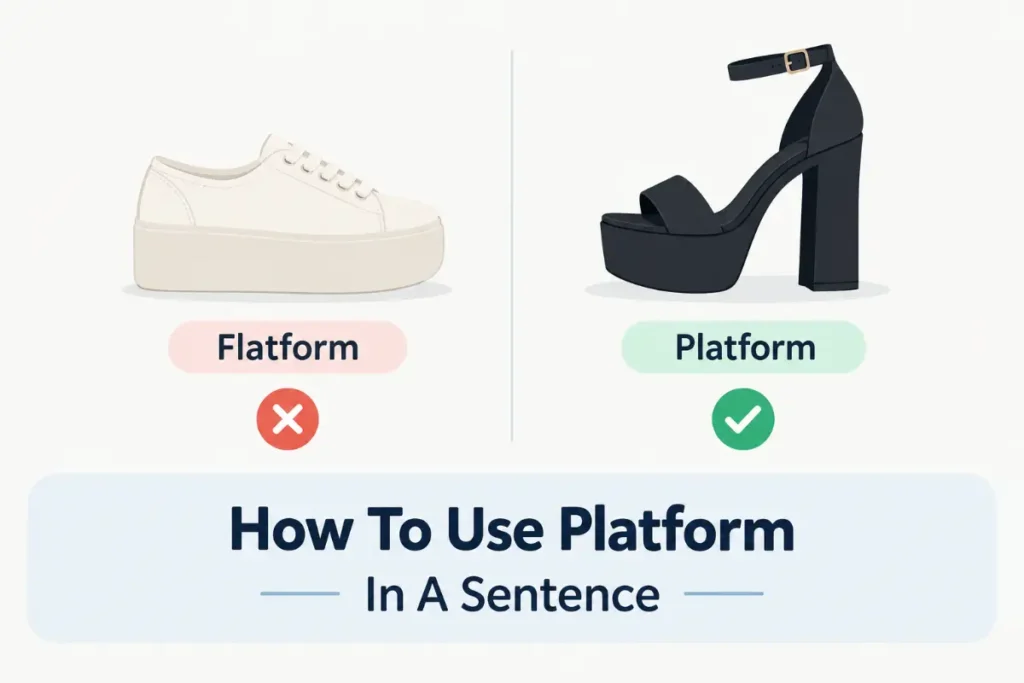
How To Use Platform In A Sentence
The word platform works in many parts of everyday English. The correct meaning comes from the context around it.
Consider these examples.
- The train pulled into the platform.
- The workers built a platform beside the building.
- Students use the online platform to submit homework.
- The candidate explained her political platform.
- She wore platform shoes to the party.
The first sentence refers to a station area. The second describes a physical structure. The third refers to an online service. The fourth refers to political ideas. The last one describes footwear.
One word can serve all these purposes because its basic idea involves a surface or base that supports something.
How To Use Flatform In A Sentence
The fashion term has a much narrower use. Use it when you want to describe footwear with a thick and relatively level sole.
For example:
- I bought a pair of flatform sandals for summer.
- Her flatform sneakers look great with jeans.
- Those flatform boots have a very thick sole.
- She likes flatform shoes because they give her extra height.
You don’t need to explain the term every time. In a fashion context most readers can understand it from the surrounding details.
If your audience isn’t familiar with the word then a short description can make the meaning clear.
For example:
- The store sells flatform sandals with thick level soles.
That sentence gives readers both the name and the main feature.
Can Flatform Be Used For Things Other Than Shoes
In standard everyday usage the word is strongly tied to footwear. You may occasionally see creative uses outside fashion but those uses are not common.
If you’re talking about a raised surface then platform is the natural choice. If you’re talking about an online service then platform is also the correct word.
For example:
- The camera sits on a raised platform.
- The business uses a digital platform.
- The band performed on a large platform.
Using flatform in any of these sentences would confuse the reader because the word doesn’t normally carry those meanings.
Why Context Matters So Much
A single word can have several meanings. English speakers often understand the intended meaning by looking at the words around it.
Take platform shoes as an example. The word platform clearly points to footwear because shoes follow it.
Now consider social media platform. Nobody imagines a shoe because social media gives the word a completely different context.
The same thing happens with flatform. When you see it beside words such as sandals sneakers boots or shoes the meaning becomes clear.
This is useful when you’re writing for people who may not know the term. Give the reader enough context and the meaning usually takes care of itself.
Common Search Questions About The Spelling
People often type the two terms side by side because one looks like a spelling error. That search is understandable. Platform is such a familiar word that the less common fashion term can look strange at first.
The key is not to ask which spelling looks right. Ask what you are trying to describe.
If you mean a raised surface then use platform. If you mean an online service then use platform. If you mean a thick level soled shoe then flatform can be the right term.
That simple meaning based approach works better than trying to memorize the spelling alone.
A Simple Memory Trick
You can remember the fashion term by focusing on its first part.
Flat reminds you that the sole stays relatively level. Platform reminds you that the shoe has a raised base.
Put those ideas together and flatform becomes much easier to remember.
Think of it this way. A flat shoe gives you little extra height. A platform shoe gives you a raised sole. A flatform combines a flat shape with a raised sole.
That mental picture is more useful than memorizing a complicated rule.
When A Shoe Description Can Be Unclear
Fashion terms don’t always have perfectly fixed boundaries. One store may call a shoe a platform sandal while another may call a similar design a flatform sandal.
This happens because shoe styles can overlap. Designers often create shapes that borrow details from several categories.
The best approach is to look at the actual sole instead of relying only on the product name. Check how high the sole is at the front and how high it is at the heel.
If both areas are close in height the term flatform makes sense. If the heel is clearly higher than the front then platform or wedge may be a better description.
Product names can vary but the physical design gives you a clearer answer.
Quick Practice
Try choosing the word that fits each sentence.
Sentence one.
The company launched a new online ______ for small businesses.
The answer is platform because the sentence describes a digital service.
Sentence two.
She wore black ______ sandals with a thick level sole.
The answer is flatform because the sentence describes a specific type of footwear.
Sentence three.
Passengers waited on the train ______.
The answer is platform because the sentence refers to a raised area at a train station.
Sentence four.
Her new ______ boots added height without a steep heel.
The answer is flatform because the sentence describes footwear with a thick level sole.
These examples show why meaning matters more than the similar spelling. Once you identify the subject of the sentence the correct choice usually becomes obvious.
FAQs
Is flatform or platform correct for shoes?
Both words can be correct when talking about shoes but they describe slightly different styles. Platform is the broader term for footwear with a raised sole. Flatform usually describes footwear with a thick sole that stays fairly level from the front to the back.
Is flatform a misspelling of platform?
No. Flatform is a recognized fashion term. It describes a shoe that combines a thick raised sole with a mostly flat shape.
The spelling may look unusual because platform is a much more familiar word. In a shoe description however flatform can be the exact word the writer intends.
What is the difference between a flatform and a platform?
A platform shoe has a raised sole and may have a higher heel area. A flatform usually has a thick sole that stays close to the same height from toe to heel.
The difference is easiest to see from the side. A level thick sole points toward a flatform while a more noticeable rise toward the heel points toward a platform style.
Are flatform shoes flat shoes?
Not exactly. Flatform shoes have a relatively flat sole shape but they are usually much thicker than traditional flat shoes.
A ballet flat may have a very thin sole and add almost no height. A flatform can have a thick sole that adds noticeable height while keeping the foot in a more level position.
Are platform shoes and flatform shoes the same?
They are closely related but they aren’t exactly the same. Both styles can have thick soles and add height but a flatform places more emphasis on keeping the sole level.
Fashion brands don’t always use these terms in exactly the same way. Looking at the sole gives you a better clue than the product name alone.
Can I use platform when talking about an online service?
Yes. Platform is the normal word for an online service or system that allows people to do something.
For example you can say that a company operates a shopping platform or that students use an online learning platform. Flatform would not fit those meanings.
Why does flatform have an extra f?
The word comes from the idea of combining a flat shoe with a platform style. The extra f reflects the word flat.
That makes the spelling easier to remember. Think of the word as a blend of flat and platform.
How can I remember the difference?
Focus on the meaning instead of the spelling. Think platform when you mean a raised surface or a broad shoe style. Think flatform when you mean a shoe with a thick and mostly level sole.
A simple mental picture can help. Imagine a thick sole that looks almost like a flat block. That image will remind you of flatform.
Conclusion
The main difference between flatform vs platform comes down to meaning. Platform is the standard and much broader English word. It can describe a physical structure a digital service a political program or a type of shoe.
Flatform has a much narrower role. It is mainly a fashion word for footwear with a thick sole that stays relatively level from the front to the back. It gives the wearer extra height without the strong slope found in many raised heel designs.
If you’re writing about technology transportation politics or a physical raised surface then platform is the natural choice. If you’re describing a chunky level soled shoe then flatform can give your reader a more precise description.
When you’re unsure which word to use don’t rely only on how the spelling looks. Ask yourself what you’re describing. A raised surface or general system calls for platform. A specific shoe with a thick level sole points to flatform. That one distinction will help you choose the right word quickly and confidently.

Sienna Watson is a veteran copywriter and communications coach who has helped startup founders, marketers, and professionals polish their writing for over a decade. Realizing that most people don’t need a degree in linguistics—just clear, impactful communication—Sienna focuses on practical grammar, business writing etiquette, and eliminating wordiness. She advocates for plain language, strong verbs, and persuasive prose that gets results.