
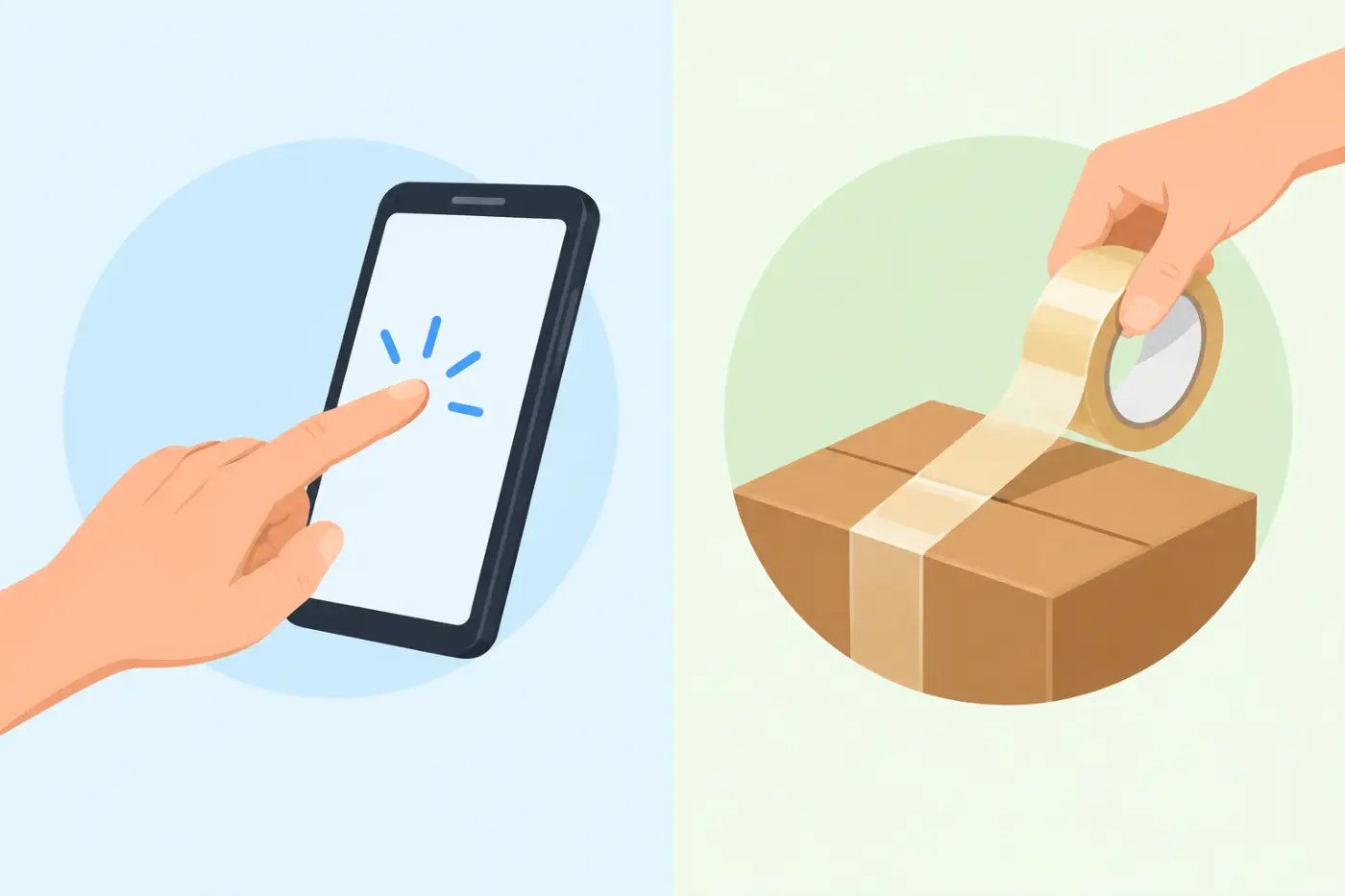
If you’re confused by tapping vs taping you’re looking at two real English words with different meanings. The right choice depends on the action you want to describe.
Tapping usually means touching or hitting something lightly several times. Taping usually means attaching something with tape or recording something on tape or another medium.
The difference is just one letter but the meanings can change completely. You might tap your phone screen. You might tape a package shut. You might also tap someone on the shoulder or tape a show for later.
This guide explains the difference in plain English. You’ll see how each word works as a verb and noun. You’ll also learn the spelling rule behind each form and the common mistakes that can make these words confusing.
Quick Definition
Tapping is the present participle of tap. It means touching or hitting something lightly and often repeatedly.
Taping is the present participle of tape. It usually means attaching something with tape or making a recording.
Direct Answer
Use tapping when you mean lightly touching or hitting something. Use taping when you mean using tape to attach something or recording something.
Comparison Table
| Word | Meaning | Example Sentence | When to Use It |
|---|---|---|---|
| Tapping | Touching or hitting something lightly | She was tapping her fingers on the desk. | Use it for light touches or hits. |
| Taping | Attaching or recording with tape | He is taping the box shut. | Use it for tape or recording. |
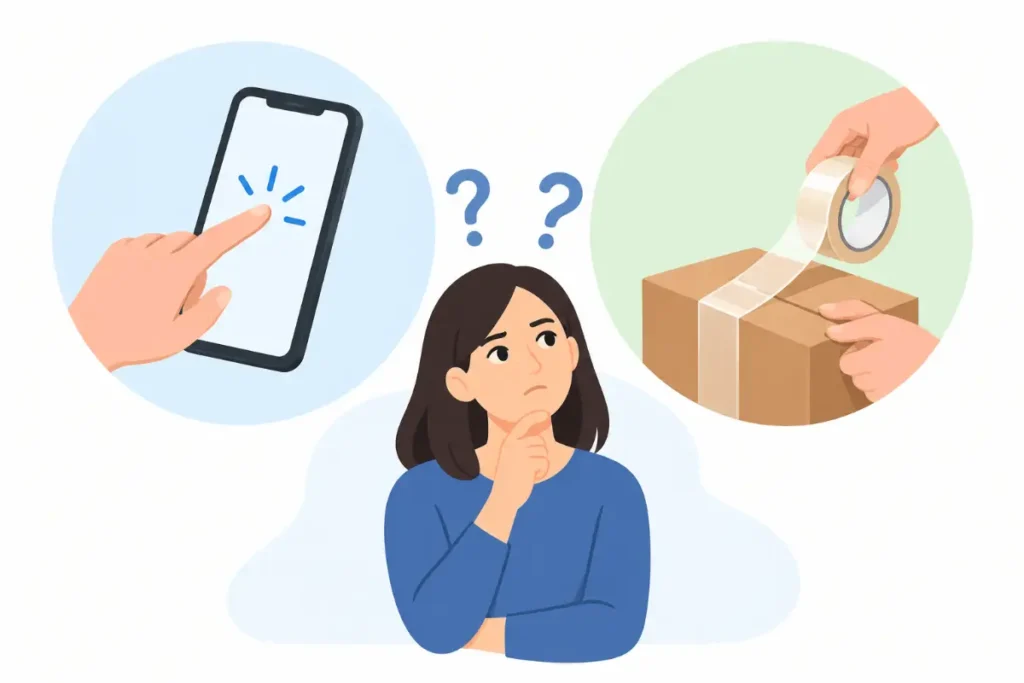
Why These Words Get Confused
The confusion comes from the verbs tap and tape. They look almost identical on the page and sound similar when spoken. Add the ending ing and the difference becomes easy to miss.
There is also a spelling rule that changes the final letter of the base word. When you add ing to tap the final consonant is doubled. That gives you tapping. When you add ing to tape the silent e disappears. That gives you taping.
So the difference isn’t random. The two spellings come from two different base words.
If you’re writing about a finger touching a screen repeatedly then tapping is the word you need. If you’re putting tape around a package then taping is correct. Once you connect each spelling to its meaning the distinction becomes much easier to remember.
What Tapping Means
Tapping describes a light touch or light hit. The action can happen once or many times but the word often suggests a repeated or gentle movement.
You can tap with a finger knuckle foot hand or another object. The action doesn’t have to be hard. In fact the idea of a light touch is one of the main features of the word.
For example you might tap your phone screen to open an app. You might tap your foot along with a song. Someone might tap you on the shoulder to get your attention.
Tapping On A Phone
Modern technology gives us plenty of reasons to use this word.
You tap a screen to select something. You might tap a button to submit a form. You can tap an icon to open an app.
For example:
- Tap the screen to wake the phone.
- She was tapping the wrong button by mistake.
- I tapped the link and opened the page.
In these examples the person makes contact with the screen. No tape is involved.
Tapping On A Door
You can also tap on a physical object.
Someone might tap on a door before entering a room. A person might tap on a window to get someone’s attention.
For example:
- I heard someone tapping on the window.
- She was tapping on the door with her knuckles.
- He tapped twice before walking inside.
The action is light and usually produces a small sound.
Tapping Your Fingers
Finger tapping is another common use. People often tap their fingers when they’re waiting thinking or feeling impatient.
For example:
- She was tapping her fingers on the table.
- He kept tapping his pen against the desk.
- I started tapping my foot while I waited.
The word can describe an unconscious habit as well as a deliberate action.
What Taping Means
Taping comes from the verb tape. It usually means using adhesive tape to attach secure cover or hold something together.
You might tape a package before shipping it. You could tape a torn piece of paper back together. A doctor might use medical tape to hold a bandage in place.
For example:
- I’m taping the box before taking it to the post office.
- She is taping the poster to the wall.
- We finished taping the broken cable in place.
In each sentence the person uses tape.
The word can also describe recording something. For example a person can tape a television program or tape an interview. Today people often use recording instead because many recordings are digital. Still tape remains common in certain expressions.
Taping A Package
One of the most common uses involves shipping boxes.
If you’re preparing a package for delivery you might fold the box flaps together and tape them shut.
For example:
- I’m taping the package now.
- Make sure you’re taping the box securely.
- She finished taping the shipping box.
Here the meaning has nothing to do with touching something lightly.
Taping Something To A Wall
Tape can also hold objects in place.
You might tape a note to your refrigerator. A teacher might tape a chart to a classroom wall. Someone decorating a room might tape paper decorations to a surface.
For example:
- I taped the note to the fridge.
- They are taping pictures to the wall.
- She taped the sign beside the front door.
The action involves adhesive tape.
Taping A Recording
The word can also refer to making a recording.
For example:
- The station is taping the interview today.
- We taped the show because we couldn’t watch it live.
- They spent the afternoon taping the performance.
This use is less connected to physical tape than it once was. People still use the expression even when the recording happens digitally.
The Spelling Rule Behind Tapping
The spelling of tapping follows a common English spelling pattern.
The base verb is tap. It has one syllable and ends in a single consonant after a single vowel. When you add ing the final consonant is doubled.
So:
tap + ing = tapping
The same pattern appears in many other words.
- Run becomes running.
- Sit becomes sitting.
- Plan becomes planning.
- Stop becomes stopping.
- Shop becomes shopping.
The doubled consonant helps preserve the short vowel sound in the base word.
This rule applies to many short verbs but you shouldn’t apply it blindly to every word ending in a consonant. English spelling has several patterns and exceptions. The important point for this word is simple. Tap becomes tapping with two p letters.
The Spelling Rule Behind Taping
The spelling of taping works differently because the base verb is tape.
The word tape ends with a silent e. When you add ing the final e is usually dropped.
So:
tape + ing = taping
This pattern appears in many other verbs.
- Make becomes making.
- Take becomes taking.
- Bake becomes baking.
- Hope becomes hoping.
- Ride becomes riding.
Notice the difference between the two base words.
Tap becomes tapping.
Tape becomes taping.
That small spelling difference tells you which verb you’re using.
Tapping And Taping In Real Sentences
The easiest way to see the difference is to put both words in natural sentences.
Consider these examples.
- She was tapping her foot while she waited.
- She was taping the label onto the package.
The first sentence describes repeated light movement. The second describes using tape.
Here is another pair.
- He kept tapping the screen.
- He kept taping the poster to the wall.
The meaning changes completely even though the words look almost the same.
You can also compare these sentences.
- The child was tapping the glass.
- The child was taping a picture to the glass.
In the first sentence the child is lightly touching or hitting the glass. In the second sentence the child is attaching something with tape.
Context makes the intended meaning clear.
When To Use Tapping
Use tapping when someone is making light contact with something. The action can involve a finger hand foot pen or another object.
Common examples include:
- Tapping a phone screen.
- Tapping your foot.
- Tapping your fingers.
- Tapping on a door.
- Tapping someone on the shoulder.
- Tapping a microphone to test it.
- Tapping a table with a pen.
- Tapping a glass to get attention.
The word can also describe a sound.
For example:
- I could hear rain tapping against the window.
The rain isn’t using tape. It is making repeated light contact with the glass.
When To Use Taping
Use taping when someone is using tape to attach secure cover or hold something.
Common examples include:
- Taping a box shut.
- Taping a poster to a wall.
- Taping a note to a door.
- Taping a package for shipping.
- Taping a bandage in place.
- Taping a cable to the floor.
- Taping a recording.
The meaning comes from the base verb tape.
If you can replace the action with using tape the word taping is probably correct.
Common Mistakes With These Words
The most common mistake is choosing the wrong form because the two words look so similar. A writer may know exactly what they want to say but still type the wrong spelling. The good news is that the meaning usually gives you a clear clue.
Ask yourself what action is taking place. If someone is making light contact with something then tapping fits. If someone is using adhesive tape then taping fits. If someone is making a recording then taping can also be correct.
Mistaking Tapping For Taping
Consider this sentence.
- She was taping her fingers on the desk.
This sentence suggests that she is putting tape on her fingers. That may be possible but it probably isn’t what the writer means.
If the person is repeatedly touching the desk with her fingers the natural sentence is:
- She was tapping her fingers on the desk.
The spelling changes the meaning. One letter can make a big difference.
Mistaking Taping For Tapping
Now look at another example.
- He was tapping the package shut.
That sentence sounds strange because tapping doesn’t normally mean attaching something with tape. If he is using adhesive tape to close the package the correct sentence is:
- He was taping the package shut.
This distinction becomes easy once you connect each word to its base verb.
The Difference Between Tap And Tape
Understanding the two base verbs makes the spelling much easier.
Tap means to touch or hit something lightly. It can also mean to select something on a screen or get someone’s attention with a light touch.
Tape means to attach something with tape. It can also mean to record something.
For example:
- I tapped the screen.
- I taped the note to the screen.
The first action involves touching. The second involves attaching.
You can also see the difference in these sentences:
- She tapped me on the shoulder.
- She taped the label to the box.
The first sentence describes contact. The second describes the use of adhesive tape.
Tapping Someone On The Shoulder
One common expression deserves special attention. People often tap someone on the shoulder when they want that person’s attention.
For example:
- I tapped him on the shoulder and asked for directions.
- She tapped her friend on the shoulder before the meeting started.
- Someone tapped me on the shoulder while I was standing in line.
The action is usually gentle. It lets someone know that you want them to turn around or pay attention.
Using taping in these sentences would change the meaning completely. It would suggest that someone was putting tape on another person’s shoulder.
Tapping On A Screen
Phones and tablets have made tapping an everyday word. You can tap an icon open a menu choose a photo or send a message with a simple touch.
For example:
- Tap the button to continue.
- I tapped the photo and it opened.
- She tapped the screen three times.
- Tap your name to view your account.
This use is especially common in instructions for mobile apps and websites. You may also hear people say tap here when they want you to select something on a touchscreen.
Tap Or Click
There is a small difference between tap and click in technology.
A tap usually refers to touching a touchscreen. A click usually refers to pressing a mouse button or selecting something with a computer mouse.
For example:
- Tap the icon on your phone.
- Click the link on your computer.
Modern devices sometimes blur this distinction. Still the basic difference remains useful when you’re writing clear instructions.
Tapping In Music And Dance
The word also appears in music and dance.
A musician might tap a rhythm with their fingers. A dancer might tap their feet to the beat. Someone listening to music may tap along without even realizing it.
For example:
- She was tapping her foot to the music.
- He tapped a rhythm on the table.
- The children were tapping their feet during the song.
In dance the word can describe light foot movements. Tap dancing is a well known form of dance in which performers use shoes that create sounds when they strike the floor.
The spelling still comes from tap. Adding ing gives you tapping.
Tapping In Sports And Exercise
You may also see this word in sports fitness and physical training.
An athlete might tap a ball lightly with a foot or hand. A player might tap a teammate to get their attention. Fitness instructions may describe tapping your toes or shoulders during an exercise.
For example:
- Start by tapping your toes on the floor.
- She kept tapping the ball with her foot.
- Tap your shoulders with opposite hands.
The exact meaning depends on the activity but the central idea remains light contact.
Taping In Sports And Medicine
Taping has a very different meaning in sports and health settings. Coaches trainers and medical professionals sometimes use tape to support an injured area or hold a bandage in place.
For example:
- The trainer is taping his ankle before the game.
- She had her wrist taped after the injury.
- The therapist showed him how to tape his knee.
In these examples tape provides physical support. The action isn’t a light touch.
Sports taping can involve different kinds of tape and different techniques. Athletic tape may help support a joint or protect an area during physical activity. Medical tape can secure dressings or other materials.
Taping And Recording
There is another meaning that can confuse people. Taping can mean making a recording.
For example:
- We’re taping the interview tomorrow.
- They were taping the concert for television.
- She taped the program so she could watch it later.
This use comes from the older practice of recording sound or video onto tape. Today many recordings are stored digitally but the word tape remains part of everyday English.
You may hear someone say they are taping a show even though they aren’t using physical tape. The expression has stayed in common use because people understand it as a way of saying recording a show.
Taping A Show Versus Watching A Show
Consider these two sentences:
- We watched the show last night.
- We taped the show last night.
The first means you watched it as it happened or watched a recording that was already available.
The second means you made a recording so you could watch it later.
For example:
- We couldn’t stay home for the game so we taped it.
- I taped the episode and watched it after work.
The word has a recording meaning in these cases.
How To Tell Which Word You Need
When you’re unsure about the spelling ask yourself one simple question.
Am I describing light contact or the use of tape?
- If the answer is light contact use tapping.
- If the answer is using tape use taping.
- If the answer is making a recording use taping.
This quick test works in most everyday situations.
You can also go back to the base word. Remove ing and see which verb makes sense.
- If the base word is tap then the form becomes tapping.
- If the base word is tape then the form becomes taping.
This method is useful because it focuses on meaning and spelling at the same time.
A Simple Spelling Trick
Think about the final letter of the base word.
- Tap has no silent e. When you add ing the final p doubles.
- Tape has a silent e. When you add ing the silent e drops away.
That gives you:
- Tap + ing = tapping.
- Tape + ing = taping.
This same pattern appears in many other words.
For example:
- Hop becomes hopping.
- Hope becomes hoping.
- Plan becomes planning.
- Plane becomes planing.
- Shop becomes shopping.
- Shape becomes shaping.
These pairs show why spelling can change when you add ing. The base word matters.
Tapping And Tap
The relationship between tap and tapping is straightforward. Tap is the base verb. Tapping describes the action as it happens or continues.
Compare these sentences:
- I tap the screen to open the app.
- I am tapping the screen to open the app.
The first sentence describes a general action. The second focuses on the action happening now.
You can use the same pattern with physical contact.
- He taps the desk when he is nervous.
- He is tapping the desk right now.
The second sentence gives the action a sense of movement and time.
Taping And Tape
The same relationship exists between tape and taping.
Compare:
- I tape the package every Friday.
- I am taping the package right now.
The first sentence describes a regular action. The second shows an action that is happening at the moment.
You can also use taping to describe an activity that takes place over a period of time.
- They are taping a new episode this afternoon.
- The crew spent the morning taping interviews.
Again the base verb tells you the meaning.
More Real World Examples
Seeing these words in different settings can make the difference easier to remember.
At Home
- I heard someone tapping on the window.
- Mom is taping the broken box.
- The child kept tapping the table.
- Dad is taping a note to the refrigerator.
At School
- The student was tapping her pencil on the desk.
- The teacher is taping the poster to the wall.
- Stop tapping your foot during the test.
- We are taping the project pieces together.
At Work
- I could hear someone tapping on the keyboard.
- The team is taping the presentation for later.
- She was tapping her pen while thinking.
- He is taping the shipping label onto the package.
On A Phone
- Tap the screen to continue.
- She kept tapping the wrong icon.
- I tapped the notification by accident.
- He is tapping through the photos.
These examples show why context matters. The two words may look similar but they describe different actions.
Why The Extra P Matters
Some writers see tapping and wonder why the p appears twice. The answer comes from the spelling pattern used when certain short verbs take an ending that begins with a vowel.
The base word tap has one syllable. The vowel is followed by one consonant. When ing is added the final consonant is doubled.
That gives us tapping.
The same thing happens with run, sit, stop, and begin in their related forms.
- Run becomes running.
- Sit becomes sitting.
- Stop becomes stopping.
- Begin becomes beginning.
The doubled consonant isn’t optional. Writing taping when you mean the action of tapping changes the word into a different form with a different meaning.
Related Words And Expressions
The difference between these two forms becomes even clearer when you look at words that belong to the same families. English often builds several words from one base word. Once you recognize the base word you can usually understand both the meaning and the spelling.
The family built from tap includes words such as tapped, tapper, and tapping. These words all connect to the idea of touching or hitting something lightly.
The family built from tape includes taped, taper, and taping. These words can relate to adhesive tape or recording. The meaning depends on the sentence.
Tapped And Taped
The past tense forms create the same kind of confusion.
Tapped comes from tap. It describes an action that already happened.
- She tapped me on the shoulder.
- He tapped the screen twice.
- I tapped my foot under the table.
Taped comes from tape.
- She taped the picture to the wall.
- He taped the package shut.
- We taped the interview yesterday.
The spelling difference remains clear when you remember the base words.
Tapper And Taper
These words can look confusing too but they have different meanings.
A tapper can be a person or thing that taps. In some settings it can describe someone who collects sap from trees.
A taper is different. As a noun it can describe a candle that becomes narrower toward one end. As a verb it means to become smaller or less intense gradually.
For example:
- The drummer is a skilled tapper.
- The candle is a tall taper.
- The rain began to taper off.
These words show why looking at the letters alone isn’t enough. Meaning matters too.
Common Expressions With Tap
The verb tap appears in many everyday expressions. Learning these phrases can help you understand how the word works beyond simple physical contact.
Tap Someone On The Shoulder
This means touching someone’s shoulder lightly to get their attention.
- I tapped Sarah on the shoulder when I saw her at the store.
- He tapped me on the shoulder and asked for help.
Tap Your Foot
This often means moving your foot up and down to music or because you’re waiting.
- She was tapping her foot to the beat.
- I started tapping my foot while waiting for the bus.
Tap Into Something
This expression means to make use of a source of knowledge skill energy or information.
- The company wants to tap into new markets.
- She learned how to tap into her creative side.
This meaning isn’t about physically touching something. It is a figurative use of the verb.
Tap Water
Tap water means water that comes from a faucet rather than a bottle or another source.
- I usually drink tap water at home.
- Is the tap water safe to drink here?
The word tap in this expression is a noun. It refers to the fixture that controls the flow of water.
Common Expressions With Tape
The word tape also appears in familiar expressions.
Tape Something Up
To tape something up means to attach or repair it with tape.
- I taped up the torn envelope.
- She taped up the box before shipping it.
Tape Something Down
To tape something down means to use tape to hold it firmly against a surface.
- Tape the cable down so nobody trips over it.
- We taped the loose paper down before the wind could blow it away.
Tape Over Something
To tape over something means to cover it with tape.
- He taped over the crack.
- Someone taped over the old label.
These expressions all involve the base word tape and usually have a clear connection to adhesive material.
Can Tapping Mean Recording
No. If you mean making a recording you need the word that comes from tape.
For example:
- The crew is taping the interview.
- They spent the afternoon taping the performance.
However modern speakers often use recording instead. Digital devices don’t usually use physical tape so the older expression can sound a little traditional in some situations.
Still taping a show is understandable and grammatically correct. The meaning comes from an older recording practice that remains part of everyday English.
Can Taping Mean Touching Something
No. If you mean lightly touching or hitting something you need the form that comes from tap.
For example:
- She was tapping on the window.
- He kept tapping his pencil against the desk.
Using the other form would suggest tape instead.
This distinction matters because readers may understand the wrong action if you choose the incorrect spelling. A small spelling mistake can change the picture in someone’s mind.
What Happens When You Add Other Endings
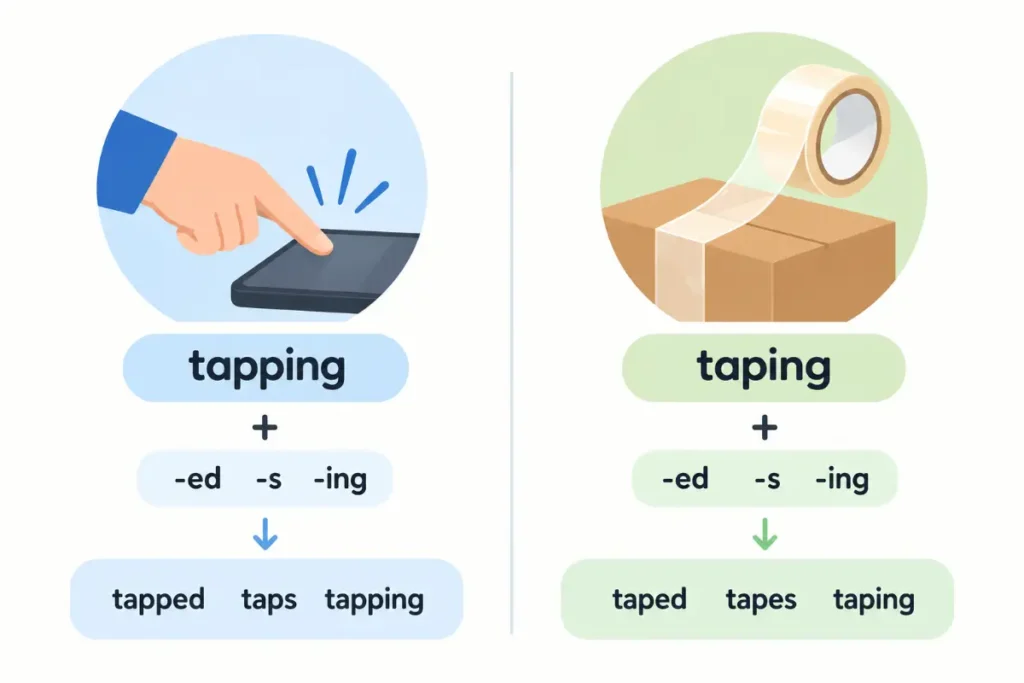
The spelling difference isn’t limited to the ing form. Other endings can also reveal which base word you’re using.
For example:
- Tap becomes tapped.
- Tap becomes tapping.
- Tape becomes taped.
- Tape becomes taping.
The base words remain easy to identify once you understand the pattern.
There is one interesting detail here. Taped keeps the e before the d because the final e is needed for the base word and the pronunciation pattern. But when ing is added the final e normally disappears.
That gives you tape, taped, and taping.
Why Tapping Has Two Ps
The double p can look strange if you haven’t studied this spelling pattern before. It happens because tap is a short one syllable verb with a short vowel followed by one consonant.
When an ending such as ing begins with a vowel is added the final consonant is doubled.
Compare these examples:
- Tap becomes tapping.
- Sit becomes sitting.
- Run becomes running.
- Hop becomes hopping.
- Plan becomes planning.
The same pattern helps explain why taping has only one p. Its base word is tape and the final e drops before ing.
Compare the two forms side by side.
- Tap plus ing becomes tapping.
- Tape plus ing becomes taping.
Once you learn the base words the spelling stops feeling like a guessing game.
A Useful Memory Trick
Try linking the number of p letters to the meaning.
- Think of tapping as repeated physical contact. The doubled p can remind you of repeated movement.
- Think of taping as using tape. The word keeps the basic spelling pattern of tape when you recognize that the final silent e disappears before ing.
You can also use a simple question.
Am I touching or attaching?
- If you’re touching something lightly use the form from tap.
- If you’re attaching something with tape use the form from tape.
That quick mental check works well when you’re writing quickly.
How To Avoid The Mistake While Writing
You don’t need to stop and memorize a complicated spelling rule every time you use one of these words. Instead focus on the meaning first.
Suppose you’re writing this sentence:
- She was ___ her fingers on the table.
Ask what she is doing. She is making light repeated contact with the table. The base verb is tap. The correct form is tapping.
Now try this sentence:
- She was ___ the note to the table.
This time she is attaching something with adhesive material. The base verb is tape. The correct form is taping.
The context gives you the answer before you even think about spelling.
Editing Examples
A quick edit can also help you catch mistakes.
Incorrect
- He was taping his fingers on the desk.
Correct
- He was tapping his fingers on the desk.
The corrected version describes repeated light contact.
Now consider another example.
Incorrect
- She was tapping the package shut.
Correct
- She was taping the package shut.
The corrected version makes it clear that she is using adhesive tape.
One more example shows the difference in a technology setting.
Incorrect
- I’m taping the screen to open the app.
Correct
- I’m tapping the screen to open the app.
The person is touching the screen rather than attaching something to it.
When Both Words Can Appear In One Sentence
Sometimes you may need both words in the same sentence. This can make the distinction especially clear.
- She was tapping the box while taping the label onto it.
In this sentence the person is doing two different things. She is lightly hitting or touching the box. At the same time she is using tape to attach a label.
Another example is:
- He stopped tapping the table and started taping the papers together.
The first action involves light contact. The second involves adhesive tape.
These examples show why spelling isn’t just a matter of appearance. The word you choose tells the reader what happened.
Tapping In Figurative Language
The word can also appear in figurative expressions. In these cases the physical idea of touching or drawing from something may develop into a broader meaning.
For example:
- The speaker tapped into years of experience.
Here nobody is physically tapping anything. The phrase means the speaker made use of a source of knowledge.
Another example is:
- The project tapped into local talent.
This means the project made use of skills or abilities available in the local community.
These expressions are common in everyday English. They show how a simple physical action can develop into a figurative meaning.
Taping In Modern Technology
The recording meaning of taping has changed with technology. Older recording systems often stored audio or video on physical tape. Today most people use phones computers cloud storage or digital cameras.
Even so the older verb remains familiar.
Someone might say:
- We’re taping the podcast this afternoon.
In modern use this can simply mean that they’re recording the podcast. They may never touch a piece of tape.
The expression survives because language often keeps familiar words long after the technology behind them changes. Similar examples include phrases such as hang up the phone and rewind even though many people no longer use the physical devices that inspired those expressions.
Choosing The Right Word In Formal Writing
In school work professional emails reports and other formal writing the distinction still matters. Readers expect the spelling to match the intended meaning.
- If you mean light contact write tapping.
- If you mean attaching something with adhesive tape write taping.
- If you mean making a recording you can use taping in contexts where that expression is natural. In many modern situations recording may be clearer.
For example:
- The team is recording the meeting tomorrow.
That sentence is direct and works well in professional writing. If you’re specifically using the familiar expression taping the meeting the meaning is still clear.
FAQs
What is the difference between tapping and taping?
The main difference is the base word and meaning. Tapping comes from tap and means touching or hitting something lightly. Taping comes from tape and usually means attaching something with tape or making a recording.
Is tapping the correct word for touching a phone screen?
Yes. Use tapping when you mean touching a phone or tablet screen with your finger. For example you can tap an icon tap a button or tap a link to open it.
Is taping the correct word for using tape?
Yes. Taping means using tape to attach secure repair or cover something. You might be taping a box shut or taping a note to a wall.
Why does tapping have two Ps?
The base verb tap ends with one vowel followed by one consonant. When you add ing the final consonant is doubled. That gives you tapping rather than taping.
Why does taping have only one P?
Taping comes from tape. The final silent e is dropped before the ing ending is added. The result is taping rather than tapeing.
Is taping also used for recording?
Yes. Taping can mean making an audio or video recording. The expression comes from the time when people commonly recorded programs on physical tape but people still use the word even for digital recordings.
Should I say taping or recording a show?
Both can be correct. Recording a show is usually the clearest choice for modern writing because most recordings are digital. Taping a show is also a familiar expression and means saving the show so it can be watched later.
Can both words appear in the same sentence?
Yes. They can describe two completely different actions in one sentence. For example someone might be tapping a box while taping a label onto it.
Conclusion
The difference in tapping vs taping comes down to two different base words. Tapping comes from tap and describes light touching or hitting. Taping comes from tape and usually describes attaching something with tape or making a recording.
The spelling follows a useful pattern. Tap doubles its final consonant before ing, giving you tapping. Tape drops its silent e, giving you taping.
When you’re unsure which form to use ask yourself what is happening. If someone is touching a screen tapping a foot knocking lightly on a door or touching a person to get their attention use tapping. If someone is attaching a label closing a package securing a bandage or making a recording use taping.
The easiest habit is to check the base word before you write. Tap plus ing gives tapping. Tape plus ing gives taping. Keep that small distinction in mind and you’ll be able to choose the right spelling quickly and confidently.

Sienna Watson is a veteran copywriter and communications coach who has helped startup founders, marketers, and professionals polish their writing for over a decade. Realizing that most people don’t need a degree in linguistics—just clear, impactful communication—Sienna focuses on practical grammar, business writing etiquette, and eliminating wordiness. She advocates for plain language, strong verbs, and persuasive prose that gets results.