
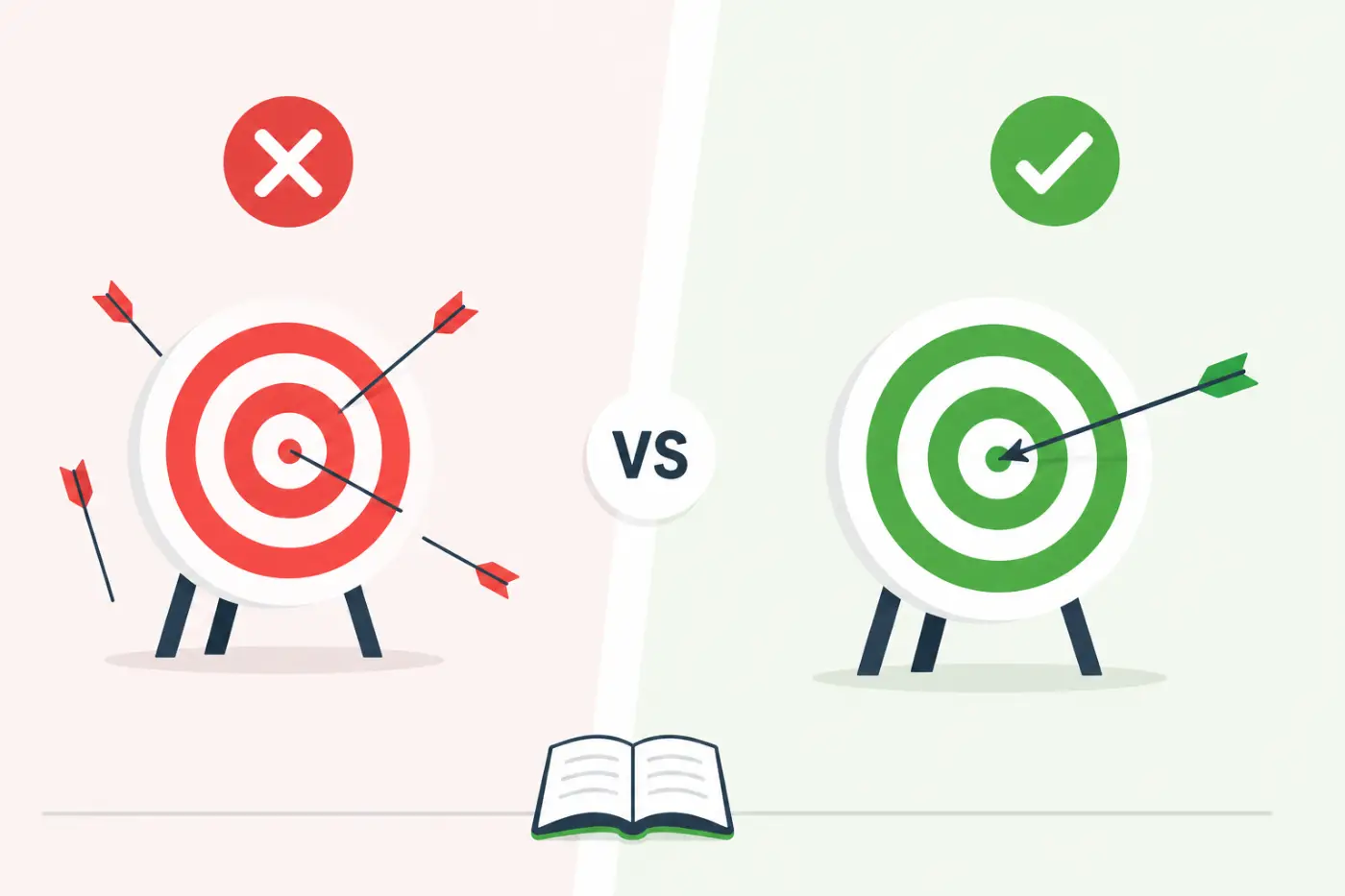
If you’ve ever paused over targetted vs targeted you’re dealing with a very common spelling question. Both versions look believable at first glance. Only one is the standard spelling in American English.
The correct spelling is targeted. It has one t after the e and uses the ending eted after the word target. The spelling targetted adds an extra t and is not the standard form used in US English.
This confusion often comes from a real spelling pattern in English. Some words double their final consonant before an ending such as ed. That rule works in certain cases but not with every word. Understanding why target behaves differently will make this spelling much easier to remember.
This guide explains the spelling rule in plain English. You’ll see how targeted is formed why targetted looks tempting where the extra t comes from and how to use the word naturally in sentences. We’ll also look at related words such as targeting and targetable so the whole word family makes sense.
Quick Definition
Targeted is the past tense and past participle of target. It means that someone or something was chosen as the focus of an action.
For example a company might create targeted advertising for a specific group of customers. A security team might investigate a targeted attack. In both cases the action is aimed at a particular person group or goal.
Direct Answer
Targeted is the correct spelling in American English. Targetted is not the standard US spelling.
Comparison Table
| Word or phrase | Meaning | Example sentence | When to use it |
|---|---|---|---|
| Targeted | Chosen as the focus of an action. | The company launched a targeted campaign. | Use this spelling in US English. |
| Targetted | Nonstandard spelling. | The spelling is incorrect in standard US English. | Avoid it in normal writing. |
Why This Spelling Causes Confusion
The confusion comes from the way English handles words that end in a consonant before a suffix. Writers often learn that the final consonant should be doubled in some cases. That lesson is useful but it has limits.
Consider words such as stop and plan. When you add ed they become stopped and planned. The final consonant doubles before the ending. That pattern can make targetted seem logical.
But target doesn’t follow that pattern.
The reason becomes clearer when you look at the final sound and the structure of the word. Target ends with the consonant t but that does not automatically mean the t should be doubled. English spelling uses several conditions before a final consonant gets doubled.
This is where many spelling guides become confusing. They give learners a short rule without explaining when the rule actually applies. Once you understand the basic condition you can see why targeted is the normal form.
The Basic Rule For Adding Ed
When a verb takes the ending ed to form its past tense or past participle the final consonant is sometimes doubled. The doubling usually happens when the verb has a short stressed vowel before its final consonant.
For example consider stop.
The word has one syllable. The vowel sound is short. The word ends in one consonant. When ed is added the final consonant doubles.
Stop becomes stopped.
The same idea appears in plan.
Plan becomes planned.
You can also see it in admit.
Admit becomes admitted.
The spelling changes because the final consonant is doubled before the ending.
Target doesn’t fit that pattern in the same way. Its final syllable does not have the short stressed vowel pattern that normally triggers consonant doubling. As a result the standard form is targeted rather than targetted.
Why Targeted Has One T
The word target contains two syllables.
The stress falls on the first syllable.
TARGET
That matters because consonant doubling depends partly on stress. A final consonant usually does not double simply because it happens to be the last letter of a word.
When you add ed to target the word keeps its basic spelling.
Target becomes targeted.
Nothing needs to be added to the final consonant except the normal past tense ending.
This gives you a useful visual pattern.
Target + ed = targeted.
The extra t in targetted has no role to play. It is simply an unnecessary doubling of the final consonant.
What Does Targeted Mean
Targeted describes something directed toward a particular person group place object or goal.
The word appears in many areas of everyday life. You might hear it in advertising politics security technology education health care or casual conversation.
A few examples make the meaning clear.
- The store sent me a targeted email based on my recent purchase.
- The campaign used targeted advertising to reach young adults.
- Police carried out a targeted search of the building.
- The program provides targeted help for struggling students.
- The attack appeared to be targeted at a specific group.
In each sentence the action is focused rather than random.
If an advertisement is targeted the advertiser has selected a certain audience. If a search is targeted the people conducting it have a specific goal.
That central idea stays the same across different contexts.
Targeted In Everyday Writing
You may come across this word more often than you realize. It is especially common in online writing because companies often describe ads content emails and promotions as targeted.
For example a website might say that it uses targeted recommendations. The idea is simple. The recommendations are selected for a particular user instead of being shown to everyone.
You can also use the word in ordinary conversation.
- The teacher gave targeted feedback on my essay.
- We need a more targeted approach to this problem.
- The message was targeted at new customers.
- She received targeted training before starting the new role.
Notice that targeted does not always describe something negative. A targeted action can be helpful and carefully planned.
Targeted feedback can help someone improve. Targeted training can prepare an employee for a specific task.
The word simply tells the reader that the action has a specific focus.
Targeted In Advertising
Advertising is one of the places where this word appears most often.
A targeted ad is designed for a specific audience. An advertiser may focus on people who share certain interests or who are looking for a particular type of product.
For example a shoe company could create an advertisement aimed at runners. That advertisement would be more targeted than a general ad shown to everyone.
You might see sentences such as these.
- The brand created a targeted campaign for college students.
- Targeted ads can reach people who have shown interest in a product.
- The company tested two targeted marketing campaigns.
The term targeted marketing has a clear meaning. It refers to marketing designed around a specific audience instead of a broad population.
The same idea applies to targeted advertising. The advertiser chooses a group and creates messages that are relevant to that group.
Targeted And Targeting
One reason this spelling can feel confusing is that the word changes slightly when different endings are added.
The base verb is target.
The present participle is targeting.
The past tense and past participle are targeted.
You can see the forms together.
- Businesses target specific audiences.
- Businesses are targeting specific audiences.
- Businesses targeted specific audiences.
- The campaign was targeted at specific audiences.
The word does not need an extra t when you form the past tense.
The same spelling principle appears in the ending ing. You write targeting rather than targetting.
That gives you a useful word family to remember.
Target. Targeting. Targeted.
Once these three forms become familiar the extra t starts to look wrong.
Targeted And Targeting Have Different Jobs
Although these forms come from the same verb they do not always perform the same job in a sentence.
Targeting often describes an action that is happening or a strategy that focuses on something.
- The company is targeting younger customers.
- The campaign focuses on targeting local shoppers.
Targeted often describes an action that has already happened or something that has been designed for a specific purpose.
- The company targeted younger customers last year.
- The campaign uses targeted messages.
This distinction is useful when you’re writing about marketing business strategy or any process that involves choosing a specific audience.
Common Examples With Targeted
The best way to build spelling confidence is to see the word in natural sentences. These examples cover several common uses.
Targeted Advertising
The company invested in targeted advertising to reach new customers.
Here targeted describes the type of advertising. The ads are aimed at a particular group.
Targeted Support
The school offers targeted support to students who need extra help.
The support isn’t being offered in exactly the same way to every student. It is designed around a particular need.
Targeted Search
Investigators conducted a targeted search after receiving new information.
The search has a clear purpose. It isn’t a random search of every possible location.
Targeted Treatment
The doctor recommended targeted treatment for the specific condition.
Here the word shows that the treatment is focused on a particular problem.
Targeted Campaign
The organization launched a targeted campaign to reach local voters.
The campaign has a defined audience rather than trying to reach everyone.
Targeted Message
The company sent a targeted message to customers who had recently purchased the product.
The message was selected for a particular group.
Why Targetted Looks Correct At First
The incorrect form looks convincing because doubling a final consonant is a real feature of English spelling. The problem is that people often apply the rule too broadly.
Think about stop.
- Stop becomes stopped.
- Now think about target.
- Target becomes targeted.
Both words end with t. Yet only one doubles that consonant.
The difference comes from the spelling pattern of the base word. A final consonant does not automatically double before ed. The word must meet the conditions for consonant doubling.
This is a useful lesson beyond this one word. When you see a spelling rule in English don’t assume it applies to every word that looks similar. Small differences in syllables stress and vowel sounds can change the result.
That is why memorizing a list of rules without examples can cause more confusion than it solves.
The Difference Between Target And Stop
Comparing target with stop gives you a simple way to understand the issue.
Stop is a one syllable word. Its short vowel is followed by one final consonant. The final consonant doubles when ed is added.
Target has two syllables. The final syllable does not have the same short stressed vowel pattern. The final t therefore stays single when ed is added.
So you get:
- Stop → stopped.
- Target → targeted.
The spelling may seem like a tiny detail but the pattern helps explain why the two words behave differently.
More Words That Double Their Final Consonant
Several common verbs do double their final consonant before ed.
- Plan becomes planned.
- Stop becomes stopped.
- Shop becomes shopped.
- Drop becomes dropped.
- Admit becomes admitted.
- Prefer becomes preferred.
- Occur becomes occurred.
These examples can help you see the pattern more clearly.
In plan the short vowel comes before the final consonant.
In admit the stress falls on the final syllable and the final consonant doubles when the ending is added.
But not every word ending in a consonant behaves this way.
That is why targeted needs to be learned as part of the larger pattern rather than by simply asking if the last letter should double.
Words That Do Not Double The Final Consonant
Many common verbs keep a single final consonant when ed is added.
For example:
- Visit becomes visited.
- Open becomes opened.
- Listen becomes listened.
- Offer becomes offered.
- Target becomes targeted.
- Enter becomes entered.
These words show why the doubling rule has limits.
The final consonant is not doubled just because ed follows it. The structure and stress pattern of the word matter.
If you’re unsure about a word you can often avoid a mistake by checking its base form and asking how the final syllable sounds. Over time these patterns become much easier to recognize without consciously thinking through every rule.
A Simple Memory Trick
If you want one quick way to remember the spelling keep this phrase in mind.
Target gets one extra ending but not an extra t.
Start with target. Then add ed.
Target + ed = targeted.
Don’t insert another t between the base word and the ending.
You can also connect it with the ing form.
Target. Targeting. Targeted.
The three forms share the same single final t. This makes the word family easier to remember as one group.
What About British English
This spelling question can sometimes cause confusion because American and British English do not always use the same spelling patterns. In this case however the standard spelling targeted is also widely used in British English.
You may see variations in other words that follow different regional spelling rules. For example British English often doubles a final l in forms such as travelled while American English usually writes traveled.
That difference does not make targetted a standard alternative. The normal spelling remains targeted.
So if you’re writing for an American audience you can confidently use targeted. It is also the standard form you’ll commonly find in British English.
Why The Extra T Should Be Removed
The extra t does not change the pronunciation or meaning. It simply creates a spelling error.
This is why the incorrect version can survive during casual writing. When you say the word aloud you cannot hear the extra letter. Someone reading quickly may also understand the word immediately.
Still spelling matters when you want your writing to look polished. A single common spelling mistake can distract a reader even when the meaning is obvious.
The fix is simple. Keep the original spelling of target and add ed.
Target → targeted.
That small habit will prevent the mistake in emails articles reports assignments and other writing.
How The Spelling Rule Really Works
The easiest way to understand this spelling is to look at what happens when a word takes the ending ed. English sometimes doubles the final consonant before an ending. However the rule only applies in certain situations.
A common pattern involves a short vowel followed by one consonant at the end of a word. When that pattern appears and the conditions are right the final consonant is often doubled before an ending.
Take hop as an example. The word has one syllable and ends with a short vowel followed by one consonant. Add ed and you get hopped.
The same pattern appears in plan. The short vowel comes before the final consonant. Add ed and the result is planned.
Now compare those words with target. The structure is different. Target has two syllables and the stress falls on the first syllable. Its final consonant does not need to double when you add ed.
That gives you the standard form targeted.
The Role Of Word Stress
Word stress is one of the details that helps explain why some words double their final consonant and others don’t.
Stress means that one part of a word is said more strongly than another. In target the first syllable receives the main stress.
You say the word like this.
TAR get.
The first part stands out more than the second part.
Now consider admit. The stress falls on the second syllable.
ad MIT.
When you add ed the final consonant doubles.
Admit becomes admitted.
This difference matters because consonant doubling is closely tied to the sound and structure of the final part of a word. Simply seeing a final t isn’t enough to tell you to double it.
That is the mistake behind targetted. The writer sees the final t and remembers that some words double their final consonant. The rule then gets applied too broadly.
English spelling doesn’t work that way. You have to look at the whole word.
Targeted Compared With Similar Verbs
A useful way to understand the spelling is to compare target with other verbs that look similar.
Consider visit.
The word has two syllables and the stress falls on the first syllable.
VIS it.
When you add ed you write visited. You don’t write visitted.
The same pattern appears with limit.
Limit becomes limited.
You don’t write limitted.
The spelling of targeted follows the same general idea. The final consonant stays single.
Here are several examples side by side.
| Base word | Correct past form | Incorrect form |
|---|---|---|
| Target | Targeted | Targetted |
| Visit | Visited | Visitted |
| Limit | Limited | Limitted |
| Open | Opened | Openned |
| Listen | Listened | Listenned |
These examples show why it isn’t enough to look only at the last letter. The spelling pattern of the entire word matters.
Why Targeted Is Easy To Remember
Once you connect the word with visited and limited the spelling becomes much less mysterious.
Think of the base word first.
Target.
Then add the normal past tense ending.
Target + ed.
The result is targeted.
There is no need to insert another t. The final letter of the base word stays exactly where it is.
This is also useful when you write the word in other forms.
Target.
Targets.
Targeting.
Targeted.
The spelling stays clear across the word family.
Targeted As A Past Tense
The word targeted can work as the past tense of target.
For example:
- The company targeted young customers last year.
- The campaign targeted people in several large cities.
- The organization targeted areas with limited access to food.
- The teacher targeted the main problems in my essay.
In each sentence the action happened in the past.
The base verb is target.
The past tense is targeted.
You don’t need to change the vowel or add another consonant.
Targeted As A Past Participle
Targeted can also work as a past participle. A past participle often appears with forms of be or have.
For example:
- The advertisement was targeted at a specific audience.
- The campaign has targeted several age groups.
- The message was carefully targeted.
- The program has targeted families in need.
This form is especially common in business writing and reports. It describes an action that has been completed or an object that has been acted on.
The spelling stays the same in every case.
Targeted As An Adjective
The word can also describe a noun. In this use it acts as an adjective.
An adjective gives more information about a person place thing or idea.
Consider these examples.
- The company created a targeted campaign.
- We need targeted support for new students.
- The police conducted a targeted search.
- The doctor recommended targeted treatment.
- The website shows targeted advertisements.
In each sentence targeted tells you that something has a specific focus.
This use is extremely common. You will often see the word before nouns such as campaign, advertising, marketing, support, treatment, training, search, and message.
Targeted Marketing
Marketing is one of the most common areas where this word appears.
Targeted marketing focuses on a particular group of potential customers. Instead of sending the same message to everyone a business creates content for a defined audience.
For example a company that sells running shoes might create a campaign for people who enjoy running. A furniture company might create content aimed at new homeowners.
You could write:
- The company uses targeted marketing to reach new customers.
- Our team created a targeted campaign for local shoppers.
- The brand developed targeted content for first time buyers.
The word tells the reader that the marketing has a specific audience.
That meaning is easy to connect with the basic idea of a target. A target is something you aim at. If an action is targeted it is aimed at a particular person group or goal.
Targeted Advertising
Targeted advertising works in much the same way.
A targeted advertisement is created for a particular audience. The audience might be based on interests age location shopping behavior or another factor.
For example a company selling hiking equipment may create ads for people interested in outdoor activities. The company isn’t trying to make the same message appeal to every person.
Here are some natural examples.
- The store uses targeted advertising to reach outdoor enthusiasts.
- Targeted ads can make marketing messages more relevant to a specific audience.
- The company changed its targeted advertising strategy after reviewing customer data.
You don’t need to use the word in every sentence about advertising. Often a simpler phrase such as ads aimed at a specific audience works just as well.
Good writing isn’t about repeating the same term. It is about choosing the clearest words for the idea.
Targeted At Or Targeted Toward
You may see both targeted at and targeted toward in English.
Targeted at is very common when you mean that something is designed for a particular person or group.
- The course is targeted at new business owners.
- The campaign is targeted at teenagers.
- The product is targeted at busy parents.
Targeted toward can also express a similar idea.
- The program is targeted toward college students.
- The campaign is targeted toward small businesses.
Both forms can be natural. Your choice often depends on the sentence and the style of the publication.
In American English targeted at is especially common and direct. If you’re unsure which phrase sounds better simply read the sentence aloud. The clearer version will often stand out.
Targeted To Or Targeted For
You may also encounter targeted to and targeted for.
For example:
- The campaign was targeted to local customers.
- The training was targeted for new employees.
- The message was targeted to a younger audience.
- The program was targeted for students who needed extra help.
These phrases can work in specific contexts but they don’t always sound as natural as targeted at.
For many situations targeted at is the safest choice when you mean that something is aimed at a particular group.
For example:
The advertisement was targeted at college students.
That sentence is clear and natural.
Targeted And Aimed At
The word targeted often has the same basic idea as aimed at.
Compare these sentences.
- The campaign was targeted at small businesses.
- The campaign was aimed at small businesses.
Both tell the reader that small businesses are the intended audience.
The difference is mostly one of style and context. Targeted can sound more specific or planned. Aimed at is often more conversational.
This gives you another way to avoid repetition.
Instead of writing:
- The company created a targeted campaign targeted at young customers.
You can write:
- The company created a campaign aimed at young customers.
That sentence is shorter and cleaner.
Targeted And Specific
Another useful synonym is specific.
A targeted approach focuses on a particular need or group. A specific approach also focuses on something clearly defined.
For example:
- The school provides targeted support for struggling readers.
- The school provides specific support for struggling readers.
The first sentence sounds more natural in many professional settings because targeted support is a common phrase. The second sentence is understandable but has a slightly different feel.
Other useful alternatives include focused, directed, specialized, and selective. The best choice depends on the exact meaning you want.
Common Spelling Mistakes With Target
The error involving the extra t isn’t the only spelling problem people can make with this word family.
Here are some forms worth knowing.
| Correct form | Common mistake |
|---|---|
| Target | Targget |
| Targets | Targetss |
| Targeted | Targetted |
| Targeting | Targetting |
| Targetable | Targettable |
The most common issue is the past form. The extra t looks tempting because many English verbs do double their final consonant.
The key is to remember the complete family rather than focusing only on one form.
Target. Targeting. Targeted.
Once those forms are familiar you are much less likely to add a letter that doesn’t belong.
Is Targetting Ever Correct
No. In standard American English targetting is not the normal spelling of the present participle. The correct form is targeting.
For example:
- The company is targeting new customers.
- The campaign is targeting a younger audience.
- The program is targeting areas with high demand.
The same principle applies to the past form.
Targeted is correct.
The extra consonant doesn’t belong in either form.
Is Targetted Ever Correct
No. Targetted is not the standard American English spelling. If you’re writing an email report article essay application or other piece of US English use targeted.
You may occasionally see the extra t online. That does not make it a standard spelling. Common mistakes can spread simply because people copy what they have seen before.
A word can look familiar and still be wrong.
That is why it helps to trust the spelling pattern rather than the number of times you’ve seen a form online.
How Dictionaries Treat The Word
Major English dictionaries list target as the base verb and targeted as its standard past form. The same spelling is also used when the word functions as a past participle or adjective.
This matters because dictionaries are not simply collections of words people happen to type. They record standard forms used in established English.
If you’re editing professional content and see targetted you should normally correct it to targeted.
The same applies to targetting. Change it to targeting when the intended meaning is the present participle of target.
A Quick Proofreading Test
If you’re checking your own writing and aren’t sure about the spelling use a simple three step test.
First find the base verb.
Target.
Next add the ending without changing the final consonant.
Target + ed.
Then read the finished word.
Targeted.
This method is quick because it avoids overthinking the spelling rule. You’re simply building the word from its base form.
You can use the same method when checking targeting.
Target + ing = targeting.
The final t stays single.
Examples To Test Yourself
Try reading these sentences and notice the spelling.
- The company targeted a new group of customers.
- The school targeted students who needed extra support.
- The advertisement was targeted at young adults.
- The campaign targeted several neighborhoods.
- The team created a targeted plan for the project.
- The organization launched a targeted outreach program.
Now compare the incorrect forms.
- The company targetted a new group of customers.
- The school targetted students who needed extra support.
- The advertisement was targetted at young adults.
The incorrect spelling may still look familiar but it is not the form you should use in standard US English.
A Simple Editing Rule
When you’re editing an article or checking an assignment remember this rule.
Target takes ed without doubling the final t.
That gives you:
Target → targeted.
The same idea applies to the ing form.
Target → targeting.
This small rule is enough for most everyday writing. You don’t need to memorize a long list of technical spelling terms to get the answer right.
When The Word Is Used In Professional Writing
When The Word Is Used In Professional Writing
You will often find targeted in professional writing because many fields involve focused actions.
Marketing teams talk about targeted campaigns. Teachers talk about targeted instruction. Health professionals may discuss targeted treatment. Security teams may describe targeted attacks. Business leaders may use targeted strategies.
For example:
- The company developed a targeted sales strategy.
- The school introduced targeted reading support.
- The researchers studied targeted treatment options.
- The organization created a targeted response plan.
The word works well in these settings because it quickly tells the reader that something has a clear focus.
Still you should not use it simply to sound professional. If specific, focused, or directed communicates the idea better use the simpler word.
Clear writing always beats fancy writing.
The Difference Between Targeted And Targeting
These two forms are easy to confuse because they come from the same verb.
Targeting usually describes an action that is happening now or an activity that is in progress.
- The company is targeting new customers.
- The campaign is targeting people in rural areas.
Targeted usually describes a completed action or something designed for a particular group.
- The company targeted new customers last year.
- The campaign uses targeted advertising.
The difference becomes even clearer when you place the forms next to each other.
The company is targeting young customers.
The action is in progress.
The company targeted young customers.
The action happened in the past.
The company created a targeted campaign.
The campaign was designed for a specific audience.
Learning this distinction improves both grammar and spelling at the same time.
More Examples Of Targeted In Real Writing
The word appears in many kinds of writing. Its meaning stays fairly simple but the context can change how it works in a sentence. Looking at several settings will help you recognize the word and use it naturally.
Targeted In Business Writing
Businesses often use the word when they describe a plan aimed at a certain customer group or problem. It can refer to marketing but it can also describe sales plans training programs customer support and other business activities.
For example:
- The company created a targeted sales plan for small businesses.
- The team developed targeted training for new managers.
- We need targeted support for customers who are having trouble with the new system.
- The business launched a targeted campaign in three states.
In these examples the word tells the reader that the action has a clear focus. It isn’t being applied to everyone in exactly the same way.
Targeted In Education
Teachers and schools use the term when support or instruction is designed around a particular student need.
A teacher might provide targeted reading practice to students who struggle with certain skills. A school could also create a targeted program for students preparing for an important exam.
For example:
- The teacher provided targeted feedback on each student’s writing.
- The school offers targeted reading support.
- Students received targeted instruction in basic math.
- The program gives targeted help to students who are falling behind.
The word can make the idea more precise. Instead of saying that a teacher helped students in general you can explain that the help focused on a specific skill or group.
Targeted In Technology
Technology companies also use this word often. You may see it when a company talks about advertising data content recommendations or security.
For example:
- The website uses targeted recommendations based on user activity.
- The company created targeted ads for a specific audience.
- The software provides targeted alerts when unusual activity appears.
- The security team investigated a targeted attack.
The word does not always mean something harmful. A targeted alert can help users notice a problem quickly. Targeted recommendations can help people find useful information faster.
Targeted In Health Care
Health related writing often uses the term to describe care designed for a particular condition or group.
For example:
- The doctor recommended targeted treatment.
- The program provides targeted support for older adults.
- Researchers are studying targeted therapies for certain diseases.
- The clinic offers targeted services for people with specific needs.
In this context the word emphasizes focus. The treatment or service is designed around a defined problem instead of being a general solution.
Targeted In Security
Security writing often uses the word to describe an action aimed at a particular person place organization or system.
For example:
- Investigators conducted a targeted search.
- The company experienced a targeted cyberattack.
- Security staff took targeted action after finding a serious weakness.
- The police operation focused on a targeted location.
Here the word often carries a stronger sense of deliberate focus. The action isn’t random.
Targeted And Focused
Focused is one of the closest everyday alternatives to targeted.
Consider these sentences:
- The team created a targeted plan for new customers.
- The team created a focused plan for new customers.
Both sentences suggest that the plan has a clear purpose. However targeted often suggests that the action is aimed at a particular person group or outcome.
Focused can describe a broader kind of attention.
For example:
- She stayed focused during the meeting.
- We need a focused discussion about the budget.
You wouldn’t normally replace focused with targeted in those sentences. The words overlap in some situations but they don’t have the same job everywhere.
Targeted And Specific
Specific can also be a useful alternative when you want to show that something is clearly defined.
Compare these examples:
- The teacher gave targeted feedback.
- The teacher gave specific feedback.
Both can work. The first suggests that the feedback was aimed at a particular need. The second emphasizes that the feedback was clear and exact.
Here’s another example:
- We need targeted help for new employees.
- We need specific help for new employees.
The first sounds more natural when you mean that a program has been designed for that group. The second could mean that the help needs to address a particular question or problem.
Choosing the right word depends on the idea you’re trying to express.
Targeted And Directed
Directed can sometimes replace targeted when something is aimed toward a person or group.
For example:
- The campaign was targeted at local voters.
- The campaign was directed at local voters.
Both sentences communicate the basic idea. Still targeted is often more natural in modern writing about marketing audiences and specific groups.
Directed has other meanings too. You can direct a person to a location or direct a project. Because of that wider meaning it doesn’t always work as a direct substitute.
Targeted And Aimed
Aimed is often the most conversational alternative.
- The program is targeted at new workers.
- The program is aimed at new workers.
The second sentence sounds very natural in everyday American English. It also avoids the slightly formal tone that targeted can sometimes have.
That doesn’t mean one form is better. Use the word that fits the tone of your sentence.
If you’re writing an article about marketing you might naturally use targeted advertising. In a casual conversation you might simply say ads aimed at a certain group.
Good writers change their wording based on context.
When Targeted Sounds Too Formal
The word is correct but it can sometimes make a simple sentence sound more formal than necessary.
For example:
- We need targeted help for this problem.
That sentence is perfectly fine. But in casual conversation you might say:
- We need help with this specific problem.
Both versions are clear. The second sounds more relaxed.
Likewise:
- The campaign was targeted at local families.
Could become:
- The campaign was aimed at local families.
Neither sentence is wrong. The best choice depends on your audience and the style of the writing.
Common Mistakes With Targeted
Spelling errors aren’t the only mistakes people make. Writers sometimes use the word in ways that make a sentence unclear.
Adding An Extra T
The most obvious mistake is adding another t.
Incorrect:
- The company targetted new customers.
Correct:
- The company targeted new customers.
The extra letter is unnecessary.
Using Targeted When You Mean Targeting
These forms have different meanings.
Incorrect for an ongoing action:
- The company targeted new customers right now.
Better:
- The company is targeting new customers right now.
The first sentence describes a completed action. The second describes something happening now.
Repeating Targeted Too Often
The word is useful but repeating it in every sentence can make your writing feel mechanical.
For example:
- The company created a targeted campaign for targeted customers using targeted content.
That sentence is overloaded.
A cleaner version would be:
- The company created a campaign for a specific group of customers and designed content for that audience.
The meaning stays clear without repeating the same adjective.
Using It Without Explaining The Target
Sometimes a sentence says something is targeted but doesn’t tell the reader what it is aimed at.
For example:
- The company launched a targeted campaign.
That sentence is grammatically correct but the reader may want more information.
A stronger version is:
- The company launched a targeted campaign for first time home buyers.
Now the reader immediately knows the intended audience.
Targeted Does Not Always Mean Personalized
These words can overlap but they aren’t identical.
Something targeted is aimed at a particular group or goal. Something personalized is changed for an individual person.
For example a company might create targeted advertising for people who enjoy cooking. Every person in that group may see a similar advertisement.
Personalized advertising could use information about one specific user to show a message designed for that person.
So targeted can be broad while personalized can be individual.
This distinction matters in marketing writing because the two terms are sometimes used as if they mean exactly the same thing.
Targeted Does Not Always Mean Narrow
A targeted action can still involve a large group.
For example a national campaign might target millions of people who share a certain interest. The audience is still large but it is more specific than the entire population.
This is why targeted doesn’t simply mean small.
It means focused on a defined group or goal.
A targeted campaign can reach ten people or ten million people. The size of the audience isn’t what makes it targeted. The clear focus is what matters.
Targeted And General
The opposite of targeted is often general.
A general message is meant for a broad audience. A targeted message is designed for a particular audience.
Compare these examples.
- The company sent a general announcement to all customers.
- The company sent a targeted message to customers who recently bought the product.
The first message has a broad audience. The second has a defined audience.
This contrast can help you understand the word quickly.
- General means broad.
- Targeted means focused.
That simple distinction works in many contexts.
Targeted And Selective
Selective can sometimes be related to targeted but the meanings aren’t identical. A selective process involves choosing some people or things while leaving others out. A targeted process focuses on a particular goal or group.
For example:
- The company used targeted advertising to reach new parents.
- The company was selective about which customers received the offer.
The first sentence describes the purpose of the advertising. The second describes the choice of recipients.
The words can overlap but they emphasize different parts of the idea.
A Useful Word Family
Learning a whole word family can make spelling easier. Start with the base word and notice how each form changes.
Target
Target is the base verb and noun.
As a verb it means to choose something as the focus of an action.
- The company plans to target younger customers.
As a noun it can mean the person thing or goal that someone aims at.
- The target audience is college students.
Targets
Targets can be the plural noun or the third person singular form of the verb.
- The company has several targets for the new campaign.
- The program targets small businesses.
Targeting
Targeting is the present participle or gerund form.
- The company is targeting new customers.
- Targeting the right audience can improve a campaign.
Notice that the final t remains single.
Targeted
Targeted is the past tense and past participle. It can also function as an adjective.
- The company targeted new customers.
- The campaign was targeted at young adults.
- The company created targeted content.
Seeing these forms together is one of the best ways to make the spelling automatic.
Targetable And Other Less Common Forms
You may also encounter targetable in specialized writing. It generally means capable of being targeted.
For example:
- The system identifies targetable accounts.
This form is much less common in everyday writing. Most readers will see target targeting and targeted far more often.
There are also nouns such as targeting when the word describes the practice or process itself.
- Audience targeting is common in digital marketing.
Again the spelling stays consistent. There is no reason to add an extra t.
How To Proofread The Word Quickly
When editing your work you don’t need to spend a lot of time on this word.
Look at the base form first.
Target.
Then check the ending.
Target + ed.
If you see two final t letters before ed you know something needs fixing.
The same check works with targeting.
Target + ing.
This quick visual check is useful when editing articles reports essays and emails. It can catch the mistake before it reaches your reader.
A Five Second Memory Test
Cover the word and try to write the past form from memory.
Start with:
- Target.
- Now add ed.
The answer should come naturally.
Targeted.
If you still feel unsure connect it with these two forms:
- Targeting.
- Targeted.
Both keep one final t.
That small association can be enough to stop the spelling mistake from returning.
Why Reading Helps More Than Repetition
Writing a misspelled word again and again won’t always fix the problem. You might simply train yourself to remember the wrong pattern.
Reading the correct form in real sentences gives your brain useful context. You see how the word looks and how it functions at the same time.
For example:
- The company launched a targeted campaign.
- The teacher provided targeted feedback.
- The program offers targeted support.
- The advertisement was targeted at young adults.
After seeing the word in several settings the correct spelling starts to feel familiar.
That is much more useful than staring at a single isolated word.
When To Use A Dictionary
If you’re unsure about a spelling and the word matters to your work a dictionary is the safest check.
This is especially useful when you’re editing formal content or publishing something under your name. A quick lookup takes seconds and removes the guesswork.
You don’t need to look up every word you write. Use a reference when your memory feels uncertain.
For targeted the standard spelling is clear. The extra t isn’t needed.
What Editors Should Change
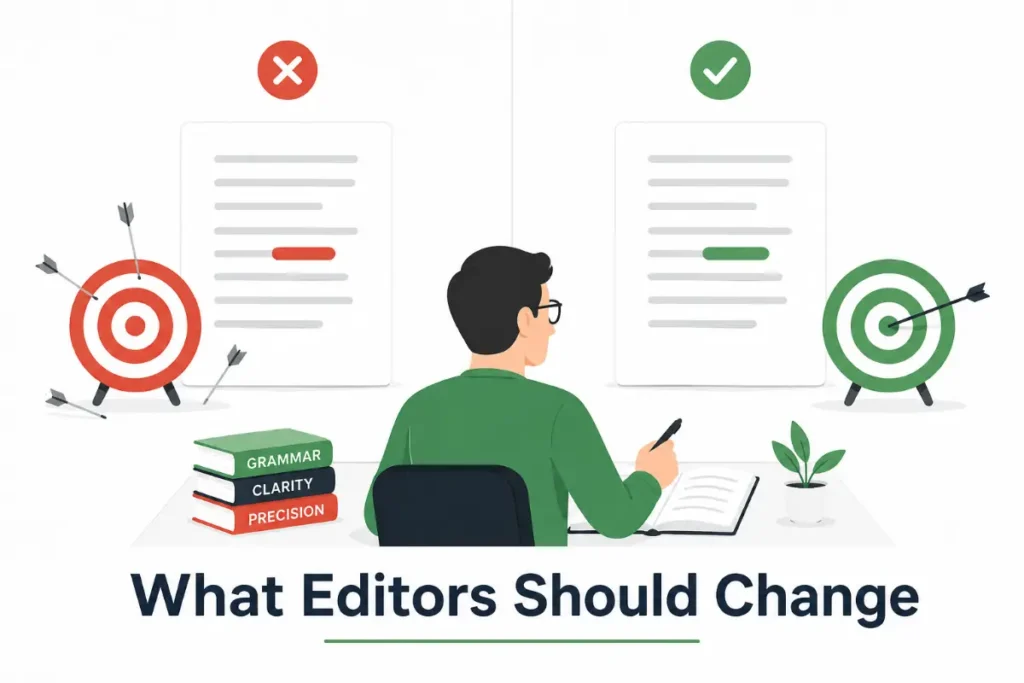
If you’re proofreading someone else’s work and find targetted you should change it to targeted in standard US English.
You should also change targetting to targeting when the intended form is the present participle.
For example:
Incorrect:
- The company is targetting new customers.
Correct:
- The company is targeting new customers.
Incorrect:
- The campaign targetted young adults.
Correct:
- The campaign targeted young adults.
These corrections are simple but they improve the polish of the entire piece.
A Final Look At The Pattern
The spelling becomes much easier when you stop thinking of the word as a difficult exception and start thinking about its structure.
- The base word is target.
- Add ed.
- You get targeted.
- Add ing.
- You get targeting.
The final t stays single in both forms.
That is the pattern worth remembering. You don’t need a complicated grammar lesson every time you write the word.
FAQs
Is targetted or targeted correct?
Targeted is the correct spelling in standard American English. Targetted has an extra t and should not be used in normal US writing. The same spelling is also standard in British English.
Why is targeted not spelled targetted?
The final t in target doesn’t double when you add ed. The consonant doubling rule applies only to certain words with specific sound and stress patterns. Target doesn’t meet those conditions so the correct form is targeted.
Is targetted a British spelling?
No. British English does not normally use targetted as the standard spelling. You should write targeted in both American and British English.
Is targeting spelled with one t?
Yes. The correct spelling is targeting with one t at the end of the base word. Targetting is a common misspelling.
What is the past tense of target?
The past tense is targeted. For example you can say The company targeted a younger audience last year.
What does targeted mean?
Targeted means directed toward a particular person group thing or goal. For example a targeted advertisement is designed for a specific audience.
What is the difference between targeted and targeting?
Targeted usually describes a completed action or something designed for a particular purpose. Targeting usually describes an action that is happening or a process that is currently taking place.
Can targeted be an adjective?
Yes. Targeted can describe a noun when something is designed or directed toward a particular person group or purpose. Phrases such as targeted advertising targeted support and targeted treatment are common examples.
Conclusion
If you’ve been stuck on targetted vs targeted the answer is simple. Targeted is the correct spelling. The version with two t letters before ed is a common mistake and isn’t the standard form in American English.
The reason behind the spelling becomes clearer once you understand consonant doubling. Some short words double their final consonant when an ending is added. For example stop becomes stopped and plan becomes planned. Target doesn’t follow that pattern because its syllable structure and stress are different.
The easiest way to remember the correct form is to keep the word family together. Target becomes targeted and targeting without adding another t. You can also connect the spelling with related words such as targeted advertising targeted support and targeted marketing.
So when you’re proofreading an email writing an article or checking an assignment don’t second guess the word. Start with target and add ed. The result is targeted. That one small habit will keep the extra t out of your writing.

Dr. Elena Vance holds a Ph.D. in Linguistics from Columbia University and has spent over 15 years analyzing the evolution of the English language. A former university professor turned full-time writer and editor, Elena specializes in breaking down high-level grammatical concepts, punctuation nuances, and style guides (APA, Chicago, MLA) into clear, actionable advice. When she isn’t hunting down dangling modifiers, she can be found collecting vintage dictionaries and reading classic literature.