
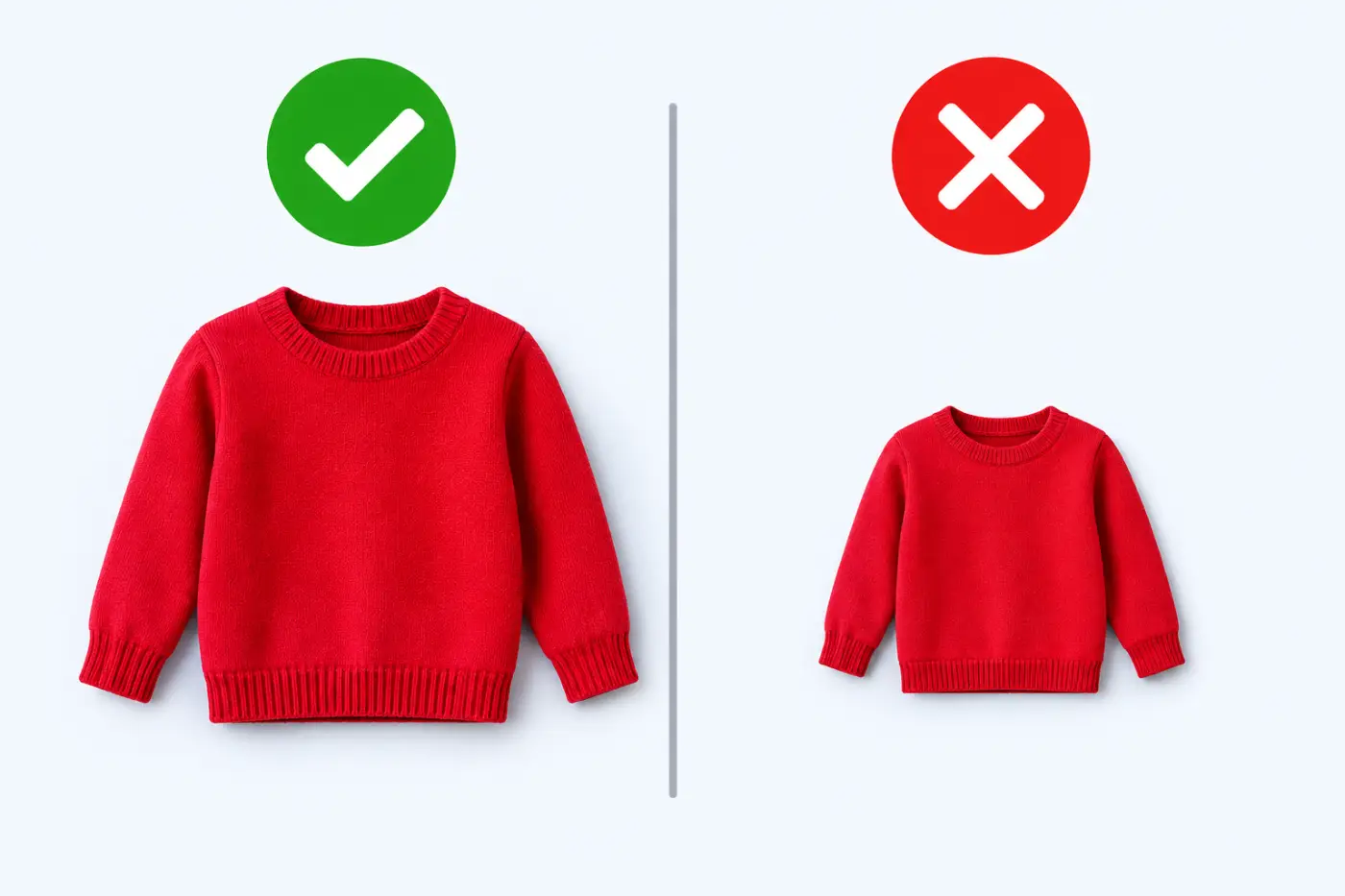
Have you ever written a sentence and stopped to wonder if to small or too small is the correct choice? You’re not alone. These two expressions look almost identical. However, they don’t have the same meaning or grammatical purpose.
The correct expression for describing something that isn’t large enough is too small. The word too means more than needed or desired. For example, if your shoes hurt because they don’t fit your feet, you can say, “These shoes are too small.”
On the other hand, to is a preposition or part of an infinitive verb. It doesn’t express excess or degree. You might see it before the word small in a sentence such as “She donated clothes to small children.” Here, to connects the action to the people receiving the clothes.
This small spelling difference can change how a sentence works. Using the wrong word can make your writing confusing or grammatically incorrect.
In this guide, you’ll learn the difference between to and too, discover when to use each one, and see plenty of everyday examples. We’ll also cover common mistakes, easy memory tricks, and related expressions so you can use the right word with confidence.
Quick Definition
Too small means something has less size, space, or room than needed or wanted. The word too describes an excessive degree and usually suggests that something doesn’t meet a particular need.
To small isn’t a standard expression for describing an object as undersized. However, the words to and small can appear next to each other when to introduces a phrase such as to small children or to small businesses.
Direct Answer
Too small is correct when you mean that something is not big enough. Use too to describe an excessive lack of size or space. Use to when it introduces an infinitive verb or connects words and phrases in a sentence.
Comparison Table
| Word or Phrase | Meaning | Example Sentence | When to Use It |
|---|---|---|---|
| Too small | Smaller than needed or wanted | This shirt is too small for me. | When describing insufficient size. |
| To small | Not a standard expression by itself | We gave the supplies to small schools. | When to introduces a phrase that begins with small. |
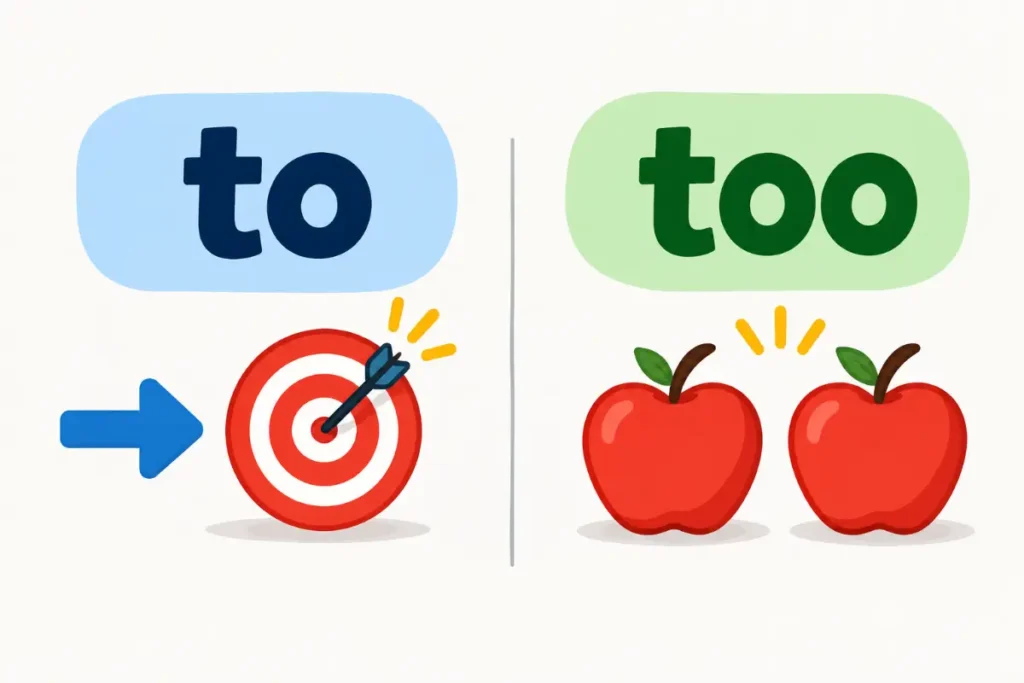
Understanding the Difference Between To and Too
The easiest way to understand this spelling question is to look at the job each word performs in a sentence.
Although to and too sound exactly alike, they have different meanings. They also follow different grammar rules.
Let’s look at each word separately.
What Does To Mean?
The word to is a preposition and an important part of many infinitive verbs.
As a preposition, it often shows direction, movement, purpose, or a connection between people and things.
For example:
- I walked to the grocery store.
- She sent a letter to her grandmother.
- We drove to the beach on Sunday.
- He gave his notebook to his teacher.
- They moved to a smaller apartment.
In these examples, to connects an action or idea to another part of the sentence.
You can also use to before a base verb to form an infinitive.
For example:
- I want to learn Spanish.
- She plans to buy a new phone.
- We need to finish our homework.
- He likes to read before bed.
- They hope to visit California.
Notice that to introduces an action in these sentences. It doesn’t describe the size of anything.
What Does Too Mean?
The word too is an adverb. It has two common uses.
First, it can mean more than necessary or desirable. This meaning often appears when someone describes a problem or an unwanted amount.
For example:
- The coffee is too hot to drink.
- These pants are too long for me.
- The box is too heavy to lift.
- This room is too small for our family.
- The music is too loud for studying.
In each sentence, too adds a sense of excess. Something goes beyond a comfortable or acceptable limit.
Second, too can mean also or in addition.
For example:
- I want to come too.
- She likes chocolate too.
- My brother is joining us too.
- We enjoyed the movie too.
- He brought his sister too.
The meaning depends on the sentence. However, both uses belong to the same word.
Why These Words Cause Confusion
The main reason people confuse to and too is their pronunciation.
Both words sound the same in everyday American English. This makes them homophones.
Homophones are words that share the same pronunciation but have different meanings or spellings.
For example:
- To and too.
- Their and there.
- See and sea.
- Right and write.
- Here and hear.
When you speak, nobody can see which spelling you have in mind. However, when you write, you must choose the correct form.
This is especially important in emails, school assignments, work documents, social media posts, and other everyday writing.
The good news is that you don’t need to memorize complicated grammar rules. Once you understand the meaning of each word, the correct choice becomes much easier.
When To Use Too Small
Use too small when something doesn’t have enough size, space, room, or capacity for a particular purpose.
The phrase usually describes a problem. Something is smaller than the situation requires.
For instance, imagine buying a pair of shoes online. When they arrive, you discover that your feet barely fit inside them.
You could say:
“These shoes are too small for me.”
This sentence tells the reader that the shoes don’t fit properly because they lack enough room.
Here are some common situations where this expression works naturally.
When Clothes Don’t Fit
Clothing is one of the most common subjects people describe with too small.
A shirt, jacket, pair of jeans, or dress can become uncomfortable when it doesn’t fit properly.
Examples:
- This jacket is too small around my shoulders.
- Your old jeans are too small now.
- I ordered a medium shirt, but it turned out to be too small.
- These gloves are too small for my hands.
- The dress looks beautiful, but it’s too small for me.
Notice how the phrase describes a lack of physical size.
You can also use it when talking about children’s clothes.
For example:
“My son has grown so quickly that most of his shirts are too small.”
The sentence makes it clear that the clothes no longer fit because the child has grown.
When a Room Doesn’t Have Enough Space
You can also use too small when a room or building cannot provide enough space for its intended use.
Examples:
- Our kitchen is too small for a large dining table.
- This bedroom is too small for two people.
- The classroom is too small for thirty students.
- Their new office is too small for the entire team.
- The garage is too small to hold both cars.
In each example, the space doesn’t meet a particular need.
This phrase can also describe a house, apartment, storage room, or meeting area.
For example:
“We wanted to invite the whole family, but our apartment was too small to host everyone.”
The sentence explains why the apartment wasn’t suitable for the gathering.
When an Object Doesn’t Meet Your Needs
Many everyday objects come in different sizes. Sometimes, the smallest option doesn’t provide enough space or capacity.
Examples:
- This suitcase is too small for all my clothes.
- The water bottle is too small for a full day of hiking.
- My laptop screen is too small for editing detailed photos.
- The container is too small to store these leftovers.
- This bag is too small to carry my books.
You can use the same phrase for tools, furniture, containers, appliances, and other objects.
For example:
“The table is too small for our new television.”
This sentence means the table doesn’t provide enough surface area or support for the television.
When Something Doesn’t Have Enough Capacity
Size isn’t always about physical measurements. Sometimes, it refers to capacity.
Capacity means how much something can hold, contain, or handle.
Examples:
- The tank is too small to hold enough water.
- The memory card is too small for all these files.
- The battery is too small to power the device for long.
- The backpack is too small for my camping equipment.
- The parking lot is too small for all the visitors.
These examples show how the phrase works in different situations.
A storage device can be too small because it doesn’t have enough space for files. A parking lot can be too small because it cannot accommodate enough vehicles.
When Something Doesn’t Meet a Particular Requirement
You can also use too small in professional, academic, and technical writing.
For example:
- The sample size is too small to produce reliable results.
- The budget is too small for the proposed project.
- The font is too small to read comfortably.
- The image is too small for the website banner.
- The opening is too small for the equipment to pass through.
Here, the phrase describes a limitation rather than simply an object’s appearance.
That’s why context matters. A small object isn’t always a problem. It becomes too small when it fails to meet a specific need.
When To Use To Before Small
Although to small isn’t correct as a standalone expression meaning undersized, you can use these two words together in a grammatically correct sentence.
The key is understanding that to and small perform separate jobs.
Usually, to introduces a noun phrase. The word small then describes the noun that follows it.
Consider this example:
“The company sells affordable products to small businesses.”
This sentence is correct.
Why?
Because to shows who receives the products. The word small describes the businesses.
Here are more examples:
- The school provides free meals to small children.
- We donated books to small libraries.
- The organization offers support to small communities.
- The program gives grants to small farms.
- She teaches English to small groups of students.
In every example, to connects the action to the recipient. Meanwhile, small describes the people or things receiving the action.
To Before an Infinitive Verb
Another common use of to is before a base verb.
For example:
- I want to start a small business.
- She plans to buy a small house.
- We need to build a small garden.
- He hopes to adopt a small dog.
- They decided to rent a small apartment.
These sentences are also correct.
However, notice that to comes before an action word rather than describing size.
For instance, in “I want to start a small business,” the word to introduces the verb start. The word small describes the business.
This distinction is useful because you might see the words together in many sentences without them forming a single expression.
To When Showing Direction
The word to often shows movement toward a person, place, or destination.
Examples:
- She walked to a small shop near her house.
- We drove to a small town in Texas.
- He sent the package to a small office downtown.
- They traveled to a small island last summer.
- I went to a small restaurant for lunch.
These sentences contain both words, but each has its own role.
The word to points toward a destination. The word small describes the place.
To When Showing Who Receives Something
You can also use to when describing the person or group receiving something.
Examples:
- Give this notebook to a small child.
- The teacher handed the prizes to small students.
- We offered free tickets to small groups.
- She explained the rules to small children.
- The store provides discounts to small retailers.
The word to introduces the recipient. The adjective small describes that recipient or group.
Remember that the phrase following to must make sense in the full sentence.
You cannot use to small alone as a replacement for too small when describing something that lacks enough size.
Real Life Examples of Too Small in Sentences
The best way to remember a grammar rule is to see how people use it in everyday situations.
The following examples cover common situations involving clothing, homes, shopping, work, school, and technology.
Examples About Clothes and Shoes
- These shoes are too small for my feet.
- I need a bigger shirt because this one is too small.
- Her wedding dress was too small around the waist.
- The sleeves are too small to fit comfortably.
- My winter coat is too small now.
- These socks feel too small after washing.
- The jeans are too small for my brother.
- I bought a new pair of gloves because my old ones were too small.
- This hat is too small for my head.
- The baby has outgrown clothes that were too small just a month ago.
Examples About Homes and Rooms
- Our living room is too small for another sofa.
- This apartment is too small for a family of five.
- The kitchen is too small to fit a large refrigerator.
- Their guest room is too small for a queen size bed.
- The house is too small for all our furniture.
- My bedroom is too small for a desk and a bookshelf.
- The bathroom is too small to install a bathtub.
- Their garage is too small for two large vehicles.
- The storage room is too small for all these boxes.
- We need a bigger house because this one is too small.
Model About Food and Containers
- This bowl is too small for the salad.
- The lunchbox is too small to hold all my food.
- I need a larger pot because this one is too small.
- The glass is too small for the amount of juice I want.
- This container is too small for the leftover pizza.
- The baking pan is too small for the recipe.
- That cup is too small for a large serving of coffee.
- The jar is too small to store all the cookies.
- We need a bigger plate because this one is too small.
- The cooler is too small for all our drinks.
Model About Work and Education
- The classroom is too small for the entire class.
- This desk is too small for my computer and notebooks.
- The font is too small for students to read easily.
- Our office is too small for the growing team.
- The training room is too small for the new employees.
- The budget is too small to cover all the expenses.
- The sample size is too small for a reliable study.
- This worksheet has text that’s too small to read.
- The meeting room is too small for the conference.
- The school library is too small to hold all the new books.
Examples About Technology
- My phone screen is too small for watching movies.
- The storage space is too small for these applications.
- This image is too small to use as a desktop background.
- The laptop display is too small for detailed design work.
- The memory card is too small to store all my videos.
- The battery is too small to last through a long trip.
- The buttons are too small for me to press comfortably.
- This screen is too small for editing large spreadsheets.
- The text on this website is too small to read.
- The computer’s storage capacity is too small for my needs.
These examples show that the phrase works in many different contexts. You don’t need to memorize every sentence. Just remember that too small describes something that doesn’t have enough size or capacity.
Common Mistakes People Make
Even experienced writers sometimes confuse to and too. The words sound alike, and typing quickly makes the mistake easier.
Here are some common errors and the correct ways to write them.
Writing To Small Instead of Too Small
This is the most common mistake.
Incorrect: My shoes are to small.
Correct: My shoes are too small.
The first sentence uses the wrong word. The writer wants to describe the size of the shoes, not show direction or introduce an infinitive verb.
Use too because the shoes don’t have enough room for the person’s feet.
Writing Too Small When To Is Needed
The opposite mistake can happen too.
Incorrect: I sent the package too small businesses.
Correct: I sent the package to small businesses.
In this example, to introduces the people receiving the package. The word too would change the meaning and make the sentence incorrect.
Confusing Too Small With Very Small
These expressions are related, but they don’t always mean the same thing.
Very small describes a high degree of smallness. It doesn’t automatically suggest that something causes a problem.
Too small usually suggests that the size creates a limitation or exceeds an acceptable degree of smallness.
Compare these examples:
- The puppy is very small.
- The puppy is too small for that large collar.
The first sentence simply describes the puppy’s size.
The second explains that the puppy cannot comfortably wear the collar because the collar doesn’t suit its size.
Using Too Small Without Explaining the Need
Sometimes, a sentence becomes clearer when you explain what something is too small for.
For example:
“The room is too small.”
This sentence is grammatically correct. However, the reader might wonder what makes the room insufficient.
A more detailed version would be:
“The room is too small for six people to work comfortably.”
Now the reader understands the problem.
You don’t always need to add this extra information. If the context already makes the meaning clear, a shorter sentence works perfectly.
Confusing Too Small With So Small
The words too and so can both describe degree, but they work differently.
Compare:
- The box is too small to hold the books.
- The box is so small that it can barely hold one book.
The first sentence suggests that the box doesn’t meet a requirement.
The second emphasizes the box’s size and its surprising effect.
Both are correct. However, they don’t communicate exactly the same idea.
Easy Ways To Remember The Difference
You don’t need complicated grammar lessons to remember when to use to and too.
A few simple tricks can help you make the right choice every time.
Remember That Too Has an Extra O
The word too contains an extra letter O.
Think of that extra O as representing extra size, extra amount, or something beyond the limit.
For example:
- The box is too small.
- The coffee is too hot.
- The bag is too heavy.
- The music is too loud.
Each sentence describes something that goes beyond an acceptable or comfortable limit.
This memory trick works well when you’re describing an excessive amount or degree.
Replace Too With More Than Needed
When you’re unsure about the spelling, try replacing too with the words more than needed.
For example:
“The shoes are more than needed small.”
That replacement doesn’t create a natural sentence. However, it helps you recognize the intended meaning.
A better way to test it is to ask yourself:
“Do I mean that the shoes are smaller than they need to be?”
If the answer is yes, use too small.
You can also try the same test with other expressions.
- Too expensive means more expensive than desired.
- Too loud means louder than acceptable.
- Too difficult means harder than manageable.
- Too small means smaller than required.
Remember That To Often Shows Direction
Think of to as a word that points somewhere.
For example:
- Go to school.
- Walk to the park.
- Give it to me.
- Send the letter to Sarah.
You can also remember that to often introduces an action.
For example:
- To learn.
- To write.
- To cook.
- To travel.
If the sentence expresses direction or introduces an infinitive verb, to is usually the correct choice.
Ask Yourself What You Want To Say
Before choosing a spelling, look at the meaning of the sentence.
Ask yourself two simple questions.
- Am I describing something as smaller than needed?
- Am I showing direction or connecting an action to something else?
If you’re describing insufficient size, choose too small.
If you’re showing direction, introducing an infinitive, or connecting an action to a recipient, use to.
This simple habit can prevent many common spelling mistakes.
Related Expressions That Can Help You Write Better
Understanding too small also helps you learn other expressions that describe size, space, and degree.
These phrases can make your writing more natural and give you different ways to express the same general idea.
Too Big
Too big means larger than needed or wanted.
Examples:
- This shirt is too big for me.
- The sofa is too big for our living room.
- That box is too big to fit inside the car.
- The shoes are too big for my feet.
This phrase works in the opposite direction of too small.
Too Tight
Too tight describes something that fits too closely or has too little room.
Examples:
- These jeans are too tight around my waist.
- The lid is too tight to open.
- My shoes feel too tight after walking.
- The necklace is too tight around her neck.
The phrase often describes clothing, straps, lids, and other objects that restrict movement or comfort.
Too Short
Too short means something doesn’t have enough length or duration.
Examples:
- The dress is too short for the event.
- This cable is too short to reach the outlet.
- The meeting was too short to cover everything.
- My hair is too short for that hairstyle.
The word too expresses an amount that falls below the required level.
Too Narrow
Too narrow describes something that doesn’t have enough width.
Examples:
- The hallway is too narrow for this furniture.
- The road is too narrow for two large trucks.
- These shoes are too narrow around my toes.
- The doorway is too narrow for the refrigerator.
This expression is useful when describing roads, spaces, objects, and measurements.
Too Low
Too low means below the desired or required level.
Examples:
- The chair is too low for the desk.
- The temperature is too low for these plants.
- The shelf is too low to store large boxes.
- The sound is too low for everyone to hear.
The phrase can describe height, temperature, volume, price, and other measurements.
Too Little
Too little means an amount is insufficient.
Examples:
- We have too little time to finish the project.
- There is too little water in the bottle.
- She added too little salt to the soup.
- The company has too little money to expand.
Use this phrase when discussing an amount rather than physical size.
The Difference Between Too Small and Not Small Enough
These expressions can sometimes describe the same situation, but they approach it from different angles.
Too small means something is below the size you need.
Not small enough means something hasn’t reached a desired level of smallness.
For example:
“The box is too small for these books.”
This means the box doesn’t have enough space to hold the books.
Now consider:
“The box is not small enough to fit inside the drawer.”
This means the box is larger than the drawer can accommodate.
The difference comes down to the result you want.
If an object needs more room, you can say it is too small.
If an object needs less size to fit somewhere, you can say it isn’t small enough.
Here are more examples.
- The shirt is too small for me.
- The shirt isn’t small enough for my toddler.
- The container is too small for the food.
- The container isn’t small enough to fit inside the cabinet.
- The font is too small to read comfortably.
- The font isn’t small enough to fit all the text on one page.
These comparisons show why context matters when choosing descriptive expressions.
Can You Use Too Small in Formal Writing?
Yes. Too small is perfectly acceptable in both formal and informal English.
It’s a standard expression that clearly describes insufficient size or capacity.
You can use it in school assignments, professional reports, business emails, research papers, and everyday conversations.
For example:
“The available sample size is too small to support a reliable conclusion.”
This sentence sounds natural in academic writing.
Similarly:
“The proposed office space is too small for the company’s current staffing needs.”
This sentence works well in a professional report.
You don’t need to replace too small with a more complicated expression just to sound formal.
However, you can provide exact measurements when precision matters.
For example:
Instead of writing:
“The storage room is too small.”
You could write:
“The storage room measures only 80 square feet and cannot accommodate the required equipment.”
The second version provides more useful information.
A good writer chooses words based on the reader’s needs. Simple language often communicates an idea better than complicated wording.
How To Use Too Small in Different Types of Writing
The phrase can fit many writing styles. The main thing is to make sure the surrounding sentence gives enough information.
In Everyday Conversations
People often use too small when talking about clothes, furniture, homes, and other everyday things.
Examples:
- This shirt is too small. I need another size.
- Your room is too small for that huge bed.
- These shoes are too small. Can I exchange them?
- The bag is too small for everything I need.
These sentences are direct and easy to understand.
In Emails and Messages
You can also use the phrase when explaining a problem or asking for a replacement.
Examples:
- The item arrived today, but it’s too small for me.
- Could you exchange this shirt? The size is too small.
- The meeting room is too small for our group.
- I think we need a bigger storage space because the current one is too small.
When writing to a customer service team, explain the issue clearly and include the size or product details when needed.
In Academic Writing
In academic writing, the phrase can describe limitations involving measurements, samples, or research materials.
Examples:
- The sample size is too small to produce meaningful results.
- The study group was too small to represent the wider population.
- The image resolution is too small for detailed analysis.
- The available dataset is too small for the planned comparison.
You can use more specific measurements to support these statements.
For instance, rather than simply saying a sample is too small, explain how many participants took part and why that number affects the study.
In Business Writing
Businesses often use too small to discuss budgets, facilities, equipment, and customer needs.
Examples:
- The current office is too small for our growing team.
- The budget is too small to cover the full project.
- Our existing warehouse is too small for the new inventory.
- The display area is too small for the complete product range.
Clear wording helps readers understand the problem without unnecessary explanation.
Why Context Matters When Choosing Between To and Too
A single word can perform different jobs depending on the sentence around it.
That’s why you shouldn’t choose a spelling based only on how it sounds.
Consider these two sentences:
- The room is too small for our family.
- We moved to a small apartment last month.
Both sentences contain the word small, but the words before it have different purposes.
In the first sentence, too describes the degree of smallness. It tells us the room doesn’t have enough space.
In the second sentence, to shows the destination of the move. The adjective small describes the apartment.
Here are a few more comparisons.
| Sentence | Correct Word | Explanation |
|---|---|---|
| This bag is too small. | Too | Describes insufficient size. |
| I gave the bag to small children. | To | Introduces the recipients. |
| The room is too small for us. | Too | Shows that the room lacks space. |
| We moved to a small town. | To | Shows the destination. |
| She wants to buy a small car. | To | Introduces the verb buy. |
| The car is too small for our family. | Too | Describes insufficient size. |
Reading the complete sentence is often enough to identify the correct spelling.
Don’t rely on sound alone. Focus on meaning and grammar.
A Short Practice Test
Now that you understand the difference, try choosing the correct word in the following sentences.
Pick to or too for each blank.
- These shoes are ___ small for my feet.
- She gave the toys ___ small children.
- The room is ___ small for a family gathering.
- I want ___ buy a small house.
- We traveled ___ a small town in Florida.
- This container is ___ small for all the food.
- He sent the invitation ___ small groups of friends.
- The text is ___ small to read comfortably.
- They plan ___ build a small garden.
- My backpack is ___ small for all my books.
Answer Key
- Too.
- To.
- Too.
- To.
- To.
- Too.
- To.
- Too.
- To.
- Too.
Why These Answers Are Correct
In sentences 1, 3, 6, 8, and 10, the writer describes something that doesn’t have enough size or capacity. That’s why too is correct.
In sentences 2 and 7, to introduces the people receiving something.
In sentences 4 and 9, to comes before an infinitive verb.
If you got most of these answers right, you’ve understood the main rule. If you missed a few, review the meaning of each word and try the exercise again.
FAQs
Is To Small or Too Small Correct?
Too small is correct when you want to describe something that isn’t big enough. For example, “These shoes are too small for my feet.” The words to small can appear together in a sentence such as “We donated books to small schools,” but they don’t express the same meaning.
Why Do People Confuse To and Too?
People confuse these words because they sound exactly alike. However, their meanings and grammatical uses are different. Reading the full sentence and checking its meaning can help you choose the correct spelling.
Does Too Small Mean Not Big Enough?
Yes. Too small means something has less size or space than needed. For example, a room that’s too small cannot comfortably accommodate the people or furniture you want to put inside it.
Is Too Small One Word or Two Words?
Too small consists of two separate words. Too is an adverb that describes the degree of smallness, while small is an adjective that describes size. Always write them as separate words.
Can I Say Very Small Instead of Too Small?
Yes, but the meaning can change. Very small describes something with a high degree of smallness. Too small suggests that the size is insufficient for a particular purpose or need.
Is Too Small Grammatically Correct?
Yes. Too small is a grammatically correct adjective phrase. You can use it in everyday conversations and formal writing to describe objects, spaces, clothing, rooms, and other things that lack sufficient size.
What Is the Opposite of Too Small?
The opposite depends on the situation. Too big is a common opposite when something exceeds the desired size. You can also use large enough or big enough when something meets the required size.
How Can I Remember To and Too?
Remember that too has an extra O and often means more than needed. Use to for direction, connection, or an infinitive verb. For example, “The box is too small” and “I gave the box to my friend.”
Conclusion
The difference between to and too becomes simple once you understand their meanings. Although they sound alike, they don’t perform the same job in a sentence.
When describing something that doesn’t have enough size, space, or capacity, use too small. The word too expresses an excessive degree and shows that something falls short of what you need.
The expression to small isn’t correct when you want to describe something as undersized. However, you can use to before small when it connects an action to a noun phrase, such as in “We donated supplies to small schools.”
If you ever feel confused about to small or too small, look at the meaning of your sentence instead of relying on pronunciation. Ask yourself if you’re describing insufficient size or showing direction and connection.
Keep this simple rule in mind. If something isn’t big enough, it’s too small. Once you remember that distinction, you’ll find it much easier to choose the right spelling in your everyday writing.

Sienna Watson is a veteran copywriter and communications coach who has helped startup founders, marketers, and professionals polish their writing for over a decade. Realizing that most people don’t need a degree in linguistics—just clear, impactful communication—Sienna focuses on practical grammar, business writing etiquette, and eliminating wordiness. She advocates for plain language, strong verbs, and persuasive prose that gets results.