
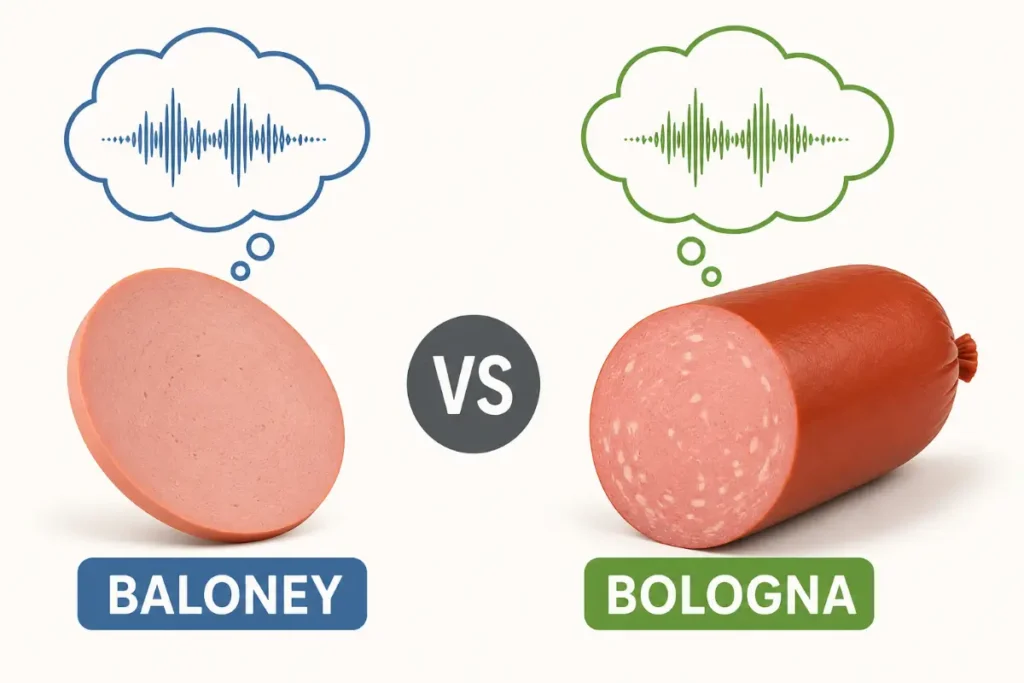
If you’ve ever wondered about baloney vs bologna you’re dealing with two words that look very different but can sound almost exactly the same. One refers to a type of meat. The other is a common word for something that is foolish untrue or silly.
The confusion comes from pronunciation. In American English the meat called bologna is usually pronounced like buh LOO nee. The word baloney has the same basic sound. That makes the two spellings easy to mix up when you’re writing.
The key is simple. Use bologna when you’re talking about the deli meat. Use baloney when you’re calling something nonsense or describing a silly claim. This guide explains the difference the history behind the words and the easiest ways to remember which spelling belongs in each situation.
Quick Definition
Bologna is a type of sausage that is commonly sold as sliced deli meat in the United States. The word comes from Bologna in Italy.
Baloney has two common uses. It can be an informal word for nonsense or foolish talk. It can also be used as an informal spelling of the meat name in some contexts.
Direct Answer
Use bologna for the meat and baloney for nonsense or foolish talk. Although they sound almost the same in American English their standard uses are different.
Comparison Table
| Word | Meaning | Example Sentence | When To Use It |
|---|---|---|---|
| Bologna | A type of sausage or deli meat. | I bought some bologna for sandwiches. | Use it when talking about the food. |
| Baloney | Nonsense or foolish talk. | That excuse is complete baloney. | Use it when calling a claim silly or untrue. |
Why These Words Sound The Same
The main source of confusion is pronunciation. American English speakers usually pronounce bologna as buh LOO nee. The word baloney is pronounced almost the same way.
That creates a spelling trap. You can hear the word clearly and still have no clue which spelling belongs on the page. Sound alone doesn’t give you enough information.
Think about a conversation at a deli counter. Someone might say that they want a few slices of bologna. If you only hear the sentence you won’t know the spelling until you see it written.
Now imagine someone says a ridiculous excuse is baloney. Again the pronunciation sounds almost identical. The meaning of the sentence tells you which word the writer should choose.
This is a classic example of why English spelling cannot always be based on sound. Two words can share a pronunciation while having different meanings and spellings.
What Bologna Means
Bologna is a cooked sausage traditionally associated with Bologna in northern Italy. In the United States the word usually refers to a smooth deli sausage that is sold in slices.
American bologna is often made from a mixture of meat and spices. It can be eaten cold in sandwiches or heated in a pan. Some people enjoy it with mustard cheese and bread. Others fry the slices until the edges curl and become crisp.
The word can also refer to the Italian city that gave the food its name. Context usually makes the meaning clear.
For example the sentence below refers to food.
- I bought bologna for lunch.
- This sentence refers to the city.
- We spent three days in Bologna during our trip to Italy.
Notice the capital letter in the city name. When Bologna refers to the Italian city it is a proper noun and needs a capital B. When it refers to the food in American English it is normally written with a lowercase b.
What Baloney Means
Baloney is an informal word that means nonsense foolishness or something that isn’t believable. It often shows that a speaker thinks a statement is ridiculous or false.
For example.
- That story is baloney.
- This sentence doesn’t say anything about food. The speaker is saying that the story isn’t believable.
- You might also hear someone say.
- That’s a bunch of baloney.
That phrase means the person thinks the claim is nonsense. It can sound playful or mildly annoyed depending on the situation.
Another example is.
- His excuse about missing the meeting was baloney.
- The speaker believes the excuse wasn’t honest or convincing.
The word is common in casual American English. It can make a sentence sound more colorful than simply saying nonsense.
When To Use Bologna
Use bologna when you mean the food or the Italian city.
The food meaning is common in everyday American English.
Examples include:
- I made a bologna sandwich for lunch.
- She bought sliced bologna at the grocery store.
- The kids wanted bologna and cheese sandwiches.
- He fried some bologna for breakfast.
- We need another package of bologna.
The city meaning appears in travel writing geography history and other topics about Italy.
Examples include:
- Bologna is known for its food and historic buildings.
- She studied at a university in Bologna.
- We took a train from Milan to Bologna.
The context usually makes the intended meaning obvious. Still the capital letter helps distinguish the city from the food.
When To Use Baloney
Use baloney when you mean nonsense or foolish talk.
It works especially well when you want to reject an idea in a casual and expressive way.
Examples include:
- That explanation is baloney.
- I don’t believe that story. It’s pure baloney.
- He told us the project would be finished in one day but that was baloney.
- The idea that you can learn a language overnight is baloney.
- She wasn’t buying his excuse. She called it baloney.
The word can sound humorous because it has a connection to the name of the food. That playful quality is part of what makes it memorable.
Is Baloney A Real Word
Yes. Baloney is a real English word.
It isn’t simply a bad spelling of bologna. It has developed its own meaning in English. In standard modern American English it commonly means nonsense or foolish talk.
That distinction matters. If you write that a political claim is baloney you are using a normal English word. If you write that you bought baloney at the supermarket you may be understood as talking about the meat but the spelling is less standard for that meaning.
English contains many words that began in one context and later developed another meaning. Baloney is a good example of that process.
Is Baloney Another Spelling Of Bologna
This is where the answer gets a little more interesting.
Baloney can be found as an informal spelling for the meat name because English speakers often write words according to their pronunciation. The spelling reflects how the food is commonly pronounced in American English.
Still bologna is the standard spelling for the food in American English. If you’re writing a recipe a menu article school assignment or professional document use bologna for the meat.
The spelling baloney is most useful when you mean nonsense or foolish talk.
That simple distinction will keep your writing clear.
Where The Word Bologna Comes From
The food name comes from Bologna in Italy. Bologna is a historic city in the Emilia Romagna region and has long been associated with a sausage called mortadella.
As the food became known outside Italy the name changed in different languages and food traditions. In American English bologna became the familiar name for a type of deli sausage.
The connection to the Italian city explains why the spelling looks unusual to many English speakers. It also explains why the word has a pronunciation that doesn’t match the letters in an obvious way.
English has many borrowed words like this. A borrowed word is a word taken from another language and used in English. Over time its pronunciation may change while the spelling keeps some connection to the original language.
How Baloney Got Its Meaning
The exact history of the slang sense of baloney is less certain than the connection between bologna and the Italian city.
One popular explanation connects the slang word to bologna sausage. The idea is that calling something baloney compared it to cheap or low quality meat. Another explanation connects it to older slang expressions involving deception or nonsense.
Language historians have debated the precise path. What matters for modern readers is clear. Baloney became established in American English as a word for foolishness or nonsense.
You don’t need to know the full history to use it correctly. Still the history helps explain why two words with such different meanings sound alike.
Why Americans Pronounce Bologna Differently
The pronunciation of bologna often surprises people who are seeing the word for the first time.
An English speaker might expect the letters to produce something close to boh LOHN ah. American English usually doesn’t pronounce it that way when the word refers to the deli meat.
The common American pronunciation is closer to buh LOO nee.
The city of Bologna has a different Italian pronunciation. Italian pronunciation follows its own sound system and shouldn’t be treated as an American English word with the same pronunciation.
This difference is one reason learners can struggle with the spelling. They hear buh LOO nee and may naturally try to spell it baloney.
That spelling makes sense from a sound based point of view. It just isn’t the standard spelling for the food.
Common Mistakes With These Words
The most common mistake is using baloney when you mean the deli meat.
For example.
I made a baloney sandwich.
You may see this in casual writing and people will understand it. But the standard spelling for the food is:
I made a bologna sandwich.
Another mistake happens in the opposite direction. A writer may use bologna when talking about nonsense.
For example:
That story is bologna.
Most readers will probably understand the intended meaning from context. Still baloney is the normal word for nonsense.
A third mistake is forgetting the capital letter when talking about the Italian city.
Correct:
We flew to Bologna last summer.
Incorrect:
We flew to bologna last summer.
Proper nouns such as city names begin with capital letters.
Bologna In Real Sentences
The easiest way to build confidence is to see the word in natural sentences.
Food Examples
- I packed a bologna sandwich for the road trip.
- The deli sells several kinds of bologna.
- He likes fried bologna with eggs.
- We picked up some bologna and cheese before heading home.
- She asked the butcher to slice the bologna thin.
These examples all refer to food. The spelling stays bologna.
City Examples
Bologna has a long history and a strong food culture.
- My friend studied in Bologna for a semester.
- We visited Bologna after spending a few days in Florence.
- The train from Bologna to Venice was comfortable.
- She hopes to return to Bologna next year.
Here the capital letter tells you that the word refers to the Italian city.
Baloney In Real Sentences
Now compare those examples with the slang meaning.
- That story sounds like baloney to me.
- His promise to finish everything in an hour was baloney.
- Don’t give me that baloney.
- She said the rumor was complete baloney.
- The salesman gave us a lot of baloney about the product.
In each sentence the word means nonsense or an untrue claim.
Is Baloney A Slang Word
Yes. Baloney is generally considered an informal word.
It works well in casual conversations and informal writing. It can also appear in newspapers books television dialogue and other forms of public writing when the writer wants a conversational tone.
For formal writing you may want a more precise word.
- Instead of saying:
- The report is baloney.
- You could write:
- The report contains false claims.
Or:
The report is not supported by evidence.
The best word depends on your purpose. Baloney is expressive and familiar but it doesn’t sound as formal as words such as falsehood nonsense or misinformation.
Baloney And Nonsense
These words are close in meaning but they don’t always create the same tone.
- Nonsense is neutral enough to appear in both casual and formal settings.
- Baloney sounds more informal and often carries a playful tone.
- Compare these sentences.
- That claim is nonsense.
- That claim is baloney.
Both sentences reject the claim. The second one sounds more conversational.
You might use baloney when talking with a friend. You might choose nonsense in an academic or professional discussion. In a formal report you would probably describe exactly why the claim is false instead of relying on either word.
Baloney And Bull
American English has several informal words for nonsense. Bull is one example.
Both words can express disbelief or frustration. Baloney is usually milder and can sound almost humorous.
For example:
- That’s baloney.
- That’s bull.
The second statement can sound much stronger and less polite. Baloney is often a safer choice when you want to call out something silly without sounding overly harsh.
Is Bologna Always About Food
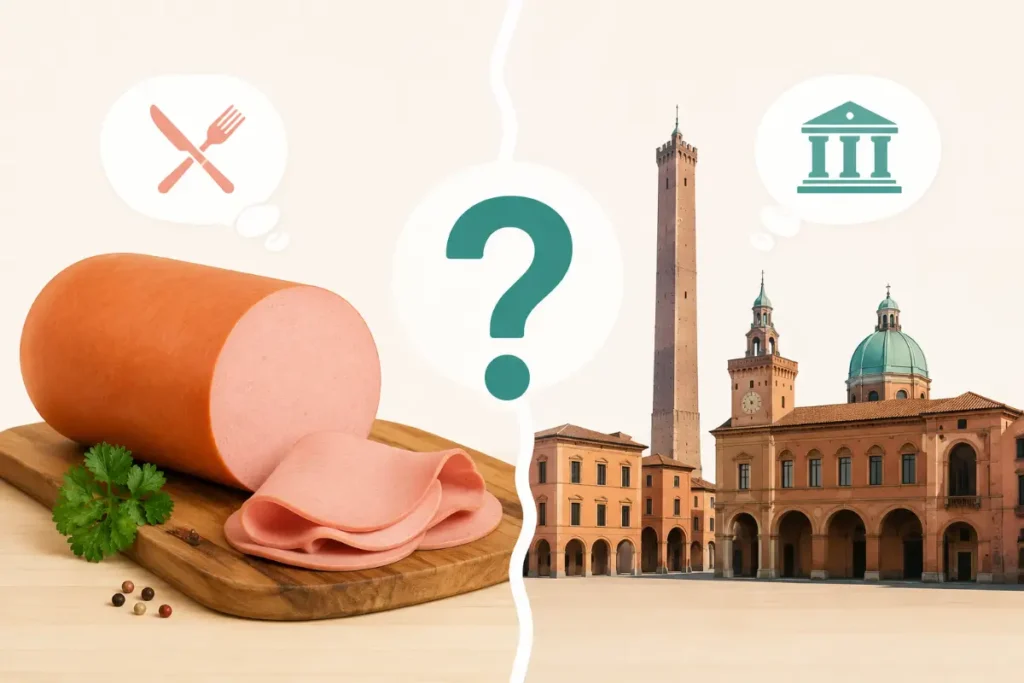
- No. Bologna can also refer to the Italian city.
- This is a useful distinction because the same spelling can represent two related but different things.
- When the word is lowercase it commonly refers to the food.
- I bought bologna at the store.
- When the word is capitalized it can refer to the city.
- Bologna is one of Italy’s best known historic cities.
- The surrounding words usually make the meaning clear.
Is Bologna An Italian Word
The name Bologna is the Italian name of the city. English uses the same spelling for the city.
The food name also comes from this place name. The traditional Italian sausage associated with Bologna is mortadella. American bologna developed into its own style of deli meat.
That means American bologna shouldn’t automatically be treated as identical to traditional Italian mortadella. They are related but have different histories and food traditions.
This distinction is useful if you’re writing about food. A recipe or article about American deli bologna may be discussing something quite different from a description of traditional mortadella in Italy.
Does Baloney Mean A Type Of Meat
It can appear that way in casual writing because some people use baloney as a phonetic spelling of bologna.
However the clearest standard choice for the meat is bologna.
If you’re writing for a broad audience you don’t want readers wondering if you’re using the slang word or the food name. Choosing bologna removes that ambiguity.
For a menu or recipe this is especially important.
Write:
Bologna and cheese sandwich.
Not:
Baloney and cheese sandwich.
The second version may look playful or informal but the first is the standard spelling.
A Simple Memory Trick
You don’t need a complicated trick to remember these words.
Think of the meanings as two separate boxes.
- Bologna means food or the Italian city.
- Baloney means nonsense.
You can also connect the spelling to the phrase baloney is nonsense. Both ideas belong to the same informal word.
For the food remember the unusual spelling. Think of the Italian city and the deli meat as partners. They both use Bologna or bologna.
For the slang meaning think of a person shaking their head and saying that something is baloney.
That mental picture is often enough to stop the spelling mix up.
A Quick Test For Your Writing
When you’re unsure which word to use ask yourself one question.
- Am I talking about food a place in Italy or nonsense.
- If you’re talking about food use bologna.
- If you’re talking about the city use Bologna.
- If you’re talking about nonsense use baloney.
This simple test works in almost every everyday situation.
Consider these examples.
I bought ___ for lunch.
The answer is bologna.
We visited ___ during our trip to Italy.
The answer is Bologna.
That’s a load of ___.
The answer is baloney.
Once you connect each spelling with its meaning the confusion disappears.
Other Words With Similar Sound Based Confusion
- English has plenty of words that cause trouble because pronunciation and spelling don’t line up neatly.
- Consider to too and two. They sound alike in many sentences but have different meanings.
- Consider there their and they’re. Their sounds can overlap in everyday speech but their functions are different.
- Consider your and you’re. They sound similar but one shows possession while the other means you are.
- The lesson is simple. When two words sound alike you can’t always rely on pronunciation. Meaning and context matter just as much.
- The same idea applies to the two words discussed here. Hearing buh LOO nee isn’t enough. You need to know what the speaker means.
How To Choose The Right Word Quickly
- If you’re writing quickly don’t stop and overthink the spelling. Use the meaning as your first clue.
- If you’re describing lunch use bologna.
- If you’re writing about Italy use Bologna.
- If you’re saying that an idea is foolish use baloney.
For example:
- We had bologna sandwiches before the game.
- Bologna is famous for its historic center.
His explanation was pure baloney.
The three sentences make the distinction clear. Once you build this connection in your memory you’ll usually choose the right spelling without stopping.
Why Context Matters More Than Sound
Words don’t exist in isolation. Their meaning comes from the sentence around them.
Imagine someone says:
I can’t believe that.
That sentence tells you almost nothing about spelling.
Now consider:
- I can’t believe that excuse. It’s baloney.
- The meaning makes the spelling clear.
Compare that with:
I can’t believe how much bologna he put on the sandwich.
Now the food meaning is obvious.
The surrounding words act like signposts. They help your reader understand the intended word even when two words sound alike.
This is one reason good writers think about meaning first and spelling second.
Can You Use Baloney In Formal Writing
You can but you should think about tone.
Baloney is familiar and expressive. It works well when a writer wants a relaxed conversational voice. It may feel too casual in a legal document research paper scientific report or formal business statement.
Instead of:
- The argument is baloney.
- A formal writer might say:
- The argument is not supported by reliable evidence.
- That sentence gives the reader useful information instead of simply rejecting the claim.
- In a personal essay or opinion piece the informal word may work perfectly.
- The speaker’s promise was nothing but baloney.
The choice depends on the voice you want. Good writing isn’t just about choosing a grammatically correct word. It’s also about choosing a word that fits the situation.
Can You Use Bologna For Nonsense
No. Bologna isn’t the standard spelling when you mean nonsense.
You might see someone write:
That’s bologna.
The reader may understand the joke or the intended meaning because of the sound. Still the standard spelling for the slang word is baloney.
If accuracy matters use baloney for nonsense.
This distinction is especially useful for editors teachers students and content writers. A reader may not stop to complain about the error but careful writing should use the established spelling.
Can You Use Baloney For The Meat
In informal writing you may encounter baloney as a phonetic spelling of the food. The meaning is usually obvious from context.
Still the standard spelling of the meat is bologna.
If you’re writing a recipe article menu product description school assignment or other polished content choose bologna. That spelling is clear and accepted.
The informal spelling can work as a deliberate joke or as part of dialogue where you want to show a character’s casual speech. That’s a style choice rather than the standard spelling.
What The Two Words Have In Common
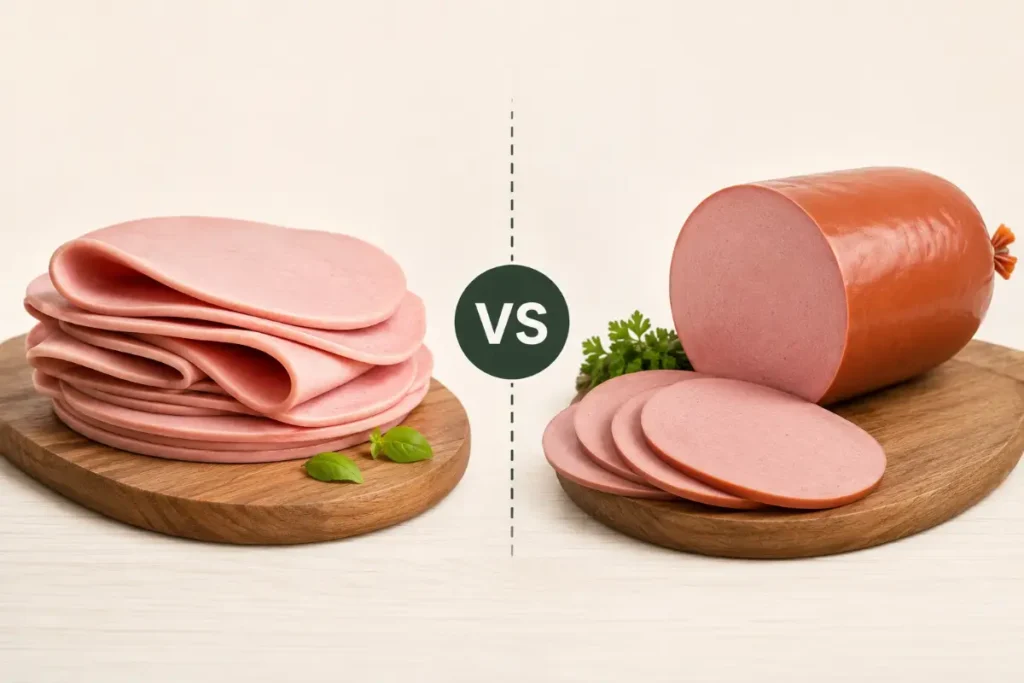
The biggest connection is their sound.
Both are commonly pronounced the same way in American English. That shared pronunciation helps explain why people confuse them.
They also have a historical connection through the food name and the later slang use of baloney. Their stories show how English words can change over time and develop new meanings.
But modern usage gives you a simple rule.
- Food is bologna.
- The city is Bologna.
- Nonsense is baloney.
That is all you need for everyday writing.
FAQs
What is the difference between baloney and bologna?
The main difference is meaning. Bologna refers to a type of deli meat or the Italian city. Baloney means nonsense or foolish talk.
Is baloney the correct spelling for the meat?
No. The standard spelling for the meat is bologna. You may see baloney used informally because it matches the common American pronunciation.
Why are bologna and baloney pronounced the same?
The American English pronunciation of bologna developed in a way that makes it sound like baloney. The shared pronunciation is why the two spellings are often confused.
Is baloney a real English word?
Yes. Baloney is a real informal English word that means nonsense or foolishness. It is not simply a spelling error.
Does bologna mean nonsense?
No. Bologna normally refers to the food or the city in Italy. Use baloney when you mean nonsense or foolish talk.
Is Bologna a city in Italy?
Yes. Bologna is a city in northern Italy and is the capital of the Emilia Romagna region. The food name bologna comes from this place name.
Is baloney a formal word?
Baloney is informal. It works well in casual conversation and conversational writing but a more precise term may be better in formal or academic writing.
How can I remember the difference between baloney and bologna?
Connect bologna with the food and the city. Connect baloney with nonsense. If you’re talking about something you can eat or a place in Italy use bologna or Bologna. If you’re calling an idea foolish use baloney.
Conclusion
The difference between baloney vs bologna becomes simple once you connect each word to its meaning. Bologna is the standard spelling for the deli meat and the name of the Italian city. Baloney is the informal word for nonsense or foolish talk.
The tricky part is pronunciation. In American English the food name bologna sounds much like baloney. That sound can fool your brain into choosing the spelling that feels natural. Don’t let pronunciation make the decision. Let meaning do the work.
If you’re writing about a sandwich use bologna. If you’re writing about the Italian city use Bologna. If you’re saying that a claim or excuse is nonsense use baloney.
The next time you face baloney vs bologna stop and ask what you mean. Food gets bologna. Italy gets Bologna. Nonsense gets baloney. That quick check is all you need to make the right choice.

Dr. Elena Vance holds a Ph.D. in Linguistics from Columbia University and has spent over 15 years analyzing the evolution of the English language. A former university professor turned full-time writer and editor, Elena specializes in breaking down high-level grammatical concepts, punctuation nuances, and style guides (APA, Chicago, MLA) into clear, actionable advice. When she isn’t hunting down dangling modifiers, she can be found collecting vintage dictionaries and reading classic literature.