

If you’re wondering about unenroll vs disenroll you may have noticed both forms in school websites college policies online courses and membership systems. They look almost identical and both seem to mean the same basic thing. So which word should you use?
In most American English writing unenroll is the more common and natural choice. It means to remove yourself or someone else from a course program class or other enrollment. Disenroll can also mean to remove someone from an enrollment list but it appears less often and can sound more formal or administrative.
The difference isn’t as simple as saying one word is always right and the other is always wrong. Context matters. Some organizations use their own preferred wording in official policies and systems. You’ll also see unregister and withdraw in situations where they may be more precise.
This guide explains the difference between these verbs and shows you how people actually use them. You’ll learn what each word means where the terms came from how they work in sentences and which option sounds most natural in American English.
Quick Definition
Unenroll means to remove yourself or another person from a course program class or other enrollment. Disenroll has a similar meaning and can refer to removing a person from an enrollment or membership list. In everyday US English unenroll is generally the clearer and more familiar choice.
Direct Answer
Unenroll is usually the better choice in everyday American English when you mean to leave or remove someone from a course program or enrollment. Disenroll is also a real word but it’s less common and often has a more administrative sound.
Comparison Table
| Word or Phrase | Meaning | Example Sentence | When to Use It |
|---|---|---|---|
| Unenroll | To remove someone from an enrolled course program or activity. | I decided to unenroll from the online course. | Best for common everyday use. |
| Disenroll | To remove someone from an enrollment or membership. | The office may disenroll students who do not meet the requirements. | More common in formal or administrative contexts. |
| Unregister | To remove your name from a registration or sign up list. | I need to unregister from the workshop. | Useful when the original action was registration. |
| Withdraw | To leave a course class or program. | She withdrew from the class before the deadline. | Common in schools and colleges. |
What Unenroll Means
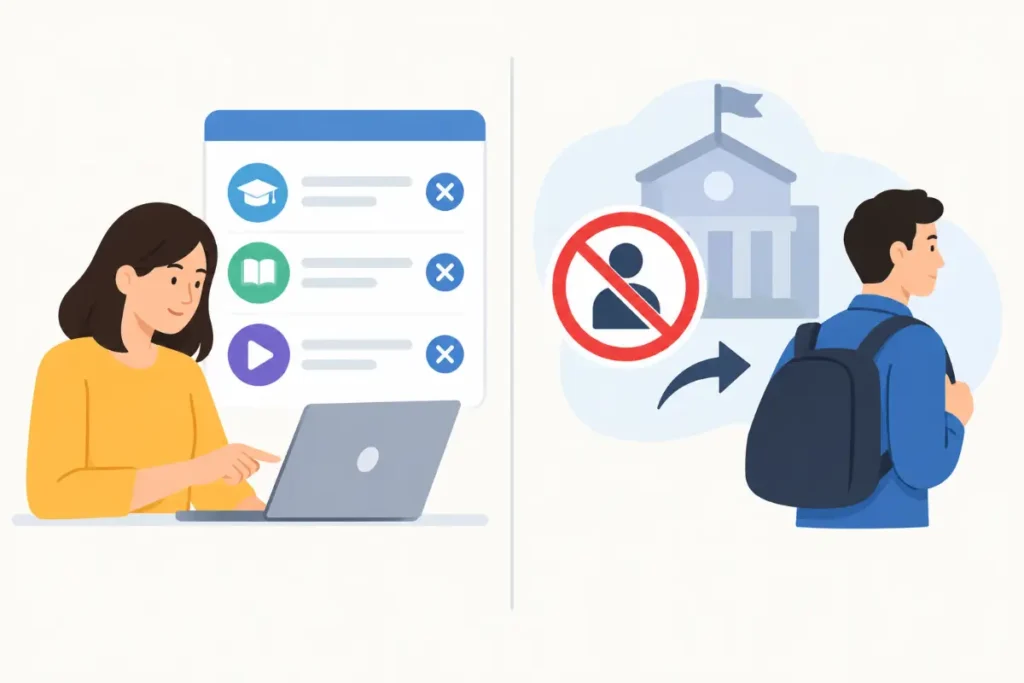
Unenroll is built from the prefix un and the verb enroll. The basic idea is simple. If you enroll in something you join it as an official participant. If you unenroll you remove yourself from that enrollment.
For example a student might enroll in an online class at the start of a semester. Later the student may realize that the schedule doesn’t work. The student can then unenroll from the class.
You can also use the word when one person removes another person.
- I need to unenroll my child from the summer program.
- The administrator helped me unenroll from the course.
- You can unenroll from the training program before Friday.
- She decided to unenroll after finding a different class.
The word works well in digital education too. Online learning platforms often give users an option to leave a course. A button might say Unenroll from course or Unenroll.
That wording feels natural because it directly describes the action. You were enrolled before and you’re now removing that enrollment.
What Disenroll Means
Disenroll also refers to removing someone from an enrollment. The word can describe a person leaving a program or an organization removing someone from its records.
You’ll often see it in formal rules policies and administrative writing. For example an organization might say that a participant can be disenrolled for failing to meet certain requirements.
Consider these examples.
- The school may disenroll students who fail to complete the required paperwork.
- The program can disenroll participants who miss too many sessions.
- Members may be disenrolled if their eligibility changes.
- The administrator decided to disenroll the participant from the program.
The meaning is clear in each sentence. Someone was enrolled and is no longer part of that enrollment.
Still disenroll isn’t as common in casual conversation. If a friend tells you they are leaving an online class they’re more likely to say they are going to unenroll or drop the class.
That’s a useful distinction. Grammar isn’t the only factor when choosing between two words. Natural usage matters too.
Why The Two Words Cause Confusion
The confusion comes from the fact that enroll already describes joining a course or program. Adding different prefixes can make the opposite action seem complicated.
The prefix un often creates the idea of reversing an action. Think about familiar words such as unlock untie and unpack. You unlock something that was locked. You untie something that was tied. You unpack something that was packed.
The same basic idea works with unenroll. You enroll first and then unenroll.
The prefix dis can also express separation removal or reversal. That makes disenroll seem perfectly logical too. In fact it is a recognized English word.
The tricky part is usage. A word can be grammatically possible and still be less common in ordinary conversation. That’s what happens here.
If you’re writing for a general US audience and simply want to tell someone how to leave a course unenroll will usually sound more natural.
Enroll And Unenroll
Understanding the base word makes the difference easier to remember.
Enroll means to officially join a course program school or activity.
- I enrolled in an English class.
- She enrolled her son in summer camp.
- We enrolled in the training program last month.
Unenroll describes the reverse action.
- I unenrolled from the English class.
- She unenrolled her son from summer camp.
- We unenrolled from the training program last month.
The relationship is straightforward. One action adds you to a program and the other removes you from it.
How The Meaning Changes
Imagine you sign up for a photography course. The school adds your name to its list of students. You are now enrolled.
A week later you decide that the course isn’t right for you. You contact the school or use its online system to leave the course. You are now unenrolled.
That simple sequence is why the word is easy to understand once you connect it to enroll.
Enroll Does Not Always Mean Pay
Another point can cause confusion. Enrollment and payment are not always the same thing.
You can enroll in a free online course. You can enroll in a school program before paying a separate fee. You can also enroll in an activity that doesn’t involve money at all.
For that reason unenroll simply refers to ending the enrollment. It doesn’t automatically mean asking for a refund or canceling a payment.
For example:
- I unenrolled from the course but I still need to request a refund.
- She unenrolled before the payment deadline.
- He unenrolled from the program after paying the registration fee.
The exact result depends on the rules of the organization.
When To Use Unenroll
Use unenroll when you want a simple and direct way to describe leaving an enrollment.
It’s especially useful for online courses educational programs workshops training platforms and other systems where people actively join and leave programs.
Online Courses
This is probably one of the most familiar settings for the word.
- I want to unenroll from this course.
- Students can unenroll at any time before the final exam.
- Where can I unenroll from the class?
These sentences sound natural because online platforms often treat enrollment as an action that can be reversed.
School Programs
Schools can also use the term when students leave a program.
- Parents can contact the office to unenroll their child from the program.
- The student asked to unenroll from the after school course.
- You must speak with an advisor before you unenroll.
Some schools may prefer withdraw instead. Their choice depends on their policies and the type of enrollment involved.
Training Programs
Companies and professional organizations often enroll employees in training.
- Employees can unenroll from optional training before the deadline.
- I need to unenroll from the workshop because of a schedule conflict.
- The system lets participants unenroll themselves.
Again the word is clear because the person is reversing a previous enrollment.
When Disenroll Makes Sense
Disenroll makes sense when the writing has a formal or administrative tone. It can be useful when an organization has the authority to remove someone from a program.
This difference becomes clearer when you compare these two sentences.
- I decided to unenroll from the program.
- The organization decided to disenroll the participant from the program.
The first sentence focuses on the person’s choice. The second focuses on an organization’s action.
That distinction isn’t an absolute grammar rule. Both words can be used in different ways. Still this pattern appears often enough to help you choose the more natural expression.
Administrative Rules
Formal policies sometimes need to describe situations where an organization removes a participant.
For example:
- The program may disenroll participants who provide false information.
- Students may be disenrolled for failing to meet eligibility rules.
- The organization reserves the right to disenroll members who no longer qualify.
This style sounds more official than everyday speech. That’s often exactly what a policy needs.
Eligibility Changes
An organization may also use disenroll when someone’s status changes.
Suppose a person qualifies for a program because they meet certain requirements. Later they no longer meet those requirements. The organization may remove them from the enrollment list.
A policy might state that participants can be disenrolled after their eligibility ends.
In ordinary conversation you might simply say that the person was removed from the program. The formal term is useful when precise administrative language matters.
How Unenroll Works In A Sentence
The verb unenroll can work with or without a direct object. Your choice depends on who is taking the action.
When you remove yourself from a course or program you can say unenroll from something. The preposition from shows the course or program you’re leaving.
For example:
- I decided to unenroll from the class.
- She wants to unenroll from the program.
- We had to unenroll from the workshop because of a schedule change.
You can also use unenroll with a direct object when you’re removing another person. In that case you don’t need from directly after the verb.
- The school unenrolled the student from the course.
- I need to unenroll my daughter from the program.
- The administrator unenrolled several participants from the training.
This pattern is useful because it helps you build natural sentences instead of simply knowing the definition.
Unenroll From Or Unenroll In
A common question is which preposition belongs after unenroll. The usual choice is from because the action involves leaving something.
You enroll in a course but unenroll from a course.
For example:
- I enrolled in the writing class.
- I unenrolled from the writing class.
The prepositions change because the actions point in different directions. In shows entry into the program. From shows removal or departure from it.
You may also see unenroll someone from a program.
- The office unenrolled him from the course.
- She unenrolled her child from the summer program.
That structure is standard and easy to understand.
A Simple Sentence Pattern
You can remember the most common structure like this.
Enroll in something.
Unenroll from something.
Here are a few more examples.
- Maria enrolled in the nursing course last month.
- Maria unenrolled from the nursing course this week.
- James enrolled in the workshop.
- James unenrolled from the workshop before it started.
Once you connect the two patterns the correct preposition becomes much easier to remember.
Unenroll Vs Withdraw
These words often appear in the same school or college setting. They can describe similar actions but they aren’t always exact substitutes.
Unenroll focuses on removing enrollment. Withdraw usually focuses on leaving a course or program after joining it.
A college might say that a student withdrew from a class. An online learning platform might say that the student unenrolled from the course.
For example:
- I withdrew from my history class.
- I unenrolled from my online history course.
Both sentences tell the reader that the person is no longer taking the class. The difference comes from the system and context.
When Withdraw Is Better
Withdraw is especially common in higher education. Colleges often have formal withdrawal policies with deadlines and effects on grades tuition and academic records.
A student might say:
- I need to withdraw from my biology course.
- She withdrew from the class before the deadline.
- Students can withdraw from the course until Friday.
In this setting withdraw may sound more natural than unenroll.
When Unenroll Is Better
Unenroll works especially well for online education and systems where a user can remove themselves from a course with a button or account setting.
For example:
- I accidentally joined the wrong course and need to unenroll.
- You can unenroll from the class through your account.
- The platform lets students unenroll without contacting an instructor.
The word feels practical and direct. It describes exactly what happens inside the system.
Unenroll Vs Unregister
Unregister is another word that can create confusion. It usually means canceling a registration rather than reversing enrollment itself.
Registration and enrollment overlap in meaning but they aren’t always identical.
You might register for a conference. You might enroll in a course. You can then unregister from the conference or unenroll from the course.
For example:
- I registered for the workshop.
- I decided to unregister from the workshop.
Compare that with:
- I enrolled in the training course.
- I decided to unenroll from the training course.
The best word often depends on the original action.
If you registered for something then unregister can be the natural opposite. If you enrolled in something then unenroll is usually the natural opposite.
Unenroll Vs Drop
Students often use drop when talking about classes. It’s shorter and more casual than many formal terms.
For example:
- I decided to drop the class.
- She dropped the course after two weeks.
In a college setting drop a class is very common American English. However the exact meaning can depend on school policy.
Some schools distinguish between dropping a course early and withdrawing from it later. A dropped class may disappear from the student’s record while a withdrawal may appear with a special notation.
That’s why students should check their school’s rules instead of assuming that every term has the same administrative effect.
In casual conversation you can still use drop naturally.
- I’m going to drop my Friday class.
- He dropped the course because it conflicted with his work schedule.
For an online course the platform may instead use unenroll.
Can You Use Disenroll In Everyday Conversation
You can. The word is understandable and grammatically valid. Still it isn’t usually the first choice in casual American conversation.
If a friend says they are leaving an online class they might say:
- I’m going to unenroll from the course.
- I’m dropping the class.
- I’m leaving the program.
They are less likely to say:
- I’m going to disenroll from the course.
That sentence isn’t necessarily wrong. It simply sounds more formal and less conversational.
The difference is similar to many pairs in English where both words communicate the same basic idea but one feels more natural in ordinary speech.
When Disenroll Is The Better Choice
There are situations where disenroll fits perfectly. Formal organizations sometimes need a word that describes removal from an official enrollment.
Consider a health plan membership program or regulated service. The organization may need to explain exactly what happens when a person’s eligibility changes.
A formal notice might say that a participant will be disenrolled after failing to meet the program’s eligibility requirements.
That wording sounds administrative because it is administrative. The organization is not simply saying that someone decided to leave. It is describing an official action.
Formal Policy Writing
Policy documents often use precise terms to describe actions taken by an organization.
For example:
- The program may disenroll participants who fail to meet eligibility requirements.
- A member may be disenrolled after coverage ends.
- Participants can be disenrolled for failure to provide required information.
These sentences focus on rules and procedures. Disenroll fits that purpose.
Organization Initiated Removal
The word can also make sense when an institution removes someone rather than when the person chooses to leave.
For example:
- The school disenrolled the student after the required documents were not submitted.
- The program disenrolled participants who no longer qualified.
- The organization disenrolled the member after the account became inactive.
Again the context gives the word its formal tone.
The Difference In Tone
The biggest practical difference between these two words isn’t basic meaning. It’s tone and frequency.
Unenroll sounds more familiar and conversational. It’s a natural choice for instructions help pages emails and everyday discussions.
Disenroll sounds more formal. It appears more often in policies administrative notices and official records.
Think of the two words as close relatives wearing different clothes. They can describe the same basic action but they fit different situations.
If you’re writing a message to a friend you might say:
- I need to unenroll from the course.
If you’re writing an official policy you might say:
- The institution may disenroll a participant who fails to meet the requirements.
That distinction can make your writing sound much more natural.
Common Mistakes With These Words
Many errors come from treating similar words as exact copies. A writer may know that both terms involve leaving a program but still choose the wrong form for the sentence.
Using Enroll When You Mean Leave
One of the simplest mistakes is using enroll when the intended meaning is removal.
- I want to enroll from the course.
That sentence doesn’t express the intended meaning. The natural form is:
- I want to unenroll from the course.
You could also say:
- I want to withdraw from the course.
Using Unenroll In The Wrong Structure
Another common problem is forgetting the preposition.
- I want to unenroll the course.
This sounds incomplete if you mean that you are leaving the course yourself. A natural sentence is:
- I want to unenroll from the course.
If you’re removing someone else you can use the person as the object.
- I want to unenroll my son from the course.
Treating Disenroll As A Universal Replacement
Because disenroll has the same basic meaning people sometimes use it everywhere. That can make ordinary writing sound unnecessarily formal.
For a simple online course instruction this sounds natural:
- Click the button to unenroll from the course.
A formal policy may use:
- The institution may disenroll participants who fail to satisfy the eligibility requirements.
Neither word needs to be forced into every situation. Choose the one that fits the audience and context.

Spelling And Grammar Tips
Both unenroll and disenroll are built from the base word enroll. The main spelling issue comes from American English spelling conventions.
In US English the usual spelling is enroll with two l letters. The related forms follow the same pattern.
- Enroll.
- Enrolled.
- Enrolling.
- Unenroll.
- Unenrolled.
- Unenrolling.
The double l can make some forms look unusual at first. Once you know the base word the pattern becomes easier to follow.
For example:
- I enrolled in the course.
- I unenrolled from the course.
- She is enrolling in a new program.
- She is unenrolling from the old program.
The spelling stays connected to the base form.
Unenrolled And Disenrolled
The past tense and past participle forms are also worth knowing.
Unenrolled is the standard past form of unenroll.
- I unenrolled from the course yesterday.
- She unenrolled her child from the program.
Disenrolled is the corresponding form of disenroll.
- The participant was disenrolled from the program.
- Several members were disenrolled after their eligibility changed.
These forms are common in formal writing because they describe an action that has already happened.
You may also see the words in passive sentences.
- The student was unenrolled from the class.
- The participant was disenrolled from the program.
The passive form focuses on the person affected by the action rather than the person or organization that performed it.
Which Word Sounds More Natural In American English
For most general readers in the United States unenroll is the safer everyday choice.
It is direct and easy to understand. It also matches the wording people often see on educational websites and digital learning systems.
Use disenroll when the context calls for formal administrative language or when an organization is describing the official removal of a participant.
You don’t need to avoid disenroll completely. It’s a legitimate word with a clear meaning. The goal is simply to choose the word that sounds right for your audience.
For everyday writing this is a good rule to keep in mind.
Choose unenroll for ordinary instructions and personal decisions. Choose disenroll when formal administrative removal is the focus.
Real World Examples Of Unenroll And Disenroll
The easiest way to understand the difference is to see these words in situations people actually face. A student may choose to leave a class. A parent may remove a child from a program. An organization may remove a participant because that person no longer meets the rules.
All three situations involve the end of enrollment. The wording changes based on who takes the action and how formal the situation is.
Leaving An Online Course
Imagine you signed up for an online writing course. After a few lessons you realize that you don’t have enough time to finish it.
You could say:
- I decided to unenroll from the course.
- I need to unenroll because I don’t have enough time.
- She unenrolled from the course after two weeks.
These sentences sound natural because you’re talking about your own decision to leave.
An online learning platform might also use unenroll in its instructions.
- Select the course and choose the option to unenroll.
- You can unenroll from the course at any time.
- Contact support if you can’t unenroll from the class.
The word works well here because the action is simple and familiar.
A Parent Removing A Child From A Program
Parents often enroll children in sports programs summer camps music lessons and after school activities. Plans can change and the child may need to leave the program.
For example:
- I need to unenroll my daughter from the summer program.
- We decided to unenroll our son from the soccer class.
- She called the school to unenroll her child.
These examples focus on the parent’s action. The parent is choosing to end the child’s participation.
A School Removing A Student
Now imagine a school removes a student because the student no longer meets a program requirement. The situation has a more official tone.
You might see language such as:
- The school may disenroll students who fail to meet the program requirements.
- The institution can disenroll a student who does not provide the required documents.
- Students may be disenrolled if they no longer meet the eligibility rules.
Here disenroll fits the formal setting. The organization is taking official action rather than simply describing a person’s choice.
Leaving A Membership Program
Enrollment isn’t limited to classes. Organizations can enroll people in membership programs services and other structured programs.
Suppose a person no longer qualifies for a program. An official notice could explain that the member will be disenrolled after their eligibility ends.
A more casual explanation might simply say that the person’s membership has ended or that they were removed from the program.
This shows why context matters. Good writing isn’t always about finding one word that works in every situation. It’s about choosing the word that communicates the situation naturally.
Is Unenroll A Real Word
Yes. Unenroll is a real English word and is widely understood in American English. It is formed by adding un to enroll to describe the reversal of enrollment.
You may see it on websites learning platforms school portals and registration systems. It also appears in everyday conversations about classes and programs.
For example:
- I want to unenroll from this course.
- You can unenroll through your student account.
- She decided to unenroll before classes began.
There is nothing incorrect or informal about the word simply because it contains the prefix un. English commonly uses un to express the reversal of an action.
Think about familiar words such as unlock untie and unplug. The same basic idea appears in unenroll.
Is Disenroll A Real Word
Yes. Disenroll is also a real English word. It means to remove someone from enrollment or to end a person’s enrollment in a program.
The word appears most naturally in formal contexts. Government programs schools health plans organizations and other institutions may use it in official language.
For example:
- The program may disenroll participants who no longer qualify.
- The member was disenrolled after their eligibility changed.
- The organization has the authority to disenroll participants who violate the rules.
So you don’t need to treat disenroll as a spelling error or an invented word. It has a legitimate place in English.
The main question is style and context. In ordinary American conversation unenroll often sounds more natural. In formal administrative writing disenroll can sound more precise.
Can You Say Unenrolled
Yes. The past tense and past participle of unenroll is unenrolled.
For example:
- I unenrolled from the class yesterday.
- She unenrolled her child from the program.
- We were unenrolled from the course after the session ended.
The word can also appear after a form of be.
- I am unenrolled from the program.
- The student was unenrolled from the course.
- Several participants were unenrolled after the program ended.
The exact meaning depends on the sentence. A person can choose to leave or an administrator can remove that person.
Can You Say Disenrolled
Yes. Disenrolled is the past form of disenroll.
For example:
- The student was disenrolled from the program.
- Several participants were disenrolled after losing eligibility.
- The member was disenrolled according to the program rules.
This form is especially common in official statements because it can describe an administrative decision.
Notice how formal the examples sound. That isn’t because the grammar is difficult. It’s because the situations themselves involve rules records and official decisions.
The Difference Between Voluntary And Involuntary Removal
One useful way to understand the two words is to think about choice.
If you choose to leave something you joined you can describe that action with unenroll.
- I decided to unenroll from the class.
If an organization removes you because of a rule it may describe that action with disenroll.
- The organization disenrolled him after his eligibility ended.
This distinction can help you choose a word quickly. However it isn’t a fixed grammar rule. People and organizations may use the terms differently.
A school might use unenroll for every type of removal. Another organization might use disenroll for both voluntary and involuntary changes.
That is why the organization’s own wording should take priority when you’re completing a form or following official instructions.
What About Unenrollment And Disenrollment
The noun forms follow the same basic distinction.
Unenrollment refers to the act or result of ending enrollment. Disenrollment can describe the formal removal of someone from an enrollment or program.
For example:
- The system allows unenrollment at any time.
- The policy explains the disenrollment process.
- Students should review the rules before requesting unenrollment.
These nouns appear more often in policies and instructions than in casual speech.
In everyday conversation people usually choose simpler phrases.
Instead of saying:
- I requested unenrollment from the course.
A person might say:
- I asked to leave the course.
Instead of:
- My disenrollment was processed yesterday.
They might say:
- My enrollment was canceled yesterday.
Clear writing doesn’t require the longest or most official word. Simple language often works better.
When To Use Withdraw Instead
In college writing withdraw can be a better choice than either form. Colleges commonly use this verb when students leave courses after enrollment.
For example:
- I need to withdraw from my chemistry class.
- She withdrew from the course before the deadline.
- Students can withdraw from the class until Friday.
This matters because leaving a college course can affect grades tuition financial aid and academic records. The school may have a specific process for withdrawal.
So if you’re talking about a college class don’t assume that unenroll or disenroll describes the official process. Check the school’s terminology.
A student may casually say:
- I’m going to drop the class.
The college may officially call the action a withdrawal.
All three expressions can point to a similar real world event while carrying different meanings in the school’s system.
When To Use Drop A Class
Drop is one of the most common casual expressions used by American college students.
You might hear:
- I’m thinking about dropping my statistics class.
- She dropped the course last week.
- I had to drop one class because my schedule was too full.
This language sounds natural in conversation. It is less suitable when you need to describe an official school process in detail.
For example a university policy may explain a withdrawal deadline while students casually refer to that same process as dropping a class.
The lesson is simple. Everyday speech and official terminology don’t always match.
When To Use Cancel
Cancel can sometimes work but it doesn’t mean exactly the same thing.
You can cancel a registration appointment subscription reservation or event. Enrollment can also be canceled by a school or organization.
For example:
- The school canceled my registration.
- I canceled my enrollment before the semester started.
However cancel focuses on stopping something rather than specifically removing a person from enrollment.
If the point is that you no longer belong to a course unenroll or withdraw may give the reader more useful information.
When To Use Remove
Remove is another broad alternative.
An administrator might say:
- We removed the student from the course list.
This sentence is clear but less specific than a sentence using an enrollment term.
If the audience already understands the system you can use remove without a problem. If you’re writing a policy or help page the more precise term may be better.
Good editing means choosing the clearest word for the reader. A simple word that everyone understands can often beat a more technical word.
A Quick Test For Choosing The Right Term
When you’re unsure which word to use ask yourself three questions.
First ask what happened before. If the person joined a course or program through enrollment then a form of enroll may be appropriate.
Next ask who is taking the action. If the person is choosing to leave unenroll often sounds natural. If an organization is formally removing the person disenroll may fit better.
Finally consider the setting. Online courses and everyday communication often favor unenroll. Formal policies and administrative notices may favor disenroll. Colleges may use withdraw or drop instead.
This three step check takes only a few seconds. It also keeps your writing clear without forcing you to memorize complicated rules.

A Simple Memory Trick
Think of enroll as getting onto the list.
When you enroll you join the list. When you unenroll you leave the list.
The word disenroll can be remembered as the more formal administrative version of removing someone from that list.
Another useful trick is to connect the words with common situations.
Enroll in a course.
Unenroll from a course.
Withdraw from a college course.
Drop a class in casual conversation.
Disenroll a participant under an official rule.
These combinations sound natural because they match the way English speakers commonly use the terms.
You don’t need to force yourself to memorize every possible sentence. Learn these common patterns and let repeated exposure do the rest.
Part 4 completes the article with the FAQ, conclusion, and meta description. I’ll keep the exact keyword usage limited and avoid repeating the earlier sections.
FAQs
Is Unenroll Or Disenroll More Common
Unenroll generally sounds more natural in everyday American English, especially when someone talks about leaving a class course or program. Disenroll is also correct but often has a more formal administrative tone.
Is Disenroll Grammatically Correct
Yes. Disenroll is a grammatically correct verb that means to remove someone from enrollment or end that person’s enrollment in a program. Its past form is disenrolled, and its noun form is disenrollment.
Is Unenroll Grammatically Correct
Yes. Unenroll is a standard English verb that means to stop being enrolled or to remove someone from enrollment. Its past form is unenrolled, and it commonly appears in school websites course platforms and registration systems.
Can I Use Unenroll For A College Course
You can use unenroll when you’re speaking generally about leaving a college course. However many colleges use terms such as withdraw or drop for their official procedures, so follow the terminology used by your school.
Can Disenroll Mean Voluntary Removal
Yes. Disenroll can describe the end of enrollment without always meaning that an organization forced the person out. The surrounding context tells the reader who made the decision and why the enrollment ended.
What Is The Main Difference In Unenroll Vs Disenroll
The main difference is usually tone and context rather than basic meaning. Unenroll often sounds more natural for a person’s decision to leave a course or program, while disenroll often sounds more formal and administrative.
Should I Say Unenroll From Or Unenroll In
Use unenroll from when describing the course class or program someone is leaving. For example, you can say, “I need to unenroll from this course.” The preposition from fits the idea of moving out of an enrollment.
Conclusion
The difference between unenroll vs disenroll is easier to understand once you focus on context instead of treating the words as completely different actions. Both words relate to ending enrollment, but they can carry different tones.
Unenroll is usually the more natural choice for everyday American English. You can use it when someone decides to leave a course program or class, and it also works well in instructions on online learning platforms.
Disenroll has a more formal sound. Schools organizations and other institutions may use it when discussing the official removal of a participant or the ending of someone’s enrollment under a policy.
When you’re unsure, think about the situation first. If you’re talking about a person’s simple decision to leave, unenroll will often be the clearest choice. If you’re writing formal administrative material, disenroll may fit better.
Meta Description
Learn the difference between unenroll vs disenroll, with clear meanings, examples, grammar tips, and simple rules for choosing the right word.

Dr. Elena Vance holds a Ph.D. in Linguistics from Columbia University and has spent over 15 years analyzing the evolution of the English language. A former university professor turned full-time writer and editor, Elena specializes in breaking down high-level grammatical concepts, punctuation nuances, and style guides (APA, Chicago, MLA) into clear, actionable advice. When she isn’t hunting down dangling modifiers, she can be found collecting vintage dictionaries and reading classic literature.