

If you’re wondering about waring vs wearing the correct spelling is wearing. The word waring is not the standard spelling when you mean having clothes shoes jewelry or another item on your body.
The confusion is easy to understand because both versions sound the same when spoken. The extra e in wearing can also be easy to miss when you’re typing quickly. Once you understand where the word comes from though the spelling becomes much easier to remember.
In this guide you’ll learn the difference between the two forms what wearing means how it comes from the verb wear and why waring can appear in some writing without being the word you intended. You’ll also see plenty of everyday examples so you can recognize and use the correct form with confidence.
Quick Definition
Wearing is the present participle and gerund form of the verb wear. It means having clothes shoes accessories or something else on your body or using something until it shows signs of use.
Waring is not the standard spelling of this form of wear. If you’re talking about clothes or something you have on your body use wearing.
Direct Answer
Wearing is the correct spelling when you mean having clothes or another item on your body. Waring is incorrect in that context.
Comparison Table
| Word | Meaning | Example Sentence | When to Use It |
|---|---|---|---|
| Wearing | Having clothes accessories or another item on your body | She is wearing a blue jacket. | Use it when talking about what someone has on or is using. |
| Waring | Not the standard spelling of the verb wear | Waring is not correct in this context. | Do not use it when you mean wearing. |

Why The Spelling Causes Confusion
The main reason people make this mistake is simple. The word wear already looks different from the way it sounds. When you turn it into wearing you keep the original spelling of the verb and add ing.
That gives you wear + ing = wearing.
The mistake happens when someone remembers the sound rather than the letters. Since wearing and waring are pronounced alike in standard American English it can be hard to catch the error while speaking. Your ears can’t tell you which spelling belongs on the page.
There is another reason the mistake can feel natural. English has many words where a silent or less obvious letter changes the spelling. The e in wear is part of the original word and remains when ing is added.
Think of it this way. The word wear is the foundation. Wearing is built from that foundation. You don’t change the spelling of wear before adding ing.
That small connection makes the correct form much easier to remember.
The Correct Spelling Comes From Wear
The best way to understand wearing is to start with the base verb wear.
The verb wear means to have something on your body. It can also mean to use something until it becomes damaged or less useful.
For example:
- I wear glasses every day.
- She wears a red coat in winter.
- He wears comfortable shoes to work.
- They wear uniforms at school.
When you need the form that describes an action happening now you add ing to the base verb.
Wear + ing = wearing.
The spelling stays connected to the original verb. You don’t remove the e from wear before adding ing.
This is different from many regular verbs that drop a final e before ing. For example:
- Make becomes making.
- Take becomes taking.
- Drive becomes driving.
- Write becomes writing.
Those examples can make wearing seem unusual. However wear does not follow that same pattern in its spelling when forming wearing. The result is simply wearing.
What Does Wearing Mean
The most common meaning of wearing is having something on your body.
That something might be a shirt a dress a jacket a pair of shoes a hat or an accessory. It can also be something less obvious such as glasses a watch or a uniform.
For example:
- What are you wearing tonight?
- She is wearing a green sweater.
- I’m wearing my new shoes.
- He was wearing a black suit at the wedding.
In each sentence the word describes something that is on a person’s body.
The meaning can also extend beyond clothing. You can wear something that protects your body or helps you see or hear.
For example:
- She is wearing sunglasses.
- He is wearing a helmet.
- The child is wearing a hearing device.
- I was wearing my reading glasses.
The word doesn’t describe the item itself. It describes the action or state of having that item on.
Wearing In Different Situations
You probably use this word more often than you realize. It appears in everyday questions conversations descriptions and instructions.
Talking About Clothes
This is the most common use.
You might ask someone:
- What are you wearing today?
A person could answer:
- I’m wearing jeans and a white shirt.
The word tells us what the person has on at that moment.
Talking About Accessories
You can also use the word for jewelry and other personal items.
For example:
- She is wearing a gold necklace.
- He’s wearing a watch.
- I love the earrings you’re wearing.
The same rule applies. The item is being worn on the body so wearing is the correct form.
Talking About Shoes
Shoes are also something people wear.
- I’m wearing sneakers today.
- She was wearing high heels at the party.
- He is wearing his work boots.
Notice that you don’t use a different verb just because the item is footwear. Shoes are worn just like shirts jackets and hats.
Talking About Uniforms
Uniforms are another common use.
- The students are wearing school uniforms.
- The workers were wearing safety uniforms.
- Everyone was wearing the same uniform.
This usage is especially common in schools workplaces sports teams and military settings.
Wearing Can Describe More Than Clothes
The verb wear has a broader meaning than simply putting on clothes. Understanding these other meanings helps you use wearing naturally.
You can wear something because it is attached to your body or placed on your body. You can also use wear to describe damage caused by repeated use.
For example:
- These shoes are wearing out.
- The carpet is wearing thin.
- The old sofa is showing signs of wear.
Here wearing doesn’t mean putting on clothing. It relates to the gradual damage that happens through use.
This second meaning can sometimes confuse learners because the same verb has two related but different ideas.
The first meaning is about having something on your body.
- She is wearing a jacket.
The second meaning is about becoming damaged from use.
- The fabric is wearing thin.
Context tells you which meaning the speaker intends.
The Difference Between Wear And Wearing
The words wear and wearing come from the same verb but they don’t always work in the same places in a sentence.
Wear is the base form.
- I wear glasses every day.
Wearing usually describes an action in progress or acts as a noun.
- I am wearing glasses today.
- Wearing glasses helps me read.
The difference becomes clearer when you compare the sentences.
Consider these examples:
- I wear a suit to work.
- I am wearing a suit today.
The first sentence describes a regular habit. The second describes what is happening now.
You can also use wearing after certain verbs and expressions.
- She enjoys wearing bright colors.
- Wearing comfortable shoes makes a big difference.
- He hates wearing a tie.
In these sentences wearing functions as a gerund. A gerund is a verb form ending in ing that works like a noun. You don’t need to memorize that term to use the word correctly. Just notice how naturally wearing fits into the sentence.
The Difference Between Wearing And Putting On
Another common point of confusion is the difference between wearing something and putting on something.
These ideas are connected but they describe different stages.
Put on describes the action of placing something on your body.
Wear describes having it on.
For example:
- I am putting on my jacket.
- I am wearing my jacket.
The first sentence focuses on the action of getting dressed. The second focuses on the state that follows.
Imagine getting ready for work. You pick up your jacket and put it on. Once the jacket is on your body you’re wearing it.
This distinction is useful in everyday conversation.
You might say:
- Put on a coat. It’s cold outside.
But after you’ve dressed you could say:
- I’m wearing my warmest coat today.
Both expressions are correct. They simply describe different parts of the same process.
Wearing And Dressing Are Not The Same
People sometimes use wearing and dressing as though they mean the same thing. They are related but not identical.
Dressing usually refers to the act of getting dressed or choosing clothes.
Wearing refers to the clothes that are already on someone.
For example:
- She is dressing for the party.
- She is wearing a beautiful dress.
The first sentence focuses on getting ready. The second tells us what she has on.
You can also say:
- He dressed quickly this morning.
- He wore a blue shirt to work.
These verbs work together but serve different purposes.
Common Mistakes With Wearing
The most common error is simply leaving out the e from wear.
People may write:
- She is waring a red dress.
The correct sentence is:
- She is wearing a red dress.
Another common mistake happens when people use the wrong form of the verb.
For example:
- She wearing a red dress.
This sentence is missing the helping verb is. The correct version is:
- She is wearing a red dress.
You can also use a different subject and helping verb.
- I am wearing a jacket.
- He is wearing a jacket.
- They are wearing jackets.
- We were wearing jackets.
The form of wearing stays the same. The helping verb changes to match the subject and tense.
Wearing In Different Tenses
Understanding how wearing fits into different verb forms can help you avoid grammar mistakes.
Present Continuous
Use am is or are with wearing when an action is happening now.
- I am wearing a blue shirt.
- She is wearing a hat.
- They are wearing matching jackets.
This form is very common in everyday speech.
Past Continuous
Use was or were with wearing when the action was happening at a particular time in the past.
- I was wearing my favorite shirt.
- She was wearing a red coat.
- They were wearing costumes at the party.
The word itself doesn’t change. Only the helping verb changes.
Future Continuous
You can also use will be wearing to describe something that will be happening at a future time.
- I will be wearing a suit at the ceremony.
- She will be wearing a blue dress tonight.
- The team will be wearing new uniforms this season.
Again the spelling stays wearing.
Wearing And Worn
Another useful distinction is between wearing and worn.
Wearing describes someone who has something on.
- She is wearing a jacket.
Worn is the past participle of wear. It can describe something that someone had on in the past or something damaged by use.
For example:
- She has worn that jacket many times.
- These shoes look worn.
- He had worn the same coat for years.
The word worn is also used as an adjective when something looks old or damaged.
- The carpet looks worn.
- The book has a worn cover.
This is different from wearing but all the forms come from the same verb.
How To Remember The Correct Spelling
A simple memory trick can make this spelling stick.
Start with the word wear. Then add ing.
Wear + ing = wearing.
Don’t think about the pronunciation. Think about the base word.
If you’re writing a sentence about clothes ask yourself a quick question. What is the base verb?
The answer is wear.
Then add ing.
That gives you wearing.
You can use the same trick with many sentences.
- She is wearing a dress.
- He is wearing glasses.
- They are wearing uniforms.
- I am wearing sneakers.
The word always keeps the spelling of wear before ing.
A Simple Spelling Test
If you’re unsure about the spelling while writing try removing ing from the word.
Suppose you write waring. Remove ing and you’re left with war.
That should make you pause.
The intended base verb is wear not war.
Now add ing to wear.
Wear + ing = wearing.
This is a useful test because it connects the spelling to the meaning. If you’re talking about clothes the base verb should be wear.

Why Waring Can Sometimes Appear Online
You may have seen Waring written somewhere and wondered if it is actually a word.
There are situations where Waring can appear as a proper name. For example a person’s surname or a company name may use that spelling. Proper names can have spellings that don’t follow the usual rules for common English words.
That doesn’t make waring a correct spelling of the verb wearing.
Context matters.
If someone writes:
- She is waring a jacket.
The sentence contains a spelling mistake.
If Waring appears as part of a person’s name or another proper name it may be correct for that specific name.
This distinction is useful because you shouldn’t assume that every appearance of a particular spelling is an ordinary English word.
Wearing In Questions
The word appears often in questions about clothes and personal style.
Here are some natural examples:
- What are you wearing?
- What is she wearing?
- Are you wearing a jacket?
- Why are you wearing sunglasses indoors?
- Which shoes are you wearing?
- Were you wearing your blue shirt yesterday?
These questions sound natural because wearing describes what someone has on.
A very common question is:
- What are you wearing?
This can simply ask about clothes. Depending on the situation it can also ask about accessories shoes or other items.
For example a friend might ask:
- What are you wearing to the wedding?
A natural answer would be:
- I’m wearing a navy suit and brown shoes.
Wearing In Everyday Conversation
Native speakers use this word constantly. You don’t need a formal setting to use it.
Imagine a parent talking to a child before school.
- Are you wearing your school shoes?
A friend getting ready for dinner might ask:
- What are you wearing tonight?
Someone checking the weather could say:
- I’m wearing a light jacket because it’s chilly.
A shopper trying on clothes might tell a friend:
- I like the shirt I’m wearing now.
These examples show how natural the word is in ordinary American English.
Wearing And Clothing Vocabulary
The word often appears beside other clothing terms. Learning these combinations can make your English sound more natural.
Common combinations include:
- Wearing a shirt.
- Wearing pants.
- Wearing jeans.
- Wearing a dress.
- Wearing a jacket.
- Wearing a coat.
- Wearing shoes.
- Wearing boots.
- Wearing a hat.
- Wearing glasses.
- Wearing jewelry.
- Wearing a uniform.
- Wearing a costume.
- Wearing a suit.
- Wearing a tie.
These phrases are all standard.
You can also describe colors patterns materials and styles.
- She is wearing a blue dress.
- He is wearing black jeans.
- I’m wearing a cotton shirt.
- They are wearing matching outfits.
- She was wearing a patterned scarf.
The word works naturally with almost any item that can be worn.
When To Use Wear Instead
You don’t always need wearing. Sometimes wear is the better choice.
Use wear when you’re talking about a habit routine or general fact.
- I wear glasses every day.
- She wears a uniform to school.
- He wears boots during the winter.
- My dad wears a suit to work.
Use wearing when you’re describing something happening now.
- I am wearing glasses today.
- She is wearing her school uniform.
- He is wearing boots right now.
- My dad is wearing a suit today.
The difference is often about time and context.
Compare these two sentences:
- I wear sneakers to work.
- I am wearing sneakers today.
The first describes a usual choice. The second describes what is happening today.
When To Use Wore
Wore is the simple past form of wear.
Use it when you’re talking about something someone had on in the past.
- I wore a blue shirt yesterday.
- She wore a beautiful dress to the party.
- He wore his old boots during the hike.
- They wore costumes for Halloween.
Don’t use wearing by itself as the simple past form.
Incorrect:
- I wearing a blue shirt yesterday.
Correct:
- I wore a blue shirt yesterday.
You can use wearing with a past helping verb when you want to describe an action that was in progress.
- I was wearing a blue shirt when you called.
The difference is small but useful. Wore tells us what happened. Was wearing gives us a picture of what was happening at a particular moment.
When To Use Worn
Worn is the past participle of wear.
It usually appears with a helping verb.
- I have worn these shoes before.
- She has worn that dress several times.
- He had worn the jacket for years.
It can also act as an adjective.
- The shoes look worn.
- The old chair has a worn surface.
- The book has a worn cover.
Learning the basic forms together makes the whole word family easier.
| Form | Use | Example |
|---|---|---|
| Wear | Base verb | I wear glasses. |
| Wears | Present form with he she or it | She wears glasses. |
| Wearing | Present participle or gerund | She is wearing glasses. |
| Wore | Simple past | She wore glasses yesterday. |
| Worn | Past participle | She has worn those glasses before. |
The Word Wear Has Two Main Meanings
One reason this verb is interesting is that wear has more than one common meaning.
The first meaning relates to clothing and objects placed on the body.
- I wear a jacket in winter.
The second meaning relates to damage caused by use.
- My shoes are starting to wear out.
This second meaning appears in phrases such as wear out wear down and wear away.
Wear Out
When something wears out it becomes too damaged or weak to use properly.
- My old sneakers finally wore out.
- The batteries wear out quickly.
You can also use the phrase for people when something makes them very tired.
- The long trip wore me out.
Wear Down
To wear something down means to gradually reduce its strength or condition through use.
- Years of use have worn down the wooden steps.
It can also describe mental or emotional tiredness.
- The constant noise is wearing me down.
Wear Away
To wear away means to gradually remove something through repeated contact or use.
- The waves slowly wore away the rock.
These expressions show why learning the full word family can be more useful than memorizing one spelling alone.
Common Sentence Corrections
Seeing mistakes side by side can make the difference easier to remember.
Incorrect:
- She is waring a beautiful dress.
Correct:
- She is wearing a beautiful dress.
Incorrect:
- What are you waring today?
Correct:
- What are you wearing today?
Incorrect:
- He was waring a black jacket.
Correct:
- He was wearing a black jacket.
Incorrect:
- I am waring my new shoes.
Correct:
- I am wearing my new shoes.
Incorrect:
- They are waring matching shirts.
Correct:
- They are wearing matching shirts.
The pattern is the same every time. If the sentence describes clothes or another item someone has on their body the correct form is wearing.
Does Wearing Have The Same Pronunciation As Waring
For most speakers the two spellings would be pronounced the same. That’s why listening won’t help you identify the spelling mistake.
This is a classic example of a spelling problem rather than a pronunciation problem. You can say the word correctly and still spell it incorrectly.
The solution is to connect the word to its base form.
Wear gives you wearing.
That connection is much more reliable than trying to hear the missing vowel.
Is Wearing Always About Clothes
No. Clothing is the most common meaning but the verb can apply to many things.
You can wear:
- Glasses.
- Sunglasses.
- A watch.
- Jewelry.
- A helmet.
- A seat belt.
- A uniform.
- A costume.
- Protective gear.
- A badge.
For example:
- She is wearing a helmet.
- He is wearing a watch.
- The workers are wearing protective gear.
You can also use the word in a broader sense for something that is attached to or carried on the body.
The main idea stays the same. The item is being used or carried on the body in a way that makes wear the natural verb.
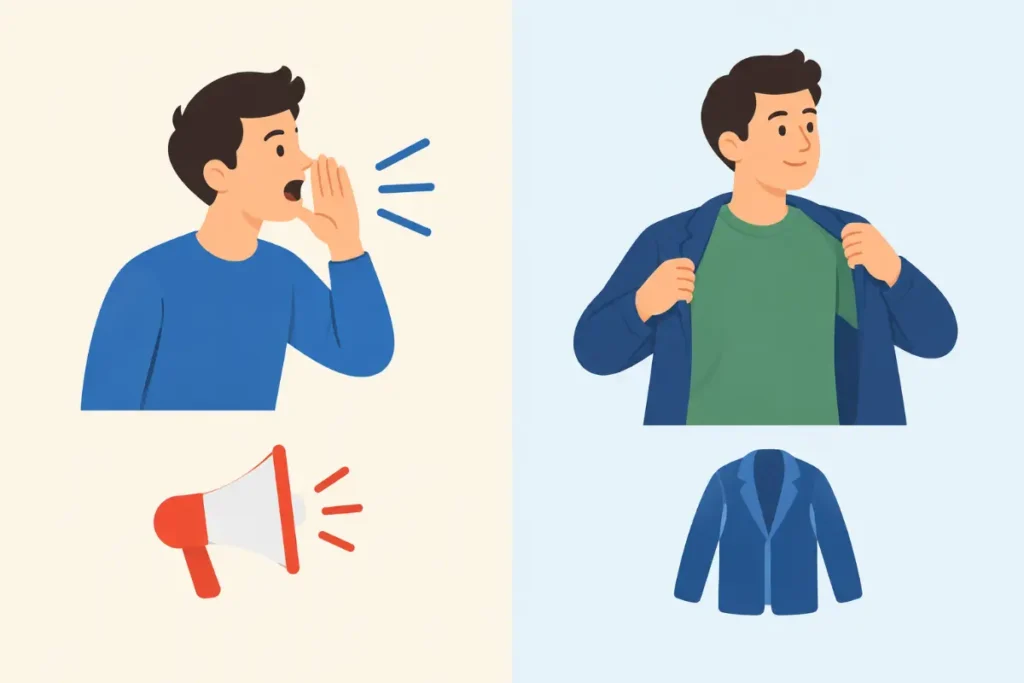
Why The Extra E Matters
The extra e isn’t decoration. It connects the word to its base form wear.
If you remove the e and write waring you create a different letter pattern. More importantly you lose the connection to the verb that gives the word its meaning.
This is why learning words as families can help.
Think of:
- Wear.
- Wearing.
- Wore.
- Worn.
- Wears.
These aren’t random spellings. They are different forms of the same verb.
Once wearing becomes familiar as part of this family it becomes much harder to accidentally write the shorter incorrect form.
A Quick Editing Trick
If you’re proofreading an article email essay or social media post search for waring.
If the sentence talks about clothes or something someone has on their body check the word carefully. In most cases you’ll want wearing.
For example:
- What are you waring to the event?
Change it to:
- What are you wearing to the event?
This quick search can be especially useful when you’re editing a long document. A spelling mistake that looks small can be surprisingly easy to miss during normal reading.
FAQs
Is wearing the correct spelling?
Yes. Wearing is the correct spelling when you mean having clothes shoes accessories or another item on your body. The form waring is not correct for this meaning.
Is waring ever a word?
Waring can appear as a proper name such as a surname or business name. It isn’t the standard spelling of the verb form that means having something on your body. For that meaning use wearing.
Why is wearing spelled with an e?
The word comes from the verb wear. When you form the present participle you add ing to the base word which gives you wearing. The spelling keeps the connection to the original verb.
What is the difference between wear and wearing?
Wear is the base verb and often describes a habit or general action. Wearing usually describes something happening now or works as a gerund in a sentence.
What is the past tense of wear?
The simple past form is wore. For example you can say I wore a blue shirt yesterday.
What is the past participle of wear?
The past participle is worn. It usually appears with a helping verb as in I have worn these shoes before.
Can wearing refer to things besides clothes?
Yes. You can wear glasses watches jewelry helmets uniforms costumes and protective equipment. The word can describe many things that you have on your body.
How can I remember the spelling?
Remember the base verb first. Wear plus ing gives you wearing. If you’re talking about clothes or something you have on your body keep the e in wear.
Conclusion
When you’re deciding between waring vs wearing the answer is simple. Use wearing when you mean having clothes shoes accessories or another item on your body. The spelling comes directly from the verb wear.
The easiest memory trick is to start with the base word. Think wear and then add ing. That gives you wearing. The extra e is part of the spelling and should stay there.
It’s also useful to remember the other forms of the same verb. Wear is the base form. Wears works with he she or it. Wearing describes an action in progress. Wore is the simple past. Worn is the past participle.
So the next time you type a sentence about clothes take a second to connect the word to its base form. If you can say wear then you can build the correct form as wearing. Keep that simple pattern in mind and this common spelling mistake becomes much easier to avoid.

Sienna Watson is a veteran copywriter and communications coach who has helped startup founders, marketers, and professionals polish their writing for over a decade. Realizing that most people don’t need a degree in linguistics—just clear, impactful communication—Sienna focuses on practical grammar, business writing etiquette, and eliminating wordiness. She advocates for plain language, strong verbs, and persuasive prose that gets results.