

If you’re wondering about puddy or putty the correct spelling is putty. The word refers to a soft material that can be shaped pressed or spread. It has several common uses in home repair construction crafts and other hands on work.
Puddy isn’t the standard spelling for this material. You may see it used as a name nickname or informal term in some places but it isn’t the normal English word for the repair material.
The confusion makes sense because putty doesn’t sound exactly like it looks. When people hear the word in conversation they may guess that it ends with a sound like the one in buddy or muddy. That can lead to the incorrect spelling puddy.
This guide explains the difference between the two forms and shows how to use putty naturally. You’ll also learn what putty means where the word comes from the different types of putty and the common phrases you’ll see in everyday English.
Quick Definition
Putty is a soft workable material used to fill seal smooth or repair surfaces. Depending on the type it can be used around windows walls wood metal or other materials.
Puddy isn’t the standard spelling when you’re talking about this material. In normal English writing use putty.
Direct Answer
The correct spelling is putty. Use puddy only when it is being used as a specific name nickname or another proper term.
Comparison Table
| Word | Meaning | Example Sentence | When to Use It |
|---|---|---|---|
| Putty | A soft material used for filling sealing shaping or repairing surfaces. | I used putty to fill the small crack in the wall. | Use this spelling for the material and its related uses. |
| Puddy | Not the standard spelling of the repair material. | Puddy is not the usual spelling for this material. | Use it only when it is a specific name or term. |

Why The Spelling Causes Confusion
The main reason people confuse these words is sound. When you hear someone say putty quickly the middle sound can be easy to miss. If you haven’t seen the word written often you may try to spell it based on how it sounds.
English has plenty of words that don’t give you a perfect clue about their spelling. Putty is a short word but that doesn’t make it immune to mistakes. In fact short words can be surprisingly easy to misspell because we often write them from memory without stopping to think.
The letters in putty are simple once you know them. The word begins with pu and ends with tty. There is no d in the standard spelling.
Think of the word as a small piece of material that you press into a crack. The word itself has a firm shape too. P U T T Y.
That visual pattern can help. The double t is especially useful because it separates the correct spelling from the version people sometimes create when they spell the word by sound.
What Does Putty Mean
Putty is a general name for a soft material that can be pressed into a surface or spread across it. It is usually thick enough to stay where you place it but soft enough to work with a tool or your fingers.
The exact material depends on the type of putty. Some putties are made for glass and window work. Others are designed for wood repair. Some are used to fill holes in walls or repair small areas of damage.
The basic idea remains the same. You use the material to fill a gap smooth a surface seal an opening or repair an area.
For example you might say:
- I used putty to fill the hole before painting the wall.
- The carpenter applied putty to the damaged part of the wood.
- The window needs fresh putty around the glass.
These sentences use the word in a practical way. Putty isn’t just something you see in a dictionary. It is a common word in repair and construction conversations.
The Different Types Of Putty
Putty doesn’t always mean one exact product. The word covers several materials made for different jobs. Knowing the context can help you understand what someone means.
Window Putty
Traditional window putty is used to hold and seal glass in a window frame. It creates a seal around the edge of the glass and helps keep air and moisture from passing through the gap.
You may hear someone say that an old window needs new putty. This usually means the material around the glass has become cracked dry or damaged and needs repair.
For example:
- The old window putty has started to crack.
- The worker removed the damaged putty before fitting the new glass.
Window putty has a long history in home repair. Modern windows may use other sealing systems but the word remains common.
Wood Putty
Wood putty is used to fill small holes cracks and imperfections in wood. It can help create a smoother surface before painting or finishing.
Imagine a wooden cabinet with a small nail hole. A person can press wood putty into the hole and smooth the surface. After it dries the repaired area can often be sanded and finished.
For example:
- I used wood putty to cover the nail holes in the cabinet.
- The table had a few small cracks that needed putty before it was painted.
Woodworkers often use related products such as wood filler. The exact product and its properties can vary so the terms aren’t always interchangeable.
Wall Putty
Wall putty is commonly used to create a smoother surface before painting. It can help fill small imperfections and make a wall look more even.
You might hear the term during home renovation work.
For example:
- The wall needs a thin layer of putty before we paint it.
- They applied putty to the small dents in the wall.
The exact product used depends on the wall surface and the repair job.
Epoxy Putty
Epoxy putty is a repair material that combines two components and hardens after they are mixed. It can be used for certain repairs involving materials such as metal wood plastic or ceramic.
It starts as a workable substance. After the components are combined it becomes much harder.
For example:
- He used epoxy putty to repair the cracked part of the pipe.
- The broken ceramic piece was repaired with epoxy putty.
This type of putty is very different from traditional window putty even though both use the same general word.
How To Use Putty In A Sentence
Putty can function as a noun and sometimes appears in phrases connected with repair work. As a noun it names the material itself.
Here are some natural examples.
- I bought some putty for the wall repair.
- The putty is still soft.
- Let the putty dry before you paint the surface.
- She spread putty over the small hole.
- The old putty around the window needs to be replaced.
- The carpenter used putty to fill the damaged area.
These sentences show how the word works in ordinary English. You don’t need complicated grammar to use it correctly.
Putty As A Verb
Putty can also be used as a verb. When used this way it means to apply putty to something.
For example:
- We need to putty the holes before painting.
- The worker puttied the damaged section of wood.
- She puttied the cracks and waited for the surface to dry.
The verb form changes depending on the tense. In the past tense you will often see puttied.
This form follows a familiar spelling change. The final y changes to i before the ending is added.
- Putty becomes puttied.
- You can see the same pattern in many other English verbs.
- Study becomes studied.
- Carry becomes carried.
- Try becomes tried.
This is different from simply adding a d to the word.
Putty In Everyday Conversation
You may not use the word every day unless you work in construction repair woodworking or home improvement. Still it is common enough to appear in instructions product descriptions and conversations about fixing things.
- Someone might say:
- Do we have any putty left?
- You’ll need some putty to fix that hole.
- The putty hasn’t dried yet.
- Can you pick up some window putty?
- The old putty needs to come out first.
These examples sound natural because the word usually appears in a practical setting. People often mention it while discussing a repair rather than as an abstract topic.
Puddy Is Not The Standard Spelling
The spelling puddy can look believable because English has many words that end in ddy. Words such as muddy and buddy are familiar. That pattern can influence how someone spells putty after hearing it.
- But those words don’t tell you how to spell this one.
- Putty uses tt rather than dd. The difference is small on the page but significant in standard spelling.
- If you’re writing an email about a home repair you should write:
- I need some putty to repair the window.
- You should not write:
- I need some puddy to repair the window.
The second version may still be understood. However understanding a word and spelling it correctly are two different things.
A Simple Memory Trick
One easy way to remember the spelling is to connect putty with the word put.
- You put putty into a crack.
- That little connection gives you the first three letters.
- put plus ty becomes putty.
- You can picture yourself saying:
- Put putty in the hole.
The repetition makes the spelling easier to remember because the word put gives you the correct beginning.
Another useful trick is to remember the two t letters. Picture the word as a small tool with two handles in the middle.
P U T T Y.
The double t is the part worth remembering.
Putty And Put
The words putty and put are related in sound but they have very different meanings.
Put is a common verb. It means to move or place something somewhere.
For example:
- Put the book on the table.
- Please put the tools away.
- She put the keys beside the door.
Putty is a material used for filling sealing shaping or repairing something.
For example:
- Put the putty into the crack.
- The first put tells you about an action. The second putty tells you about a material.
- This connection can make the spelling much easier to remember.
Putty And Paste
Putty and paste can look similar because both can be soft and spreadable. However they aren’t the same thing.
Paste is usually a thick substance used to stick things together or spread onto a surface. Glue paste and food paste are common examples.
Putty is generally used as a filling sealing or repair material.
For example:
- Use paste to attach the paper.
- Use putty to fill the hole.
- The context tells you which word fits.
Putty And Caulk
Putty and caulk are also related to sealing and repair work. They can both be used to close gaps but they serve different purposes.
Caulk is usually flexible and is commonly used to seal joints and gaps around places such as sinks windows tubs and doors. Putty can be used for filling and sealing too but its exact purpose depends on the type.
For example:
- She used caulk around the bathtub.
- He used putty around the window frame.
Modern products can blur these simple distinctions because materials are designed for many specific jobs. When working on a repair it is best to follow the product instructions instead of choosing a material based only on its name.
Putty And Filler
You may also see the word filler used in place of putty in some situations. These words overlap but they aren’t always exact synonyms.
A filler is generally a substance used to fill holes gaps or uneven areas. Wood filler is a common example.
Putty can perform a similar job but it may have a different formula and purpose.
For example:
- The painter used filler to smooth the damaged wall.
- The carpenter used wood putty to fill the small holes.
If you’re reading a product label pay attention to the intended use. A material made for wood may not be suitable for glass or walls.
Common Spelling Mistakes With Putty
The most common error is replacing the tt with dd. That produces the nonstandard spelling puddy. Another possible mistake is dropping one of the t letters. Putty should always contain two t letters.
Correct:
- Putty.
- Incorrect:
- Putty with one t.
The double letter matters because it is part of the standard spelling.
Some people may also confuse the word with other terms that sound close in fast speech. Reading the word regularly helps prevent that problem.

Why Pronunciation Can Mislead You
English spelling often gives learners trouble because spoken English and written English do not always line up perfectly.
The final sound in putty can sound similar to the ending in other familiar words. Depending on the speaker’s accent and speed the middle consonant may also sound less clear than it looks on the page.
That can make someone write what they think they heard.
This is why spelling by sound isn’t always reliable. The safest approach is to learn the written form and connect it with meaning.
If you’re talking about the soft repair material the standard spelling is putty.
The Pronunciation Of Putty
In standard US English the word putty is commonly pronounced with a sound similar to PUT ee.
The first part sounds like the word put. The second part has a short unstressed sound similar to the ending in words such as city.
The exact pronunciation can vary slightly by region and speaker. Some US speakers use a quick sound for the middle t that may sound different from the pronunciation you hear in careful speech.
That variation doesn’t change the spelling.
No matter how the word sounds in conversation the standard written form remains putty.
Examples From Home Repair
Home repair provides some of the clearest examples of this word.
- The window frame needs fresh putty around the glass.
- I filled the small hole with putty before sanding it.
- The old putty was cracked and dry.
- Let the putty set before you touch the surface.
- We need to smooth the putty before painting.
- The repair looks much better after the putty dried.
These examples also show that putty can be used with several common repair verbs. You can apply it spread it smooth it fill a hole with it remove it and replace it.
Examples From Woodworking
Woodworking is another area where the word appears often.
- The table has a few nail holes that need putty.
- She used wood putty to repair the damaged corner.
- After the putty dried he sanded the surface smooth.
- The cabinet looked better after the holes were filled.
- The craftsman chose a putty that matched the color of the wood.
These sentences show how specific context changes the meaning slightly. The general idea stays the same but the material is chosen for the surface being repaired.
Examples From General Writing
You don’t need to write about construction to use the word correctly.
Here are some broader examples.
- The artist used putty to prepare the surface.
- The repair team brought several containers of putty.
- I thought the crack was small but it needed more putty than expected.
- The instructions say to let the putty dry completely.
- She kept a small tube of putty in her repair kit.
The examples are simple but useful because they show the word in natural sentences instead of isolated spelling exercises.
When To Use The Word Putty
Use putty when you’re referring to a material used to fill repair seal or smooth something.
Common phrases include:
- Window putty.
- Wood putty.
- Wall putty.
- Epoxy putty.
- Putty knife.
- Putty compound.
The phrase putty knife is especially common. A putty knife is a flat tool used to spread scrape or apply materials such as putty. Despite its name it can be used for other jobs too.
For example:
- Use a putty knife to spread the material evenly.
- The putty knife made it easier to smooth the repair.
What Is A Putty Knife
A putty knife is a small flat tool with a blade and a handle. It is commonly used to spread putty over a surface and smooth it out. It can also be used for scraping paint removing old material and handling other repair tasks.
The name can confuse beginners because the tool isn’t limited to putty. Still the word is strongly connected with home repair.
For example:
- I used a putty knife to smooth the filler.
- The old paint came off easily with a putty knife.
The blade may be flexible or stiff depending on the job. A flexible blade is useful for spreading material while a stiffer blade can be better for scraping.
How The Word Changes In Different Forms
The base word is putty. As a verb you can use putty to describe applying the material. In the past tense the common form is puttied.
For example:
- He puttied the holes yesterday.
- She puttied the wall before painting it.
- The present participle is puttying.
For example:
- He is puttying the cracks now.
- They are puttying the damaged sections before the final coat of paint.
Notice that the spelling changes slightly when endings are added. The final y changes to i in puttied but remains in puttying.
These forms follow familiar English spelling patterns.
Is Puddy Ever A Real Word
You may encounter Puddy in writing. That does not automatically mean the writer is trying to spell the repair material.
A word can appear as a surname a nickname character name brand name or other proper name. In those cases the spelling depends on the specific name.
For example a person may have the surname Puddy. If you’re referring to that person then you should preserve the spelling of the name.
The key point is context. When you’re talking about the repair material the standard English spelling is putty. A proper name can follow its own spelling.
How To Choose The Right Word
Ask yourself what you’re trying to describe.
- If you mean a soft repair material use putty.
- If you are referring to a person’s name or another specific term called Puddy then use that spelling only when it belongs to that name or term.
This simple check prevents most mistakes.
For example:
- I need putty for the window.
- That sentence clearly refers to the material.
Now consider:
Mr. Puddy called this morning.
Here Puddy is a name.
The two spellings can therefore exist in writing but they don’t have the same role.
How To Remember Putty When Writing Quickly
When you’re typing quickly it helps to use a short mental cue instead of trying to recall a long spelling rule.
- Think put plus ty.
- You put putty into a crack.
- That sentence links the spelling with the meaning. It also gives you the double t automatically.
- If you still hesitate write the word slowly once.
- P U T T Y.
After that your brain will usually recognize the pattern.
You can also save the word in a personal spelling list if it is a word you often use for work or home projects. A few repeated encounters are usually enough to make a short common word stick.
Why Context Matters
Spelling questions are often easier when you understand the meaning first.
If you only compare the letters putty and puddy they may look like tiny variations. Once you know that putty is a repair material the correct spelling becomes easier to connect with related words such as putty knife window putty and wood putty.
Context gives the word a home in your memory.
That is why learning words inside sentences can work better than memorizing spelling lists. You’re not just remembering letters. You’re remembering what the word does and where it belongs.
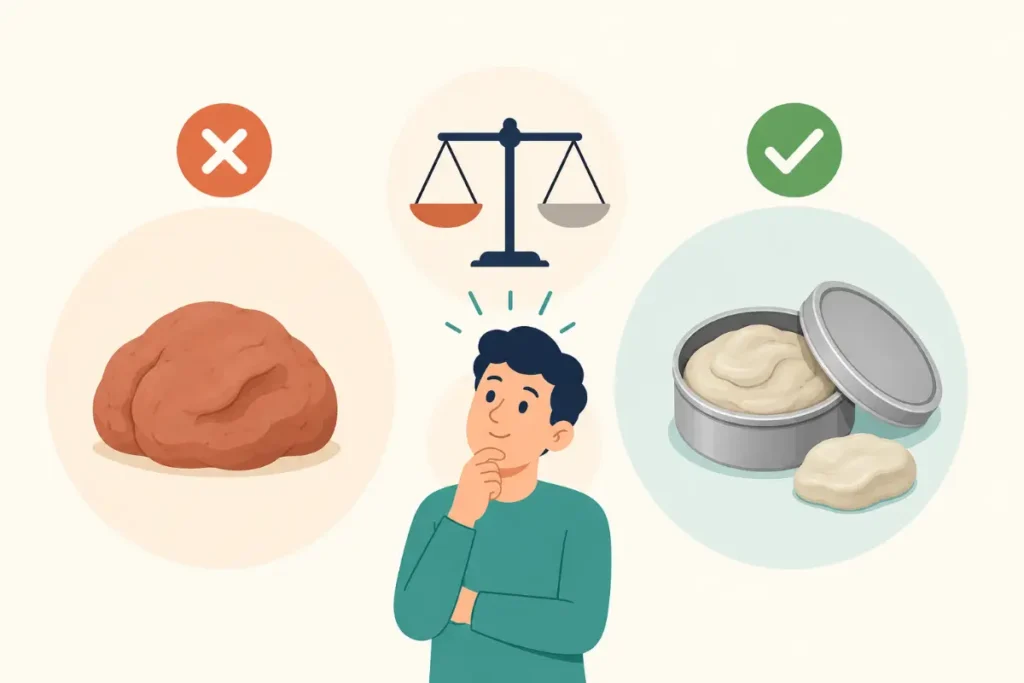
A Quick Review Of The Main Rule
There is no complicated spelling rule you need to memorize here. The standard word for the repair material is spelled with tt.
- P U T T Y.
- The version with dd is not the standard spelling for that material.
- Remember the word put at the beginning. Then add ty.
- Put plus ty.
- Putty.
- That simple trick is enough for most writers.
FAQs
Is puddy or putty correct?
Putty is the correct spelling for the soft material used to fill seal smooth or repair surfaces. Puddy is not the standard spelling for that meaning. Use Puddy only when it refers to a specific name or another term that is intentionally spelled that way.
Is puddy a word in English?
Puddy can appear as a proper name or informal term in some contexts but it isn’t the standard word for the repair material. If you’re writing about window repair wood repair or wall repair use putty.
How do you spell the material used to fill holes?
The material is spelled putty. It contains two t letters. A simple way to remember it is to think of put plus ty.
What is putty used for?
Putty is used for filling sealing smoothing and repairing surfaces. Different types are made for different jobs including windows wood walls and certain industrial repairs.
What is a putty knife used for?
A putty knife is a flat tool used to spread and smooth putty or similar materials. It can also be used for scraping paint and removing old material during repair work.
Is putty the same as wood filler?
Not always. Putty and wood filler can both fill holes and imperfections in wood but they can have different formulas and uses. Always check the product instructions for the specific repair.
How do you use putty in a sentence?
You can use it as a noun by saying The putty is still wet or I bought putty for the repair. It can also be used as a verb such as She puttied the holes before painting.
Why do people spell putty as puddy?
The mistake usually comes from pronunciation. The spoken word can make the middle consonant sound less clear especially during quick conversation. Familiar words ending in ddy may also influence the incorrect spelling.
Conclusion
When you’re deciding between puddy or putty the answer is simple. Putty is the standard spelling for the soft material used in filling sealing smoothing and repair work. It is the form you should use in normal English writing.
The spelling becomes easier to remember when you connect it with the word put. Think about putting putty into a crack or hole. Then remember the two t letters in the middle.
The word appears in many useful expressions including window putty wood putty wall putty epoxy putty and putty knife. Learning these phrases gives you more than the spelling. It helps you understand how the word works in real conversations and instructions.
If you see puddy in a repair sentence it is almost certainly a spelling mistake. Write putty instead. Keep the double t and you’ll have the standard spelling every time.

Sienna Watson is a veteran copywriter and communications coach who has helped startup founders, marketers, and professionals polish their writing for over a decade. Realizing that most people don’t need a degree in linguistics—just clear, impactful communication—Sienna focuses on practical grammar, business writing etiquette, and eliminating wordiness. She advocates for plain language, strong verbs, and persuasive prose that gets results.