
If you’re unsure about bellies or bellys you’re dealing with a simple spelling question that trips up many writers. The correct spelling is bellies. The word bellys is incorrect in standard English.
The confusion comes from the way English changes some nouns that end in y. When you turn a singular noun such as belly into its plural form you don’t simply add s. The final y changes to ie before the plural s is added.
That gives us belly → bellies.
This same pattern appears in many everyday words. Once you understand the rule you can use it with confidence instead of having to memorize each plural form separately. This guide explains the spelling rule behind the change and shows how to use the plural form naturally in sentences.
Quick Definition
Bellies is the plural form of belly. A belly is the front part of the body between the chest and the hips. Bellys is not the standard plural spelling.
Direct Answer
Bellies is the correct spelling. Bellys is incorrect because nouns ending in a consonant followed by y usually change the y to ie before adding s to form the plural.
Comparison Table
| Word or Phrase | Meaning | Example Sentence | When to Use It |
|---|---|---|---|
| Belly | The front part of the body between the chest and hips. | My belly hurts after that big meal. | Use for one belly. |
| Bellies | More than one belly. | The babies had round bellies. | Use for two or more bellies. |
| Bellys | Incorrect spelling. | This spelling is not standard English. | Do not use it. |
Why The Spelling Changes From Belly To Bellies
The spelling change makes more sense once you look at the letters before the final y. The singular word belly ends with a consonant followed by y. When you make it plural you change y to ie and then add s.
So the process looks like this.
Belly → bellie → bellies.
The middle form isn’t used as a word. It simply shows how the spelling changes before the final s is added.
This rule applies to many common nouns. For example baby becomes babies and city becomes cities. The same thing happens with party becoming parties and story becoming stories.
The key is to look at the letter directly before the y. In belly the letter before y is l which is a consonant. That puts the word in the group that normally changes y to ie when forming the plural.
The Rule For Nouns Ending In Y
English has a useful plural rule for words that end in y. If a noun ends in a consonant plus y you usually change the y to ie and add s.
Here are some common examples.
- Baby becomes babies.
- City becomes cities.
- Family becomes families.
- Story becomes stories.
- Country becomes countries.
- Party becomes parties.
- Puppy becomes puppies.
- Lady becomes ladies.
- Body becomes bodies.
- Cherry becomes cherries.
Belly follows exactly the same pattern.
The spelling isn’t based on pronunciation alone. In fact the singular and plural forms can sound quite different at the end. The written rule gives you a reliable way to form the plural.
This is also why adding only s creates an error. Writing bellys treats the word as though every noun simply takes s in the plural. English doesn’t work that way for many nouns ending in consonant plus y.
When You Add S Instead
There is another important part of the rule. Not every noun ending in y changes to ies.
If the letter before the y is a vowel such as a e i o or u you usually keep the y and simply add s.
Consider these examples.
- Boy becomes boys.
- Toy becomes toys.
- Key becomes keys.
- Day becomes days.
- Way becomes ways.
- Journey becomes journeys.
- Monkey becomes monkeys.
- Donkey becomes donkeys.
Look closely at the difference.
Baby has a consonant before the y, so it becomes babies.
Boy has a vowel before the y, so it becomes boys.
That small difference controls the spelling change.
The same idea explains belly. The letter before the final y is l, a consonant. So the plural follows the y to ies pattern.
Belly And Bellies In Real Sentences
The easiest way to understand the difference is to see the two forms in natural sentences. Belly refers to one. Bellies refers to more than one.
For example, you could say:
- My belly feels full after dinner.
- The baby has a round belly.
- His belly was sore after the workout.
Now compare those sentences with the plural form.
- The babies had full bellies after lunch.
- The puppies had tiny bellies.
- The children laughed as their bellies shook.
- The kittens slept with their bellies facing upward.
The meaning changes from one body area to several body areas. The spelling changes with it.
You can also use belly and bellies in a figurative or casual way. English speakers often use belly in everyday expressions that have little to do with anatomy.
For example:
- We had a belly laugh.
- He has a beer belly.
- The boat has a rounded belly.
- The fish have colorful bellies.
The plural form works naturally in similar situations.
- The children had sore bellies after laughing so hard.
- The fish showed their silver bellies as they turned.
- The characters in the cartoon have huge bellies.
These examples show why knowing the plural spelling matters. The word appears in casual speech as well as ordinary writing.
What Does Belly Mean
A belly is the front part of the human or animal body. In everyday American English the word usually refers to the stomach area or the abdomen.
For people the term is often casual rather than technical. A doctor may use abdomen in a medical setting while friends and family are more likely to say belly.
For example:
- My belly hurts.
- The baby has a little belly.
- She rubbed her belly after eating.
- His belly was sore from laughing.
The word can also describe the underside or rounded middle part of something. Writers sometimes use it for animals objects or natural shapes.
For example a bird may have a pale belly. A fish may have a white belly. A cloud or aircraft can even be described as having a rounded belly in descriptive writing.
The plural bellies works in these cases too. It simply refers to more than one belly or more than one thing with a belly.
Why Bellys Looks Almost Right
One reason this error is easy to make is that bellys looks like a normal plural at first glance. Many English nouns form their plurals by adding s.
For example:
- Book becomes books.
- Chair becomes chairs.
- Table becomes tables.
- Phone becomes phones.
- Window becomes windows.
So it feels natural to write belly + s.
The problem is that nouns ending in consonant plus y follow a different spelling pattern. The final y changes before the plural ending is added.
That gives us belly + ies rather than belly + s.
Once you learn this small rule the spelling becomes much easier. You don’t have to remember that belly is a special case because it isn’t. It belongs to a larger group of nouns that follow the same pattern.
A Simple Way To Remember Bellies
Think of the singular word first.
One belly.
Now imagine more than one.
Two bellies.
The final y changes to ie before the plural s appears. If you can remember baby to babies you can apply the same pattern to belly to bellies.
Another useful trick is to remember the phrase full bellies. It’s a common expression and easy to picture. You might imagine a group of happy children after a big meal or a litter of puppies after feeding.
Visual memory can make spelling easier because you’re connecting the letters with a real idea rather than trying to memorize a rule in isolation.
The main point is simple. Don’t add s directly to belly. Change the final y to ie first and then add s.
Belly becomes bellies.
More Words That Follow The Same Rule
Learning related words gives you a stronger grasp of the pattern. Once you see several examples together you can apply the rule to new words without stopping to think about each one.
Consider these pairs.
| Singular | Plural |
|---|---|
| Baby | Babies |
| Body | Bodies |
| City | Cities |
| Family | Families |
| Hobby | Hobbies |
| Lady | Ladies |
| Party | Parties |
| Puppy | Puppies |
| Story | Stories |
| Cherry | Cherries |
| Country | Countries |
| Company | Companies |
Each singular noun ends with a consonant followed by y. Each plural changes y to ie before adding s.
The pattern becomes even clearer when you compare these words with nouns ending in a vowel plus y.
| Singular | Plural |
|---|---|
| Boy | Boys |
| Day | Days |
| Key | Keys |
| Toy | Toys |
| Way | Ways |
| Journey | Journeys |
| Monkey | Monkeys |
| Donkey | Donkeys |
The difference is the letter before the y.
That one detail can save you from many common spelling errors.
Belly As A Countable Noun
Belly is usually a countable noun when you’re talking about separate people animals or things. That means you can use numbers with it.
You can say:
- One belly.
- Two bellies.
- Three bellies.
- Several bellies.
For example:
- The doctor examined the patient’s belly.
- The two babies had round bellies.
- The animals rested on their bellies.
You can also use words such as a and the with the singular form.
- She has a small belly.
- He hurt his belly.
- The baby’s belly looked swollen.
When you’re talking about more than one you use the plural form.
- The babies had soft bellies.
- Their bellies were full.
- The animals lay on their bellies.
This is another useful clue. If the sentence refers to several people animals or objects you need the plural form.
Common Expressions With Belly
The word appears in several familiar English expressions. Knowing these phrases can help you recognize the spelling in context.
Belly Laugh
A belly laugh is a deep and hearty laugh. It describes laughter that feels strong and genuine.
- The comedian gave the audience a reason for a huge belly laugh.
The expression doesn’t mean that your belly itself is laughing. It describes a laugh that comes from deep inside.
Beer Belly
A beer belly is a casual term for a rounded stomach. The expression is common in everyday American English.
- He joked about having a beer belly after years of enjoying weekend cookouts.
The phrase is informal so it works best in casual conversation and relaxed writing.
Belly Up
Belly up can have different meanings depending on the context. When an animal lies with its belly facing upward it can literally mean that position. In the phrase belly up to the bar it means to walk up to a bar or counter.
For example:
- The dog rolled belly up and waited for a scratch.
- We belly up to the counter and ordered breakfast.
The phrase can also appear in the expression belly up when talking about a business that has failed. That use is informal.
Belly Full
The phrase belly full means that someone has eaten enough food.
- We left the restaurant with happy hearts and full bellies.
This phrase is especially useful when you’re writing in a warm or playful tone.
The Difference Between Belly And Stomach
- Belly and stomach can refer to the same general area in everyday speech but they aren’t identical in every context.
- Belly is a common everyday word for the front part of the body around the abdomen. It sounds casual and friendly.
Stomach can also refer to the area around the middle of the body in casual speech. However it has a more specific biological meaning. The stomach is an organ in the digestive system that helps break down food.
For example you might say:
- My belly is getting bigger.
You could also say:
- My stomach hurts.
In medical or scientific writing abdomen is often more precise when referring to the body area. In casual conversation belly sounds more natural.
The plural spelling stays the same pattern when you use bellies to talk about several people or animals.
How To Form The Plural Of Belly
The plural of belly follows a common English spelling rule. When a noun ends in a consonant followed by y the y usually changes to ie before you add s. That gives us belly → bellies.
This rule applies to many everyday nouns. Once you recognize the pattern you can form the plural without guessing. The same spelling change happens in baby → babies, family → families, and city → cities.
The important part is the letter that comes right before the final y. In belly that letter is l. Since l is a consonant the word takes the ies ending in its plural form.
The Basic Pattern
You can remember the rule with this simple pattern.
Consonant + y → ies.
For example:
- Belly becomes bellies.
- Baby becomes babies.
- Family becomes families.
- Party becomes parties.
- Puppy becomes puppies.
- Library becomes libraries.
The spelling change happens because English has developed several patterns for forming plurals. Adding s works for many nouns but not all of them.
That’s why bellys doesn’t work. It treats the word like a noun that simply takes s even though belly belongs to the consonant plus y group.
When A Word Ending In Y Keeps The Y
There is one detail you need to remember. A noun ending in y doesn’t always change to ies.
When a vowel comes before the final y you normally keep the y and add s.
For example:
- Boy becomes boys.
- Toy becomes toys.
- Day becomes days.
- Key becomes keys.
- Way becomes ways.
- Journey becomes journeys.
- Monkey becomes monkeys.
Look at boy. The letter before y is o which is a vowel. So you simply add s.
Now look at belly. The letter before y is l which is a consonant. That means the spelling changes to bellies.
This small test works for many regular nouns. When you’re unsure about a plural ending in y first look at the letter before the y. That usually tells you which spelling pattern to use.
Belly And Baby Follow The Same Pattern
The words belly and baby are useful to learn together because they follow exactly the same plural rule.
A single child can be called a baby. Two or more are babies.
A single body area can be called a belly. Two or more are bellies.
The spelling changes in the same way.
- Baby → babies.
- Belly → bellies.
You can use this connection as a memory aid. If you already know how to spell babies you already know most of what you need to spell bellies.
The same idea works with puppy and puppies. A single puppy has one y at the end. Several puppies have ies at the end.
For example:
- The puppy has a round belly.
- The puppies have round bellies.
The sentence gives you a clear picture of how the singular and plural forms work together.
Singular And Plural Examples
Seeing both forms side by side makes the distinction easier to remember.
| Singular | Plural | Example |
|---|---|---|
| Belly | Bellies | The babies have full bellies. |
| Baby | Babies | Three babies are sleeping. |
| Puppy | Puppies | The puppies are playing outside. |
| Story | Stories | She writes short stories. |
| Family | Families | Several families attended the event. |
| City | Cities | The train connects several cities. |
| Party | Parties | The company hosts two parties each year. |
| Country | Countries | The program serves many countries. |
The pattern isn’t limited to words about people or body parts. It works across many types of nouns.
That’s useful because spelling becomes easier when you recognize a general rule. You don’t need to treat every word as a separate fact to memorize.
Common Mistake With The Final Y
One of the most common errors is adding s without changing the final y. This often happens when writers remember the general rule that plural nouns take s but forget that some nouns have a spelling change.
For example:
- Incorrect: The babies have round babys.
- Correct: The babies have round bellies.
The first sentence has two separate problems if baby is meant to be plural. The plural of baby is babies. The plural of belly is bellies.
Another common error is changing the y but forgetting the final s.
For example:
- Incorrect: The babies have full bellie.
- Correct: The babies have full bellies.
The correct plural needs both parts. The y changes to ie and then s is added.
Thinking of the process in two steps can help.
Belly → bellie → bellies.
Again the middle form isn’t a word you use in a sentence. It only helps show the spelling change.
Why Bellies Has Two Ls
Another small spelling point can cause confusion. The plural form contains two l letters before the ies ending.
The singular is belly. The plural is bellies.
You don’t remove one of the l letters when changing the word to its plural form. The base spelling stays intact while the final y changes.
Compare these forms.
- Belly.
- Bellies.
- Bellyache.
- Bellybutton.
- Bellyful.
The double l is part of the normal spelling of the word. It isn’t created by the plural rule.
This matters when you’re typing quickly because it’s easy to write belies instead of bellies. But belies is a different word entirely. It is the third person singular form of belie, which means to give a false impression or show something to be untrue.
For example:
- His calm voice belies his nervousness.
That word has nothing to do with the plural of belly. One extra l changes the word completely.
Bellies In Different Contexts
The plural form can appear in many kinds of writing. You may see it in casual conversation children’s books health writing food writing animal descriptions and creative work.
Talking About People
When discussing several people you can use the word to describe their stomach or abdominal area.
- The children rubbed their bellies after the big meal.
- The runners stretched their bodies and relaxed their bellies.
- The dancers kept their bellies tight during the exercise.
The tone is usually casual. In everyday American English belly sounds less formal than abdomen.
Talking About Babies
The word is especially common when people talk about babies.
- The babies had round bellies after feeding.
- Her twins have tiny bellies.
- The doctor checked the babies’ bellies during the exam.
Parents and caregivers often use belly because it sounds warm and familiar. It is a natural word in family conversation.
Talking About Animals
You can also use bellies for animals.
- The puppies slept on their bellies.
- The kittens showed their white bellies.
- The fish flashed their silver bellies as they moved through the water.
Animal descriptions often use the word because it gives readers a simple picture. It can describe the underside or front of an animal’s body depending on the species.
Talking About Food
The word also appears in playful expressions about eating.
- We left the picnic with full bellies.
- The kids filled their bellies with pizza.
- Everyone had happy bellies after dinner.
These expressions are informal. They work well in conversations and lighthearted writing.
Belly Can Be Used As An Adjective
Belly doesn’t always act as the main noun in a sentence. It can also appear before another noun to describe something related to the belly.
Consider these common compounds.
Belly Button
A belly button is the small mark in the center of the abdomen where the umbilical cord was attached before birth.
Example:
- The baby kept touching her belly button.
The plural is belly buttons.
Example:
- The children were comparing their belly buttons.
Notice that only the main noun becomes plural. You don’t write bellies buttons.
Bellyache
A bellyache is a stomachache. It is often used in casual speech.
Example:
- I had a bellyache after eating too much candy.
The plural is bellyaches.
This word also has a figurative meaning. To bellyache can mean to complain a lot.
Example:
- He spent the whole afternoon bellyaching about the long line.
Belly Fat
Belly fat refers to fat stored around the abdominal area. This phrase is common in health and fitness writing.
Example:
- Regular exercise can help reduce body fat over time.
The phrase usually treats fat as an uncountable noun. You don’t normally form the phrase by simply making belly plural.
Belly Dance
A belly dance is a style of dance that focuses on movements of the torso and hips.
Example:
- She started learning belly dance last year.
The plural can be belly dances when you’re talking about multiple dances or performances.
These examples show why context matters. The spelling of belly doesn’t change just because it appears before another noun.
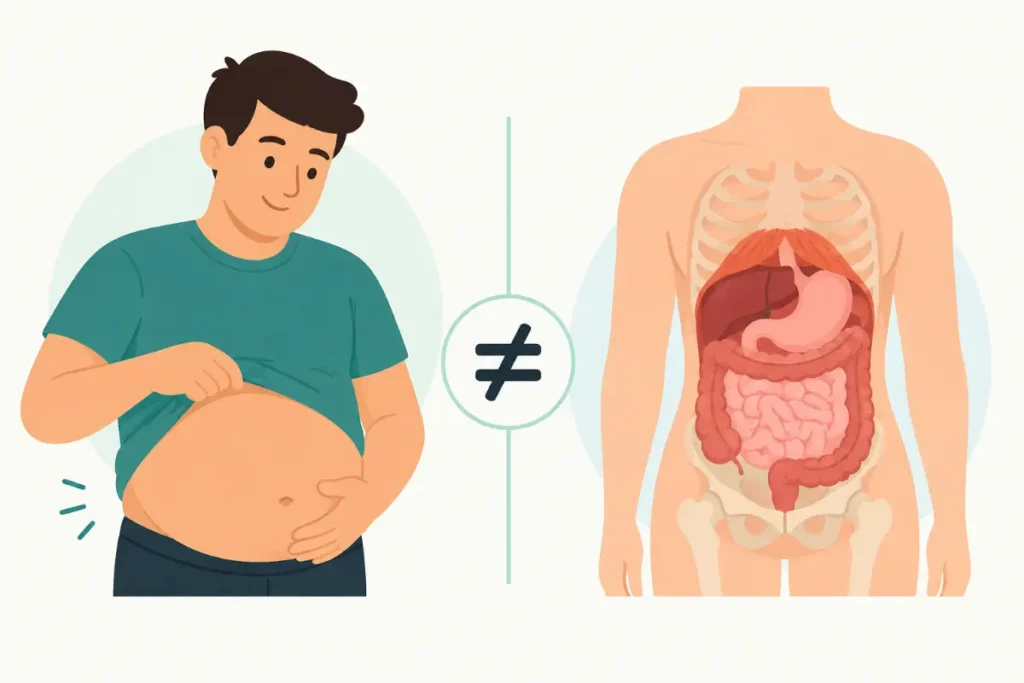
Belly And Abdomen Are Not Always Interchangeable
The words belly and abdomen refer to a similar area but they carry different tones.
- Belly is everyday language. It sounds relaxed and familiar. You might use it when talking to a friend or describing a child.
- Abdomen is more formal and precise. You are more likely to see it in medical writing or hear it in a doctor’s office.
For example a person might casually say:
- My belly hurts.
A medical professional might write:
- The patient reported abdominal pain.
Both statements can refer to discomfort in the same general part of the body. The choice depends on the setting and the level of detail needed.
The plural bellies is also more natural in casual descriptions.
- The babies had soft bellies.
A formal medical text would likely use a different term and structure the sentence differently.
Belly Can Refer To Animals And Objects
The word isn’t limited to human bodies. Writers often use belly to describe the lower or underside part of an animal.
A bird may have a bright belly. A fish may have a pale belly. A frog can have a colorful belly.
For example:
- The bird had a yellow belly and a dark back.
- The frog’s belly was lighter than its legs.
- The fish had silver bellies.
The plural follows the same spelling rule.
- The birds had yellow bellies.
- The frogs showed their pale bellies.
- The fish had silver bellies.
You can also see belly used creatively for objects or natural forms that have a rounded lower section.
A boat might be described as having a deep belly. A cloud can have a large rounded belly in a piece of creative writing. These uses are more descriptive but still follow the same plural pattern.
Is Belly A Formal Word
Belly is a standard English word but it has a casual tone in many situations. It isn’t incorrect or slang. It simply sounds more relaxed than terms such as abdomen.
You can use it in everyday conversation without a problem.
- My belly is full.
- The baby has a round belly.
- His belly hurts.
For formal medical writing abdomen may be a better choice because it is more precise and fits the professional setting.
The same idea applies to bellies. It is perfectly correct English but it often sounds informal and friendly.
Choosing the right word isn’t only about grammar. Good writing also depends on tone. A children’s story might naturally talk about full bellies while a medical report would use more precise clinical language.
A Quick Test For Y Plurals
When you face a noun ending in y and need its plural form take one second to check the letter before the y.
If that letter is a consonant change y to ie and add s.
For example:
- Belly → bellies.
- City → cities.
- Family → families.
- Party → parties.
If that letter is a vowel keep the y and add s.
For example:
- Boy → boys.
- Toy → toys.
- Day → days.
- Key → keys.
This simple check handles a large group of common spelling questions.
There are also borrowed words and special cases in English that can behave differently. That’s normal. Grammar rules often have patterns rather than absolute formulas. For common words such as belly the pattern is clear and reliable.
How To Avoid The Mistake While Typing
If you frequently type bellys by accident the best solution isn’t to stare at the word and hope you remember. Build a small habit around the spelling.
First identify the singular form. If you’re talking about one person or animal use belly.
If you’re talking about more than one use bellies.
Then look at the ending. The plural has ies rather than ys.
For important writing you can also use your spelling checker as a second pair of eyes. Don’t rely on it as your only source of knowledge. A quick manual check is still useful because spell checkers don’t always understand the meaning or context of a sentence.
Reading your own sentence aloud can help too. You may not hear the spelling mistake but you can often spot other problems in the sentence. A clean sentence makes it easier to notice a word that looks unusual.
The most useful habit is simple: learn the pattern once and apply it consistently.
A Few Sentences To Practice
Try reading these sentences slowly. Pay attention to the plural ending.
- The babies had full bellies after lunch.
- The puppies slept on their bellies.
- The kittens showed their white bellies.
- The children laughed until their bellies hurt.
- Several animals rested on their bellies.
- The fish had bright orange bellies.
- The twins had tiny round bellies.
- The campers went to bed with warm and full bellies.
Now compare them with singular examples.
- The baby has a round belly.
- The puppy rolled onto its belly.
- The kitten has a white belly.
- The child laughed until her belly hurt.
- The fish has a bright orange belly.
The difference is straightforward. One uses belly. More than one uses bellies.
Once you see that contrast in enough real sentences the correct form becomes much easier to recall.
Why The Plural Rule Matters Beyond This Word
Learning the spelling of one word is useful. Learning the rule behind it is even better.
If you understand why belly becomes bellies you can apply the same idea to dozens of other words. That means one small lesson can prevent many future spelling mistakes.
It also helps you recognize errors when you read them. If you see a plural noun ending in ys after a consonant you can stop and check the word. Sometimes the writer made a mistake. Other times the word may belong to a different spelling pattern.
Good spelling isn’t about memorizing endless lists. It is about recognizing patterns and knowing when they apply.
For this word the pattern is clear. The singular ends in consonant plus y. The plural changes the y to ie and adds s.
More Ways To Use Bellies
The plural form appears in more places than simple descriptions of the human body. You can use it when talking about animals, food, exercise, clothing, humor, and physical positions. The meaning depends on the sentence, but the spelling stays the same.
Understanding these different uses helps you recognize the word naturally. It also prevents you from thinking that bellies only refers to someone’s stomach.
Bellies In Animal Descriptions
Animal descriptions often use belly to refer to the underside or lower front part of the body. This is especially common when describing color or markings.
For example:
- The birds had bright yellow bellies.
- The kittens had soft white bellies.
- The frogs had spotted bellies.
- The fish showed their silver bellies as they swam.
- The puppies rolled onto their bellies in the grass.
The word can make an animal description feel more natural and visual. Instead of using a technical body term a writer can choose a simple word that most readers understand immediately.
The plural form works the same way for groups of animals. If you describe one animal you can write belly. If you describe several you can write bellies.
Bellies In Food And Eating Expressions
English speakers often use belly when talking about food. These expressions tend to sound casual and friendly.
One familiar phrase is full belly. It means that someone has eaten enough food and feels satisfied.
For example:
- We went home with full bellies after the barbecue.
- The children had full bellies and sleepy eyes after dinner.
The plural form is especially common when talking about a group of people.
You might also hear someone say that they need to fill their belly. This means they need to eat.
For example:
- I skipped lunch so I need to fill my belly.
This wording is informal. You wouldn’t normally use it in a formal business report. It fits better in conversation, storytelling, children’s writing, or humorous content.
Bellies In Fitness And Exercise
The word also appears in fitness conversations. People often talk about the belly when discussing the midsection of the body.
For example:
- The exercise strengthens the muscles around your belly.
- The class focuses on your core and belly muscles.
- The athletes worked hard to strengthen their bellies and backs.
In fitness writing abdomen and core may be more precise terms. However belly remains common in everyday language.
The word core usually refers to the muscles around the center of the body. It can include muscles in the abdomen as well as the back and hips. So belly and core aren’t exact synonyms.
That distinction matters when you’re writing about exercise. Use the word that matches the meaning you want.
Bellies In Children’s Writing
Children’s books often use belly because the word sounds simple and friendly. Young readers understand it easily and it can make descriptions feel playful.
For example:
- The little bear had a round belly.
- The puppies tumbled onto their bellies.
- The hungry monsters had empty bellies.
- The dragon had a giant green belly.
The plural form can create a fun image.
- The hungry monsters rubbed their bellies.
- The baby animals slept with their bellies touching.
- The little dragons had colorful bellies.
This is a good example of how word choice affects tone. Abdomen would sound much more formal in these sentences. Belly feels natural and warm.
Bellies And Body Position
The word can also describe how someone or an animal is positioned.
For example:
- The children lay on their bellies.
- The puppies crawled across the floor on their bellies.
- The swimmers floated on their bellies.
In these sentences the word refers to the front or underside of the body that faces the ground.
The singular form works the same way.
- The baby is lying on her belly.
- The dog rolled onto its belly.
- The swimmer rested on his belly.
This is one of the most common ways you’ll see the word used with on.
The Phrase On Your Belly
On your belly means lying with the front of your body facing downward.
For example:
- The baby is sleeping on her belly.
- Lie on your belly and stretch your arms forward.
- The dog rolled over and rested on its belly.
For several people or animals the phrase changes to on their bellies.
- The children lay on their bellies.
- The puppies rested on their bellies.
- The swimmers floated on their bellies.
The spelling change follows the same singular and plural rule.
The Difference Between Bellies And Stomachs
In casual American English bellies and stomachs can sometimes refer to the same general area. However the words aren’t exact substitutes in every sentence.
Belly is a casual word for the front part of the body around the abdomen. Stomach can also describe that general area in everyday speech but it has a more specific meaning as a digestive organ.
For example:
- My belly is full.
- My stomach hurts.
- The doctor examined my abdomen.
All three sentences can relate to the middle section of the body but each word has a slightly different tone or meaning.
The choice often depends on context. A child might say my belly hurts. A doctor may use stomach or abdomen depending on what they mean.
The Difference Between Belly And Abdomen
The distinction between these terms becomes clearer when you think about tone.
Belly is informal and conversational. It sounds natural in everyday speech.
Abdomen is more formal. It is common in medical and scientific contexts.
Consider these examples.
- She has pain in her belly.
- She has pain in her abdomen.
Both sentences are understandable. The second sounds more clinical.
If you’re writing a health article for everyday readers belly may sound more approachable. If you’re writing a medical document you may need the more precise term abdomen.
Good writing isn’t only about choosing the grammatically correct word. It also means choosing a word that fits the audience and situation.
Related Plural Spelling Errors
The spelling rule behind this word can help you avoid several other common errors.
Babys Or Babies
The correct plural is babies.
The singular word baby ends in consonant plus y. The y changes to ie before s is added.
Baby → babies.
Citys Or Cities
The correct plural is cities.
City → cities.
The letter before the final y is t. Since t is a consonant the word follows the same pattern.
Familys Or Families
The correct plural is families.
Family → families.
The same spelling rule applies even though the word is longer.
Partys Or Parties
The correct plural is parties.
Party → parties.
The spelling change isn’t connected to the meaning of the word. It simply follows the plural rule for this type of noun.
Puppys Or Puppies
The correct plural is puppies.
Puppy → puppies.
This example is particularly useful because it looks very similar to belly → bellies.
Words Ending In Y That Keep Their Y
To master the rule you also need to know when it doesn’t apply.
Words ending in a vowel plus y normally keep the y when they become plural.
For example:
- Boy → boys.
- Toy → toys.
- Key → keys.
- Day → days.
- Tray → trays.
- Essay → essays.
- Journey → journeys.
- Monkey → monkeys.
The reason is simple. The letter before the y is a vowel.
Compare boy with belly.
In boy the letter before y is o.
In belly the letter before y is l.
That difference determines the plural spelling.
A Useful Spelling Formula
If you want one formula to remember the rule use this:
- Consonant + y becomes ies.
- Then remember the other side.
- Vowel + y keeps y and adds s.
- You can test the rule with several words.
- Baby has b before y, so it becomes babies.
- Toy has o before y, so it becomes toys.
- Family has l before y, so it becomes families.
- Key has e before y, so it becomes keys.
- Belly has l before y, so it becomes bellies.
This formula isn’t difficult to remember because you can see the reason behind the spelling. You’re not just memorizing a random list.
Does The Rule Apply To Every Word
No. Like many English spelling rules this one has some special cases.
The consonant plus y rule mainly helps with regular nouns. English also contains proper names, borrowed words, abbreviations, and words that have developed their own accepted plural forms.
For common nouns such as belly, baby, and city, the pattern is reliable.
You should also avoid applying the rule to verbs without checking the role of the word in the sentence. The spelling patterns for third person singular verbs can differ from noun plurals.
For example try becomes tries when it is used as a third person singular verb.
- She tries her best.
That spelling looks similar to the plural noun pattern but the grammar is different.
Understanding the difference between a noun and a verb helps you see why the spelling appears in different situations.
Belly As A Verb
Although belly is most often used as a noun it can also appear as part of a verb in informal English.
The verb belly can describe something becoming rounded or swollen. This use is less common than the noun.
You are much more likely to see the word in compounds or phrases such as belly laugh, bellyache, or belly up.
For most everyday writing the noun is the form you need to understand.
Belly As Part Of A Compound Word
A compound word combines two words to create a specific meaning. Belly appears in several familiar compounds.
Bellybutton
A bellybutton is the small mark in the center of the abdomen. In American English belly button is also commonly written as two words.
Example:
- The baby grabbed her belly button.
The plural is belly buttons.
Example:
- The children were curious about their belly buttons.
Bellyache
A bellyache means a stomachache in casual speech.
Example:
- Too much candy gave him a bellyache.
The word can also describe complaining.
Example:
- He spent the morning bellyaching about the weather.
Bellyful
A bellyful means as much food as someone can comfortably eat. It can also be used figuratively to mean enough of something.
Example:
- We had a bellyful of pancakes at breakfast.
Belly Dance
A belly dance is a style of dance involving controlled movements of the torso and hips.
Example:
- She signed up for a belly dance class.
The plural form is belly dances when you’re talking about more than one dance or performance.
These compounds show how flexible the word can be. It can describe a body part directly or become part of a larger expression with its own meaning.
Is Bellies A Scrabble Word
Bellies is a standard English plural form and can be found in major English dictionaries. It is also accepted in many word games that use standard dictionary entries.
If you’re playing a particular word game you should check that game’s official dictionary because word lists can vary.
The important language point remains the same. The plural form is correctly spelled bellies.
How To Proofread This Word
A quick proofreading routine can catch this error in seconds.
First ask how many you are talking about. If you mean one use belly. If you mean two or more use bellies.
Then check the ending. The plural should finish with ies.
If you see bellys stop and correct it.
You can also compare the word with familiar examples such as babies and puppies. If those spellings are already familiar to you the same pattern can guide you here.
This kind of quick check is useful when editing articles emails school assignments or other important writing. It takes almost no time but can prevent a very noticeable spelling error.
Practice With These Sentences
Try filling in the correct form mentally before looking at the answers.
- The baby has a round ______.
- The puppies have round ______.
- The child rubbed his ______ after eating.
- The children rubbed their ______ after eating.
- The dog rolled onto its ______.
- The dogs rolled onto their ______.
The answers are belly, bellies, belly, bellies, belly, and bellies.
The key isn’t the subject alone. The key is singular versus plural. One takes belly. More than one takes bellies.
A Final Spelling Check
If you remember only one thing from this section remember the spelling pattern rather than the incorrect form.
The singular noun ends in y.
The plural changes y to ie and adds s.
So the correct form is bellies.
The same pattern appears in babies, cities, families, parties, stories, and puppies. Once this pattern becomes familiar you’ll start spotting it automatically.
FAQs
Is bellies or bellys correct?
Bellies is correct. Bellys is an incorrect spelling because the plural of belly changes the final y to ie before adding s.
What is the plural of belly?
The plural of belly is bellies. For example you can say The babies had full bellies after dinner.
Why does belly change to bellies?
The word belly ends with a consonant followed by y. When a regular noun has this ending its final y usually changes to ie before the plural s is added.
Is bellys ever correct?
No. Bellys isn’t the standard plural spelling. Use bellies when you mean more than one belly.
What is the difference between belly and bellies?
Belly refers to one belly while bellies refers to two or more. For example The baby has a round belly describes one while The babies have round bellies describes more than one.
Does belly always change to bellies?
When belly is used as a regular plural noun the correct plural is bellies. The spelling pattern is the same as baby to babies and puppy to puppies.
What other words change y to ies?
Many nouns ending in a consonant plus y follow this pattern. Common examples include city to cities family to families story to stories and party to parties.
When do words ending in y keep the y?
A noun usually keeps its y when a vowel comes before the final y. For example boy becomes boys and toy becomes toys.
Conclusion
If you were searching for bellies or bellys the answer is clear. Bellies is the correct plural form of belly. Bellys is not standard English and shouldn’t appear in your writing.
The reason is simple. Belly ends with a consonant followed by y. To make it plural you change the y to ie and then add s. That gives you bellies.
The same rule helps with many other words. Baby becomes babies. Family becomes families. City becomes cities. Puppy becomes puppies. Once you understand the pattern you can use it far beyond this one word.
So the next time you need the plural form don’t add s directly to belly. Change the ending first and write bellies. It’s a small spelling rule but one worth remembering because it comes up often in everyday English.

Dr. Elena Vance holds a Ph.D. in Linguistics from Columbia University and has spent over 15 years analyzing the evolution of the English language. A former university professor turned full-time writer and editor, Elena specializes in breaking down high-level grammatical concepts, punctuation nuances, and style guides (APA, Chicago, MLA) into clear, actionable advice. When she isn’t hunting down dangling modifiers, she can be found collecting vintage dictionaries and reading classic literature.