
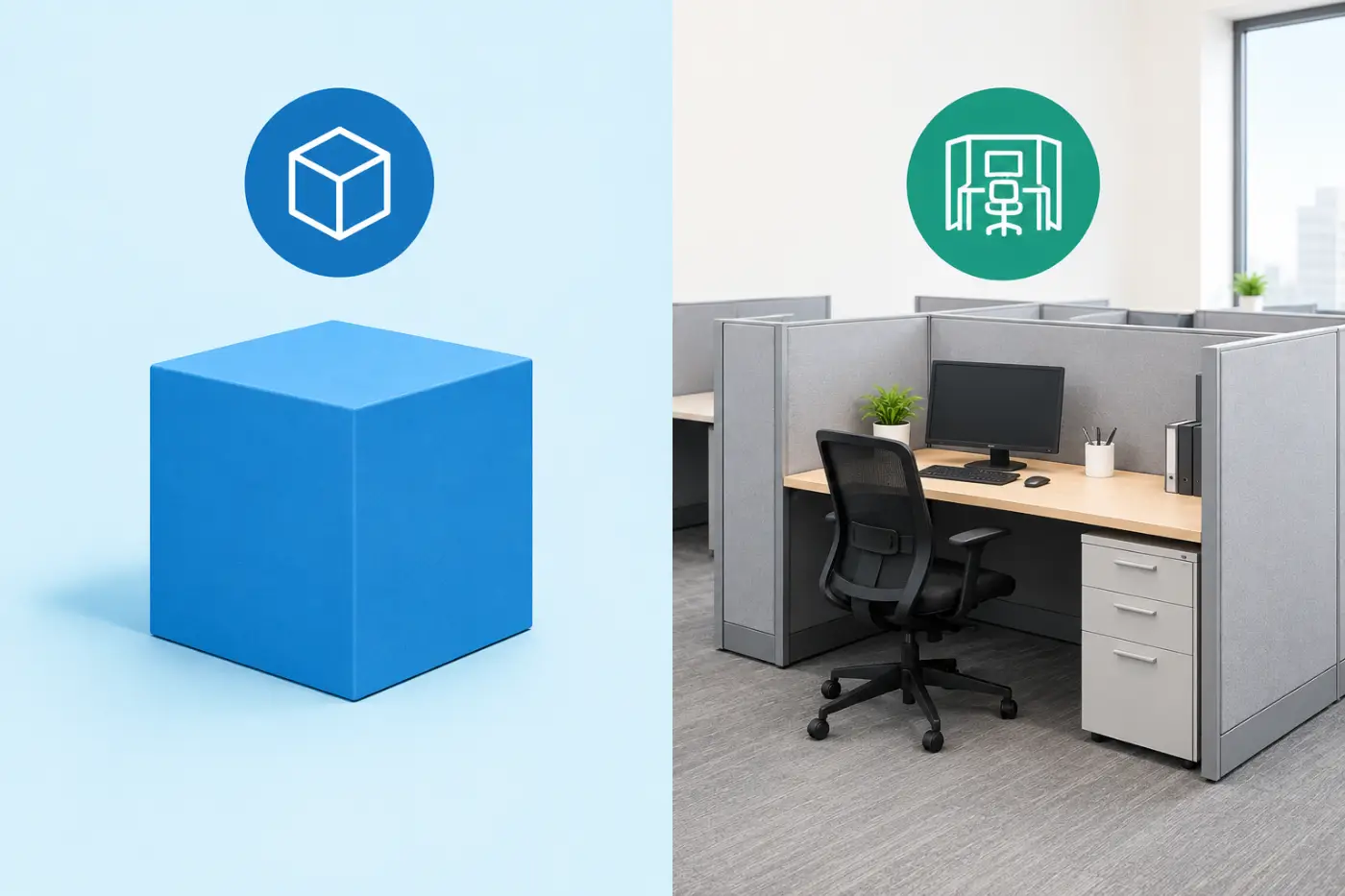
If you have ever wondered about cubical vs cubicle you are not alone. These two words look almost identical and sound similar. However they have different meanings. One describes a shape while the other usually refers to a small private workspace in an office.
The correct word depends on what you want to say. If you are talking about a desk surrounded by short walls at work you need cubicle. If you are describing something shaped like a cube you need cubical.
This small spelling difference can change the meaning of your sentence. Using the wrong word in an email a school assignment or a work report may confuse your reader. The good news is that the difference is simple once you see how each word works.
In this guide you will learn the meaning of both words how to use them in everyday sentences and why people often mix them up. You will also find practical examples and easy memory tricks to help you choose the right word with confidence.
Quick Definition
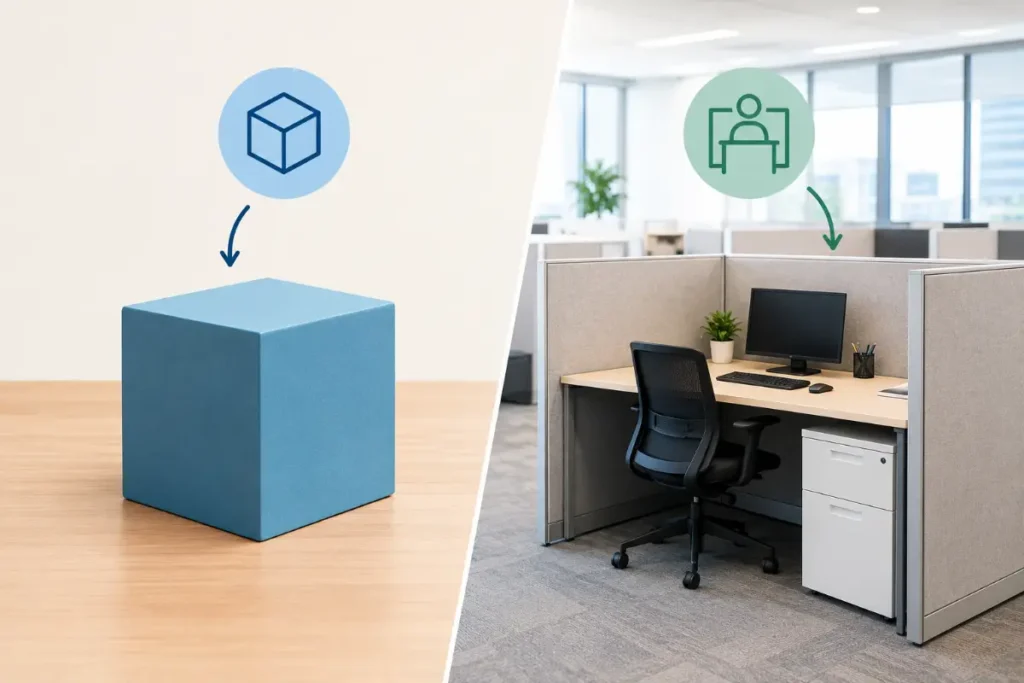
Cubical is an adjective that describes something shaped like a cube. A cube is a solid shape with six equal square faces.
Cubicle is a noun that usually means a small workspace separated from other areas by walls or partitions. Offices often use cubicles to give employees their own work areas without building separate rooms.+
Direct Answer
Use cubical when you mean cube shaped. Use cubicle when you mean a small enclosed or divided space such as an office workspace. For most office settings cubicle is the correct word.
Comparison Table
| Word | Meaning | Example Sentence | When to Use It |
|---|---|---|---|
| Cubical | Shaped like a cube. | The artist created a cubical sculpture. | When describing the shape of an object. |
| Cubicle | A small divided space or workspace. | I decorated my office cubicle with family photos. | When talking about an office area or another small partitioned space. |
What Does Cubical Mean
The word cubical describes the shape of something. It comes from the word cube and refers to an object that looks like a cube or has a cube like form. In geometry a cube has six square faces of equal size. A regular die and a classic toy block are familiar examples of cube shaped objects.
You might use cubical when describing a sculpture a box like structure or a building feature. For example a designer might create a cubical display stand for a store. An architect might describe a small cubical building with a simple geometric shape.
The word is an adjective. That means it gives more information about a noun. In the phrase a cubical container the word cubical describes the container. It tells the reader something about its shape rather than its purpose.
Examples Of Cubical In A Sentence
Here are some natural examples that show how the word works.
- The museum displayed a cubical sculpture made from steel.
- The children built a cubical tower with wooden blocks.
- A cubical glass ornament sat on the shelf.
- The designer chose a cubical shape for the product display.
- The science class studied a cubical object to learn about volume.
- The modern building had a cubical design with clean lines.
In each sentence the word describes an object’s form. It does not refer to a desk or a space where someone works.
Is Cubical The Same As Cube Shaped
In many everyday situations cubical means the same thing as cube shaped. Both expressions describe something that resembles a cube. The main difference is that cubical is a single adjective while cube shaped is a two word description.
For example you could write a cubical box or a cube shaped box. Both phrases tell the reader that the box has a cube like form. The second version may feel more familiar to some readers because it uses simple everyday words.
Keep in mind that an object does not need to be a perfect mathematical cube to look cubical. People sometimes use the word loosely to describe something with a roughly cube like shape. In technical writing however you should describe the object’s exact dimensions when accuracy matters.
What Does Cubicle Mean
A cubicle is a small space divided from nearby areas by walls or partitions. The word most often appears in offices where employees work at desks separated by panels. These work areas may include a desk a chair a computer and storage space.
Unlike cubical the word cubicle is a noun. It names a place or thing rather than describing a shape. You can sit in a cubicle decorate a cubicle clean a cubicle or move to a different cubicle.
Office cubicles became common because they let workplaces organize many desks in one large room. They offer some separation between workers without taking up as much space as individual offices. However they do not always provide complete privacy because the partitions may be low and conversations can still carry across the room.
Examples Of Cubicle In A Sentence
These examples show how people commonly use the word.
- My cubicle is near the main office entrance.
- She added a small plant to her cubicle.
- The new employee moved into an empty cubicle.
- His cubicle has enough room for two computer screens.
- We walked past several cubicles on our way to the meeting room.
- The manager asked everyone to keep their cubicles tidy.
Notice that each sentence refers to a workspace or a small divided area. None of these examples describes the shape of an object.
Where Else Can You Find A Cubicle
Although office workspaces are the most familiar example the word can describe other small divided areas. For example some public restrooms have toilet cubicles separated by partitions. A changing area at a gym may also contain individual cubicles where people can change clothes in private.
The exact meaning depends on the setting. In an office the word usually refers to a work area. In a restroom it refers to a small enclosed space for using the toilet. In a store or gym it may refer to a private changing area.
The central idea remains the same. A cubicle is a separate small space within a larger area. The word does not describe an object’s geometric shape.
Why People Confuse These Two Words
The confusion makes sense because the words share most of their letters. Both begin with cubi and both relate to the idea of a cube or a small space. When people write quickly they may remember the general sound of the word but forget which ending belongs to the meaning they want.
Another reason is that an office cubicle may look roughly cube shaped. This visual link can make cubical seem like a reasonable choice when someone is describing a workspace. However English uses cubicle as the standard name for that kind of divided work area.
The endings provide a useful clue. The ending ical often appears in adjectives such as historical and mathematical. The ending icle appears in nouns such as article and particle. These patterns do not explain every English word but they can help you recognize how the two words function.
The easiest approach is to focus on the meaning before you write. Ask yourself if you are describing a shape or naming a space. If you mean a shape choose cubical. If you mean an office workspace choose cubicle.
How To Use Cubical And Cubicle Correctly
The easiest way to use these words correctly is to look at the job each word does in a sentence. Cubical describes an object’s shape. Cubicle names a small divided space. Once you understand this difference you can choose the right word without second guessing yourself.
Use Cubical To Describe A Shape
Use cubical when you want to explain that something looks like a cube. It often appears before a noun because it describes that noun. You might use it when talking about art science design or architecture.
For example you could say that a toy has a cubical shape or that a designer created a cubical display. In both cases the word tells readers what the object looks like. It does not tell them how someone uses the object.
Here are a few more examples.
- The artist placed a cubical sculpture in the center of the room.
- We used cubical blocks to build a small tower.
- The company designed a cubical package for its new product.
- A cubical glass ornament caught the light from the window.
- The architect included a cubical structure in the garden.
- The students measured a cubical model during their math lesson.
You can often replace cubical with cube shaped and keep the same basic meaning. For example a cubical container means much the same as a cube shaped container. This simple substitution can help you check your spelling.
Use Cubicle To Name A Small Space
Use cubicle when you mean a small area separated from other spaces by walls or partitions. In an office this usually means a desk area where someone works. In other places it may mean a small private space for changing clothes or using a public restroom.
Unlike an adjective cubicle can stand on its own as the name of a place. You can use it with words such as office desk and work. You can also describe its size location or condition.
Consider these examples.
- My office cubicle is next to the window.
- She moved her files from one cubicle to another.
- The company added new cubicles to make room for more staff.
- His cubicle is small but it has plenty of storage.
- I left my notebook in the cubicle near the break room.
- The gym has separate changing cubicles for its members.
In each sentence the word names a space. You would not replace it with cubical because that would change the meaning or make the sentence sound incorrect.
Common Mistakes With These Words
Many spelling mistakes happen because people choose a word based on how it looks or sounds instead of what it means. These two words are a good example. Their similar appearance can hide the difference between an adjective and a noun.
Mistake One Using Cubical For An Office Workspace
A common error is writing cubical when talking about an office desk area. The writer may picture the box like shape of the space and assume that the adjective is the correct word. However the standard term for that workspace is cubicle.
Incorrect. I keep my family photos in my office cubical.
Correct. I keep my family photos in my office cubicle.
The second sentence uses the correct noun for the workspace. If you want to describe the shape of a nearby object you can use cubical instead. For example a cubical storage box sits on the desk in my office cubicle.
Mistake Two Using Cubicle To Describe A Shape
The reverse mistake happens when someone uses cubicle as an adjective. Since the word refers to a small space it does not usually describe the shape of an object.
Incorrect. The artist made a cubicle sculpture.
Correct. The artist made a cubical sculpture.
The correct sentence tells readers that the sculpture has a cube like form. It does not suggest that the sculpture is a small room or partitioned space.
Mistake Three Assuming Both Words Are Interchangeable
These words are related in appearance but they do not serve the same purpose. You cannot swap them freely and expect the sentence to keep its meaning. The noun cubicle names a place while the adjective cubical describes a form.
Compare these examples.
- The worker returned to her cubicle after lunch.
- The worker placed a cubical paperweight on her desk.
The first sentence describes a place where someone works. The second describes the shape of an object. Keeping that distinction in mind will prevent most errors.
Mistake Four Relying Only On Spell Check
Spell check can help you catch typing errors but it may not identify every wrong word. Both cubical and cubicle are valid English words. If you use one in a sentence where the other belongs your software may not flag it because the spelling itself is correct.
For example a spell checker may accept I returned to my office cubical even though cubicle is the right word for the workspace. The problem is not the spelling alone. It is the meaning of the word in context.
That is why proofreading matters. Read the full sentence and ask what you want the word to mean. A quick meaning check is often more useful than relying on a red underline.
Real World Examples Of Cubical And Cubicle
The difference becomes clearer when you see both words used in familiar settings. The examples below cover offices schools homes and public places. Each one shows how the meaning affects the word choice.
At The Office
Office writing is where people most often need the word cubicle. Employees use it to talk about their desk area their work setup or the space around them. The adjective cubical may appear in the same setting when someone describes a box shaped object or decoration.
- I moved my computer into the new cubicle.
- Our office cubicles have low walls and shared walkways.
- A cubical pen holder sits beside my keyboard.
- She put a cubical paperweight on the corner of her desk.
- The manager assigned each new worker a cubicle.
- A cubical display stand holds the samples in the meeting room.
Notice that both words can appear in the same office. Their meanings do not change just because the setting stays the same. Choose cubicle for the workspace and cubical for the shape.
At School
Students may encounter both words during lessons or school projects. A science teacher might use cubical to describe a model while a student might use cubicle to describe a divided space in a changing room or school office.
- The science teacher showed us a cubical model.
- Each student placed a cubical block on the table.
- The school office has a small cubicle for private meetings.
- We built a cubical tower from cardboard.
- The changing room has separate cubicles for students.
- The art class created a cubical sculpture from recycled materials.
These examples also show why context matters. School related writing may need either word depending on the object or place being discussed.
At Home
You may not use the word cubicle often at home unless you have a small work area or a divided space. Still cubical can describe objects such as storage boxes decorations or pieces of furniture with a cube like design.
- I bought a cubical storage box for my bedroom.
- The home office has a cubicle style desk area.
- She placed a cubical vase on the shelf.
- The basement has a small cubicle used for storage.
- We arranged cubical stools around the table.
- He turned a corner of the room into a work cubicle.
The setting does not determine the correct spelling. The meaning does. A work area remains a cubicle even inside a home while an object with a cube like form can be described as cubical.
In Public Places
Public buildings often contain small divided spaces. These may appear in restrooms changing rooms gyms and shops. In these settings cubicle usually refers to an enclosed or partitioned area that offers some privacy.
- The restroom cubicle had a broken lock.
- She used a changing cubicle before trying on the jacket.
- The gym provides private shower cubicles.
- A cubical display sits near the store entrance.
- The museum featured a cubical sculpture in its main hall.
- Each restroom cubicle had its own door.
The key is to picture what the word refers to. If it names a small space use cubicle. If it describes an object’s shape use cubical.
A Simple Trick To Remember The Difference
You do not need to memorize a long grammar rule to keep these words straight. A quick link between the word and its meaning can do the job.
Think of the e in cubicle as the start of enclosed. A cubicle is a small enclosed or divided space. This is a memory trick rather than a formal spelling rule but it can help you recall the correct word when you need it.
For cubical think of cube. The word describes something with a cube like shape. The shared beginning makes the connection easy to see.
Try these two quick reminders.
- Cubical describes a cube like shape.
- Cubicle names a divided space.
You can also test yourself by replacing the word with a simpler phrase. If cube shaped fits the sentence choose cubical. If small workspace or partitioned area fits choose cubicle.
For example The office cubicle is beside the window makes sense because you could say The office workspace is beside the window. However The sculpture is cubical makes sense because you could say The sculpture is cube shaped.
The Grammar Behind Cubical And Cubicle
Understanding the grammar of these words makes them easier to use. The main difference is that cubical describes something while cubicle names something. This distinction affects how each word fits into a sentence.
Cubical Is An Adjective
An adjective describes a person place or thing. It can tell readers about an object’s shape size color or other features. The word cubical describes shape by telling us that something resembles a cube.
You will often find it before a noun. For example in the phrase a cubical box the word describes the box. You can also use it after a linking verb such as is or looks.
Consider these examples.
- The storage container is cubical.
- We bought a cubical table for the display.
- The sculpture looks cubical from every angle.
- A cubical building stood at the end of the street.
- The designer chose a cubical form for the project.
In each sentence the adjective gives information about the shape of an object or structure. It does not name a place where someone works.
Cubicle Is A Noun
A noun names a person place thing or idea. The word cubicle names a small divided space. It often appears after words such as office and work or after a possessive word such as my or her.
You can use the noun as the subject or object of a sentence. For example The cubicle is empty uses it as the subject. In She cleaned her cubicle the word acts as the object of the verb.
Here are some more examples.
- The cubicle needs a new chair.
- My cubicle faces the hallway.
- She decorated her cubicle with colorful notes.
- The company installed several new cubicles.
- We moved the printer outside the cubicle.
These sentences use the word to name a physical space. The noun can be singular or plural depending on how many spaces you mean.
How To Make Cubicle Plural
The plural form of cubicle is cubicles. You add s to talk about more than one workspace or divided area.
For example you might say The new office has twelve cubicles. You could also write Workers can personalize their cubicles with photos and plants.
The word cubical can also appear in sentences about several objects. In that case it remains an adjective while the noun changes to show the number.
For example The store sells cubical boxes in several sizes. The adjective does not need an s because it describes the plural noun boxes.
This is a useful distinction. Nouns often change form to show number while adjectives usually stay the same.
Can Cubical And Cubicle Appear In The Same Sentence
Yes. You can use both words in one sentence when you need to describe a space and an object inside it. This is a helpful way to see the difference in action.
For example I placed a cubical clock on the shelf in my office cubicle. The word cubical describes the clock’s shape while cubicle names the workspace. Each word has its own job and the sentence sounds natural.
Here are a few more examples.
- A cubical storage box sits beside the desk in her cubicle.
- The worker displayed a cubical model inside his office cubicle.
- Several cubicles surrounded a table holding a cubical sculpture.
- She brought a cubical lamp to brighten her cubicle.
- The designer placed a cubical sample in each display cubicle.
These sentences show that the words are not competing spellings of the same thing. They have different meanings and can work together when the context calls for both.
Related Words That Can Help You Understand The Difference
English has many words that look or sound similar but perform different jobs. Comparing related words is a useful way to understand how word endings affect meaning.
Cube And Cubical
A cube is a three dimensional shape with six equal square faces. A cubical object has the shape or appearance of a cube.
For example The child built a cube from plastic blocks names the shape itself. The child built a cubical tower describes the form of the tower.
The noun names the shape while the adjective describes something that resembles it. This is a common pattern in English. A noun can often provide the base for an adjective that describes a feature linked to that noun.
Cubicle And Office
An office is a room or place where people do administrative or professional work. A cubicle is a smaller divided space that may sit inside a larger office.
For example The office has a large meeting room and twenty cubicles. The word office refers to the broader workplace while cubicles refers to the individual work areas.
Not every office contains cubicles. Some workplaces have private rooms shared desks or open work areas. The word cubicle describes a particular type of divided space rather than every place where someone works.
Cubicle And Compartment
A compartment is a separate section within a larger object or space. You might find compartments in a suitcase a train or a storage cabinet. A cubicle is usually a small space separated by partitions and often large enough for a person to use.
For example The suitcase has a compartment for shoes describes a section inside a bag. The employee returned to her cubicle describes a workspace.
The words may overlap in some settings but they are not exact synonyms. A compartment is often part of an object while a cubicle is commonly a separate usable area.
Cubicle And Cabin
A cabin is usually a small room or enclosed structure. Depending on the setting it may be a small house in the woods a room on a ship or a separate area inside a building. A cubicle is generally a smaller divided space with a specific use.
For example We stayed in a wooden cabin near the lake describes a small building. He changed clothes in a fitting cubicle describes a private area within a larger facility.
A cabin may have full walls and a door. An office cubicle often has partitions that do not reach the ceiling. The exact design can vary but the words usually point to different kinds of spaces.
Cubicle And Booth
A booth is a small enclosed or partly enclosed area used for a particular activity. You may find booths in restaurants at trade shows or in photo studios. A cubicle often refers to a divided workspace or private area.
For example We sat in a restaurant booth near the window describes a place to eat. The office cubicle has room for a desk and chair describes a work area.
Some spaces may reasonably be called either a booth or a cubicle depending on their design and purpose. However the words are not interchangeable in every context.
Does Cubical Mean Small
Not necessarily. The word cubical describes shape rather than size. Something can be cubical and large or cubical and small.
For example a small decorative block may have a cubical shape. A large building may also have a cubical design if its overall form resembles a cube. The word does not tell you how big the object is.
If you want to describe size use an additional adjective. You could write a small cubical box or a large cubical building. In both examples small and large describe size while cubical describes shape.
A cubicle is generally a small divided space but the word does not specify an exact measurement. One office cubicle may have room for a desk and a chair while another may fit a larger workstation.
Does A Cubicle Have To Be Cube Shaped
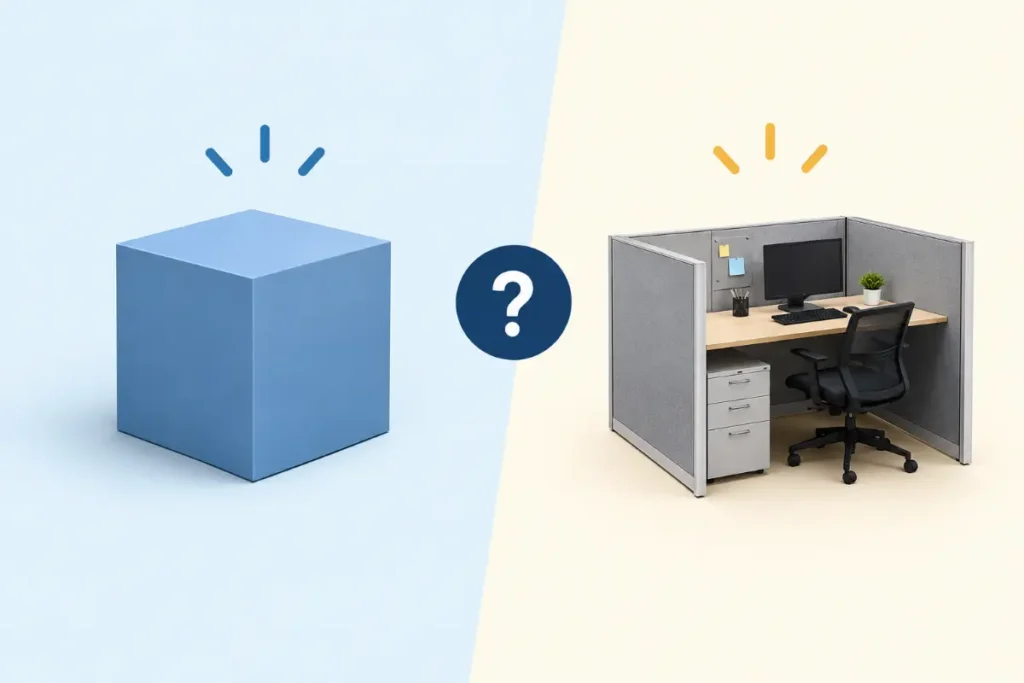
No. An office cubicle does not need to have the shape of a perfect cube. It may be rectangular or irregular in shape depending on the layout of the workplace.
This is one reason the words can be confusing. A cubicle is named for a small divided space not because every cubicle must have six equal square sides. Its walls or partitions define the area rather than a precise geometric shape.
For example a long rectangular workspace with three partition walls can still be called a cubicle. The word describes how the space is divided and used. It does not make a claim about the exact shape of the entire area.
By contrast cubical specifically describes a cube like form. If a desk accessory has six equal square faces you might describe it as cubical. If a worker sits at a desk surrounded by partitions you would call that area a cubicle.
How To Choose The Right Word In Different Situations
When you are unsure which word to use look at the noun or place you are describing. The surrounding words often reveal the right choice.
When Writing About Work
Use cubicle for an employee’s workspace. This is the usual term in office emails reports and conversations about workplace layouts.
For example Please leave the documents on the desk in my cubicle. The sentence refers to a particular workspace.
If you are describing a box shaped object on that desk you can use cubical. For example The cubical organizer holds pens and paper clips. Here the adjective describes the organizer’s shape.
When Writing About Art And Design
Use cubical when describing a sculpture a model or an object with a cube like shape. The word can help explain a design without requiring a long description.
For example The gallery displayed a cubical sculpture made of polished stone. The reader can picture an object with a cube like form.
Use cubicle if the art or design involves a divided space. For example The exhibition included a small viewing cubicle where visitors could listen to audio recordings. The word names the enclosed area rather than its shape.
When Writing About Buildings
Use cubical to describe a building’s overall shape. A structure with a simple cube like form might be called a cubical building or a cubical structure.
Use cubicle when describing a small divided space inside a larger building. For example The clinic has a private cubicle where patients can change before an examination.
The right choice depends on the detail you want to communicate. One word describes form while the other names a space.
When Writing About Restrooms And Changing Areas
Use cubicle for an individual restroom stall or changing area separated from other areas by walls or partitions. This is a common use of the word in public facilities.
For example The restroom has four cubicles and each one has a lockable door. The word refers to separate spaces that provide privacy.
You would use cubical only if you were describing the shape of an object or structure. For example A cubical soap dispenser was fixed to the wall. The dispenser’s shape is the detail being described.
A Quick Practice Test
The best way to check your understanding is to choose the word that fits each sentence. Read each example and decide if it needs cubical or cubicle before checking the answers.
- I left my notebook inside my office ______.
- The artist made a ______ sculpture from stone.
- Our new workplace has twenty ______.
- The designer created a ______ box for the display.
- She added a small plant to her office ______.
- The science teacher showed us a ______ model.
Answers.
- Cubicle.
- Cubical.
- Cubicles.
- Cubical.
- Cubicle.
- Cubical.
If you answered all six correctly you understand the main difference. If you missed one or two review the meaning of each word and try again. Focus on what the word describes rather than how it looks.
A Final Tip For Better Word Choice
When you proofread your writing do more than check for misspelled letters. Check that each word matches the meaning of the sentence. This matters especially when two valid words look similar.
For this pair you can use a simple test. Replace cubical with cube shaped. If the sentence still makes sense you probably need the adjective. Replace cubicle with workspace or divided area. If that works you probably need the noun.
For example The cubical box is on the desk can become The cube shaped box is on the desk. The meaning stays clear. The employee is sitting in her cubicle can become The employee is sitting in her workspace. That also makes sense.
This method will not solve every spelling problem in English but it works well for these two words. A quick meaning check can save you from a mistake that a spell checker might miss.
FAQs
What Is The Difference Between Cubical And Cubicle?
Cubical is an adjective that describes something shaped like a cube. Cubicle is a noun that usually refers to a small divided space such as an office workspace. Use the word that matches the meaning you want to express.
Is Cubical Or Cubicle Correct For An Office?
Cubicle is the correct word for an office workspace separated from nearby desks by partitions. For example you might say I decorated my office cubicle with photos. Use cubical only when describing the shape of an object or structure.
Is Cubical A Real Word?
Yes. Cubical is a standard English adjective that means cube shaped or resembling a cube. You can use it to describe objects such as sculptures boxes and buildings.
Is Cubicle A Noun Or An Adjective?
Cubicle is a noun. It names a small divided space such as an office workspace or a restroom stall. The adjective cubical describes an object’s shape.
Does A Cubicle Have To Be Cube Shaped?
No. An office cubicle can be rectangular or have another shape. The word refers to a small divided space rather than a perfect geometric cube.
What Is The Plural Of Cubicle?
The plural of cubicle is cubicles. For example you could write The new office has twelve cubicles. The adjective cubical does not change when it describes a plural noun.
Can I Use Cubical To Describe An Office Desk?
You can use cubical to describe a desk or another object if its shape resembles a cube. However you should use cubicle to name the workspace around the desk. For example A cubical organizer sits inside my office cubicle uses both words correctly.
How Can I Remember The Difference Between Cubical And Cubicle?
Connect cubical with cube shaped and cubicle with enclosed workspace. If you are describing the shape of an object choose cubical. If you are naming a small divided area choose cubicle.
Conclusion
The difference between cubical vs cubicle comes down to meaning and grammar. Cubical describes something that resembles a cube while cubicle names a small divided space. The words look similar but they serve different purposes in a sentence.
When you write about an office workspace use cubicle. When you describe the shape of a box a sculpture or a building use cubical. You can also check your choice by replacing the adjective with cube shaped or the noun with workspace.
You do not need to memorize a complicated spelling rule to get this right. Just ask yourself what you are describing. If you mean a shape choose cubical. If you mean a space choose cubicle.

Sienna Watson is a veteran copywriter and communications coach who has helped startup founders, marketers, and professionals polish their writing for over a decade. Realizing that most people don’t need a degree in linguistics—just clear, impactful communication—Sienna focuses on practical grammar, business writing etiquette, and eliminating wordiness. She advocates for plain language, strong verbs, and persuasive prose that gets results.