
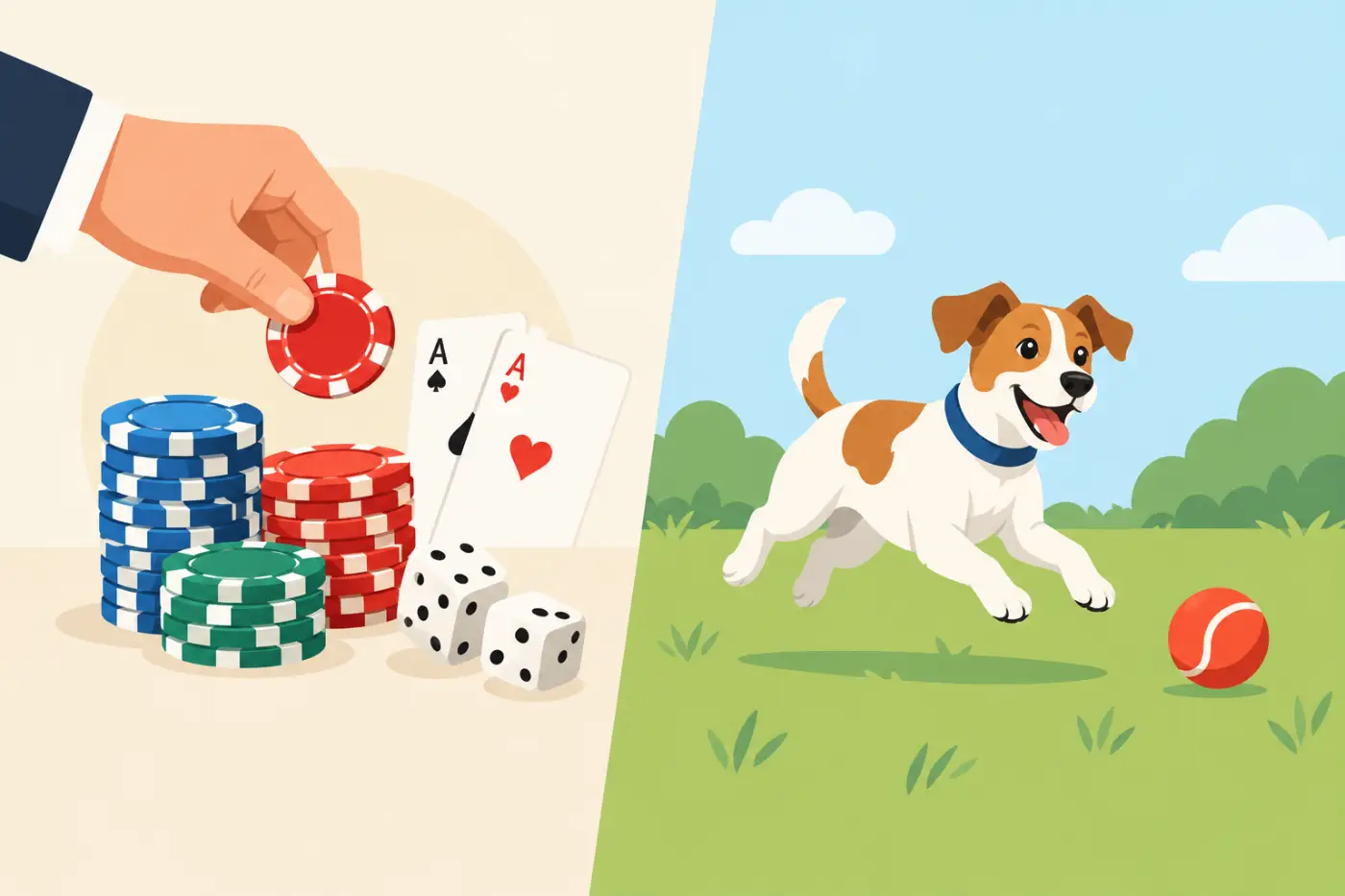
The words gamble vs gambol look almost identical. They also sound similar when spoken. However, they have very different meanings. One relates to taking risks or betting money. The other describes playful movement or joyful activity.
So, how do you know which word to use?
The answer depends on what you want to say. Use gamble when someone takes a risk or bets on an uncertain result. Use gambol when someone runs, jumps, or plays in a lively and carefree way.
The confusion often comes from their similar spelling and pronunciation. Just one letter separates them, but that small difference changes the meaning completely.
In this guide, you’ll learn the meaning of each word, how to use it in everyday writing, and how to avoid mixing them up. You’ll also find natural examples, common mistakes, memory tricks, and answers to frequently asked questions.
Quick Definition
Gamble means to bet money or take a risk in the hope of getting a good result. Gambol means to move around playfully by running, jumping, or skipping. Both are correct English words, but they describe very different actions.
Direct Answer
Use gamble when talking about betting, risk, or an uncertain decision. Use gambol when describing playful movement, especially when children or animals run and jump with joy.
Gamble vs Gambol Comparison Table
| Word | Meaning | Example Sentence | When to Use It |
|---|---|---|---|
| Gamble | To bet money or take a risk. | He decided to gamble on the final game. | Betting, risk, and uncertain choices. |
| Gambol | To run or jump around playfully. | The lambs gambol in the green field. | Playful movement and joyful activity. |
Both words are verbs. However, gamble also works as a noun. You can use a gamble to describe a risky decision or action.
Gambol can also work as a noun. It can describe a playful leap or a period of lively activity.

What Does Gamble Mean
The word gamble describes an action that involves risk. It often refers to betting money on a game or event. However, people also use it when someone makes a risky choice without knowing the final result.
For example, imagine someone putting $50 on a football game. They hope their team will win. However, they know they could lose their money. That’s gambling.
The word also applies to everyday decisions. You don’t need a casino or a betting game to take a gamble.
Consider someone who quits a steady job to start a small business. They believe the business will succeed. Still, they don’t know what will happen. Their decision is a gamble because it involves risk.
In simple terms, a gamble is an action where you risk something to gain something.
Gamble as a Verb
As a verb, gamble means to bet or take a chance.
Here are some natural examples.
- Mark likes to gamble on horse races.
- She decided to gamble her savings on a new business.
- They gambled on the weather staying clear for the outdoor event.
- I wouldn’t gamble my future on an untested plan.
- He gambled $20 on the final match.
- The company decided to gamble on a new product.
Notice that each sentence involves uncertainty. The person takes a chance and hopes for a positive result.
The risk might involve money, time, a job, or an important opportunity.
Gamble as a Noun
You can also use gamble as a noun. In this form, it refers to a risky action, choice, or decision.
For example:
- Starting a business without a backup plan is a gamble.
- Buying that old car was a big gamble.
- His decision to move abroad was a gamble.
- Investing all her savings in one company seemed like a risky gamble.
- The coach took a gamble by changing the entire team.
In these examples, the word describes the decision itself rather than the action of taking a risk.
Different Forms of Gamble
Like most regular English verbs, gamble follows a simple spelling pattern when you change its tense.
| Form | Word | Example |
|---|---|---|
| Base form | Gamble | I never gamble with my savings. |
| Third person singular | Gambles | He gambles on sports. |
| Past tense | Gambled | She gambled everything on her idea. |
| Present participle | Gambling | They are gambling with their future. |
| Noun | Gamble | It was a risky gamble. |
The past tense uses gambled. The present participle uses gambling.
For example, you can say:
- He gambled on the wrong team.
- She is gambling with her career.
- They have gambled on a new business idea.
These forms all come from the same verb and retain its central meaning of risk or betting.
What Does Gambol Mean
The word gambol describes playful and lively movement. It usually refers to running, jumping, skipping, or moving around with excitement.
People often use it to describe children and animals enjoying themselves. For example, young lambs may gambol across a grassy field. Children might gambol around a playground during recess.
Unlike gamble, this word has nothing to do with betting or taking financial risks.
Think of a puppy running around the garden. It jumps over small plants, runs in circles, and plays happily. You can describe that movement as gamboling.
The word gives a picture of energy, freedom, and fun.
Gambol as a Verb
As a verb, gambol means to move in a playful or carefree way. It often describes light and energetic movements.
Here are some examples.
- The children gambol across the playground.
- Little lambs gambol in the sunny meadow.
- The puppies gambol around the garden.
- The young deer gambol through the tall grass.
- The students gambol along the beach after school.
- The kittens gambol around their new toys.
- The baby goats gambol on the hillside.
Each sentence describes playful movement. None involves money, betting, or risk.
You can use the word in different tenses too.
- The children gambol in the park every afternoon.
- The puppies gambolled around the yard yesterday.
- The lambs are gamboling near the fence.
- The young deer have gambolled through the meadow.
These examples show how the word works in everyday sentences.
Gambol as a Noun
Gambol can also function as a noun. In this form, it describes a playful leap, jump, or lively movement.
For example:
- The lamb made a joyful gambol across the field.
- The children’s gambols filled the playground with laughter.
- A playful gambol from the puppy made everyone smile.
- The young horses enjoyed a few gambols in the pasture.
The noun form appears less often than the verb form. Still, it’s useful when you want to describe a particular playful movement or a short period of lively activity.
Different Forms of Gambol
The word gambol follows a regular verb pattern. However, its spelling changes slightly when you add certain endings.
| Form | Word | Example |
|---|---|---|
| Base form | Gambol | The lambs gambol in the field. |
| Third person singular | Gambols | The puppy gambols around the yard. |
| Past tense | Gambolled | The children gambolled on the grass. |
| Present participle | Gamboling | The deer are gamboling nearby. |
| Noun | Gambol | The lamb made a playful gambol. |
You may notice two possible spellings of the past tense and present participle.
Gambolled and gambolling are common British English forms. American English generally uses gamboled and gamboling.
Since this article follows US English, the American spellings are the better choices for American readers.
Why People Confuse Gamble and Gambol
The confusion between these words makes sense. They share five letters and differ by only one vowel in the middle.
Both words also have a similar sound. When someone speaks quickly, the difference can be easy to miss.
However, their meanings come from different ideas.
- Gamble connects to betting, chance, and risk.
- Gambol connects to play, movement, and happiness.
This difference becomes easier to remember when you look at their common uses.
Their Spelling Looks Similar
Both words begin with the letters G, A, and M. They also end with the letters B, L, and a silent E.
The main difference appears near the end of the first part of each word.
- Gamble contains the letter L before the final E.
- Gambol contains the letter O before the final L.
That small spelling change gives each word a different meaning.
For example, compare these sentences.
Correct: The children gambol around the garden.
Correct: The children gamble their pocket money on a game.
The first sentence describes playful movement. The second describes risking money.
The spelling may look close, but the actions are completely different.
Their Pronunciation Is Similar
Both words usually have two syllables. In American English, their pronunciations are close enough to cause confusion.
- Gamble sounds like GAM bul.
- Gambol sounds like GAM bul or GAM buhl.
The difference can be subtle, especially in casual speech. That’s why spelling and context matter when you write them.
If you’re unsure which word fits, think about the action in your sentence. Is someone taking a risk, or is someone moving around playfully?
That question usually makes the correct choice clear.
They Belong to Different Meaning Groups
Another reason to keep these words separate is their meaning.
Gamble belongs to the vocabulary of risk and chance. It often appears with words such as money, bet, casino, investment, decision, and opportunity.
For example:
- She took a gamble on the new investment.
- He likes to gamble during his vacations.
- They gambled on a chance to win the competition.
On the other hand, gambol belongs to the vocabulary of movement and play. It often appears with words such as jump, run, skip, meadow, lamb, puppy, and playground.
For example:
- The lambs gambol in the meadow.
- The children gambol around the playground.
- The puppies gambol with excitement.
Looking at the surrounding words can help you identify the intended meaning.
When to Use Gamble
Use gamble when a sentence involves risk, betting, or a decision with an uncertain outcome.
You can use it in conversations about games, money, business, relationships, careers, and everyday choices.
The word doesn’t always describe a bad decision. Sometimes a gamble pays off. A person might take a risk and get the result they hoped for.
However, the possibility of losing something remains part of its meaning.
Use Gamble for Betting Money
This is the most familiar use of the word.
People gamble when they risk money on an uncertain result. Casinos, card games, sports betting, and lotteries are common examples.
Consider these sentences.
- My uncle likes to gamble at the casino.
- She gambled $100 on the basketball game.
- He lost his money because he gambled too much.
- They gambled on a horse they believed would win.
- I don’t gamble because I prefer to save my money.
In each example, the person risks money for a possible reward.
Use Gamble for Risky Decisions
You can also use gamble when someone makes a choice that could lead to success or failure.
For example, a person might leave a secure job to start a business. A student might move to another city for a new opportunity. An investor might put money into a new company.
These decisions involve more than financial betting. They involve uncertainty.
Examples include:
- She decided to gamble on her creative skills.
- Moving to another state without a job was a gamble.
- The company gambled on a product that had never been tested.
- He gambled his reputation by supporting the proposal.
- Taking that job without meeting the manager was a gamble.
Notice that none of these sentences describes a casino or a traditional betting game.
The word works because each situation involves risk.
Use Gamble in Everyday Expressions
The word also appears in common English expressions.
These phrases help people talk about risk in a natural way.
Take a gamble
This means to take a risk and accept an uncertain result.
Example: I took a gamble and applied for the job even though I lacked experience.
A safe gamble
This describes a decision that involves some risk but seems likely to succeed.
Example: Hiring an experienced employee was a fairly safe gamble.
A risky gamble
This refers to a choice with a strong chance of failure or loss.
Example: Spending all their savings on one project was a risky gamble.
Gamble on something
This means to trust an uncertain result or make a decision based on a possibility.
Example: We gambled on good weather and planned the party outdoors.
Gamble with something
This means to put something valuable at risk.
Example: You shouldn’t gamble with your family’s financial future.
These expressions are useful in both casual and formal writing.
When to Use Gambol
Use gambol when you want to describe playful movement. It works especially well for animals and children.
The word often creates a cheerful picture in the reader’s mind. It suggests that someone or something is moving freely without a serious purpose.
You might see it in stories, nature writing, descriptive essays, and creative writing.
Use Gambol for Animals
Animals often gambol when they feel playful or energetic.
Young animals are especially common subjects for this word. Lambs, puppies, kittens, foals, and young deer can all gambol.
Here are some examples.
- The baby goats gambol across the rocky hillside.
- Two puppies gambol around the backyard.
- The lambs gambol happily in the spring sunshine.
- Young deer gambol through the open meadow.
- The foals gambol beside their mothers.
- A group of kittens gambol around the living room.
These sentences help readers picture lively movement.
You could use run or jump instead. However, gambol combines the ideas of playful movement and joyful energy in one word.
Use Gambol for Children
Children often run and jump while playing. You can use gambol to describe these carefree movements.
For example:
- The children gambol across the lawn after school.
- My nieces gambol around the garden during family gatherings.
- The toddlers gambol through the playground.
- The children gambol along the beach while their parents watch.
- A group of friends gambol through the park on a sunny afternoon.
The word adds a playful touch to these descriptions.
It’s particularly useful when you want to avoid repeating simple words such as run, play, and jump.
Use Gambol in Creative Writing
Writers sometimes choose gambol because it makes a description more vivid.
For example, compare these two sentences.
Simple: The lambs ran around the field.
More descriptive: The lambs gambolled across the field in the morning sunshine.
Both sentences describe movement. However, the second gives a stronger sense of playful energy.
Here are a few more examples.
- Golden puppies gambolled through the fresh grass.
- The children gambolled beside the sparkling stream.
- Young horses gambolled freely across the open pasture.
- A playful dog gambolled through the fallen leaves.
You don’t need to use this word in every description. Simple language often works best. Still, gambol can add variety when the context calls for it.
Common Mistakes When Using Gamble and Gambol
Even people with strong English skills can mix up words that look and sound alike. The good news is that a few simple checks can help you avoid this mistake.
Here are some common errors and the correct ways to fix them.
Using Gamble When You Mean Play
One common mistake is using gamble to describe children or animals playing.
Incorrect: The little lambs gamble around the field.
Correct: The little lambs gambol around the field.
The first sentence suggests that the lambs are betting or taking risks. That’s not the intended meaning.
The second sentence correctly describes their playful movement.
Remember that gamble has a connection to risk. It doesn’t describe ordinary play.
Using Gambol When You Mean Take a Risk
Another mistake happens when someone uses gambol to describe a risky choice.
Incorrect: She decided to gambol on a new business idea.
Correct: She decided to gamble on a new business idea.
Starting a business involves uncertainty. The person risks time, money, or effort in the hope of success.
That’s why gamble is the correct word.
Assuming Gambol Is a Misspelling
Some readers see gambol and assume it’s a spelling mistake.
That’s not true. Gambol is a real English word with its own meaning.
For example:
- The young goats gambol in the grass.
- The children gambol along the beach.
- The puppies gambol around their owner.
These sentences use the word correctly.
Don’t automatically replace it with gamble just because the latter looks more familiar.
Confusing the Past Tense Forms
Both words have regular past tense forms, but their spelling patterns are different.
The past tense of gamble is gambled.
The past tense of gambol is gamboled in American English and gambolled in British English.
Compare these examples.
- He gambled his savings on the business.
- The puppies gamboled around the garden.
The first sentence describes risk. The second describes playful movement.
Pay attention to the meaning as well as the spelling.
Choosing a Word Based Only on Sound
Pronunciation can help you recognize a word, but it shouldn’t be your only guide.
Both words sound very similar in American English. In some conversations, the difference may be hard to hear.
For that reason, always consider the meaning of the full sentence.
For example:
- The children gambol in the park.
- The children gamble their money on a game.
The surrounding words make the intended meaning clear.
Easy Ways to Remember the Difference
You don’t need to memorize long dictionary definitions to use these words correctly. A simple memory trick can help you remember their meanings.
Here are a few useful ways to keep them apart.
Connect Gamble With Games and Money
Think of the word game when you see gamble.
Many people gamble on games, sports, or other events. They risk money because they hope to win something.
For example:
- He likes to gamble on football games.
- She gambled $50 on the final match.
The connection between games and gambling makes the meaning easier to remember.
You can also connect gamble with the word risk. Both relate to uncertainty and the possibility of losing something.
Connect Gambol With Goats and Grass
Think of young goats jumping around in a grassy field.
You can picture them running, skipping, and playing without a care in the world.
That’s exactly the kind of movement gambol describes.
For example:
The young goats gambol across the green hillside.
This mental picture gives you a quick way to remember the word.
Ask Yourself One Simple Question
Before choosing either word, think about the action in your sentence.
Does it involve taking a chance or risking something valuable?
Use gamble.
Does it describe playful running, jumping, or skipping?
Use gambol.
For example:
- He decided to gamble on the new plan. This sentence involves risk.
- The children gambol around the garden. This sentence describes play.
Once you identify the action, choosing the right spelling becomes much easier.
Synonyms and Related Words
Understanding similar words can help you expand your vocabulary. It can also make your writing more natural.
However, remember that synonyms don’t always have exactly the same meaning. The best choice depends on the sentence.
Synonyms of Gamble
The word gamble has several related words. Some describe betting money, while others describe taking risks.
Here are some common options.
| Related Word | Meaning | Example |
|---|---|---|
| Bet | To risk money or something valuable on an uncertain result. | He placed a bet on the game. |
| Risk | To expose something to possible loss or harm. | She risked her savings on the project. |
| Wager | To bet money or another item of value. | They wagered $20 on the race. |
| Speculate | To invest or make a guess based on uncertain outcomes. | He likes to speculate on market trends. |
| Venture | To take a chance on something new or uncertain. | She ventured into a new business. |
| Stake | To risk something valuable on an outcome. | He staked his reputation on the decision. |
These words overlap with gamble, but they don’t work in every situation.
For instance, wager usually relates to betting. Risk has a broader meaning and can describe possible danger or loss.
Synonyms of Gambol
The word gambol describes playful movement. Its synonyms include several words that express running, jumping, or lively activity.
| Related Word | Meaning | Example |
|---|---|---|
| Frolic | To play and move around happily. | The puppies frolic in the garden. |
| Prance | To move with lively or high steps. | The pony prances across the field. |
| Skip | To move forward with light jumps. | The children skip along the path. |
| Bound | To move forward with a large jump. | The dog bounds across the lawn. |
| Caper | To jump or move around playfully. | The lambs caper in the meadow. |
| Romp | To play energetically. | The puppies romp in the backyard. |
These words can make your writing more interesting.
For example, you could write that the puppies frolic in the yard instead of saying they gambol. Both express playful activity.
However, prance focuses more on the way someone moves. Skip describes a particular kind of movement. Choose the word that gives readers the clearest picture.
Antonyms of Gamble and Gambol
An antonym is a word with the opposite or nearly opposite meaning.
The two words have different meanings, so their antonyms also differ.
Possible antonyms of gamble include:
- Avoid risk.
- Play it safe.
- Protect.
- Save.
- Secure.
For example:
Instead of gambling his savings on an uncertain business, he decided to protect his money.
Possible opposites of gambol depend on the context. They may include:
- Walk slowly.
- Stand still.
- Remain motionless.
- Sit quietly.
- Rest.
For example:
Instead of gamboling across the field, the tired lambs rested beside their mother.
These aren’t exact opposites in every situation. However, they express actions that contrast with the meanings of the two words.
Are Gamble and Gambol Related Words
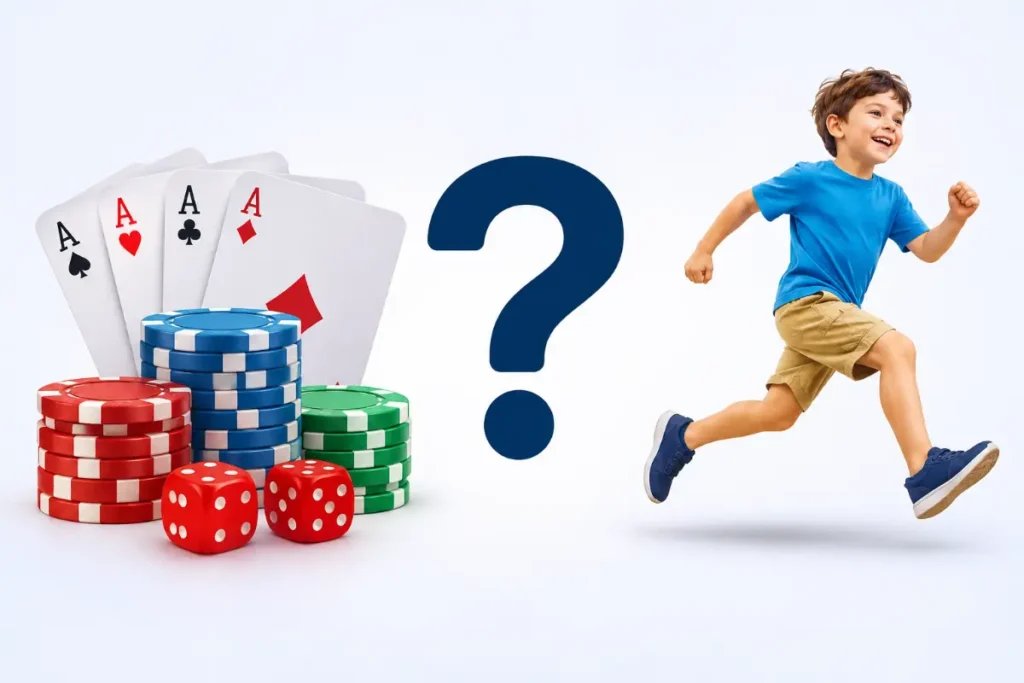
Although gamble and gambol look similar, they have different histories and meanings.
The word gamble developed from an older English word associated with gaming. Its modern meaning connects to betting and taking chances.
The word gambol came into English through French and has roots associated with leaping or skipping. Its meaning developed around playful movement.
Their similar spelling doesn’t mean they share the same meaning or origin.
This is a useful reminder that English contains many words that look alike but describe completely different things.
For example, stationary and stationery sound the same but have different meanings. Similarly, principal and principle can cause confusion because their pronunciation is almost identical.
With these word pairs, the best approach is to learn each meaning separately and use examples to understand the difference.
How to Use Both Words in the Same Sentence
You can use both words in one sentence if the context supports their different meanings.
This can be a useful way to remember the distinction.
Consider these examples.
- The children gambolled around the garden while their father gambled on a horse race.
- The playful puppies gambol in the yard while their owner enjoys a game that involves gambling.
- The young goats gambolled across the field while the farmer gambled on a new investment.
- While the lambs gambolled in the meadow, the visitors discussed the risks of gambling.
Each sentence uses both words correctly.
The first word describes playful movement. The second refers to betting or risk.
These examples also show how context helps readers understand unfamiliar words.
Practice Exercises to Test Your Understanding
The best way to remember a word is to use it. Try these short exercises to check your understanding.
Choose gamble or gambol to complete each sentence.
- The little puppies love to ______ around the garden.
- He decided to ______ his savings on a new business.
- The young lambs ______ happily across the field.
- She doesn’t like to ______ because she hates losing money.
- The children ______ along the beach after school.
- Taking that job without a backup plan was a risky ______.
- The baby goats ______ around their mother.
- They decided to ______ on good weather for their outdoor party.
- The playful kittens ______ around the living room.
- He made a dangerous ______ by investing all his money in one company.
Answer Key
- Gambol.
- Gamble.
- Gambol.
- Gamble.
- Gambol.
- Gamble.
- Gambol.
- Gamble.
- Gambol.
- Gamble.
If you got most of these right, you’ve understood the main difference.
Remember that gamble relates to risk, while gambol relates to playful movement.
FAQs
What Is the Difference Between Gamble and Gambol?
The main difference in gamble vs gambol is their meaning. Gamble means to bet money or take a risk. Gambol means to move around playfully by running, jumping, or skipping.
Is Gambol a Real English Word?
Yes. Gambol is a correct English word. It describes playful movement and often refers to children or animals running and jumping happily. For example, the lambs gambol across the meadow.
Does Gamble Mean to Take a Risk?
Yes. Gamble can mean to take a risk or make a decision with an uncertain result. It can involve money, business, relationships, or personal choices. For example, leaving a secure job to start a business can be a gamble.
Can Gambol Be Used as a Noun?
Yes. Gambol can work as both a verb and a noun. As a verb, it describes playful movement. As a noun, it refers to a playful jump or lively movement. For example, the lamb made a joyful gambol across the field.
What Is the Past Tense of Gambol?
The American English past tense is gamboled. British English commonly uses gambolled. Both forms are correct in their respective spelling systems.
What Is the Past Tense of Gamble?
The past tense of gamble is gambled. For example, you can say, He gambled his savings on a new business. The spelling doesn’t change between American and British English.
Are Gamble and Gambol Pronounced the Same?
They have very similar pronunciations in American English. Both usually have two syllables and sound almost alike. However, their spelling and meanings are different.
Can You Use Gambol for People?
Yes. You can use gambol to describe people who move around playfully. It’s especially common in descriptive writing about children playing, running, or jumping. For example, the children gambol around the playground after school.
Conclusion
The difference between these two words is simple once you understand their meanings. Gamble relates to betting, risk, and uncertain decisions. Gambol describes playful movement, such as running, jumping, and skipping.
Both words are correct English words. However, you can’t use them interchangeably. Choosing the wrong one can change the meaning of your sentence completely.
Remember this simple trick. Connect gamble with money and risk. Connect gambol with playful goats jumping across a green field.
The next time you write one of these words, think about the action you’re describing. If someone is taking a chance, use gamble. If someone is playing happily, use gambol. That simple rule will help you choose the correct word every time.

Sienna Watson is a veteran copywriter and communications coach who has helped startup founders, marketers, and professionals polish their writing for over a decade. Realizing that most people don’t need a degree in linguistics—just clear, impactful communication—Sienna focuses on practical grammar, business writing etiquette, and eliminating wordiness. She advocates for plain language, strong verbs, and persuasive prose that gets results.