
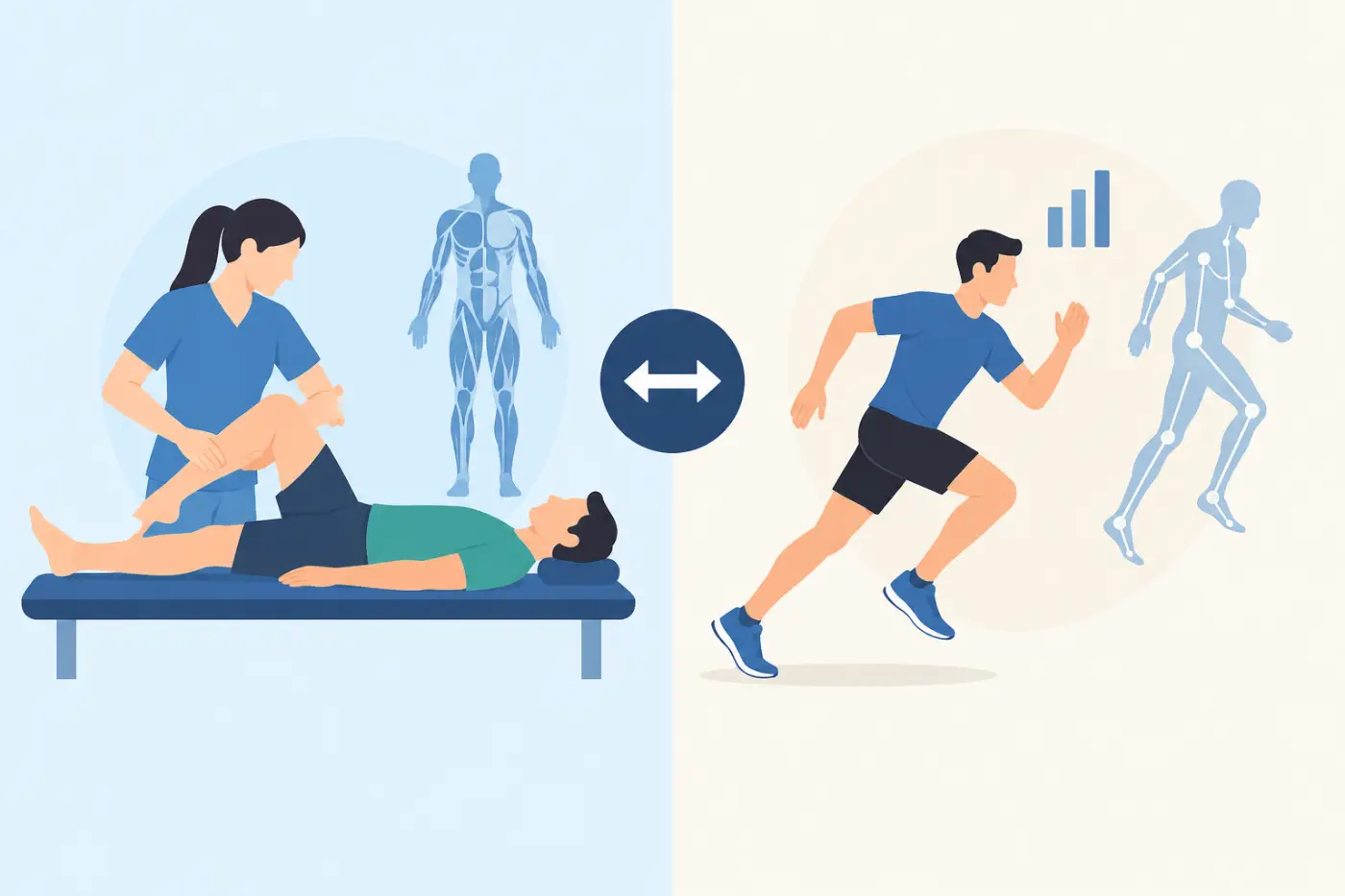
If you searched for kinesthesiology vs kinesiology you may be wondering if these are two different fields or simply two ways to spell the same word. The extra letters in kinesthesiology make the difference look more meaningful than it really is.
In modern academic and professional writing the standard term is kinesiology. It refers to the study of human movement and covers areas such as anatomy biomechanics exercise physiology motor behavior and physical activity. Universities use kinesiology as the name of established degree programs and academic departments.
Kinesthesiology is a much rarer word. Some dictionary sources record it with a meaning connected to the medical and therapeutic study of muscle and joint movement. However the term does not have the same established role as kinesiology in modern university programs and research.
That difference matters if you’re writing a college paper choosing a degree searching for a health career or simply trying to use the right word. This guide explains the difference in plain English and also clears up the related terms kinesthesia kinesthetic and kinesiologist.
Quick Definition
Kinesiology is the established scientific and academic field that studies human movement. It draws from areas such as anatomy physiology biomechanics psychology and motor behavior to understand how people move and how movement relates to exercise health and performance.
Kinesthesiology is a rare term that appears in some reference sources with a meaning related to the study of muscle and joint movement. It is not the usual modern name for the academic field of human movement.
Direct Answer
Use kinesiology when you mean the established field that studies human movement. Kinesthesiology is a rare term and should not normally replace kinesiology in academic or professional writing.
Comparison Table
| Word or phrase | Main meaning | Example | Best use |
|---|---|---|---|
| Kinesiology | Scientific study of human movement | She studied kinesiology in college. | Academic programs research exercise and human movement |
| Kinesthesiology | Rare term linked to muscle and joint movement | The term appears in some reference sources. | Specific historical or source based contexts |
| Kinesthesia | Sense of body movement and position | Kinesthesia helps you know where your arm is without looking. | Discussing movement sensation and body awareness |
| Kinesthetic | Related to the sense of body movement | The activity helped build kinesthetic awareness. | Describing movement sensation or learning |
| Kinesiologist | Person who studies or works in kinesiology | The kinesiologist analyzed the athlete’s movement. | Referring to a person in the field |

What Kinesiology Means
Kinesiology is the word you’ll see most often in colleges universities research papers and professional discussions about human movement. It is a broad field rather than a narrow study of one muscle or one type of exercise.
At its core kinesiology asks a simple question. How does the human body move and what affects that movement.
That question opens the door to many areas of study. A kinesiology student may learn about muscles bones joints nerves exercise physiology biomechanics motor control psychology and physical activity. Different programs may place more weight on some areas than others.
The field also looks at movement in real situations. A researcher might study how a runner changes stride after an injury. Another researcher might examine how strength training affects physical performance. A professional might use knowledge of movement to support exercise programs or rehabilitation.
The point is that kinesiology is much broader than simply watching how someone moves. It brings several sciences together to understand movement from different angles.
What Kinesiology Studies
Kinesiology can include the study of how muscles create force how joints move how the nervous system controls movement and how the body responds to exercise.
It can also include human performance physical activity injury prevention rehabilitation motor learning and exercise behavior. The exact subjects depend on the program or area of research.
For example a biomechanics course may focus on forces and movement. An exercise physiology course may look at how the body responds to physical activity. A motor behavior course may examine how people learn and control movement.
These areas connect because movement is not controlled by one body system working alone. Bones joints muscles nerves and the brain all play roles in human movement. Research on biomechanics shows how forces and the musculoskeletal system interact during movement.
Kinesiology In College
If you’re looking at college majors you’ll almost always see kinesiology rather than kinesthesiology.
Universities offer kinesiology programs at the undergraduate and graduate levels. Program names and course lists vary but common areas include biomechanics exercise physiology motor behavior and exercise psychology.
A kinesiology degree can also provide preparation for further study. Some programs point students toward areas such as physical therapy occupational therapy medicine and other health related graduate programs.
That does not mean every kinesiology graduate becomes a health professional. Career options depend on the degree level the student’s training and any additional credentials required for a specific job.
What Kinesthesiology Means
Kinesthesiology is where the confusion begins.
The word does exist in some reference sources. Wiktionary records it as a noun meaning the medical and therapeutic study of the movement of muscles and joints. Other dictionary sites repeat this definition.
However the existence of a word in a dictionary does not mean it is the standard term used by modern universities or researchers.
That distinction is useful. English contains many rare words that appear in dictionaries but are uncommon in everyday or professional use. Kinesthesiology falls into that kind of territory.
If you search university programs you’ll find kinesiology departments and kinesiology degrees. Current university material describes kinesiology as a field centered on human movement and related areas such as physical activity health exercise and sport.
So if you’re writing about the academic field the safer and clearer choice is kinesiology.
Why The Extra Letters Cause Confusion
The spelling of kinesthesiology looks as if it should have a special meaning. That impression comes from the word kinesthesia.
Kinesthesia refers to the sense of movement and body position. It is related to your ability to know where parts of your body are and how they are moving without constantly looking at them.
For example close your eyes and slowly bend your elbow. You can still sense that your arm is moving. You don’t need to watch your elbow to know that the position of your arm has changed.
That ability is connected with sensory information from the body. Research on proprioception and movement control shows how information from muscles joints and other tissues contributes to our sense of body position and movement.
Because kinesthesia contains the extra letters in the middle some people naturally assume that kinesthesiology must be the more precise scientific term. That assumption can lead to confusion.
In modern academic writing it is better to use the established term that matches the field you mean.
Kinesthesiology Vs Kinesiology In Simple Terms
The easiest way to remember the difference is to think about the size of the idea.
Kinesiology is the broad field. It studies human movement from many scientific and practical angles.
Kinesthesia is a specific sense. It relates to awareness of your own movement and body position.
Kinesthesiology is a rare term that appears in some reference sources but does not have the same standard status as kinesiology.
This gives you a useful three word connection.
- Kinesiology means the study of movement.
- Kinesthesia means the sense of movement.
- Kinesthetic describes something related to movement sensation.
That distinction clears up most of the confusion.
The Difference Between Kinesiology And Kinesthesia
These two terms are often mixed up because they look similar. Their meanings are quite different.
Kinesiology is a field of study. It examines human movement using knowledge from several sciences. Universities describe it as an interdisciplinary area that can include anatomy biomechanics physiology psychology and other subjects related to physical movement.
Kinesthesia is a sensory concept. It concerns your awareness of movement and body position.
Imagine walking down a hallway with your eyes closed. You can still feel your legs moving. You can sense the position of your feet and knees. Your body receives information that helps your nervous system control movement.
That is much closer to kinesthesia than kinesiology.
The two concepts can overlap in research because a broad study of human movement can include questions about sensory feedback and motor control. Still they are not interchangeable terms.
A Simple Example
Imagine a basketball player taking a jump shot.
Kinesiology can examine the whole movement. A researcher might study the player’s joint angles muscle activity balance force production and movement pattern.
Kinesthesia relates to the player’s internal sense of body position and movement. The player does not need to stare at every part of the body to know where the arms legs and trunk are during the shot.
Both concepts matter but they describe different things.
The Difference Between Kinesiology And Kinesthetic
Kinesthetic is an adjective. It describes something related to the sense or experience of body movement.
You might hear someone talk about kinesthetic awareness. This means awareness of how your body moves and where your body is positioned.
You may also hear the phrase kinesthetic learning. In that context the idea involves learning through physical movement or hands on activity.
For example a child learning a dance routine uses movement to build a physical understanding of the steps. A person learning a sport develops movement skills through practice.
Kinesiology is different because it names the broader field of study.
A useful sentence is:
She studied kinesiology and became interested in kinesthetic awareness.
The two words work together because they describe related ideas at different levels.
What A Kinesiologist Does
A kinesiologist is a person who studies or works with human movement. The exact duties depend on the person’s education job title work setting and professional credentials.
Kinesiology can lead into several areas connected with exercise health physical activity sports and rehabilitation. Some people use their education as preparation for advanced health programs. Others work in exercise or fitness settings research education or performance related roles.
A kinesiologist may look at how a person moves during walking lifting running or another physical task. Movement analysis can involve observation measurements and knowledge of anatomy and biomechanics.
For example a movement professional might examine how an athlete lands after a jump. The goal could be to understand movement patterns and help inform training.
The title alone does not tell you exactly what services someone can provide. Professional requirements vary by occupation and location. A person with a kinesiology degree is not automatically licensed to provide every type of health service.
That point matters when reading job descriptions or choosing a professional. Look at the person’s actual credentials and scope of practice rather than assuming a degree title tells the whole story.
Common Mistakes With These Words
The biggest mistake is treating the three terms as interchangeable.
Kinesiology names the broad academic field. Kinesthesia names a sense related to movement and body position. Kinesthetic describes something connected with that sense.
Kinesthesiology creates another layer of confusion because the word appears in some reference sources but is rarely used as the standard name of the modern academic field.
Another mistake is assuming that a longer word must be more scientific. It doesn’t work that way. A word can look technical and still be uncommon or unsuitable for a particular context.
Mistake One
- Incorrect idea: Kinesthesiology is simply the official modern name for kinesiology.
- Better understanding: Kinesiology is the established term used for the academic study of human movement. Kinesthesiology is a rare term with limited usage.
Two
- Incorrect idea: Kinesthesia and kinesiology mean the same thing.
- Better understanding: Kinesiology is the study of human movement. Kinesthesia refers to the sense of movement and body position.
Three
- Incorrect idea: A kinesiologist and a physical therapist always have the same role.
- Better understanding: These are different professional paths. Training duties and legal scope can vary by profession and location.
Mistake Four
- Incorrect idea: Kinesthetic means the same thing as kinesiology.
- Better understanding: Kinesthetic is an adjective related to movement sensation or awareness. Kinesiology is the name of a field of study.
Real Examples You Can Use
The best way to understand these terms is to see them in normal sentences.
Examples With Kinesiology
- She earned a degree in kinesiology.
- His kinesiology course covered anatomy and exercise physiology.
- The university offers a bachelor’s degree in kinesiology.
- Kinesiology research can help us understand how people move during exercise.
- She chose kinesiology because she was interested in human movement and health.
Examples With Kinesthesia
- Kinesthesia helps you sense the movement of your limbs.
- You can test your kinesthesia by moving your arm with your eyes closed.
- The nervous system uses sensory information to help control movement.
- A person’s awareness of body position can affect coordination and movement control.
How To Choose The Right Word
Start by asking what you are actually talking about.
If you mean the academic field that studies human movement use kinesiology.
If you mean the body’s sense of movement or position use kinesthesia.
Check the context and the source. In most academic writing about the field of human movement the established term is kinesiology.
This simple check can save you from using a rare word when a familiar and accepted term would communicate your meaning more clearly.
Why Kinesiology Is The Safer Choice For Academic Writing
Academic writing depends on clear and consistent terminology. A reader should not have to stop and wonder if you mean a different field.
Kinesiology already has a clear place in universities and research. Current academic sources describe it as an integrated field centered on human physical movement.
That makes the word easy for students researchers teachers and readers to recognize.
Suppose you’re writing a college paper about exercise and muscle function. Using kinesiology tells your reader that you’re discussing the established field of human movement.
Using kinesthesiology could make the reader wonder if you mean a specific niche concept or an unusual terminology choice.
Clear writing usually wins here. Use the established word when it says exactly what you mean.
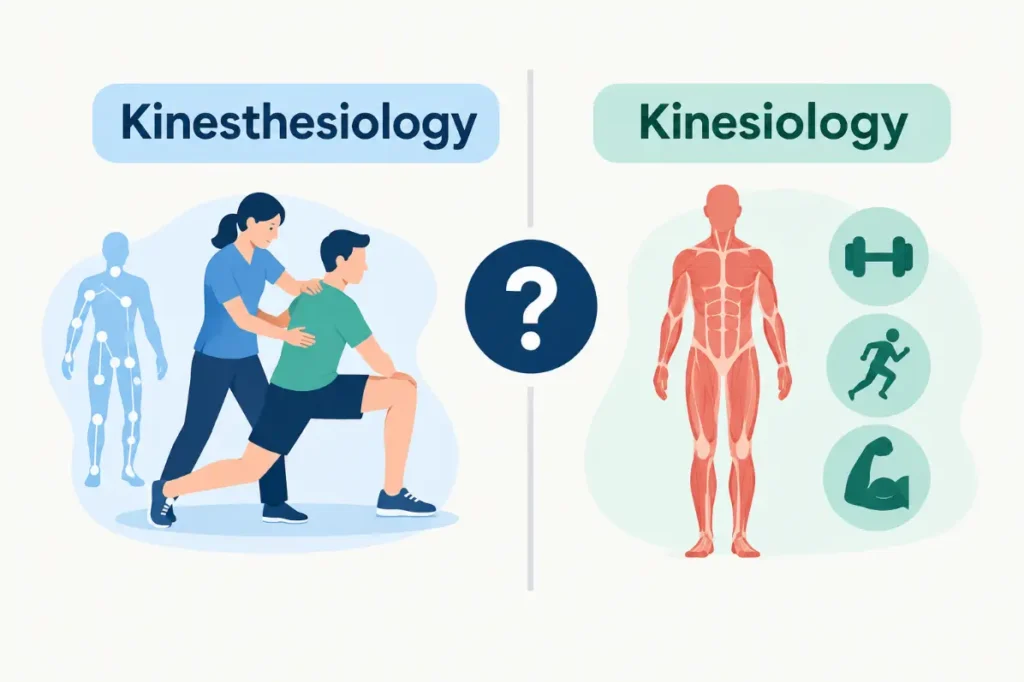
Is Kinesthesiology A Misspelling
It depends on what you mean by misspelling.
Kinesthesiology is recorded as a word in some reference sources. It has a documented definition related to the medical and therapeutic study of muscle and joint movement.
So calling it nothing more than a typing error would be too simple.
At the same time it is not the standard term for the modern academic field of kinesiology. Major university programs use kinesiology for their movement science programs.
The practical answer is straightforward. If you intended to name the established field of human movement study and typed kinesthesiology you probably want kinesiology instead.
A Quick Memory Trick
Think of the word kinesiology as the broad study of movement.
The word begins with kine which connects to movement. You can then connect it with words such as kinetic and kinematics.
Now keep kinesthesia in a separate mental box. It relates to sensing movement and body position.
That gives you a simple map.
- Kinesiology means study.
- Kinesthesia means sense.
- Kinesthetic means related to that sense.
This trick is more useful than trying to memorize a complicated definition.
Where Kinesiology Is Used
Kinesiology has applications across many areas because human movement affects everyday life.
Sports
Sports scientists and coaches can use movement science to examine technique physical performance training and recovery.
A runner’s stride is one example. Researchers can study how the runner’s body produces and controls movement during each step.
Exercise
Exercise science often overlaps with kinesiology. Students may study how the body responds to physical activity and how exercise affects health and performance.
Exercise physiology is one important area within the wider study of movement. Programs may also include biomechanics and motor behavior.
Rehabilitation
Movement science can help researchers and health professionals understand how injury or disease affects movement.
Human movement depends on coordinated action across bones muscles joints and the nervous system. Changes in any part of that system can affect how a person moves.
Education
Kinesiology can also connect with physical education and teaching. Students can learn how people develop movement skills and how physical activity relates to health.
The field is broad enough to support different academic and career paths.
Related Terms Worth Knowing
Learning the surrounding vocabulary makes this topic much easier.
Biomechanics
Biomechanics examines movement through the principles of mechanics. It looks at forces motion and how those forces affect the body.
For example biomechanics can help explain how forces act on a runner’s joints during a stride. Human movement biomechanics is used in research and clinical settings to examine movement and musculoskeletal function.
Exercise Physiology
Exercise physiology studies how the body responds to physical activity and exercise.
A student might learn how the heart lungs muscles and other body systems respond during exercise. It is closely related to kinesiology but has its own focus.
Motor Control
Motor control concerns how the nervous system organizes and controls movement.
Picking up a cup looks simple. Your brain and nervous system still have to coordinate many actions so your hand reaches the right place and uses the right amount of force.
Motor Learning
Motor learning focuses on how movement skills develop through practice and experience.
Learning to swim ride a bicycle or improve a tennis serve involves motor learning.
Proprioception
Proprioception is closely related to body position and movement awareness. It involves sensory information that helps the nervous system know where parts of the body are and how they are moving.
Research on movement and proprioception shows that sensory feedback from muscles joints and other tissues contributes to movement control.
FAQs
Is kinesthesiology the same as kinesiology?
They are related terms but they are not equally common or equally established. Kinesiology is the standard name for the academic study of human movement. Kinesthesiology is a rare term recorded in some reference sources.
Which term should I use for a college major?
Use kinesiology. Universities commonly use kinesiology for degree programs that study human movement exercise physical activity and related sciences.
What is the difference between kinesiology and kinesthesia?
Kinesiology is a broad field that studies human movement. Kinesthesia refers to the sense of movement and body position. One names an academic field while the other describes a sensory function.
Is kinesthesiology a real word?
Yes. Some reference sources record kinesthesiology as a noun. However it is rare and is not the standard modern name for the academic field that universities generally call kinesiology.
What does a kinesiologist study?
A kinesiologist studies human movement. Depending on the person’s education and job the work may involve areas such as exercise science biomechanics motor behavior physical activity or human performance.
Is kinesiology the same as exercise science?
They overlap but they are not always identical. Kinesiology is a broad field that can include exercise science along with biomechanics motor behavior psychology and other areas related to movement. The exact structure depends on the university or program.
Does kinesiology only focus on sports?
No. Sports are only one area where kinesiology can be applied. The field also covers exercise health physical activity rehabilitation education biomechanics and many other aspects of human movement.
What does kinesthetic mean?
Kinesthetic is an adjective related to the sense or experience of body movement. For example kinesthetic awareness describes awareness of how your body is moving and positioned.
Conclusion
The main point in kinesthesiology vs kinesiology is simple. Kinesiology is the established term for the scientific study of human movement. It is the word you’ll see in university programs research and many professional settings.
Kinesthesiology is a much rarer term. Some reference sources record it as a word related to the study of muscle and joint movement. Still it is not the usual name for the modern academic field.
The confusion becomes easier to understand once you separate kinesiology from kinesthesia. Kinesiology is the broad study of movement. Kinesthesia is your sense of movement and body position. Kinesthetic describes something related to that sense.
So if you’re writing a paper choosing a college major or describing the science of human movement use kinesiology. If you’re talking about the body’s awareness of movement use kinesthesia. That small distinction will keep your writing clear and accurate.

Dr. Elena Vance holds a Ph.D. in Linguistics from Columbia University and has spent over 15 years analyzing the evolution of the English language. A former university professor turned full-time writer and editor, Elena specializes in breaking down high-level grammatical concepts, punctuation nuances, and style guides (APA, Chicago, MLA) into clear, actionable advice. When she isn’t hunting down dangling modifiers, she can be found collecting vintage dictionaries and reading classic literature.