
Have you ever stopped while writing because you couldn’t decide between pail vs pale? These two words sound exactly alike but have very different meanings. Choosing the wrong one can change the meaning of your sentence completely.
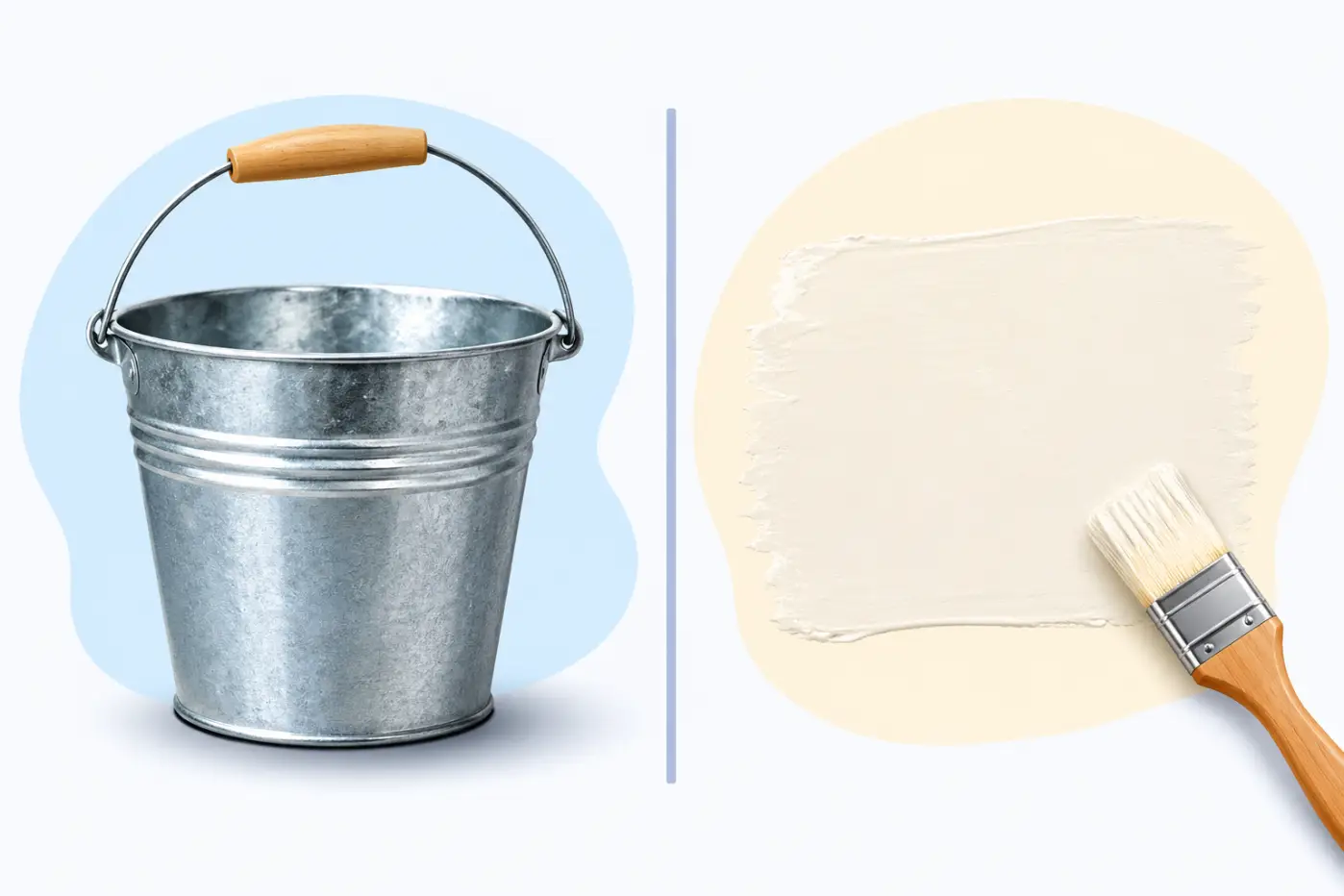
The difference between pail vs pale is simple. Pail is a noun that means a bucket. Pale is usually an adjective that describes something light in color or a person who looks less colorful than usual. It can also work as a verb that means to lose color.
For example, you might carry a pail of water to your garden. However, you might describe your face as pale after a long and tiring day. Both words sound the same when spoken, but their meanings and uses are quite different.
In this guide, you’ll learn how to use both words correctly. We’ll look at their meanings, spelling rules, everyday examples, common mistakes, and easy memory tricks. You’ll also learn a few related expressions that can help you become more confident with these words.
Quick Definition
Pail means a bucket or a round container with a handle. People often use it to carry water, sand, paint, or other materials.
Pale describes a light color or a person who has lost some color in their face. It can also mean to become less strong, bright, or important.
Direct Answer
Use pail when you mean a bucket or container. Use pale when you describe a light color, a person’s complexion, or something that has lost its brightness or strength.
Pail and Pale Comparison Table
| Word | Meaning | Example Sentence | When to Use It |
|---|---|---|---|
| Pail | A bucket or container with a handle. | She filled the pail with water. | When talking about a container used to carry things. |
| Pale | Light in color or lacking its usual color. | His face looked pale after the long trip. | When describing someone’s appearance or a light shade. |
| Pale | To become less strong or noticeable. | The old memory began to pale with time. | When something loses its strength or importance. |
Both spellings are correct English words. The right choice depends on what you want to say.
What Does Pail Mean
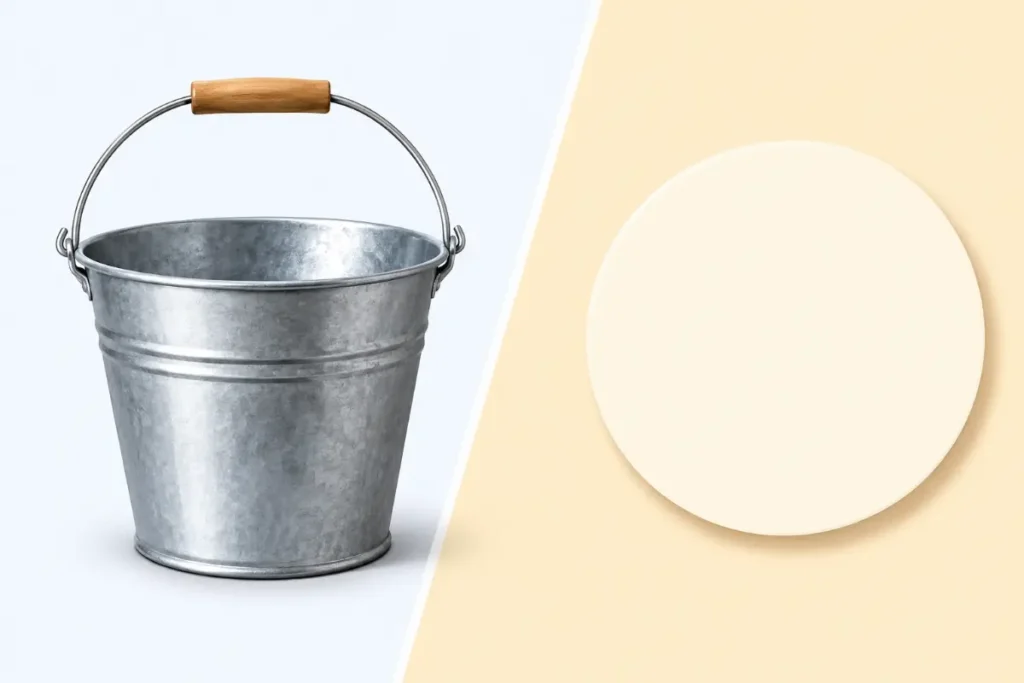
A pail is a container that people use to carry or hold different things. It usually has an open top and a handle. Most pails have a round shape and can hold liquids or solid materials.
You may also hear people call a pail a bucket. In everyday American English, these words often refer to the same kind of container.
Pails come in different sizes and materials. Some are made of plastic. Others are made of metal or wood. You can find them in homes, gardens, farms, construction sites, and many other places.
The word is a noun. That means it names a person, place, thing, or idea. In this case, it names a physical object that you can hold and use.
Common Uses of a Pail
People use pails for many everyday tasks. The exact use depends on the size and type of container.
Here are some common examples.
Carrying water. A pail can hold water for cleaning, gardening, or other household jobs.
Example: Dad carried a pail of water from the well.
Collecting sand. Children often use small pails when they play at the beach or in a sandbox.
Example: The little boy filled his pail with wet sand.
Painting. Some people use pails to hold paint during home improvement projects.
Example: The painter placed his brush inside the pail.
Cleaning. A pail can hold soapy water, cleaning liquid, or other supplies.
Example: She brought a pail of warm water to wash the kitchen floor.
Gardening. Gardeners may use pails to carry soil, weeds, compost, or freshly picked vegetables.
Example: Grandma picked a pail of tomatoes from her garden.
Farming. Farmers sometimes use pails to carry animal feed or collect materials around the farm.
Example: The farmer filled a pail with grain for the chickens.
In each sentence, the word refers to a container. If you can replace the word with bucket without changing the basic meaning, pail is probably the correct spelling.
What Does a Pail Look Like
A typical pail has three main features.
First, it has a container body that holds something. Second, it usually has an open top so people can put things inside. Third, it often has a handle that makes it easier to carry.
Not every pail looks exactly the same. A small beach pail may be bright and colorful. A metal pail used on a farm may look plain and sturdy. A cleaning pail may have a special shape that makes it easier to pour water.
The size also varies. A small pail might hold only a few cups of sand or water. A larger one can hold several gallons.
Here are a few everyday examples.
- A child carries a red pail to the beach.
- A gardener uses a pail to collect fallen leaves.
- A worker fills a metal pail with water.
- A painter keeps extra paint in a pail.
- A farmer uses a pail to carry animal feed.
These examples all describe the same basic object. The word pail does not describe the color or condition of something. It simply names the container.
Is Pail the Same as Bucket
Yes. A pail and a bucket usually mean the same thing in everyday English.
Both words describe containers that people use to hold or carry materials. You can use either word in many common situations.
For example:
- She carried a bucket of water.
- She carried a pail of water.
Both sentences are correct.
However, people may choose one word based on the object or situation. Pail sometimes sounds more natural when talking about small containers used by children or for specific household tasks. Bucket is a very common everyday word for larger containers and general uses.
There is no strict rule that says you must use one word for a certain size. The meaning often depends on local usage and personal preference.
Is Pail a Noun
Yes. Pail is a countable noun.
A countable noun names something that you can count. You can have one pail, two pails, or several pails.
Here are some examples.
- I bought a new pail for the garden.
- The children brought three pails to the beach.
- Please put the empty pail in the garage.
- We need another pail for the cleaning supplies.
- The old pails were stored in the shed.
You can also use pail with descriptive words.
For example:
- A blue pail.
- A small pail.
- A metal pail.
- An empty pail.
- A heavy pail.
These words describe the container. They don’t change the basic meaning of the noun.
What Does Pale Mean
Pale is an adjective that describes something with a light color or a lack of strong color. People often use it to talk about skin, faces, paint, flowers, clothing, and other things.
For example, someone might have pale skin. A pale yellow wall has a soft and light shade of yellow. A pale blue shirt has a lighter shade of blue than a deep blue shirt.
The word can also describe a person who looks less colorful than usual. This can happen because of fear, illness, tiredness, shock, or another physical condition.
Example: Her face turned pale when she heard the frightening news.
Unlike pail, pale does not name a container. It describes an appearance or condition.
Common Uses of Pale
The word pale appears in many everyday situations. Here are some of the most common uses.
Describing skin color. Pale can describe someone’s natural complexion or a temporary change in their appearance.
Example: His pale skin burned quickly in the summer sun.
Describing fear or shock. A person’s face may look pale after a frightening or surprising event.
Example: She went pale when she saw the broken window.
Describing light colors. Pale can describe a soft or weak shade of a color.
Example: We painted the bedroom a pale shade of green.
Describing flowers. Some flowers have light shades that people describe as pale.
Example: The garden was full of pale pink roses.
Describing clothing. Pale can describe shirts, dresses, jackets, and other clothes with soft colors.
Example: He wore a pale blue shirt to the family dinner.
Describing the sky. A sky may look pale when the light is soft or the colors are not strong.
Example: The pale morning sky slowly became brighter.
In these examples, the word describes how something looks. It does not refer to a physical container.
Pale as an Adjective
An adjective gives more information about a noun. It tells readers something about the appearance, size, color, or condition of a person or thing.
Pale works as an adjective in sentences like these.
- The pale moon appeared above the trees.
- She wore a pale pink dress.
- His face looked pale after the long flight.
- The walls were painted a pale cream color.
- A pale light came through the window.
- The flowers had pale yellow petals.
Notice how the word describes another thing in each sentence.
The moon is pale. The dress is pale. The person’s face is pale. The light and flowers also have a pale appearance.
You can place the word before a noun or after a linking verb.
Before a noun: She bought a pale green sweater.
After a linking verb: The sweater looks pale in this light.
Both sentence patterns are correct.
Pale as a Verb
Pale can also work as a verb. As a verb, it means to become pale or lose color, brightness, strength, or importance.
For example:
Her face began to pale when she heard the news.
Here, pale describes a change in her appearance. Her face is losing its usual color.
The word can also describe something that becomes less impressive or important when compared with something else.
Example: His earlier success paled beside his latest achievement.
This use is more figurative. It doesn’t describe a physical change in color. Instead, it shows that one thing seems less impressive than another.
Here are more examples.
- The flowers paled in the strong sunlight.
- Her smile paled as the bad news sank in.
- His old achievements paled beside his recent work.
- The bright paint began to pale after years outdoors.
The basic idea stays the same. Something loses its color, strength, or impact.
Pale as a Noun
Pale can also appear as a noun, although this use is much less common in everyday American English.
In older English, a pale could mean a pointed wooden stake or a boundary made from stakes. The word also appeared in expressions related to a fenced area or an established limit.
For most modern writing, you won’t need this meaning very often. Readers are far more likely to see pale used as an adjective or verb.
Still, knowing about this older use helps explain the history of certain English expressions.
One example is the phrase beyond the pale. This expression means something is outside the limits of acceptable behavior.
For example:
His rude comments were beyond the pale.
The phrase suggests that a person’s actions have crossed a boundary. It is a common expression in modern English even though the original noun pale is now rare.
Pail vs Pale in Everyday English
The easiest way to choose the correct word is to think about the meaning of your sentence.
Are you talking about a container that holds water, sand, paint, or another material? Use pail.
Are you describing a light color or a person’s appearance? Use pale.
Consider these examples.
Correct: She carried a pail of water to the garden.
Incorrect: She carried a pale of water to the garden.
The first sentence makes sense because a pail can hold water. Pale cannot name a bucket.
Now look at another example.
Correct: His face looked pale after the accident.
Incorrect: His face looked pail after the accident.
The first sentence is correct because pale describes his appearance. A pail is a container and cannot describe someone’s face.
The meaning of the sentence should guide your spelling. Don’t choose a word only because it sounds right when spoken.
Examples With Pail
Here are more natural sentences that show how to use the noun correctly.
- The children filled their pails with sand at the beach.
- Please bring a pail of water from the kitchen.
- My grandfather kept an old metal pail in the barn.
- She used a small pail to collect fresh strawberries.
- The painter placed his tools beside the pail.
- We bought a colorful pail for our son’s beach trip.
- The worker emptied the pail into the large container.
- A pail of cold water stood beside the garden hose.
- The little girl dropped her pail near the sandbox.
- He carried two pails of soil to the flower beds.
- The farmer placed the pail near the chicken coop.
- I found an empty pail behind the storage shed.
- She washed the floor with a pail of warm water.
- The children took turns carrying the heavy pail.
- Dad filled a plastic pail with small stones.
Each example uses pail as the name of an object.
You can also use the plural form pails when talking about more than one container.
For example:
The store sells plastic pails in several sizes.
The word pails follows the normal plural rule for most nouns. You simply add an s to the end.
Examples With Pale
Now let’s look at sentences that use pale correctly.
- Her face turned pale when she heard the loud noise.
- The walls were painted a pale shade of blue.
- He wore a pale yellow shirt to the party.
- The pale moon shone through the clouds.
- She has pale skin that burns easily in the sun.
- The flowers had soft pale pink petals.
- His face looked pale after the long illness.
- We chose a pale green color for the kitchen.
- The morning sky had a pale orange glow.
- The old photograph had faded to a pale brown shade.
- She looked pale after staying awake all night.
- The pale curtains allowed soft sunlight into the room.
- His excitement began to pale after the disappointing news.
- The bright paint slowly paled under the hot sun.
- Her recent success made his earlier achievements pale in comparison.
These sentences show the different ways people use the word.
Some examples describe color. Others describe a person’s appearance or something losing its strength.
How to Use Pail and Pale in One Sentence
You can use both words in the same sentence when the situation calls for them.
This is a useful way to understand the difference.
Here are some examples.
- The pale boy carried a blue pail to the beach.
- She placed the pail beside the pale yellow wall.
- His pale face was reflected in the water inside the pail.
- The girl with pale skin filled her pail with wet sand.
- A pale pink flower rested inside the small metal pail.
- He picked up the pail after noticing his pale reflection in the window.
- The pale morning light fell across the pail beside the door.
- She filled the pail while the pale sun disappeared behind the hills.
Each sentence uses both words for different purposes.
Pail names the container. Pale describes a color or appearance.
This distinction stays the same even when both words appear close together.
Why Do People Confuse Pail and Pale
The main reason is pronunciation.
In standard American English, pail and pale are homophones. Homophones are words that sound the same but have different meanings and spellings.
When you say these words aloud, most listeners won’t hear a difference. Both have the same pronunciation.
That creates a problem when you write. You may know exactly what you want to say, but the correct spelling may not come to mind.
For example, someone might write:
I need a pale to carry the water.
The reader may understand the intended meaning from the sentence. However, the spelling is wrong because the writer means a container.
The correct sentence is:
I need a pail to carry the water.
The same problem can happen in the opposite direction.
For example:
Her skin looked pail after the long day.
The correct spelling is pale because the sentence describes her skin.
They Have Different Meanings
Even though the two words sound alike, their meanings are not related in everyday use.
Pail is a physical object. Pale describes an appearance or a change in color and strength.
Think about these questions when writing.
- Can you carry it? It may be a pail.
- Can you fill it with water? It may be a pail.
- Does it describe a color? Use pale.
- Does it describe someone’s face? Use pale.
- Does it mean something is losing its brightness? Use pale.
These simple questions can help you choose the right spelling without checking a dictionary every time.
They Have Different Parts of Speech
Another reason for the confusion is that the words have different grammatical roles.
Pail is a noun. It names a container.
Pale is most often an adjective. It describes a person or thing. It can also be a verb that means to lose color or strength.
Look at these examples.
Noun: The pail is beside the door.
Adjective: The pale wall needs another coat of paint.
Verb: The flowers began to pale in the heat.
Understanding these roles makes the difference easier to remember.
Easy Tricks to Remember the Difference
You don’t need a complicated spelling rule to remember these words. A few simple connections can help you choose the correct one.
Connect Pail With Bucket
The easiest trick is to remember that pail and bucket have the same basic meaning.
Both words name a container.
Think of this sentence:
The pail holds the water.
If you can replace pail with bucket, you probably have the correct word.
For example:
She filled the pail with sand.
She filled the bucket with sand.
Both sentences make sense.
Connect Pale With Color
Think of pale colors such as pale pink, pale blue, or pale yellow.
These are light shades of colors.
You can also connect pale with a person’s face.
For example:
He looked pale after the frightening experience.
The word describes how his face looks.
Remember this simple connection:
Pale describes appearance.
Use the First Letter
Another useful trick is to connect the first letter of each word with its meaning.
Pail starts with P for portable container.
A pail is something you can carry from one place to another.
Pale starts with P for pale colors.
It describes soft shades and a lack of strong color.
These connections aren’t formal spelling rules. They’re simply memory aids that can help you avoid common mistakes.
Picture Both Words in Your Mind
Visual memory can make spelling easier.
When you think of pail, imagine a child carrying a small bucket full of beach sand.
When you think of pale, imagine a pale blue sky or a person’s face after a frightening surprise.
These mental pictures connect each spelling with its meaning.
The next time you need to write one of these words, recall the picture that matches your sentence.
Common Mistakes to Avoid
Even though the difference is easy to understand, people still mix up these words in everyday writing.
Here are some common mistakes and their corrections.
Using Pale for a Bucket
Incorrect: She filled the pale with fresh water.
Correct: She filled the pail with fresh water.
Why: The sentence refers to a container that holds water. Therefore, pail is the correct noun.
Using Pail to Describe Skin
Incorrect: His face became pail after the accident.
Correct: His face became pale after the accident.
Why: The sentence describes a change in appearance. Pale is the correct word.
Using Pail to Describe a Color
Incorrect: I bought a pail blue shirt.
Correct: I bought a pale blue shirt.
Why: Pale describes a light shade of blue. Pail cannot describe colors.
Using Pale as a Noun for a Container
Incorrect: Put the sand in the pale.
Correct: Put the sand in the pail.
Why: A container is called a pail or bucket.
Confusing the Verb Form
Incorrect: Her face began to pail when she heard the news.
Correct: Her face began to pale when she heard the news.
Why: Pale is the verb that describes losing color. Pail does not have this meaning.
Relying Only on Pronunciation
A common mistake is choosing a spelling based on how a word sounds.
This approach doesn’t always work with homophones. Many English words share the same pronunciation but have different spellings and meanings.
For example, people sometimes confuse:
- There and their.
- To and too.
- Right and write.
- Flower and flour.
- Pair and pear.
- Pail and pale.
The best approach is to understand the sentence before choosing the spelling.
Read the sentence and ask yourself what the word needs to describe or name. That small step can prevent many writing errors.
Related Words That Sound Alike
Pail and pale are part of a larger group of English homophones. Learning other confusing word pairs can help you become a stronger writer.
Here are a few examples.
Pair and Pear
Pair means two things that belong together.
Example: I bought a new pair of shoes.
Pear is a type of fruit.
Example: She ate a ripe pear after lunch.
Both words sound alike but have different meanings.
Flower and Flour
Flower means the colorful part of a plant.
Example: The garden is full of beautiful flowers.
Flour is a powder used in baking.
Example: Add two cups of flour to the bowl.
The meaning of the sentence tells you which spelling to use.
There and Their
There refers to a place or location.
Example: Please put the books over there.
Their shows ownership.
Example: Their house has a large garden.
These words also sound alike in everyday speech.
Right and Write
Right can mean correct or refer to a direction.
Example: Your answer is right.
Write means to form words using letters.
Example: Please write your name on the paper.
Sea and See
Sea refers to a large body of salt water.
Example: We spent the afternoon near the sea.
See means to look at something or notice it.
Example: I can see the mountains from my window.
Like these pairs, pail and pale need the correct spelling to make the intended meaning clear.
Pail and Pale in Different Situations
Understanding a word becomes easier when you see it in situations that people experience in daily life.
Let’s look at how these words appear in common settings.
At the Beach
A beach is one of the easiest places to picture a pail.
Children often use small plastic pails to collect sand, shells, and water. The word names the container.
Example: The children brought their pails and shovels to the beach.
Pale can also appear in a beach setting. It may describe someone’s skin after spending time indoors or a light color in the surrounding area.
Example: Her pale skin needed protection from the strong sunlight.
You can also use both words together.
Example: The little girl placed a pale pink shell inside her yellow pail.
In the Garden
Gardeners use pails to carry tools, water, soil, weeds, and vegetables.
Example: Dad filled a pail with fresh soil for the flower beds.
Pale can describe flowers, leaves, or other parts of the garden.
Example: The pale yellow flowers looked beautiful beside the green leaves.
Sometimes a plant may lose its usual color because of poor growing conditions.
Example: The leaves began to look pale after several days without enough sunlight.
At Home
A pail can help with cleaning and other household tasks.
Example: Mom brought a pail of soapy water to clean the kitchen floor.
Pale can describe furniture, walls, curtains, or clothing.
Example: The living room has pale blue walls and white curtains.
You might also describe a person’s appearance.
Example: He looked pale after spending the night awake with a sick child.
At School
Students may learn about colors, spelling, and homophones in English class.
A teacher might bring a pail into the classroom for a simple science activity.
Example: The students used a pail to collect rainwater for their experiment.
The same teacher might use pale to describe a shade of paint.
Example: The class chose pale green for the classroom display.
In Stories and Books
Writers use pail when a character needs a container.
Example: The old man carried a wooden pail down the narrow path.
They use pale to describe people, places, and changes in appearance.
Example: The princess looked pale when she heard the frightening news.
Pale can also create a certain mood in a story.
Example: A pale moon hung above the quiet village.
This use helps readers imagine the scene. It can make a setting feel calm, cold, lonely, or mysterious.

How to Choose the Right Word in a Sentence
Sometimes you may still hesitate when writing. That’s normal. English has many words that sound alike.
The best solution is to follow a simple process.
Read the Whole Sentence
Don’t choose the spelling before understanding the full sentence.
For example:
The little boy dropped his pail.
The sentence describes an object that someone can drop. Therefore, pail is correct.
Now consider:
The little boy looked pale.
Here, the sentence describes the boy’s appearance. Pale is correct.
Reading the full sentence gives you the information you need.
Identify the Job of the Word
Ask yourself what the word does in the sentence.
Does it name an object? If so, pail may be the right choice.
Does it describe a person, color, or condition? If so, pale may be correct.
Does it describe something losing color or importance? Pale can also work as a verb.
This simple grammar check can help you make the right choice.
Replace the Word With a Simpler One
Another useful method is to replace the word with one that has a similar meaning.
For pail, try bucket.
Example: She carried a pail of water.
Replacement: She carried a bucket of water.
The sentence still makes sense.
For pale, try light colored or lacking color.
Example: The walls were pale blue.
Replacement: The walls were light blue.
The meaning stays clear.
This trick works because it focuses on meaning instead of sound.
Check the Spelling Before Publishing
If you’re writing an email, school assignment, blog post, or social media update, take a moment to review your spelling.
Pay special attention to words that sound alike.
A spelling checker may catch some mistakes. However, it may not catch every homophone error because both words are correctly spelled English words.
For example, a spelling tool may accept the sentence:
She carried a pale of water.
The problem isn’t the spelling of the individual word. The problem is that the wrong word appears in the sentence.
Always review the meaning as well as the spelling.
Pail and Pale Word Forms
Understanding the different forms of these words can make your writing more accurate.
Plural Form of Pail
The plural of pail is pails.
You simply add an s to the end of the word.
Examples:
- One pail is beside the door.
- Two pails are in the garage.
- The children brought several pails to the beach.
- We need three pails for the cleaning job.
The word follows the regular plural rule used by most English nouns.
Comparative and Superlative Forms of Pale
When pale describes color or appearance, you can use its comparative and superlative forms.
The comparative form is paler.
The superlative form is palest.
Use paler when comparing two people or things.
Example: Her dress is paler than mine.
Use palest when comparing three or more things or describing the greatest degree.
Example: This is the palest shade of pink in the collection.
Here are more examples.
- His face looked paler than it did yesterday.
- The morning sky became paler as the clouds moved away.
- She chose the palest blue paint for her bedroom.
- That flower has the palest petals in the garden.
These forms follow the normal spelling pattern for many short adjectives.
Past Forms of Pale
Pale can also function as a verb.
Its common forms include:
| Verb Form | Example |
|---|---|
| Base form | pale |
| Third person singular | pales |
| Past tense | paled |
| Present participle | paling |
Examples:
- His face begins to pale when he feels sick.
- The paint pales after years in direct sunlight.
- Her excitement paled after the disappointing news.
- The flowers are paling in the afternoon heat.
The spelling changes slightly as the verb changes form. However, the basic meaning remains connected to losing color, brightness, or strength.
Pail does not have these verb forms because it is a noun.
Expressions and Phrases With Pale
The word pale appears in several common expressions. Some describe color, while others have a figurative meaning.
Pale in Comparison
This expression means that one thing seems less impressive or important when compared with something else.
Example: His first award paled in comparison with his latest achievement.
The sentence doesn’t mean the award lost its actual color. It means the newer achievement was much more impressive.
Another example:
The beauty of the mountains made the nearby hills pale in comparison.
This expression is useful when comparing achievements, experiences, beauty, or other qualities.
Beyond the Pale
Beyond the pale means outside the limits of acceptable behavior.
People often use it to describe something rude, offensive, or unacceptable.
Example: His personal attack on the teacher was beyond the pale.
The expression comes from an older meaning of pale that referred to a boundary or enclosed area.
You don’t need to use this phrase in everyday conversations. However, it’s helpful to recognize it when reading books, newspapers, or opinion articles.
Turn Pale
Turn pale means to lose color in the face.
People often use it when someone becomes frightened, shocked, or unwell.
Example: She turned pale when she heard the sudden crash.
Another example:
He turned pale after hearing the unexpected news.
This expression describes a visible change in someone’s appearance.
Pale as a Ghost
This expression describes someone who looks extremely pale.
It often suggests fear, shock, or illness.
Example: He looked as pale as a ghost after the frightening experience.
The phrase uses a comparison to help readers picture someone’s appearance.
Tips for Improving Your English Spelling
Learning the difference between similar sounding words takes practice. You don’t need to memorize long lists of spelling rules. A few simple habits can make a real difference.
Learn Words With Their Meanings
Don’t memorize a word’s spelling alone.
Connect each word with its meaning and an example sentence.
For instance:
- Pail means a bucket.
- Pale means light in color.
This approach helps you remember how to use the words instead of simply recognizing their letters.
Read More Everyday English
Reading books, articles, stories, and other useful material can improve your vocabulary.
Pay attention to words that look or sound similar. Notice how writers use them in different sentences.
For example, you may see pail in a story about a child collecting sand. You may see pale in a description of someone’s face.
These examples help you understand the words in real situations.
Write Your Own Sentences
Practice is one of the best ways to remember confusing words.
Write five sentences with pail and five with pale.
Try to use different situations rather than repeating the same example.
For instance, use pail in sentences about gardening, cleaning, and the beach. Use pale in sentences about skin, clothing, flowers, and the sky.
This helps you build a stronger connection between spelling and meaning.
Review Your Common Mistakes
If you often confuse two words, keep a small list of them.
Write the correct spelling, its meaning, and one example.
Review the list from time to time.
You can also ask a friend or teacher to check your sentences. Feedback helps you notice mistakes that you might miss on your own.
Practice With Short Quizzes
A short spelling quiz can help you test your understanding.
Try these sentences and choose the correct word.
- She filled the _____ with water.
- His face looked _____ after the long trip.
- The children carried their _____ to the beach.
- I like the _____ blue color of this shirt.
- The flowers began to _____ in the hot sun.
- Dad bought a new metal _____ for the garden.
- Her face turned _____ when she heard the news.
- The little boy dropped his _____ in the sand.
Answers
- Pail.
- Pale.
- Pails.
- Pale.
- Pale.
- Pail.
- Pale.
- Pail.
If you got all eight answers right, you’ve understood the main difference.
If you missed a few, review the meanings and try the quiz again. The goal isn’t to memorize the answers. It’s to understand why each spelling fits its sentence.
FAQs
What Is the Difference Between Pail and Pale?
Pail means a bucket or container used to carry things such as water and sand. Pale describes a light color or a person who has lost some color in their face. Both words sound the same but have different meanings.
Is It a Pail of Water or a Pale of Water?
The correct phrase is a pail of water. A pail is a container that can hold water. Pale describes a color or appearance and cannot replace the word bucket.
Is Pale a Color or a Description?
Pale is mainly a descriptive word that refers to a light or weak color. For example, pale pink describes a soft shade of pink. It can also describe someone’s skin or face when it looks less colorful than usual.
Are Pail and Pale Homophones?
Yes. Pail and pale are homophones because they have the same pronunciation but different spellings and meanings. You need to use the context of a sentence to choose the correct word.
Is Pail Another Word for Bucket?
Yes. Pail is another word for bucket in most everyday situations. Both words describe containers that people use to carry or hold materials such as water, sand, and paint.
Can Pale Be Used as a Verb?
Yes. Pale can work as a verb that means to lose color, brightness, strength, or importance. For example, her face began to pale after she heard the bad news. The past tense is paled.
What Is the Plural of Pail?
The plural of pail is pails. You form it by adding an s to the end of the word. For example, the children brought three pails to the beach.
What Does Pale in Comparison Mean?
Pale in comparison means that something seems less impressive or important when compared with another thing. For example, his earlier success paled in comparison with his latest achievement. The expression describes a difference in importance or impact rather than a change in actual color.
Conclusion
The difference between pail and pale comes down to meaning. A pail is a bucket or container that holds things such as water, sand, or paint. Pale describes a light color, someone’s appearance, or something that loses its brightness or strength.
Remember that both words sound the same in American English. However, you can’t use them interchangeably. The sentence must guide your spelling.
If you’re talking about something you can fill and carry, choose pail. If you’re describing a light shade, a person’s face, or something losing its usual strength, choose pale.
A simple way to remember the difference is to connect pail with bucket and pale with color. Keep that small trick in mind, and you’ll have a much easier time choosing the right word in your everyday writing.

Sienna Watson is a veteran copywriter and communications coach who has helped startup founders, marketers, and professionals polish their writing for over a decade. Realizing that most people don’t need a degree in linguistics—just clear, impactful communication—Sienna focuses on practical grammar, business writing etiquette, and eliminating wordiness. She advocates for plain language, strong verbs, and persuasive prose that gets results.