
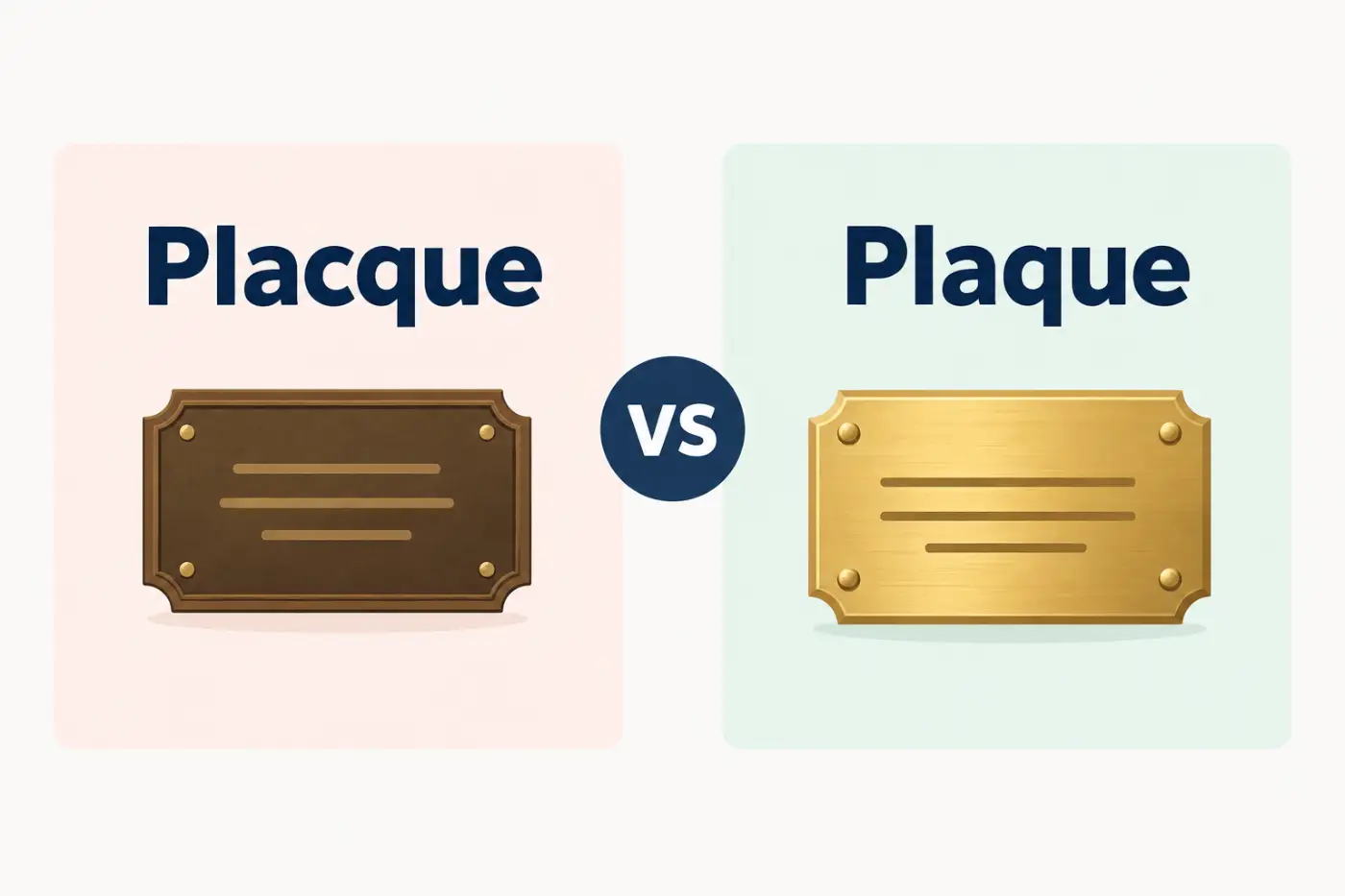
If you’re stuck on placque vs plaque you only need to remember one spelling for modern English. The correct spelling is plaque. The spelling placque is not the standard form used in current US English.
The word can have several meanings. You might see it on a memorial or award. A dentist might talk about plaque on your teeth. Doctors also use the word to describe a buildup inside blood vessels. These meanings are different but the spelling stays the same.
The extra c in the incorrect form makes the word look as if it should follow a familiar spelling pattern. That small difference can be easy to miss when you’re typing quickly. Once you know the correct form and see it in a few common phrases it becomes much easier to remember.
This guide explains the meaning of plaque and shows how to use it correctly. You’ll also learn why the spelling causes confusion how to remember it and how the word works in everyday sentences.
Quick Definition
Plaque is a noun with several meanings. It can mean a flat piece of metal stone or another material that carries writing or an image. It can also mean a sticky layer that forms on teeth or a buildup that develops inside blood vessels.
Placque is not the standard modern spelling. For normal US English writing use plaque.
Direct Answer
The correct spelling is plaque. Use plaque for a commemorative sign dental buildup and the medical term for a buildup inside an artery.
Comparison Table
| Word | Meaning | Example Sentence | When to Use It |
|---|---|---|---|
| Plaque | A sign tablet deposit or medical buildup. | The school placed a plaque near the entrance. | Use this spelling in modern English. |
| Placque | Nonstandard spelling. | The word is misspelled in standard US English. | Avoid this spelling. |
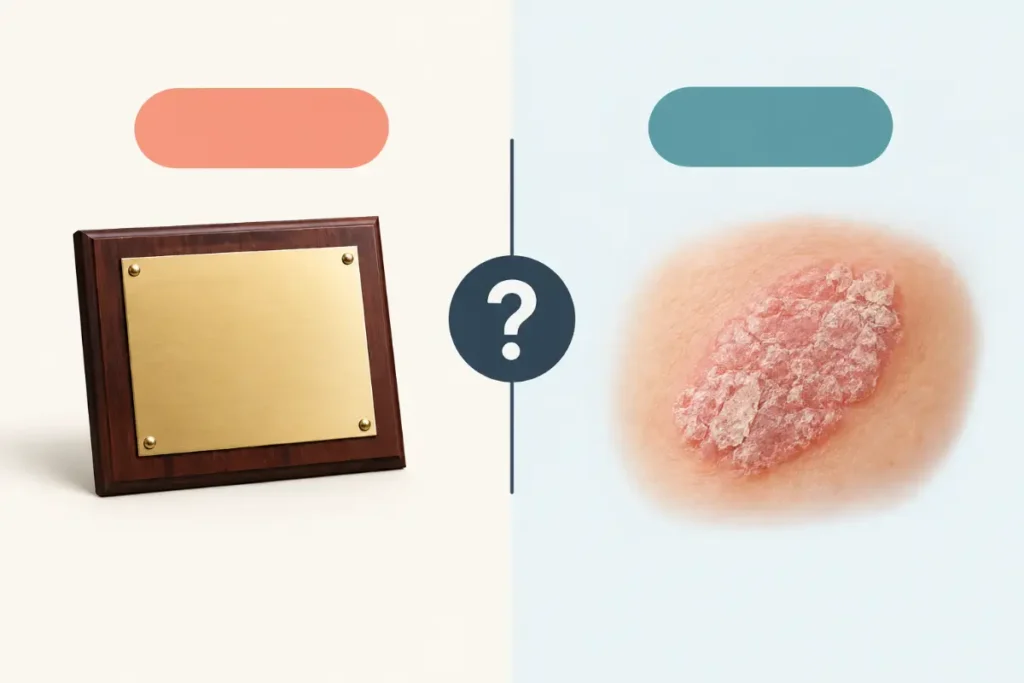
Why The Spelling Causes Confusion
The main reason people make this mistake is simple. The word looks like it could contain two c letters before the final e. English has plenty of words with double consonants so the extra c can seem reasonable at first glance.
There is also a pronunciation issue. The word is pronounced like plaak. When you hear it spoken you cannot tell how many letters appear in the middle. Sound alone gives you no clue about the spelling.
People can also remember the shape of a word incorrectly. If you’ve seen the misspelled form several times it may start to look familiar. Your brain often recognizes a word as a whole rather than checking every letter one by one.
The best fix is not to rely on pronunciation. Instead remember the visual pattern in plaque. It has one c after the a and then the final que.
What Does Plaque Mean
The meaning depends on the context. The word is used in everyday language as well as in medicine and dentistry.
One common meaning is a flat object attached to a wall or another surface. It often contains words that honor a person explain an event or mark an important place.
For example a city might place a plaque on a historic building. A school might install one to recognize a former principal. A business might give an employee a plaque for reaching an important milestone.
The word also has a completely different meaning in dentistry. Dental plaque is a sticky film that forms on teeth. It contains bacteria and can contribute to tooth decay and gum problems when it isn’t removed through good oral care.
Medicine uses the word in another way. Doctors may use plaque to describe material that builds up inside arteries. This type of plaque is associated with atherosclerosis and can affect blood flow.
So the same word can describe a wall display a dental film or a buildup inside the body. Context tells you which meaning applies.
Plaque As A Commemorative Sign
One of the easiest meanings to understand is the commemorative plaque.
A commemorative plaque is usually a flat object made from materials such as metal stone wood or another durable material. It contains words that recognize a person event place or achievement.
You may have seen these plaques on historic buildings. They often explain why a location matters or identify a person connected with the site.
For example:
The city placed a plaque on the building to honor the local architect.
The museum added a plaque explaining the history of the house.
A small bronze plaque marks the site of the original school.
In these sentences the word refers to a physical object. It isn’t talking about teeth or a medical condition.
Plaques Used For Awards
The word is also common in the world of awards.
Schools companies sports groups and professional organizations may give plaques to recognize achievement. The plaque can include the recipient’s name the award title and the date.
For example:
Maria received a plaque for ten years of service.
The coach presented each player with a plaque after the championship.
Our team received a recognition plaque at the annual event.
In this sense the plaque works much like a trophy or certificate. It gives the recipient something physical to keep as a reminder of an achievement.
Plaques In Public Places
Public plaques often provide information rather than an award.
You might find one outside a historic home. A park might have plaques that explain the history of a landmark. A university may place plaques near buildings to honor donors or important members of the school community.
These signs are usually short. They give readers key facts without taking up much space.
For example:
This plaque marks the birthplace of a local author.
A stone plaque describes the history of the old bridge.
The library installed a plaque honoring its founder.
Dental Plaque Explained
Dental plaque is a completely different use of the word. It refers to a sticky film that forms on teeth when bacteria and other substances collect on the tooth surface.
Plaque can build up after eating and drinking. Regular brushing and cleaning between the teeth help remove it. If plaque stays on the teeth it can contribute to cavities and gum disease.
You might hear a dentist use the word in sentences like these:
Your dentist noticed a buildup of plaque along the gumline.
Brushing twice a day helps remove dental plaque.
Flossing helps clean areas where plaque can collect between teeth.
This meaning is especially common in health and dental information. When you see the word next to terms such as teeth gums brushing flossing or cavities you can usually tell that the dental meaning applies.
Plaque And Tartar Are Not The Same
People sometimes use plaque and tartar as if they mean the same thing. They are related but they are not identical.
Plaque is a soft sticky film that can collect on your teeth. If it isn’t removed it can harden into tartar. Tartar is much harder and usually requires professional dental cleaning to remove.
That distinction matters because good daily oral care focuses on removing plaque before it has a chance to harden.
Plaque In Medical Writing
The word also appears in medical contexts. One well known use involves atherosclerosis.
In this setting plaque refers to a buildup inside the walls of arteries. The material can include fats cholesterol calcium and other substances. As plaque builds up it can narrow an artery and affect blood flow.
For example:
- The scan showed plaque buildup in the artery.
- The doctor explained that the patient had signs of atherosclerosis.
- The treatment plan focused on reducing cardiovascular risk.
You may also see the word in other areas of medicine and biology. The exact meaning depends on the subject being discussed. In every case the spelling remains the same.
How To Remember The Correct Spelling
A good spelling trick should make the word easier rather than create another rule to memorize. With plaque the simplest approach is to remember its ending.
Think of the word as:
P L A Q U E.
The important part is the que ending. There is only one c before it.
You can also connect the word with familiar phrases. Think of dental plaque commemorative plaque and plaque buildup. Seeing the word in common combinations helps reinforce the correct spelling.
Another useful trick is to remember that the word begins with pla and then moves directly into que.
Pla plus que gives plaque.
You don’t need to invent a complicated rhyme. A clear visual memory is enough for most people.
Common Mistakes With Plaque
Spelling mistakes often happen when people try to write the word from memory. The most common problem is adding an extra c.
For example:
- Incorrect: The museum placed a placque on the wall.
- Correct: The museum placed a plaque on the wall.
- Another mistake involves leaving out the final e.
- Incorrect: The dentist found plaque near the gumline.
- Correct: The dentist found plaque near the gumline.
The second example looks identical because plaque is already the correct form. The important point is that the word ends with que. Don’t shorten or reshape the ending when you type it.
Watch The Ending
The ending can also cause pronunciation based spelling errors. The final que does not sound like the word is spelled letter by letter. English often uses letter combinations that look different from how they sound.
That’s why writing the word from memory can be harder than recognizing it when you read it.
If you’re unsure while writing an important document pause for a moment and check the spelling. A quick check can prevent a simple error from appearing in a school paper business document or public sign.
Plaque In Real Sentences
The best way to understand a word is to see it in natural sentences. These examples cover several common meanings.
- The university placed a plaque outside the historic building.
- The award came with a small plaque engraved with her name.
- The dentist explained how plaque can affect the gums.
- The doctor discussed the risks linked to plaque buildup in the arteries.
- A bronze plaque hangs beside the entrance.
- The museum added a plaque describing the site’s history.
- He cleaned his teeth carefully to remove plaque.
- The organization presented her with a plaque for her years of service.
Each sentence uses the same spelling but the meaning changes based on the surrounding words.
Plaque And Plate Are Not The Same
Plaque and plate can sometimes seem interchangeable because both words can describe flat objects. In many situations they are not the same.
A plate is usually a flat object used for a particular purpose. A dinner plate holds food. A metal plate may cover or support part of a structure. A license plate identifies a vehicle.
A plaque is often designed to display information. It may carry a name dedication message image or historical note.
For example:
- The restaurant served the meal on a ceramic plate.
- The city installed a plaque outside the historic building.
The two objects can look similar but their purpose differs. A plaque is often connected with recognition information or commemoration.
Plaque And Trophy Are Not The Same
These words can also appear in the same setting but they describe different things.
A trophy is usually a three dimensional award. It might be a cup statue figure or another decorative object.
A plaque is usually flat. It often contains engraved or printed text that explains the award or recognizes the recipient.
For example:
- The player received a trophy for winning the tournament.
- The school gave each volunteer a plaque for outstanding service.
Both can recognize achievement. Their form and typical design are different.
Is Plaque A Noun
Yes. Plaque is a noun.
A noun names a person place thing or idea. In its common meanings plaque refers to a physical object or a buildup.
For example:
- The plaque hangs near the front door.
- The dentist removed plaque from the patient’s teeth.
- The doctor explained the plaque found inside the artery.
You generally won’t use plaque as a verb in standard everyday English.
Is Plaque Singular Or Plural
Plaque is singular. The plural form is plaques.
For example:
- The building has one historic plaque.
- The downtown area has several historic plaques.
- The museum displayed three commemorative plaques.
- The plural form simply adds s. There is no need to change the spelling of the main word.
How To Use Plaque In Formal Writing
The word works well in formal and informal writing. You may see it in school papers business documents museum descriptions news articles medical information and everyday conversation.
In formal writing the meaning should be clear from the surrounding sentence.
For example:
- The historical society installed a plaque to commemorate the building’s original owner.
- The dental report noted significant plaque buildup.
- The physician explained how arterial plaque can affect blood flow.
These sentences are direct and clear. They also give the reader enough context to understand which meaning applies.
How To Use Plaque In Everyday Conversation
You don’t need formal language to use this word correctly. People use it naturally in ordinary conversations.
Someone might say:
Did you see the plaque outside the courthouse.
My dentist said I need to do a better job removing plaque.
The company gave her a plaque after twenty years with the organization.
The context does most of the work. Once you know the spelling the word is simple to use.
Why The Extra C Looks Tempting
The incorrect form can look believable because English contains many words with double consonants. Words such as successful and necessary train us to expect repeated letters in some places.
The problem is that spelling patterns don’t always transfer from one word to another. Adding another c to plaque doesn’t make the spelling more logical. It simply creates a nonstandard form.
This is a good reminder that English spelling often requires familiarity with individual words. You can use patterns to help but you shouldn’t force every word into the same pattern.
Does The Pronunciation Help
Not much.
The standard pronunciation of plaque sounds roughly like plaak. When someone says the word aloud you can’t hear the spelling. You won’t know from pronunciation alone if the middle contains one c or two.
That makes visual memory especially useful.
Read the word several times. Write it in a few sentences. Use common phrases such as dental plaque and commemorative plaque. Over time the correct form becomes familiar.
A Simple Memory Trick
Try this short reminder.
Plaque has one c.
That’s all you need.
You can also picture a physical plaque hanging on a wall. Imagine the word engraved across its surface as:
PLAQUE
The visual connection can help you remember the spelling when you’re writing later.
Another useful approach is to connect the spelling with the letter q. The combination qu is easy to recognize. Once you remember that the word contains qua followed by e in the final part you are less likely to insert another c.
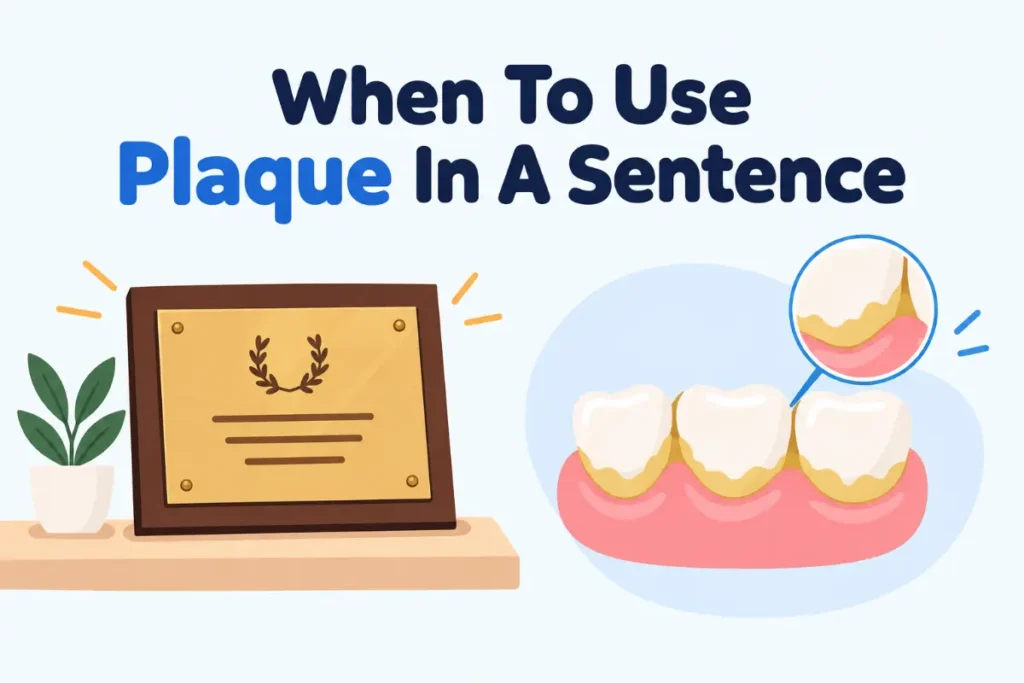
When To Use Plaque In A Sentence
Use plaque when you’re talking about a flat commemorative object.
- The town placed a plaque near the monument.
- Use it for dental buildup.
- The hygienist removed plaque from my teeth.
- Use it for certain medical deposits.
- The doctor found evidence of plaque in the artery.
The surrounding words will usually make the meaning clear. You don’t need to explain which definition you mean unless the context could confuse the reader.
Related Words Worth Knowing
Learning related vocabulary can help you understand the word more deeply.
- A commemorative plaque honors a person event place or achievement.
- A memorial plaque honors someone who has died or marks an important memory.
- A dental plaque is the sticky film that forms on teeth.
- Arterial plaque refers to buildup within an artery.
- A recognition plaque is an award given to honor someone’s work or achievement.
These phrases are common enough that learning them as groups can make the word easier to recognize.
FAQs
Is plaque the correct spelling?
Yes. Plaque is the standard spelling in modern US English. The spelling with an extra c is not the standard form.
What is the difference between placque and plaque?
Placque is a misspelling while plaque is the standard spelling. Use the standard form in school work professional writing medical writing and everyday communication.
How do you spell plaque correctly?
Spell it p l a q u e. The word contains one c followed by the letters q u e. A useful memory trick is to focus on the ending rather than trying to spell the word by sound.
Why is plaque spelled with a Q?
English uses the letter combination qu in many words. In plaque the q is followed by u and then the final e. This spelling is part of the word’s established form and isn’t based on how each individual letter sounds.
What does plaque mean on a building?
A plaque on a building is usually a flat sign that provides information or honors a person event or historical connection. It may be made from bronze stone metal or another durable material.
Is dental plaque the same as tartar?
No. Dental plaque is a sticky film that forms on teeth. Tartar is hardened material that develops when plaque remains on the teeth and becomes mineralized.
What is plaque in the human body?
In medical writing plaque can refer to a buildup of material inside an artery. Arterial plaque is associated with atherosclerosis and can restrict blood flow.
What is the plural of plaque?
The plural is plaques. For example a museum might display several plaques that describe important events or people.
Conclusion
If you’ve been unsure about placque vs plaque the answer is straightforward. Plaque is the correct spelling in modern English. The version with the extra c is not the standard spelling you should use.
The word can describe several things. It can mean a flat sign that honors someone or gives information. It can also describe the sticky film that forms on teeth or a buildup inside arteries. Context tells you which meaning applies.
The easiest way to remember the spelling is to picture plaque as P L A Q U E. Pay attention to the single c and the final que. Then practice the word in familiar phrases such as dental plaque commemorative plaque and plaque buildup.
If you’re writing the word right now don’t add another c. Write plaque and move on with confidence.

Dr. Elena Vance holds a Ph.D. in Linguistics from Columbia University and has spent over 15 years analyzing the evolution of the English language. A former university professor turned full-time writer and editor, Elena specializes in breaking down high-level grammatical concepts, punctuation nuances, and style guides (APA, Chicago, MLA) into clear, actionable advice. When she isn’t hunting down dangling modifiers, she can be found collecting vintage dictionaries and reading classic literature.