
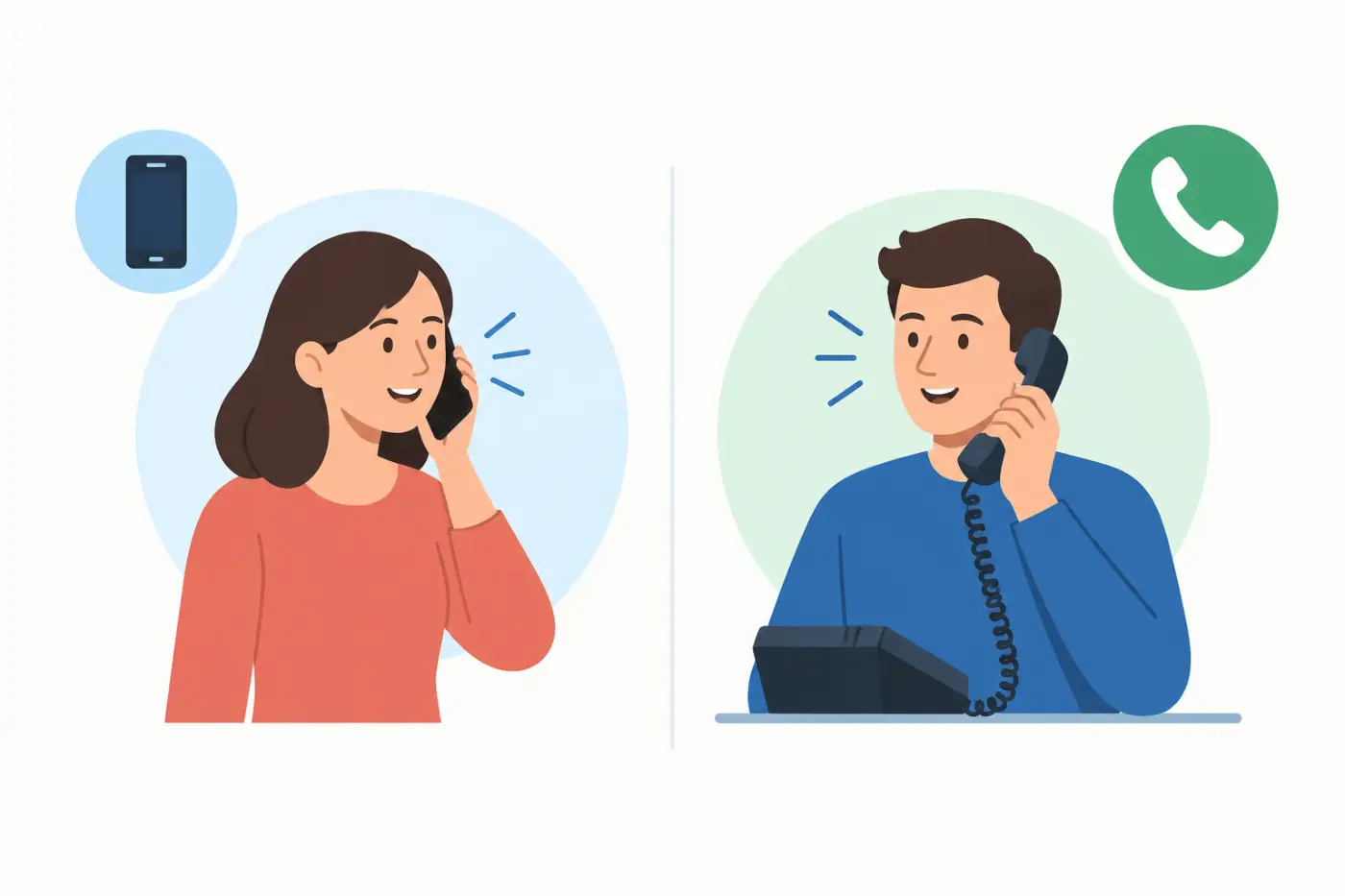
Have you ever wondered if you should say you talked on the phone or talked over the phone? Both expressions are common in American English. They describe communication by phone, but they can fit different situations.
The main difference is simple. Talk on the phone is the more natural choice when you want to describe having a phone conversation. Talk over the phone often emphasizes that two people communicated by phone instead of meeting in person or using another method.
For example, you might say, “I talked to my sister on the phone last night.” You could also say, “We discussed the job offer over the phone.” Both sentences are correct. The difference comes down to what you want to emphasize.
In this guide, you’ll learn how to use both expressions, how they differ in everyday conversation, and which one sounds more natural in different situations. You’ll also find practical examples, common mistakes, and answers to frequently asked questions.
Quick Definition
Talking on the phone means having a conversation through a telephone or mobile phone. Talking over the phone means communicating by telephone rather than meeting face to face or using another method. Both expressions are correct English. In casual American English, on the phone is usually the most natural choice for everyday conversations.
Direct Answer
Both talk on the phone and talk over the phone are grammatically correct. Use the first for ordinary phone conversations and the second when you want to emphasize the method of communication or contrast it with an in person conversation.
Comparing the Two Expressions
| Phrase | Meaning | Example Sentence | When to Use It |
|---|---|---|---|
| Talk on the phone | Have a conversation by phone | I talked to Jake on the phone this morning. | Everyday conversations and casual speech. |
| Talk over the phone | Communicate by phone | We discussed the schedule over the phone. | Work conversations and situations where the communication method matters. |
| Speak on the phone | Talk with someone by phone | She spoke with the manager on the phone. | Everyday speech and slightly more formal situations. |
| Speak over the phone | Communicate verbally by phone | The details were confirmed over the phone. | Professional conversations and formal writing. |
| Talk by phone | Communicate using a phone | We can talk by phone tomorrow. | Concise speech and business communication. |
The first two expressions are the main focus of this guide. The others are useful alternatives that can help you avoid repeating the same phrase.
Why Both Expressions Are Correct
English often uses prepositions to show how an action happens or where it takes place. The words on and over can both describe communication by telephone, but they create slightly different impressions.
Why We Say On the Phone
In American English, people commonly use on when describing communication through a device or service. You can be on the phone, on a video call, or on a conference call.
The expression focuses on the activity itself. It tells the listener that someone is using a phone to communicate.
Consider these examples.
- I’m on the phone with my doctor right now.
- She talked to her brother on the phone after dinner.
- Can we talk on the phone later?
- He spends too much time talking on the phone at work.
- I heard the news on the phone this morning.
Each sentence sounds natural in everyday American English. The phrase works in casual conversations, workplace discussions, and many other settings.
You can also use it when the conversation is brief. For example, “I talked to the delivery driver on the phone for two minutes.” The sentence describes the conversation without drawing special attention to the phone as a communication method.
Why We Say Over the Phone
The word over can describe communication that takes place through a channel or medium. A channel is simply a way to send information from one person to another.
For instance, people can share information over the phone, discuss a plan over email, or give instructions over a video call. In these examples, the word over highlights how the information travels.
Consider these sentences.
- We agreed on the price over the phone.
- The doctor explained the test results over the phone.
- They discussed the contract over the phone.
- I received the confirmation over the phone.
- The manager offered me the position over the phone.
These examples sound natural because the phone serves as the means of communication. The focus often falls on the information, decision, or agreement rather than on the act of talking itself.
However, this difference is a matter of emphasis rather than a strict grammar rule. People sometimes use the two expressions in similar situations without changing the main meaning.
When to Use Each Expression
Choosing the right phrase becomes easier when you think about the message you want to send. Are you simply describing a conversation, or are you explaining how the conversation took place?
Use On the Phone for Everyday Conversations
Choose on the phone when you want to talk about a phone conversation in a natural, relaxed way. This is the expression most Americans would use in ordinary speech.
For example, imagine that a friend asks what you did last night. You could say, “I talked to my cousin on the phone for an hour.”
The sentence sounds casual and clear. You don’t need to explain why you used the phone or compare the call with a face to face meeting.
Here are more examples.
- I talked to Mom on the phone during my lunch break.
- We talked on the phone until midnight.
- I’ll talk to you on the phone when I get home.
- She was talking on the phone when I arrived.
- They talked on the phone almost every day during college.
Notice how the expression fits naturally into each sentence. It describes the conversation without making the method of communication the main point.
It’s also useful when arranging a future call. You might tell a friend, “Let’s talk on the phone tomorrow.” This sounds friendly and natural.
Use Over the Phone to Emphasize the Method
Choose over the phone when the way you communicated matters to the story. This often happens when you discuss work, agreements, instructions, or information shared without an in person meeting.
Suppose you received a job offer but haven’t visited the office. You could say, “The hiring manager offered me the position over the phone.”
That sentence makes it clear that the offer came through a phone call. It doesn’t suggest that you met the manager in person.
Here are some more examples.
- We finalized the details over the phone.
- The customer placed the order over the phone.
- She gave me directions over the phone.
- They resolved the issue over the phone.
- I explained the problem to customer service over the phone.
In each example, the communication method helps explain how something happened.
The phrase also works well when you compare different ways of communicating. For example, “We usually meet in person, but we handled this discussion over the phone.”
The contrast makes the choice of words especially clear. You are not simply describing a conversation. You are explaining that the conversation happened by phone instead of in person.
Can You Use Both in the Same Situation
Yes. The two phrases can describe the same event, and the difference may be small.
For example, both sentences are correct.
- I talked to the client on the phone yesterday.
- I talked to the client over the phone yesterday.
The first sounds like a straightforward account of a conversation. The second can place slightly more emphasis on the fact that the conversation happened by phone.
Neither sentence is wrong. In many everyday situations, the listener will understand the same basic message.
The best choice depends on the context and the point you want to make. If you aren’t sure, use on the phone. It’s a safe and natural choice for most casual conversations.
Natural Examples in Everyday American English
Examples are one of the easiest ways to understand the difference. Pay attention to the situation in each sentence. The surrounding words often make the best choice clear.
Talking With Friends and Family
In personal conversations, on the phone usually sounds more relaxed and direct. You can use it to describe a short call, a long chat, or a conversation with someone you haven’t seen in a while.
Example one.
“I talked to my best friend on the phone last night.”
This sentence tells us that you had a phone conversation with your friend. It doesn’t suggest any special reason for using the phone.
Example two.
“My parents talked to me over the phone while I was away at college.”
This sentence is also correct. The wording may highlight how you stayed in touch while living apart.
Example three.
“Can we talk on the phone after work?”
This is a natural way to ask someone to have a call later. You could say it to a friend, family member, or coworker.
Example four.
“We talked over the phone because neither of us had time to meet.”
Here, the reason for using the phone matters. The sentence contrasts a phone conversation with an in person meeting.
Both expressions fit personal conversations. The key is to choose the phrase that best matches your intended meaning.
Talking at Work
Workplace communication often involves sharing facts, making decisions, and confirming plans. In these situations, over the phone can sound especially natural because it highlights how the discussion happened.
Consider these examples.
- I discussed the new schedule with my supervisor over the phone.
- We talked on the phone about the project this morning.
- The client approved the changes over the phone.
- I’ll talk to the supplier on the phone before placing the order.
- The team discussed the deadline over the phone.
All five sentences are grammatically correct. The best choice depends on the sentence’s focus.
In the sentence about the approved changes, over the phone makes the communication method clear. In the sentence about talking to a supplier, on the phone describes the planned conversation.
You don’t need to make every business sentence sound formal. Clear and simple English usually works best in professional communication.
Talking About Medical or Personal Information
People often receive advice or share private information by phone. Both expressions can describe these conversations.
For example, “I spoke with my doctor on the phone this morning” sounds natural. It focuses on the conversation with the doctor.
Now consider this sentence. “The nurse explained my test results over the phone.” Here, the emphasis falls on how the information was delivered.
You could also say the following.
- I talked to the clinic on the phone to ask about my appointment.
- The doctor gave me the instructions over the phone.
- She spoke with her therapist on the phone after work.
- The office confirmed my appointment over the phone.
These examples show how the surrounding details affect your choice. Use on the phone to describe the conversation itself. Use over the phone when the phone serves as the channel for advice, instructions, or other information.
Talking During an Emergency
Both expressions also work when someone needs help quickly.
For example, “I talked to emergency services on the phone while my neighbor waited outside.” This sentence describes the call.
You could also say, “The dispatcher gave me instructions over the phone.” This version highlights how the instructions reached you.
In an emergency, clear communication matters far more than choosing between these two phrases. Use the words that come naturally and explain the situation as directly as possible.
Common Grammar Patterns
Understanding a few basic sentence patterns will help you use these expressions correctly. You don’t need to memorize complicated grammar terms. Just pay attention to the verbs and the words that follow them.
Talk to Someone on the Phone
This is one of the most common patterns in American English.
The basic structure is:
Talk + to + person + on the phone.
For example:
- I talked to Sarah on the phone.
- He talks to his parents on the phone every weekend.
- We talked to the manager on the phone yesterday.
- She’ll talk to you on the phone tomorrow.
The word to introduces the person you speak with. The phrase on the phone explains how the conversation takes place.
You can change the verb tense to match the situation. Say talk for the present or future context, talked for the past, and will talk for a future conversation.
Talk With Someone on the Phone
You can also use with instead of to.
For example, “I talked with my sister on the phone last night.”
Both talk to and talk with are standard English. Some speakers use talk with to highlight a shared conversation, but the difference is small. In everyday American English, both forms sound natural.
Here are a few more examples.
- I talked with my manager on the phone this morning.
- She talks with her grandparents on the phone every Sunday.
- We talked with the customer over the phone.
- He’ll talk with the doctor on the phone later.
You don’t need to treat talk to as one way to speak and talk with as another. Both can describe a normal conversation.
Talk About Something Over the Phone
Use this pattern when you want to name the topic of the conversation.
For example, “We talked about the budget over the phone.”
The phrase about the budget tells the reader what the conversation covered. The phrase over the phone tells the reader how the discussion took place.
You can use this pattern with many topics.
- We talked about the wedding over the phone.
- They talked about the new contract over the phone.
- I talked about my travel plans with Mom on the phone.
- The team talked about the deadline over the phone.
You can move the phone phrase to different places in a sentence as long as the meaning stays clear. For example, “Over the phone, we talked about the budget.” This is correct, although the original word order sounds more natural in everyday conversation.
Be on the Phone
The expression be on the phone is different from talk on the phone in its grammatical role.
Use be on the phone to describe someone’s current activity or state.
For example:
- I’m on the phone right now.
- She was on the phone when I entered the room.
- Dad is on the phone with the bank.
- We’ll be on the phone for a few minutes.
These sentences don’t always tell you what the people are discussing. They simply indicate that someone is using the phone for a call.
You can also say, “I can’t answer because I’m on the phone.” This is a common way to explain why you can’t speak to someone in the room.
Speak on the Phone
The verb speak is another natural choice. It often sounds a little more formal than talk, although the two verbs overlap.
For example, “I spoke to the director on the phone yesterday.”
You might use speak in a work email or a conversation with someone you don’t know well.
Other examples include:
- I need to speak with the landlord on the phone.
- She spoke to the customer over the phone.
- We spoke on the phone before the meeting.
- The representative spoke with me over the phone.
Both speak on the phone and speak over the phone are correct. Choose the one that fits the sentence’s emphasis.
Common Mistakes to Avoid
These expressions are easy to use, but a few mistakes can make a sentence sound awkward. Most involve missing prepositions or unnecessary words.
Using Talk on Phone
In standard American English, you generally need the before phone in this expression.
Incorrect: “I talked to him on phone.”
Correct: “I talked to him on the phone.”
The article the is part of the normal expression. Use it in everyday speech and writing.
You may see different wording in headlines, notes, or messages where writers leave out small words for space. That doesn’t make the shortened version the best choice for a complete sentence.
Saying Talk Over Phone
The same rule applies to over the phone.
Incorrect: “We discussed the problem over phone.”
Correct: “We discussed the problem over the phone.”
Remember the complete phrase. In standard American English, say over the phone when you mean communication by telephone.
Adding an Unnecessary Preposition
Some learners write sentences such as “I talked about with him over the phone.” This sentence combines two patterns incorrectly.
You can say, “I talked with him over the phone.” You can also say, “I talked about the problem with him over the phone.”
The first sentence names the person you spoke with. The second names both the topic and the person. Don’t add about unless you are naming the subject of the discussion.
Confusing Talk to With Talk About
The words to and about do different jobs.
In “I talked to my brother,” the phrase my brother names the person. In “I talked about my brother,” the phrase my brother names the topic.
Compare these examples.
- I talked to my teacher on the phone.
- I talked about my teacher on the phone.
The first sentence means you had a conversation with your teacher. The second means you discussed your teacher with someone else.
One small word changes the meaning. Always check the sentence to make sure it says what you intend.
Treating Over the Phone as More Correct
Some people assume over the phone is the proper form and on the phone is too casual. That’s not true.
Both expressions are accepted in standard English. The first is especially common for ordinary phone conversations. The second often highlights the communication method.
You don’t need to replace every instance of on the phone with over the phone to sound educated or professional. Natural wording is usually better than formal wording that doesn’t fit the situation.
On the Phone Versus Over the Phone in Formal Writing
Both expressions work in writing, but the best choice depends on the sentence and the audience. You don’t need to avoid either phrase in a professional email, report, or article.
In Emails and Work Messages
Use on the phone when referring to a call or asking someone to speak with you.
For example:
“Can we talk on the phone tomorrow morning?”
This sounds direct and friendly. It’s suitable for a coworker, client, or business partner.
Use over the phone when reporting what happened during a call.
For example:
“We confirmed the meeting time over the phone.”
This sentence gives the reader a clear record of how the confirmation happened.
Here are a few other examples.
- I’ll call you to discuss the proposal.
- We discussed the proposal over the phone.
- I spoke with the client on the phone this morning.
- The client approved the proposal over the phone.
- Let’s talk on the phone before sending the final version.
All these sentences work in professional settings. Choose the phrase that expresses your point clearly rather than trying to make the wording sound more formal than necessary.
In Academic Writing
Academic writing often favors precise language. If you’re describing a research interview, a survey, or a study, by telephone may sometimes be more suitable than either expression.
For example, “Researchers interviewed 30 participants by telephone.”
You could also write, “The researchers spoke with each participant on the phone.”
The first sentence is concise and formal. The second is easier to read and still communicates the method.
If you’re writing a research paper, follow your institution’s style guide. Some fields prefer specific terms for phone interviews or remote data collection. The goal is to describe the method accurately, not to choose the longest phrase.
In Stories and Personal Essays
Personal writing usually benefits from natural language. If you’re telling a story about a call with a friend, family member, or coworker, on the phone will often fit well.
For example, “I was talking to my dad on the phone when the power went out.”
The sentence sounds natural because it focuses on what happened during the conversation.
You could write, “My dad gave me the news over the phone.” This version places more attention on the information he shared.
Think about the main event in your story. If the conversation matters most, on the phone is a good option. If the way you received important news matters most, over the phone may be a better fit.
Related Expressions You Should Know
Phone conversations involve more than two common phrases. Learning a few related expressions will help you sound more natural and avoid repeating the same wording.
By Phone
By phone means using a telephone as the method of communication. It is concise and works well in everyday and professional English.
Examples include:
- You can contact our office by phone.
- We arranged the appointment by phone.
- Please confirm your booking by phone.
- I prefer to discuss this matter by phone.
The expression often appears in instructions, announcements, and business messages. It usually focuses on the communication method rather than the conversation itself.
Compare “We talked on the phone” with “We arranged the meeting by phone.” Both are correct, but the second emphasizes the way the arrangement was made.
On a Call
The expression on a call is common in modern American English, especially in workplaces where people use mobile phones or online meeting tools.
For example, “I’m on a call right now, so I’ll message you later.”
The word call can refer to a telephone call or a call made through an online service. The exact meaning depends on the context.
You might also hear someone say, “I have a call with the sales team at noon.” This means the person has a planned conversation, often for work.
Over a Call
People sometimes use over a call to describe information shared during a call. However, over the phone is often the more natural choice when the call is specifically a telephone conversation.
For example, “We discussed the plan over the phone” sounds natural and clear.
If the conversation took place through a video meeting, you could say, “We discussed the plan during a video call.” That wording tells the reader exactly how the discussion happened.
The best phrase depends on the type of communication. Use over the phone for telephone conversations and during a video call when the visual part of the meeting matters.
Give Someone a Call
Give someone a call is a friendly and common way to say that you will phone someone.
For example, “I’ll give you a call after lunch.”
You can use this expression with friends, relatives, and coworkers. It’s also useful when making plans.
Other examples include:
- Give me a call when you arrive.
- I’ll give the office a call tomorrow.
- She gave her brother a call before leaving.
- Could you give me a call this afternoon?
This phrase describes making a call rather than the conversation itself. Once the conversation starts, you can say that you talked on the phone.
Talk Face to Face
Face to face means meeting and communicating in person. It contrasts with phone conversations and other forms of remote communication.
For example, “We discussed the issue face to face instead of over the phone.”
The sentence makes the difference between the two methods clear. You can use this expression when explaining why a meeting took place in person.
Another example is, “I’d rather talk to you face to face about this.” This means the speaker prefers an in person conversation.
Remember that face to face doesn’t mean the same thing as on the phone. The first describes direct contact in person. The second describes a conversation through a phone.
An Easy Way to Remember the Difference
You don’t need a complicated grammar rule to choose the right expression. A simple reminder will usually do the job.
Think of on the phone as the phrase for the activity. You’re on the phone when you’re having a call. Think of over the phone as the phrase for the communication method. You receive information, make arrangements, or discuss details over the phone.
For example, imagine that your boss calls you about a new project.
You could say, “I talked to my boss on the phone this morning.” This tells someone that you had a conversation.
You could also say, “My boss explained the new project over the phone.” This tells someone how you received the explanation.
Both sentences describe the same general event, but they focus on different parts of it.
Here is another way to test your choice. Read the sentence without the phone phrase. If the sentence mainly describes a conversation, on the phone will often fit. If it explains how information was shared or a decision was made, over the phone may fit better.
This is a useful guide, not an unbreakable rule. English gives speakers more than one natural way to express the same idea.
The easiest default is to use on the phone in ordinary conversation. Switch to over the phone when you want to highlight the method of communication.
FAQs
Is talk on the phone or over the phone correct?
Both expressions are grammatically correct. Talk on the phone is the more common choice for everyday conversations. Talk over the phone often highlights the phone as the method of communication.
Is it better to say talk on the phone or over the phone?
Use talk on the phone when describing a normal conversation. Choose talk over the phone when the method of communication matters to the sentence. Both are natural in many situations.
Do Americans say on the phone or over the phone?
Americans use both expressions. On the phone is especially common in everyday speech. Over the phone is also widely used when discussing information, arrangements, or decisions made by telephone.
Can I say I spoke to someone over the phone?
Yes. “I spoke to someone over the phone” is grammatically correct and sounds natural. You can also say, “I spoke to someone on the phone.” Both sentences describe a conversation by telephone.
Is talking over the phone formal?
The expression is suitable for both casual and professional communication. It often appears in workplace conversations when people discuss decisions, instructions, or agreements. The level of formality depends more on the full sentence than on this phrase alone.
What is the difference between talking on the phone and talking in person?
Talking on the phone means having a conversation through a telephone. Talking in person means speaking directly with someone who is physically present. For example, you might discuss a work project on the phone today and meet your coworker in person tomorrow.
Can I use over the phone in a business email?
Yes. Over the phone works well in professional emails when you describe something discussed or arranged during a call. For example, “As discussed over the phone, the delivery will arrive on Friday.” This sentence is clear and appropriate for business communication.
Is talk by phone correct English?
Yes. Talk by phone is correct, although it may sound less conversational than talk on the phone in some everyday American English contexts. It is useful when you want a short and direct way to describe phone communication. For example, “We can talk by phone tomorrow morning.”
Conclusion
Both talk on the phone or over the phone can be correct. The best choice depends on what you want to emphasize. Use on the phone for ordinary conversations and over the phone when highlighting the method of communication.
You can use either expression with friends, family members, coworkers, and clients. Both work in casual speech and professional writing. Just make sure the rest of your sentence is clear and grammatically correct.
Remember that on the phone is a reliable choice for everyday American English. When you describe an agreement, instruction, or decision made during a call, over the phone often fits naturally.
The next time you write about a phone conversation, keep the purpose of your sentence in mind. If you’re describing the conversation itself, use on the phone. If you’re explaining how information was shared, consider over the phone. Both expressions are correct, so choose the one that makes your meaning clear.

Dr. Elena Vance holds a Ph.D. in Linguistics from Columbia University and has spent over 15 years analyzing the evolution of the English language. A former university professor turned full-time writer and editor, Elena specializes in breaking down high-level grammatical concepts, punctuation nuances, and style guides (APA, Chicago, MLA) into clear, actionable advice. When she isn’t hunting down dangling modifiers, she can be found collecting vintage dictionaries and reading classic literature.