
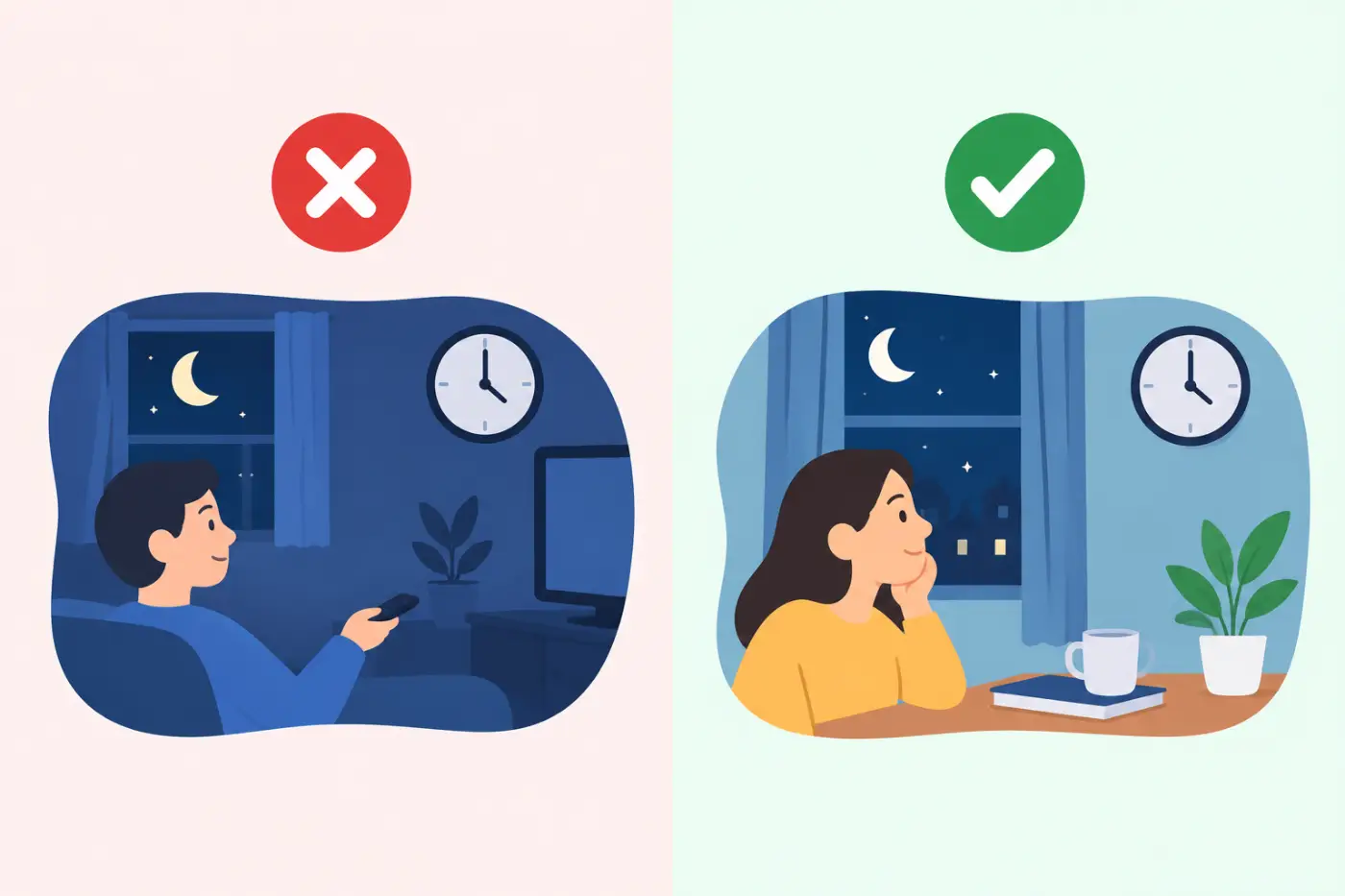
If you’re wondering about tonite or tonight the correct spelling is tonight. The shorter form can show up in casual texts and informal messages. However it isn’t the standard spelling you should use in polished writing.
This small spelling choice can cause confusion because both forms are easy to understand. You may see the shorter version in song titles social posts advertisements or quick messages. That can make it seem like both spellings are equally correct.
They aren’t used in the same way. Tonight is the standard English word for the current evening or the evening of the current day. Tonite is an informal shortened spelling that has appeared in casual writing for many years.
In this guide you’ll learn the difference between the two forms. You’ll also see when the shorter version may appear how to use the standard form in sentences and why the longer spelling is the safer choice for most writing.
Quick Definition
Tonight is an adverb or noun that refers to the evening or night of the current day. For example you might say that you’re staying home tonight or that a concert is happening tonight.
Tonite is an informal spelling of the same word. It isn’t considered standard spelling in formal English and is best avoided in school work professional writing and other polished content.
Direct Answer
Tonight is the standard and correct spelling in English. Tonite is an informal shortened form that may appear in casual writing but it isn’t the preferred spelling for standard English.
Comparison Table
| Word or Phrase | Meaning | Example Sentence | When to Use It |
|---|---|---|---|
| Tonight | The evening or night of the current day. | Are you free tonight. | Use it in standard English and polished writing. |
| Tonite | An informal shortened spelling of tonight. | See you tonite. | Mostly found in casual or creative writing. |
Why People Get Confused
The confusion comes from the way English often shortens words in everyday communication. People naturally leave out letters when they write quickly. Text messages and social media have made this habit even more common.
The shorter form looks simple because it keeps the same basic sound. When you say both versions aloud they sound the same. Nothing in the pronunciation tells you that one spelling is standard and the other is informal.
Advertising has also played a role. Businesses sometimes use shortened spellings to make signs headlines or promotional messages feel casual and friendly. You might see a phrase such as a special event happening tonight written in a shortened style on a poster or sign.
Music and entertainment have used the informal spelling too. A title can use unusual spelling for style or branding. That doesn’t automatically make the spelling standard English.
This distinction matters because a word can be understandable without being the best choice for formal writing. Many readers know exactly what the shorter form means. Still they may expect the standard spelling in an essay email report application or professional article.
What Does Tonight Mean
The word tonight refers to the evening or night connected to the current day. It can describe something that is happening later today or something that happened during the current night.
For example you might say that you’re meeting a friend tonight. If you say that someone called you tonight you mean the call happened during the current evening or night.
The word can work in several parts of a sentence.
Tonight As An Adverb
As an adverb the word tells us when something happens.
- I’m staying home tonight.
- We are going to dinner tonight.
- She plans to study tonight.
- The store is open late tonight.
In each sentence the word gives information about time. It tells the reader when the action takes place.
Tonight As A Noun
The word can also work as a noun when it refers to the current night itself.
- Tonight is the perfect night for a movie.
- Tonight was one of the best nights of my life.
- We have a big game tonight.
The exact grammar can depend on how the sentence is built. What stays the same is the basic idea of the current evening or night.
When To Use Tonight
Use the standard spelling whenever you want your writing to look correct and polished. This includes school assignments business emails work documents articles applications and most public writing.
It also works perfectly in casual writing. You don’t need a shorter spelling just because you’re sending a text to a friend.
For example these sentences all sound natural.
- What are you doing tonight.
- I’ll call you tonight.
- Are we still meeting tonight.
- We should order pizza tonight.
- I can’t stay out late tonight.
The standard form works in every one of these situations. It doesn’t sound stiff or overly formal. It’s simply the normal spelling most English speakers expect to see.
Is The Shorter Form Ever Used
Yes. You may still come across the shortened spelling in informal settings. It can appear in text messages social media posts advertising headlines song titles and creative writing.
A writer might choose the shorter version to make a message look playful or relaxed. A business might use it in a sign because the shorter word takes up less space. An artist might also use it as part of a title or brand name.
That doesn’t change the standard spelling. Creative or informal use can explain why you see the shorter version from time to time.
Think of it like a nickname. People may use it in certain situations because it feels casual. That doesn’t mean it belongs in every setting.
Why Tonight Is The Better Choice
The standard spelling gives your reader one less thing to question. It follows normal dictionary usage and works across casual formal and professional contexts.
Imagine you’re writing an email to your manager. You could write that you’ll finish the report tonight. There is no reason to shorten the word. The standard form looks natural and professional.
The same applies to school work. If you’re writing an essay about a movie you might say that you watched it tonight. Using the standard spelling keeps your work clean and consistent.
You also don’t need to worry about your audience understanding it. Tonight is familiar to English speakers and doesn’t require any special context.
Examples In Real Sentences
Learning a spelling difference is easier when you see it in situations people actually encounter. These examples show how the standard word works in everyday English.
Talking About Plans
- Are you free tonight.
- We’re having dinner with friends tonight.
- I need to finish my homework tonight.
- She said she’d call tonight.
Talking About Events
- The concert starts tonight.
- The team plays tonight.
- There’s a meeting tonight.
- The new episode airs tonight.
Talking About Feelings
- I feel much better tonight.
- He’s nervous about the interview tonight.
- I’m too tired to go out tonight.
- She seems happier tonight.
Talking About The Weather
- It might rain tonight.
- The temperature will drop tonight.
- The sky looks clear tonight.
- We may see snow tonight.
These examples show why the standard spelling is so useful. It fits naturally into almost any conversation about the current evening or night.
Common Mistakes With Tonight
The most common mistake is simply replacing the ei spelling with the shorter i spelling. Because both forms sound the same when spoken, your ear won’t help much. You have to rely on the standard written form.
Another common mistake is assuming that a shorter spelling becomes correct just because people use it often online. Internet writing contains plenty of informal forms. Some are useful in casual messages but don’t belong in standard writing.
For example you might see someone write a message like this.
- See you tonite.
The meaning is clear. Still the standard version is better for most situations.
- See you tonight.
The second sentence works just as well in a text message. It also works in an email a school assignment or a professional message. That’s why it makes sense to learn the standard spelling and use it by default.
The Difference Between Standard And Informal Spelling
Standard spelling gives readers a common form they can recognize across different types of writing. Informal spelling often changes words to make them shorter more playful or more personal.
This happens with many words and expressions. People may shorten words in texts because speed matters more than polished writing. Friends may also use unusual spellings as part of their personal style.
That doesn’t mean every informal form is wrong in every context. It means you should understand the setting before choosing one.
Standard Writing
Use the standard form in situations where accuracy and clarity matter.
Examples include school assignments resumes cover letters work emails reports articles and official documents.
You could write:
- I’ll send the completed file tonight.
- The meeting will take place tonight.
- We expect the results tonight.
Each sentence is clear and suitable for a wide range of readers.
Casual Messages
A friend might send you a message using the shortened form.
- Want to grab dinner tonite.
You can understand the message without trouble. The writer is using an informal style rather than following standard spelling.
Still you don’t need to copy that style. Writing tonight in a text is completely normal.
Why The Pronunciation Can Be Misleading
English spelling and pronunciation don’t always match perfectly. In this case both forms are pronounced the same way. That creates a simple trap.
When you hear the word you don’t see the letters. You only hear the sound. If someone asks you to spell it from memory you may choose the shorter spelling because it feels more direct.
Written English works differently. The standard spelling has to be learned visually as well as through sound.
This is why reading can help. Every time you see tonight in a book article email or message your brain gets another reminder of the correct letter pattern.
Over time the word becomes familiar enough that the shorter form may start to look unusual.
How To Remember The Correct Spelling
A good memory trick doesn’t need to be complicated. You can connect the word to its meaning and structure.
Think of tonight as two simple parts.
To plus night gives you tonight.
The word points to the night connected to today. The spelling keeps the full word night at the end.
This makes the word easier to remember because you don’t have to memorize a random group of letters. You can see the meaning inside the spelling.
For example:
- tonight.
- tonight’s plans.
- tonight’s game.
- tonight’s dinner.
The same spelling stays in place when you add an apostrophe and s to show possession.
Tonight And Tonight’s
These two forms are easy to confuse because they look almost identical.
Tonight refers to the current evening or night.
- I’m working tonight.
Tonight’s means belonging to or connected with tonight.
- Tonight’s dinner is at seven.
- Tonight’s game starts at eight.
- Tonight’s weather may be cold.
The apostrophe matters because it changes the grammatical role of the word.
If you’re talking about an action happening now or later today use tonight.
If you’re describing something connected to this evening use tonight’s.
Tonight And Tomorrow Night
People sometimes confuse these time expressions when making plans.
Tonight means the current evening or night.
- I’m meeting Sarah tonight.
Tomorrow night means the evening or night of the following day.
- I’m meeting Sarah tomorrow night.
The difference is simple. One points to the current day and the other points to the next day.
You can also use last night when talking about the previous night.
- I watched a movie last night.
- I’m going to watch another movie tonight.
- We might go to the theater tomorrow night.
These expressions create a simple timeline. Last night comes before today. Tonight refers to today. Tomorrow night comes after today.
Tonight And This Evening
Tonight and this evening often refer to the same general period. However they can have slightly different tones depending on the context.
This evening can sound a little more formal or specific. It often refers to the later part of the day before the late night period.
For example:
- I’ll call you this evening.
- We’re having dinner this evening.
Tonight is more common in everyday conversation.
- I’ll call you tonight.
- We’re having dinner tonight.
Both forms are natural. Your choice usually depends on the situation and the time you’re talking about.
Tonight And At Night
These expressions aren’t always interchangeable.
Tonight refers to one specific night connected to the current day.
- I’m going to the gym tonight.
At night usually describes a general habit or something that happens during nighttime.
- I usually read at night.
Compare these sentences.
- She works tonight.
- She works at night.
The first sentence refers to one particular night. The second describes her usual schedule or a general situation.
That small difference can change the meaning of the sentence.
Common Phrases With Tonight
The standard word appears in many everyday expressions. Learning these phrases can help you use it naturally without stopping to think about grammar.
See You Tonight
This is a common way to say goodbye when you expect to meet someone later that same day.
- I’ll see you tonight.
- See you tonight after work.
Tonight Only
This phrase often appears in advertising or event notices. It means something is happening only during the current evening.
- Live music tonight only.
Tonight At Eight
This expression gives a specific time for an event.
- The show starts tonight at eight.
Later Tonight
This means at some point later during the current evening or night.
- I’ll finish the report later tonight.
By Tonight
This means no later than tonight.
- Please send me the final version by tonight.
These phrases show how flexible the word is. It can describe a plan a deadline an event or a time reference without changing its spelling.
When The Shorter Form Can Appear
You may see the informal spelling in places where the writer wants a casual tone. Text messages are one example. Social media is another.
It can also appear in creative work. A song title may use an unusual spelling because the artist wants a particular look or sound. A store sign might use it because the designer wants to save space.
Those examples are worth noticing because they explain why the shorter spelling can seem familiar.
Still familiarity doesn’t make it the standard spelling. If you’re writing an article an essay a resume a business email or a formal message use the standard form.
Why Consistency Matters
Good writing isn’t only about choosing individual words. It also depends on consistency. If you use standard spelling throughout a document your writing looks more polished and easier to trust.
Imagine reading an otherwise professional report that suddenly contains several shortened spellings. The meaning may remain clear but the style can look careless.
Using standard forms avoids that problem. It also means you don’t have to think about your reader’s expectations.
The safest rule is simple. Use tonight in standard writing. Save the informal version for situations where you deliberately want a casual or creative style.
Tonite Or Tonight In Different Types Of Writing
The best spelling choice depends on the kind of writing you’re doing. The standard form works almost everywhere. The shorter form has a much narrower role and usually appears because the writer wants a casual or creative effect.
Knowing this difference can save you from second guessing yourself. You don’t need to memorize a long list of rules. You simply need to know the standard form and understand why the informal version sometimes appears.
School Writing
Use the standard spelling in essays reports homework and other school assignments. Teachers generally expect standard English unless an assignment specifically asks you to reproduce informal speech.
For example:
- I have a science test tonight.
- We watched the play tonight.
- The story takes place on a cold night.
Using the standard form keeps your writing clear and appropriate for school.
Workplace Writing
The same rule applies at work. Use the standard form in emails reports schedules notices and other professional documents.
Consider these examples:
- I’ll send the updated report tonight.
- The team will meet tonight at seven.
- Please review the document before tonight.
The spelling doesn’t make the sentences more formal than they need to be. It simply follows normal written English.
Text Messages
Text messages are more relaxed. Friends may shorten words or use creative spellings without worrying about formal standards.
You might see:
- Are you coming tonite.
- See you tonite.
- What are you doing tonite.
The meaning is easy to understand. Still tonight is perfectly natural in a text too. You don’t have to shorten it just because the message is casual.
Social Media
Social media gives writers more freedom with spelling and style. People often use shortened words to fit a certain voice or make a post feel informal.
For example a post might say:
- Movie night tonite.
That style can work for a casual post. If you’re creating a professional social media post for a company or organization the standard form is usually the better choice.
Creative Writing
Creative writing gives authors more room to play with language. A character’s dialogue may use an informal spelling to show personality or speech style.
For example a writer might give a character a text message that reads:
- See you tonite.
The unusual spelling can tell the reader something about the character. In this situation the writer isn’t necessarily making a spelling mistake. The choice may be intentional.
That distinction matters. A writer can use nonstandard language on purpose. Readers can still understand it. The key is knowing the difference between standard spelling and deliberate style.
Is Tonite A Real Word
The shorter spelling has been used in English for a long time. You can find it in informal writing and creative contexts. However its existence in actual use doesn’t make it the standard spelling.
English contains many informal forms that people recognize but don’t normally use in careful writing. Some become widely accepted over time. Others remain informal for generations.
The shorter version belongs in that second category for most modern writing. You may encounter it but you shouldn’t treat it as the normal replacement for the standard word.
This is an important point for English learners. A dictionary may record an informal form because people use it. That doesn’t mean the form has the same status as the standard spelling.
Can You Use Tonite In Formal Writing
It’s best to avoid it in formal writing. Choose the standard spelling instead.
This applies to essays business letters resumes cover letters reports applications and official communication. Formal writing should normally follow standard spelling unless you’re intentionally quoting or reproducing informal language.
For example:
- Please submit the form tonight.
This is a safe choice in almost every setting.
If you write:
- Please submit the form tonite.
Your reader will probably understand the sentence. The problem isn’t meaning. The problem is that the spelling can look careless in a formal setting.
A simple spelling choice can affect how polished your writing appears. Using the standard form removes that concern.
Can You Use Tonite In A Text
Yes. People sometimes use the shorter form in casual texts. There is no problem understanding a message such as See you tonite.
However you can also write See you tonight without sounding formal or awkward. The standard spelling is short enough that there is little reason to shorten it.
That makes the standard form a useful default. You can use it with friends family coworkers teachers and clients without changing your spelling for each audience.
Tonight In Questions
The word appears naturally in questions about plans events and schedules.
Here are some common examples:
- What are you doing tonight.
- Are you working tonight.
- Are we still going out tonight.
- What time does the game start tonight.
- Will you be home tonight.
- Do you want to watch a movie tonight.
These questions sound natural because the word clearly identifies the time being discussed.
Notice that tonight can appear at different points in a sentence. It can come at the beginning middle or end depending on what the speaker wants to emphasize.
For example:
- Tonight we’re going to the movies.
- We’re going to the movies tonight.
- Are we going to the movies tonight.
All three sentences are correct. The placement changes the rhythm and emphasis but not the basic meaning.
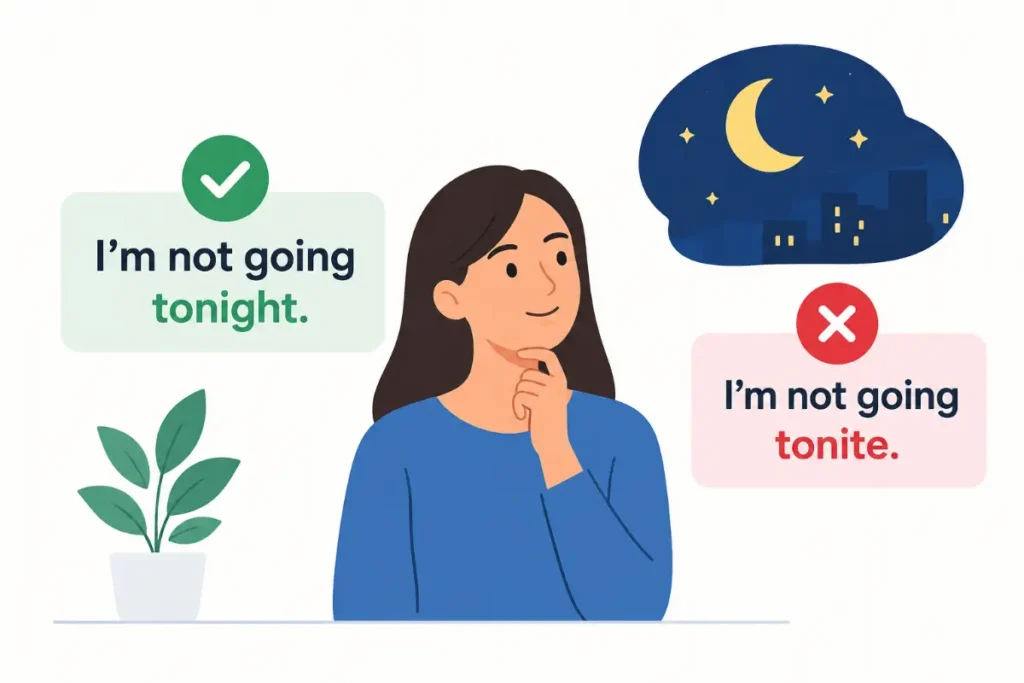
Tonight In Negative Sentences
You can also use the word when saying that something won’t happen during the current evening.
For example:
- I won’t be home tonight.
- She isn’t working tonight.
- We aren’t going out tonight.
- They won’t arrive tonight.
The word works naturally with negative verbs. It simply gives the time connected to the action.
This makes it useful in everyday planning. You can tell someone what you will do what you won’t do or what you aren’t sure about.
Tonight With Future Plans
English speakers often use tonight when talking about plans that have not happened yet.
For example:
- I’m going to study tonight.
- We’re meeting at six tonight.
- She’ll call you tonight.
- They plan to leave tonight.
The action may happen several hours later. The word still works because it connects that future action to the current day.
You can also combine it with other time expressions.
- I’ll call you later tonight.
- We should arrive early tonight.
- The store will close at ten tonight.
- I’ll finish the work before midnight tonight.
These combinations are common in natural conversation.
Tonight With Past Events
Although the word often refers to plans for later in the day it can also describe something that already happened during the current night.
For example:
- The party was tonight.
- We saw the show tonight.
- Tonight was much quieter than I expected.
The exact meaning comes from the verb and the context.
- If you say The concert is tonight the concert hasn’t happened yet.
- If you say The concert was tonight you’re talking about a concert that took place earlier during the current evening.
This is a good example of why context matters in English. The word itself doesn’t always tell you if the event is before or after the moment of speaking.
Tonight Compared With Other Time Words
Understanding nearby time expressions can make your writing more precise. Several words refer to different points around the same period.
Today
Today refers to the current day.
- I’m working today.
This Evening
This evening refers to the evening of the current day.
- We’re having dinner this evening.
Tonight
Tonight refers to the current evening or night.
- We’re watching a movie tonight.
Tomorrow
Tomorrow refers to the day after today.
- I’ll call you tomorrow.
Tomorrow Night
Tomorrow night refers specifically to the night after the current day.
- We’re going out tomorrow night.
Last Night
Last night refers to the previous night.
- I slept badly last night.
These words create a simple time line. Choosing the right one helps your reader understand exactly when something happens.
A Simple Test For Choosing The Right Spelling
When you’re unsure about the spelling ask yourself one question. Am I writing standard English.
If the answer is yes use tonight.
That works for nearly every normal situation. You can use it in casual messages and formal documents alike.
If you see the shorter form somewhere don’t assume you’ve been spelling the word incorrectly. It may simply be an informal or creative choice made by the writer.
This approach keeps the decision simple. You don’t need to judge every example you see online. Just remember which form belongs in standard writing.
Common Sentences To Practice
Writing a few natural sentences can help the spelling become automatic. Try reading these aloud and notice the full spelling each time.
- I’ll finish my homework tonight.
- Are you free tonight.
- We have a family dinner tonight.
- The store closes early tonight.
- I need to call my sister tonight.
- It looks like it will rain tonight.
- The movie starts at nine tonight.
- She has an important meeting tonight.
- We’re staying home tonight.
- I’ll send you the details tonight.
The goal isn’t to memorize every sentence. It’s to get comfortable seeing the standard form in different situations.
Once the spelling feels familiar you won’t need to stop and think about it every time you use the word.
FAQs
Is tonight the correct spelling?
Yes. Tonite or tonight has a clear standard answer. Tonight is the correct spelling for standard English. The shorter form is an informal spelling that may appear in casual messages or creative work.
Is tonite a misspelling?
In standard English writing it is considered a nonstandard spelling. People still use it in informal communication and creative settings. If you want your writing to follow standard spelling rules use tonight.
Can I use tonite in a text message?
You can use the informal form in a casual text and your meaning will still be clear. However the standard spelling is just as easy to use in a text. Writing tonight is always a safe choice.
Why do people write tonite?
People often shorten words in casual writing because they want their message to feel quick relaxed or playful. The shorter spelling also appears in advertising song titles social media posts and other creative settings. Its informal use doesn’t make it the standard spelling.
Is tonight one word or two words?
Tonight is one word. It combines the ideas of to and night into a single standard English word. You should not normally write it as two separate words.
What is the difference between tonight and this evening?
Both expressions can refer to the current evening. Tonight is more common in everyday conversation and can refer to the evening or later hours of the night. This evening can sound slightly more specific or formal.
What is the difference between tonight and tomorrow night?
Tonight refers to the current evening or night. Tomorrow night refers to the evening or night of the following day. For example you might say that you’re having dinner tonight and visiting a friend tomorrow night.
What is the difference between tonight and at night?
Tonight usually points to one specific night. At night often describes something that happens during nighttime as a general habit or pattern.
For example you might say I work tonight when talking about one shift. You might say I work at night when describing your usual schedule.
Conclusion
If you’ve been stuck between tonite or tonight the choice is simple. Tonight is the standard spelling and the form you should use in normal English writing. The shorter version may appear in casual or creative settings but it isn’t the best choice for polished writing.
The word refers to the current evening or night. You can use it when talking about plans events appointments feelings weather or anything else connected with the current night. It works naturally in questions such as What are you doing tonight and statements such as I’ll call you tonight.
You don’t need a complicated spelling trick to remember it. Think of the word as to plus night. Keeping the full word night at the end can help you avoid dropping letters when you write.
The practical rule is easy. Use tonight as your default spelling. If you see the shorter version in a text post advertisement or creative title remember that the writer may be choosing an informal style. When you need standard English choose tonight.

Dr. Elena Vance holds a Ph.D. in Linguistics from Columbia University and has spent over 15 years analyzing the evolution of the English language. A former university professor turned full-time writer and editor, Elena specializes in breaking down high-level grammatical concepts, punctuation nuances, and style guides (APA, Chicago, MLA) into clear, actionable advice. When she isn’t hunting down dangling modifiers, she can be found collecting vintage dictionaries and reading classic literature.