
If you’re wondering about granddad or grandad you may have noticed that both spellings appear in English. So which one should you use? The answer depends mainly on the variety of English you’re writing.
In American English granddad is the more common spelling. In British English grandad is widely used. Both forms mean the same thing. They refer to your grandfather or your mother’s or father’s father.
The difference isn’t about meaning. It isn’t a case of one spelling being right and the other being wrong. The main difference comes from regional spelling habits. This guide explains both forms and shows you how to choose the one that fits your audience.
Quick Definition
Granddad and grandad are informal words for grandfather. They describe the father of your mother or father. The two spellings have the same meaning and are both accepted in English.
Direct Answer
Granddad is more common in American English while grandad is especially common in British English. Both spellings are correct when used in the appropriate regional style.
Comparison Table
| Word | Meaning | Example Sentence | When To Use It |
|---|---|---|---|
| Granddad | An informal word for grandfather. | My granddad taught me how to fish. | Common in American English and also used elsewhere. |
| Grandad | An informal word for grandfather. | My grandad lives near the coast. | Especially common in British English. |
| Grandfather | The formal family term. | My grandfather was a teacher. | Best for formal or neutral writing. |
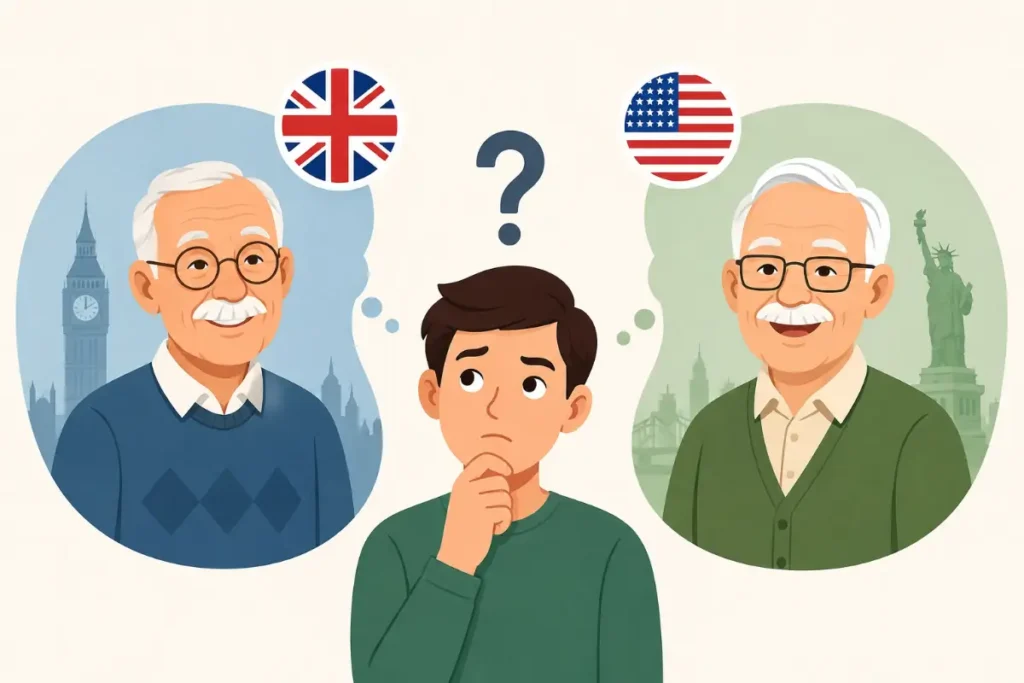
Why There Are Two Spellings
The difference between these two forms can look bigger than it really is. The words are pronounced in almost the same way and carry exactly the same basic meaning. The extra d in granddad simply reflects one spelling tradition.
English has many words that vary by region. Sometimes the difference involves spelling. Sometimes it involves vocabulary or pronunciation. Family terms are no exception.
American English tends to favor granddad while British English commonly uses grandad. That doesn’t mean every American uses the first form or every British speaker uses the second. People have personal preferences and family traditions too.
You may even find both spellings within the same country. A family might call one person Grandad because that’s the name they grew up using while another family uses Granddad.
That makes this word a little different from a simple spelling mistake. If you write grandad in an American context your reader will understand you. If you write granddad in Britain your meaning will also be clear.
The choice is mainly about style and regional preference.
Granddad In American English
American English commonly uses granddad as an informal name for a grandfather. You may hear it in family conversations books children’s stories and personal writing.
For example:
- My granddad taught me how to ride a bike.
- I’m visiting my granddad this weekend.
- Granddad always makes the best pancakes.
- My granddad gave me his old watch.
The word feels warm and personal. It usually appears when someone is talking about a family member in an informal way.
American English also uses several other terms for the same family relationship. Grandpa is extremely common. Grandfather is more formal. Granddad is somewhere in the middle in terms of tone.
A child might say Grandpa when talking to family. Another family might use Granddad instead. Neither choice changes the relationship.
Grandad In British English
British English commonly uses grandad as an informal word for grandfather. It appears often in everyday speech and writing across the United Kingdom.
You might see sentences such as these.
- My grandad used to live in London.
- I’m going to visit my grandad tomorrow.
- Grandad told us stories about his childhood.
- Her grandad taught her how to bake bread.
The spelling with one d after grand is especially familiar to British readers. It also appears in British books newspapers websites and family writing.
Still the spelling isn’t limited strictly to Britain. You can find grandad in other English speaking communities too. Language doesn’t stop at national borders.
What Does Granddad Mean
The word granddad is a familiar and affectionate term for a grandfather. A grandfather is the father of one of your parents.
For example if your mother’s father is named Robert then Robert is your grandfather. You might call him Granddad when speaking to him or talking about him.
The same applies to your father’s father.
The word doesn’t tell you which side of the family the person comes from. If you need to make that clear you can say maternal grandfather for your mother’s father or paternal grandfather for your father’s father.
Those terms sound more formal than granddad. They’re useful in family records medical forms genealogy research and other situations where you need to be precise.
In normal conversation you usually don’t need that level of detail.
You can simply say:
- I’m visiting my granddad today.
- My granddad lives with us.
- I called my granddad last night.
The listener will understand that you’re talking about your grandfather.
What Does Grandad Mean
Grandad has the same meaning as granddad. It is an informal term for a grandfather and is especially familiar in British English.
For example:
- My grandad loves gardening.
- I spent the afternoon with my grandad.
- Her grandad gave her an old family photograph.
There is no difference in the family relationship. One spelling doesn’t describe a different type of grandfather.
That’s an important point because people sometimes assume the two words have slightly different meanings. They don’t.
The difference is mainly regional spelling preference.
Is Granddad More Correct Than Grandad
No. One isn’t universally more correct than the other.
If you’re writing for an American audience granddad is a natural choice. If you’re writing for a British audience grandad may fit better.
Think of it as a regional preference rather than a right and wrong spelling. The same idea appears with many other English words.
For example American English often uses color while British English uses colour. American English often uses favorite while British English uses favourite.
The words mean the same thing. The spelling reflects the version of English being used. The same basic principle applies here.
Granddad Or Grandad In American English
For US readers granddad is generally the safer choice when you want an informal term for grandfather. Grandpa is also extremely common and may sound more natural in casual family conversation.
Consider these examples.
- My granddad lives in Texas.
- I called my granddad after work.
- Granddad and Grandma are coming over for dinner.
These sentences sound natural in American English.
You can still encounter grandad in the United States. It isn’t difficult for an American reader to understand. It may simply look less familiar depending on the person’s background.
Family names often follow personal tradition. If an American family has always used Grandad then changing it to Granddad isn’t necessary.
That is especially true when you’re writing someone’s name or a family story based on their preferred title.
Granddad Or Grandad In British English
For British readers grandad is a very natural choice. It appears often in everyday British English and is familiar across many age groups.
You might write:
- My grandad bought me a new football.
- Grandad is coming to stay this weekend.
- I learned that recipe from my grandad.
The spelling granddad is still understandable in Britain. Some British speakers use it themselves.
So you don’t need to treat the American form as an error. It is simply another accepted spelling.
If you’re writing a website aimed at readers in the United Kingdom you should normally choose grandad for consistency with common British usage.
The Difference Between Granddad And Grandpa
People sometimes search for the difference between granddad and grandpa because both words refer to a grandfather.
- There is no difference in the family relationship. Both are informal terms.
- The choice often comes down to family preference.
- One child may call their grandfather Grandpa. Another may call him Granddad. A third family may use a name such as Pops or Gramps.
These family terms can carry a strong emotional connection. If a person grew up calling their grandfather Grandad then that word may feel more natural than Grandpa.
In writing you should normally preserve the term a family actually uses when you’re describing a person’s affiring name. For example:
My granddad always took us fishing on Sunday mornings.
That sentence feels personal and natural.
If you were writing a formal family history you might instead write:
My grandfather often took us fishing on Sunday mornings.
The meaning stays the same. The tone changes.
Grandfather And Granddad Are Not Exactly The Same In Tone
Although the words describe the same person the tone is different.
Grandfather is neutral and can work in formal writing. Granddad and grandad are more personal and conversational.
Compare these sentences.
- My grandfather was born in 1942.
- My granddad was born in 1942.
Both are correct. The first sounds more formal. The second sounds more like something you’d say to a friend.
This distinction matters when you’re choosing words for a particular type of writing.
A school essay might use grandfather if the tone is formal. A personal story might sound more natural with granddad or grandad. The right word depends on the voice you want.
Is Granddad One Word
- Yes. Granddad is normally written as one word.
- The same applies to grandad.
- You don’t normally write the term as two separate words. Forms such as grand dad are not the standard spellings.
- The word is built from grand and dad but those parts have joined together to form a single family term.
- The same pattern appears in words such as grandmother, grandfather, grandma, and grandpa.
Is Grandad One Word
Yes. Grandad is also written as one word. For example:
- My grandad lives nearby.
- I visited my grandad last weekend.
- Her grandad loves old movies.
Writing grand ad would create a completely different phrase. It would not mean grandfather.
Keeping the word together is simple but worth remembering if you’re writing carefully.
Should Granddad Be Capitalized
Capitalization depends on how you’re using the word.
When granddad is used as a general family noun it is usually lowercase.
For example:
- My granddad lives in Florida.
- I called my granddad yesterday.
When you’re using the family term as a name or direct form of address you may capitalize it.
For example:
- Granddad is coming over tonight.
- I love you, Granddad.
The same principle applies to words such as Mom, Dad, Grandma, and Grandpa.
Compare these examples.
- My dad is a doctor.
- Thanks, Dad.
- My granddad is visiting.
- Thanks, Granddad.
The capitalization changes because the word changes from a general description to a name like form of address.
Granddad As A Name
Family terms can act like names when someone uses them directly. Imagine a child calling across the house. Granddad, can you help me?
Here Granddad is being used as the person’s name. The capital letter makes sense. Now compare it with:
My granddad helped me with my homework.
In this sentence granddad describes the family relationship. It isn’t being used as the person’s name.
This small distinction can help you handle capitalization correctly in your writing.
Common Spelling Mistakes
The two main forms are easy to recognize once you know the regional difference. Still several mistakes can appear when people type the word quickly.
One common mistake is writing the phrase as two words. Standard usage treats granddad and grandad as single words.
Another issue is inconsistent spelling. You might use grandad in one paragraph and granddad in another without a reason. That can make your writing look careless even though both forms are correct.
If you’re writing for a specific audience choose one form and stick with it. Consistency makes your writing cleaner.
For an American audience you can usually use granddad. For a British audience grandad is a natural choice.
If the word appears as part of a person’s chosen family name then follow that person’s preference.
How To Choose The Right Form
The easiest approach is to think about your audience first.
- If you’re writing for readers in the United States use granddad as your default informal form. If you’re writing for readers in the United Kingdom grandad will usually sound more familiar.
- If you’re writing about your own family the situation is even simpler. Use the spelling your family uses.
- Family words are personal. A dictionary may tell you that several forms are accepted but your family may have one version that feels right.
- For example if your grandfather has always been called Grandad then that is the form you should use when writing about him.
- You don’t need to change it just because another spelling is more common in your region.
How The Word Sounds
- The two spellings are pronounced in essentially the same way in normal speech.
- That’s one reason the difference can be confusing. You can’t hear the extra d in a way that reliably tells you which spelling someone has written.
- When you hear someone say the word you need context to know which spelling they prefer.
- This is common in English. Many words have different spellings across regions even though their pronunciation remains similar.
- For writers that means spelling is sometimes something you need to learn visually. Reading the word often can help your memory more than hearing it.
Granddad And Grandad In Family Writing
Family stories often use informal names because they sound warmer and more personal.
Suppose you’re writing about a childhood memory. My granddad had a small workshop behind his house. Every Saturday morning he would let me help him build little wooden toys.
That sounds personal and relaxed. You could also write:
My grandfather had a small workshop behind his house. Every Saturday morning he would let me help him build little wooden toys.
The second version is perfectly correct but slightly more formal. For memoirs personal blogs family histories and stories written for relatives the informal form can make the writing feel closer to the person being described.
That’s one reason these small word choices matter. Grammar and spelling aren’t only about rules. They also shape tone.
Related Family Words
English has several informal words for family members. Many of them vary by region or family tradition.
Grandma And Gran
- Grandma is common in American English and is also widely understood elsewhere.
- Gran is especially common in British English and some other varieties.
- Both refer to a grandmother.
Grandpa And Grandad
- Grandpa is widely used in American English.
- Grandad is especially common in British English.
- Both refer to a grandfather.
Grandmother And Grandfather
These are the more neutral terms. They work well in formal writing and in situations where you want to avoid a strongly regional or personal family term.
The choice among these words often depends on tone audience and family tradition.
Why Family Terms Vary So Much
Family language is often passed down through generations. Children hear a particular word from parents and grandparents and then use it themselves.
That creates strong habits.
A child raised in a family that uses Grandad may never question the spelling. Someone else may grow up hearing Granddad every day.
Regional English adds another layer. American British Australian and other varieties of English can develop their own common forms.
So when you see two versions of a family word it doesn’t automatically mean one is an error.
Sometimes you’re simply seeing the history and variety of English at work.
How To Use The Word Naturally
The word works well in simple everyday sentences.
- My granddad is visiting us this weekend.
- I spent the summer with my granddad.
- My grandad taught me how to fix a bicycle.
- Grandad always tells funny stories.
- I bought my granddad a birthday card.
- My grandfather and granddad are not different people. They are different levels of formality for the same family relationship.
Avoid forcing the word into formal sentences when grandfather would sound more natural.
For example a legal document might say:
The child’s grandfather provided financial support.
It would sound unusual to replace grandfather with granddad in that setting.
The informal form works best in personal and conversational writing.
A Simple Memory Trick
If you write for an American audience remember dad inside granddad.
The spelling is easy to see when you split the word mentally.
grand + dad = granddad
That can help you remember the extra d.
For British English you can remember the shorter form.
grand + ad = grandad
You don’t need a complicated spelling rule. Just connect the form with the English variety you’re writing for.
Another useful trick is to think about the audience before you start writing. If your readers are mainly American choose the American form. If they’re mainly British choose the British form.
What About Granddaddy
Granddaddy is another informal term for grandfather. It is especially familiar in American English and can sound affectionate or childlike.
For example:
- My granddaddy taught me how to fish.
- We spent every summer at my granddaddy’s house.
It has a warmer and sometimes more old fashioned feel than granddad.
Again family preference matters. Some people grow up with Granddaddy while others use Grandpa or Granddad.
There is no need to replace a family’s preferred term simply because another form is more common.
What About Gramps
Gramps is another informal word for grandfather. It is often playful and affectionate.
For example:
- Gramps always beats me at chess.
- I called Gramps after dinner.
This word is more casual than grandfather and can feel more personal than the standard family term.
It isn’t a spelling alternative to grandad. It is simply another nickname for the same family relationship.
What About Grandfather
Grandfather is the safest choice when you want a neutral term.
It works across American and British English and doesn’t depend on family preference.
You might use it in:
- Academic writing.
- Official documents.
- Family records.
- Genealogy research.
- News writing.
- Formal biographies.
For example:
Her grandfather served in the navy for twenty years.
That sentence works for a broad audience without sounding strongly regional.
In personal writing you have more freedom to use a family term.
Does Granddad Mean Fathers Father
Yes. A granddad is a grandfather.
A person’s grandfather can be their mother’s father or their father’s father. The word itself doesn’t tell you which one.
If you need to identify the exact side of the family you can use more precise terms.
- Maternal grandfather means your mother’s father.
- Paternal grandfather means your father’s father.
These terms are useful when family relationships need to be clear. In everyday conversation they’re often unnecessary.
If you say My granddad lives in Chicago the listener usually doesn’t need to know which parent he is related to.
Is Grandad British Or American
Grandad is strongly associated with British English. Granddad is common in American English.
That doesn’t create a strict rule about who can use each spelling. English speakers often use forms from different varieties. Family history can also influence vocabulary.
An American family with British roots may use Grandad. A British family may use Granddad.
So regional patterns are useful when you’re choosing a default spelling but they aren’t absolute laws.
Which Spelling Should You Use For SEO
If you’re writing online content you should choose the form that matches your audience and search intent.
- For a US audience granddad is a sensible primary spelling. If your page targets British readers grandad may be the better choice.
- You can still mention both forms naturally. That helps readers who searched for one version but want to understand the difference.
- Don’t repeat both forms in every paragraph. That makes the article sound forced and can hurt readability.
- Use the natural form for your audience and explain the regional variation once clearly.
Search engines are good at understanding related words and spelling variants. Clear useful content matters more than repeating a phrase over and over.
FAQs
Is granddad or grandad correct?
Both are correct. Granddad is common in American English while grandad is especially common in British English. Both words mean grandfather.
Is grandad British or American?
Grandad is especially common in British English. American English more often uses granddad or grandpa. You can still find grandad in American families because family language doesn’t always follow regional patterns.
Is granddad an American spelling?
Granddad is a common American English spelling for the informal word meaning grandfather. It is also understood and used in other English speaking countries. American families may also prefer Grandpa or another family nickname.
Is granddad one word?
Yes. Granddad is normally written as one word. Grandad is also written as one word.
Should granddad have a capital letter?
Use lowercase when the word describes a family relationship. Capitalize it when you’re using it as a name or direct form of address.
Can I use grandad in American English?
Yes. American readers will understand grandad without difficulty. If you’re following standard American English style though granddad or grandpa may feel more familiar.
What is the formal word for grandad?
The formal and neutral term is grandfather. It works well in official writing academic work and situations where you want a standard family term.
What is the difference between granddad and grandpa?
There is no difference in the family relationship. Both are informal terms for grandfather. The preferred word usually comes from regional usage or family tradition.
Conclusion
If you’ve been stuck on granddad or grandad the short answer is simple. Both spellings are correct and both mean grandfather. The main difference is regional usage and personal preference.
For American English granddad is a natural choice while British English commonly uses grandad. Neither spelling changes the meaning of the word. If you’re writing about a real person who has a family preference you should follow that preference.
For formal writing grandfather is usually the safest option because it works across English varieties and sounds neutral. For personal stories conversations and family writing an informal term can sound warmer and more natural.
So the next time you need to choose between granddad or grandad think about your audience first. For US readers choose granddad as your default. For British readers grandad is a strong choice. If your family already has its own tradition follow that and don’t overthink it.

Dr. Elena Vance holds a Ph.D. in Linguistics from Columbia University and has spent over 15 years analyzing the evolution of the English language. A former university professor turned full-time writer and editor, Elena specializes in breaking down high-level grammatical concepts, punctuation nuances, and style guides (APA, Chicago, MLA) into clear, actionable advice. When she isn’t hunting down dangling modifiers, she can be found collecting vintage dictionaries and reading classic literature.