

If you’re searching seperate or separate you probably already know what the word means. The tricky part is remembering which vowel comes first. One spelling is correct and the other is a very common mistake.
The correct spelling is separate. The incorrect spelling seperate replaces the second a with an e. That small change is enough to make the word wrong.
This mistake happens because the word does not sound exactly like it looks. When people say it quickly the middle vowel can be hard to hear. That makes the wrong spelling feel natural even though it isn’t.
In this guide you’ll learn how to spell the word correctly how to remember it how to pronounce it and how to use it naturally. You’ll also see common examples related words and mistakes that can trip you up.
Quick Definition
Separate can mean to keep two or more things apart. It can also describe things that are not joined or connected. It works as both a verb and an adjective and it can also be used as a noun in a less common form.
Seperate is not the correct spelling in standard English. If you’re writing about things that are apart or need to be kept apart use separate.
Direct Answer
Separate is the correct spelling. Seperate is a misspelling and should not be used in standard English.
Comparison Table
| Word | Meaning | Example Sentence | When to Use It |
|---|---|---|---|
| Separate | To keep apart or existing apart | Please separate the clean clothes from the dirty ones. | Use this spelling in all standard English writing. |
| Seperate | Incorrect spelling | This spelling is incorrect. | Do not use it. |
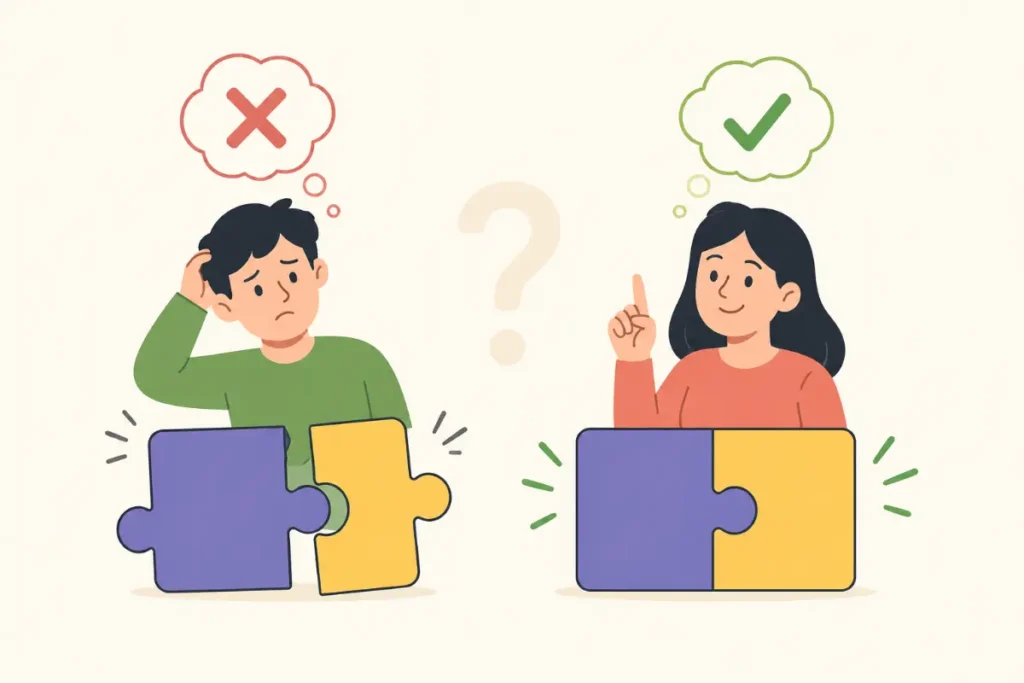
Why People Get Separate Wrong
The spelling problem comes down to one small letter. The correct word has an a in the middle. Many people put an e there because the pronunciation can make that vowel sound unclear.
Think about how you say the word naturally. You probably don’t stop after the first few letters and carefully pronounce every vowel. In normal speech the middle part moves quickly. That makes it easy for your memory to store the wrong version.
Another reason is visual familiarity. If you’ve seen the misspelled form many times online it may start to look normal. Your brain can recognize the overall shape of a word without checking every letter.
This happens with many common English spelling mistakes. A word can look familiar and still contain an error.
The good news is that separate has a useful memory trick. Once you learn it the spelling becomes much easier to recall.
The Correct Spelling Of Separate
- The correct spelling is s e p a r a t e.
- The letter a appears after p.
- That middle a is the letter people often forget. They write an e instead and produce the incorrect form.
- A simple way to remember the word is to connect it with the word par. You can see the sequence inside the word.
- sep ar ate
- The middle part contains ar. Thinking about that little piece can help you remember that the word uses a rather than e.
- Another useful trick is to connect separate with the idea of being apart. The word par can remind you of the sound and spelling in the middle.
- You don’t need a complicated spelling rule. A small memory link is often enough.
What Separate Means
The word separate has a few related meanings. They all connect to the basic idea of things being apart rather than joined together.
As a verb it means to move things or people apart.
For example:
- Please separate the papers into three groups.
- The teacher separated the students into teams.
- We need to separate the damaged items from the good ones.
As an adjective it describes something that is apart from something else.
For example:
- The children have separate bedrooms.
- We booked separate rooms for the guests.
- Each department has a separate budget.
The word can also describe something that is distinct or different.
For example:
- Those are two separate issues.
- Keep your personal and professional accounts separate.
- The two events are separate from each other.
The meaning changes slightly with the sentence but the central idea stays the same. Something is apart from something else.
Separate As A Verb
When separate works as a verb it describes an action. Someone or something causes people or objects to move apart.
For example a teacher may separate two students who are distracting each other. A worker may separate damaged products from usable ones. A parent may separate two children during an argument.
Here are more natural examples:
- The nurse separated the samples before testing them.
- Please separate the white clothes from the dark clothes.
- The fence separates the two properties.
- We separated the documents into different folders.
- The manager separated the teams for the next exercise.
Notice how the verb often answers the question of what someone is doing. The action creates distance or keeps things from being mixed together.
Separate People
The verb can describe physical distance between people.
- The security guard separated the two men.
- The coach separated the players after the argument.
- The parents tried to separate the fighting children.
It can also describe people becoming distant in a less physical sense.
- The disagreement slowly separated the two friends.
- Time and distance separated the family members.
The second use is more figurative. The people are not necessarily being physically moved apart. Instead something creates distance in their relationship.
Separate Things
The word is also common when sorting objects.
- Separate the recyclable items from the trash.
- She separated the receipts by month.
- We need to separate the old files from the new ones.
This use appears often at home school and work. It is one reason the word is so useful in everyday English.
Separate As An Adjective
As an adjective separate describes something that is apart or distinct.
For example:
- We have separate entrances for customers and employees.
- The hotel has separate rooms for families and couples.
- She keeps a separate notebook for work.
- The two companies operate as separate businesses.
In these sentences the word tells us that something is not combined with something else.
This use is especially common with words such as room space group account business department and area.
You might say:
- separate room
- separate account
- separate group
- separate space
- separate business
- separate department
These combinations are useful because they show how the word naturally appears in everyday writing.
Separate And Apart
The words separate and apart are closely related but they do not always work in the same way.
- Separate can describe the act of putting things apart or the condition of being distinct.
- Apart usually focuses on distance or the fact that things are not together.
Compare these examples:
- Please separate the books.
- The books are stored apart from the other supplies.
In the first sentence someone is taking action. In the second sentence the books are already at a distance.
You can also use both ideas in one sentence.
- Keep the chemicals separate and store them apart from food.
The words overlap in meaning but each has its own natural uses.
Separate And Distinct
Separate and distinct can sometimes describe the same idea. Still they are not perfect substitutes.
Separate often suggests physical or practical distance.
- The kitchen has a separate entrance.
Distinct usually emphasizes difference.
- The two flavors are distinct.
If two things are separate they may simply be apart. If they are distinct they are clearly different in some way.
That difference matters in formal writing. Choosing the right word makes your meaning more precise.
Common Phrases With Separate
Learning common word combinations is a useful way to improve spelling and vocabulary at the same time. When you see a word repeatedly in familiar phrases it becomes easier to remember.
Separate Room
This means a room that is not shared with another person or purpose.
- The guests asked for a separate room.
Separate Account
This describes an account that is kept apart from another account.
- I use a separate account for business expenses.
Separate Business
This describes a business that operates independently from another one.
- The new store is a separate business.
Separate Issue
This means a different matter that should be considered on its own.
- That’s a separate issue and we can discuss it later.
Separate Group
This describes a group that is apart from another group.
- The students worked in a separate group.
Separate Space
This means an area kept apart for a specific purpose.
- The equipment needs a separate space.
These phrases appear frequently in everyday English. Reading them helps you become familiar with the correct spelling without having to memorize the word in isolation.
Why The Pronunciation Causes Trouble
English spelling and pronunciation don’t always match neatly. That’s one reason this word causes trouble.
The word is commonly pronounced with three syllable groups. The middle vowel can sound weak in normal speech. Because of that some people hear an e even though the spelling uses a.
This is a useful reminder that pronunciation isn’t always a reliable guide to spelling.
You can know exactly how a word sounds and still spell it incorrectly. English has many examples of this. The best approach is to learn the written form and connect it with a memory cue.
When you write the word slowly you can see the important part clearly.
sep a rate
The middle a is the letter to watch.
A Simple Memory Trick
One of the easiest ways to remember the spelling is to think of the phrase a rat inside the word.
- Look at this part:
- separate
- You can spot the letters a r a in the middle.
- A useful memory sentence is:
- There is a rat in separate.
It sounds a little silly. That’s exactly why it can work. Strange or funny memory tricks often stick better than dry spelling rules.
You can picture a tiny rat sitting inside the word. The image helps you remember the two a sounds and especially the middle a that people often replace with e.
You don’t need to use this trick forever. Once the correct spelling becomes familiar your brain will remember it automatically.
Another Way To Remember The Spelling
- You can also connect the word with par.
- Look at the spelling again:
- separate
- The letters par appear in the middle.
This gives you another simple reminder.
Think:
Separate has par in it.
That small connection can stop you from writing the incorrect vowel.
Memory tricks work best when they feel natural to you. If the rat trick helps you remember it then use that. If par feels easier then use that instead.
Common Mistakes With Separate
The most common mistake is replacing the second a with e.
Another mistake is leaving out a letter when typing quickly. Because the word is fairly long the eye can jump from one part to another.
Here are some examples of common errors and their corrections.
| Incorrect Form | Correct Form |
|---|---|
| seperate | separate |
| seperated | separated |
| seperately | separately |
| seperation | separation |
The same spelling problem can appear in related words. Learning the main word helps you recognize the correct form in its word family.
Separate And Separately
Separately is the adverb form of separate. It means individually or apart from something else.
For example:
- Please pack the items separately.
- The bills are sent separately.
- We paid for the meals separately.
The spelling follows the same basic pattern. The a remains in the middle. A common mistake is to write seperately. That version is incorrect.
If you remember the spelling of the main word you can carry the same pattern into related forms.
Separate And Separation
Separation is a noun. It describes the act or result of separating people or things.
For example:
- The separation of the two groups took several hours.
- The parents announced their separation.
- There is a clear separation between the two sections.
Again the important a stays in the word.
Learning word families is useful because English often changes a word’s ending while keeping its core spelling. Once you recognize that pattern you don’t have to relearn every form from scratch.
Separate And Separator
A separator is something that divides or keeps things apart.
For example a divider in a drawer can act as a separator. A wall can also be a separator between two rooms.
You might see the word in technical or everyday settings.
- The drawer has plastic separators.
- The machine uses a separator to divide the materials.
The word comes from the same family as separate. The spelling connection is worth remembering.
When To Use Separate
Use separate when you mean apart distinct or not joined.
Here are some everyday examples:
- Please keep these documents separate.
- The two stores have separate owners.
- We need a separate table for the children.
- Put the clean towels in a separate basket.
- The teacher gave each group a separate assignment.
The word is useful in both casual and formal writing. You can use it in an email to a friend or a business report without changing the word itself.
When Not To Use Separate
- You shouldn’t use separate simply because two things are different. Sometimes another word gives a more accurate meaning.
- For example if you want to say that two ideas are very different you might use distinct.
- If you mean that someone is alone you might use alone or isolated depending on the situation.
- If you mean that two things are far from each other you might use apart or distant.
- Good writing isn’t about choosing the longest or most formal word. It is about choosing the word that fits your meaning.
Separate In Formal Writing
The word works well in formal writing because its meaning is clear and direct.
You might see it in:
- Business reports.
- School assignments.
- Legal documents.
- Instructions.
- Emails.
- Research writing.
- Government forms.
- News articles.
For example:
- Please submit the documents as separate files.
- The company maintains separate records for each department.
- The results were analyzed in separate groups.
There is no need to replace separate with a complicated synonym. The simple word is often the strongest choice.
Separate In Everyday Conversation
People use the word constantly in casual speech.
You might hear:
- Can you keep mine separate.
- We need separate checks.
- Let’s sit at separate tables.
- Put those clothes in a separate pile.
- They live in separate houses.
These examples show why learning the word matters beyond spelling tests. It is part of ordinary American English.
Is Separate A Verb Or An Adjective
It can be both.
As a verb it describes the action of putting things apart.
- Separate the papers into two piles.
As an adjective it describes something that is apart from something else.
- The papers are in separate piles.
The spelling stays the same but the role changes based on how the word is used in the sentence.
You can often identify the verb because it describes something someone does. You can identify the adjective because it describes a person thing place or idea.
Can Separate Be A Noun
Yes but this use is less common in everyday American English.
In some contexts separate can refer to an item that is distinct from another item. The plural separates is more common in certain areas such as clothing.
For example separates can refer to clothing pieces that can be worn together but are sold or treated as individual pieces.
Still this noun use is not the meaning most readers have in mind when they encounter the word. In most everyday sentences separate works as a verb or adjective.
Words Related To Separate
Understanding related vocabulary gives you a clearer picture of the word.
- Separate means to put apart or keep apart.
- Separation refers to the act or result of being separated.
- Separately means individually or apart.
- Separator refers to something that divides or keeps things apart.
- Separated describes something that has already been divided or moved apart.
For example:
- The teacher separated the students.
- The students are separated into groups.
- The separation took five minutes.
- They completed the tasks separately.
- A divider acted as a separator.
These words all come from the same basic idea. Learning them together makes both vocabulary and spelling easier.
A Quick Spelling Test
Try writing these sentences without looking at the answers.
- The teacher asked us to keep the two groups ______.
- She has a ______ bank account for her business.
- Please pack the frozen foods ______ from the other groceries.
- The two families live in ______ houses.
The correct forms are separate separate separately and separate.
If you got them right you have already practiced the spelling in several different contexts. That is more useful than simply writing the word ten times on a piece of paper.
How To Proofread This Word
When proofreading your work look at the middle of the word rather than trying to check the whole word at once.
Check this part:
sepa
Then check:
rate
Put them together and you get separate.
This method works because most spelling errors happen in a small part of a word. You don’t need to stare at every letter equally. Find the part you tend to get wrong and check that section carefully.
If you use a word processor you can also add the correct spelling to your personal dictionary after checking it. That can help reduce repeated mistakes but your own knowledge should still come first.
Why Correct Spelling Matters
A spelling mistake doesn’t make someone a bad writer. Everyone makes errors. Fast typing missed letters and unfamiliar words can all lead to mistakes.
Still common spelling errors can distract readers. If you’re writing a job application school paper customer email or professional document you want your ideas to get the attention instead of a basic spelling mistake.
Correct spelling also makes your writing easier to trust. Readers may never consciously notice that every word is spelled correctly. They simply move through the text without interruption.
That smooth reading experience matters. Good editing often works quietly in the background.

A Practical Way To Build Better Spelling Habits
- Don’t try to memorize every difficult word at once. Focus on the words you personally misspell most often.
- If separate is one of them write a few natural sentences using it. Read those sentences later in the day. Then use the word again in a real message or piece of writing.
- You can also keep a short list of troublesome words. Add the correct form and one example sentence. Review the list from time to time.
- The goal isn’t to become obsessed with spelling. The goal is to make correct spelling automatic.
Once you’ve seen a word correctly enough times your brain starts storing its shape. Eventually you won’t need to stop and think.
FAQs
Is separate spelled with an A or an E?
The correct spelling uses a in the middle. The word is spelled separate. The common misspelling replaces that a with e.
Why is separate so often misspelled?
The middle vowel can be hard to hear when people pronounce the word naturally. Many writers also remember the sound rather than the exact letters. That can lead to the incorrect spelling.
Is seperate a real word?
No. Seperate is not the standard English spelling. It is a common misspelling of separate.
How do you remember the spelling of separate?
A popular memory trick is to remember that there is a rat in the middle of the word. You can also remember that the letters par appear inside it. Both tricks point you toward the correct a.
What is the difference between separate and separately?
Separate can describe something that is apart or can describe the action of putting things apart. Separately means individually or apart from something else. For example you can keep two files separate and send them separately.
What is the past tense of separate?
The past tense is separated. For example you could say that the teacher separated the students into two groups.
Is separate a verb or an adjective?
It can be both. As a verb it means to put things or people apart. As an adjective it describes things that are apart or distinct.
Is separate the same as apart?
The meanings are closely related but the words are used differently. Separate can describe the act of creating distance while apart often describes the condition of being at a distance.
Conclusion
If you’ve been stuck on seperate or separate the answer is simple. Separate is the correct spelling and the other form is a common mistake. The key letter to remember is the a in the middle.
A useful memory trick is to picture a rat inside the word. You can also remember the letters par in the middle. These small reminders make the spelling easier to recall when you’re typing quickly or writing without spell check.
The word itself is useful far beyond spelling practice. You can separate objects sort people into groups keep accounts apart or describe two things as distinct. It works naturally in casual conversation formal writing school work and professional communication.
Next time you need the word take a quick look at the middle. Remember that separate has an a after the p. That one small check can keep a very common spelling mistake out of your writing.

Sienna Watson is a veteran copywriter and communications coach who has helped startup founders, marketers, and professionals polish their writing for over a decade. Realizing that most people don’t need a degree in linguistics—just clear, impactful communication—Sienna focuses on practical grammar, business writing etiquette, and eliminating wordiness. She advocates for plain language, strong verbs, and persuasive prose that gets results.