

The difference between withdraw and withdrawal is simple. Withdraw is an action word that means to take something back or remove it. Withdrawal is a noun that names the act of taking something back or removing it. You withdraw money from a bank account, but you make a withdrawal.
Both words are correct. The right choice depends on how you use the word in a sentence.
For example, you might say, “I need to withdraw $100 from my savings account.” You could also say, “I made a $100 withdrawal from my savings account.” Both sentences are correct, but each word has a different job.
This difference can be confusing because the words look and sound alike. They also appear in many of the same situations, such as banking, school enrollment, legal matters, and medical care.
In this guide, you’ll learn the meaning of each word, how to use it in a sentence, and how to avoid common mistakes. You’ll also see examples from everyday American English that make the difference easy to remember.
Quick Definition
Withdraw is a verb that means to take something out, remove yourself from a situation, or stop taking part in something.
Withdrawal is a noun that refers to the act of removing something, the amount removed, or the process of stopping something. It can also describe physical or emotional symptoms that occur after a person stops using certain substances.
Direct Answer
Use withdraw when you describe an action. Use withdrawal when you name the action, process, or result.
For example, “She will withdraw her application” is correct, and “She submitted a withdrawal request” is also correct.
Withdraw vs Withdrawal at a Glance
| Word | Meaning | Example Sentence | When to Use It |
|---|---|---|---|
| Withdraw | To take out, remove, or stop participating. | I need to withdraw cash. | When describing an action. |
| Withdrawal | The act or process of taking something out or stopping participation. | I made a cash withdrawal. | When naming an action or process. |
| Withdrawn | Removed from a place or situation, or quiet and less social. | He has withdrawn from the course. | When describing a completed action or a person’s behavior. |
| Withdrew | The past tense of withdraw. | She withdrew her application yesterday. | When talking about an action that happened in the past. |
| Withdrawing | The present participle of withdraw. | They are withdrawing their offer. | When describing an ongoing action or forming a verb phrase. |

Understanding the Difference Between the Two Words
The easiest way to choose the correct word is to look at its role in the sentence. One word describes what someone does. The other names the action or process.
Withdraw Is an Action Word
Withdraw is a verb. A verb tells the reader what someone or something does.
You can withdraw money, withdraw an offer, withdraw an application, or withdraw from a group. The word can also describe pulling away from a person or situation.
Here are some natural examples.
- I need to withdraw money before the store closes.
- The student decided to withdraw from the class.
- The company may withdraw its job offer.
- She chose to withdraw her complaint.
- He began to withdraw from his friends.
In each sentence, withdraw describes an action. Someone takes something out, removes something, or stops participating.
You can also use this verb in different tenses. For example, withdraw describes the present or a future action, withdrew describes a past action, and withdrawing often describes an action in progress.
Withdrawal Is a Naming Word
Withdrawal is a noun. A noun names a person, place, thing, idea, action, or process.
You can make a withdrawal from a bank account, submit a withdrawal request, or complete a withdrawal form. The noun can also describe the process of leaving a course or stopping the use of a substance.
Consider these examples.
- I made a withdrawal from my checking account.
- Her withdrawal from the competition surprised the team.
- The school received his course withdrawal request.
- The bank charged a fee for the cash withdrawal.
- His sudden withdrawal from social activities worried his family.
In these sentences, withdrawal names an action or process. It doesn’t tell the reader that someone is performing the action at that exact moment.
A useful clue is the word a. You can often say a withdrawal or the withdrawal because the word is a noun.
For example, “The withdrawal took two business days” is correct. However, “The withdraw took two business days” is incorrect in standard English.
How to Use Withdraw in a Sentence
The verb withdraw appears in several everyday situations. Its meaning changes slightly depending on the context, but the basic idea stays the same. Someone takes something away, pulls back, or stops taking part.
Using Withdraw for Money
In banking, withdraw means to take money out of an account. You might take out cash at an ATM, visit a bank teller, or move money from an account using an available banking service.
These examples show the correct usage.
- I plan to withdraw $200 from my savings account.
- Can I withdraw cash at this ATM?
- She withdrew money to pay for the repairs.
- He wants to withdraw funds before his trip.
- We are withdrawing money from the account to cover the bill.
Notice how the verb describes the action. The amount of money doesn’t change its grammatical role.
You can also use withdraw when discussing investments or retirement accounts. The rules and possible fees depend on the account and the transaction.
For example, “She plans to withdraw funds from her retirement account” uses the verb correctly. It doesn’t mean that she has already completed the transaction.
Using Withdraw for Applications and Requests
People also use withdraw when they decide not to continue with an application or request.
A job applicant might withdraw an application after accepting another offer. A college student might withdraw an application before the school makes a decision. A person might also withdraw a formal request.
Examples include these sentences.
- I decided to withdraw my application for the position.
- Marcus withdrew his college application last week.
- She wants to withdraw her request for a refund.
- The candidate withdrew his application before the interview.
- They may withdraw the proposal if the client rejects the new terms.
In each example, withdraw tells the reader what someone does with an application, request, or proposal.
The verb doesn’t always mean that someone has made a mistake. A person might withdraw an application because their plans have changed or because they no longer need the opportunity.
Using Withdraw for Classes and School Programs
Schools and colleges often use withdraw when a student stops taking a course or leaves a program.
For example, a student might withdraw from a class because of a scheduling problem. Another student might withdraw from a program because they have accepted a job.
Here are a few examples.
- I need to withdraw from my biology class.
- She withdrew from the course before the deadline.
- He plans to withdraw from the training program.
- The student is withdrawing from two classes this semester.
- They decided to withdraw their child from the summer program.
Pay attention to the word from. When you describe leaving a class or program, the usual pattern is withdraw from something.
You can say, “She withdrew from the course.” You can also say, “She withdrew her application to the program.” The first sentence describes leaving a course. The second describes removing an application.
These actions are related, but they don’t mean exactly the same thing.
Using Withdraw for Offers and Statements
A person or organization can withdraw an offer, statement, promise, or claim. In this case, the word means to take back something that was previously given or stated.
For example, a company might withdraw a job offer. A speaker might withdraw a comment after realizing it was inaccurate. A seller might withdraw an offer to sell a property.
Consider these sentences.
- The company withdrew its job offer.
- He decided to withdraw his earlier statement.
- The seller may withdraw the offer before Friday.
- She withdrew her accusation after reviewing the facts.
- The organization withdrew its public announcement.
This use is common in workplaces, business discussions, legal settings, and public statements.
However, withdrawing a statement doesn’t always erase its earlier effects. In formal situations, the person or organization may need to issue a correction or take another step.
Using Withdraw for Social Behavior
The verb can also describe someone who becomes less involved with other people.
A person might withdraw from friends after a stressful event. Someone might withdraw from a conversation because they feel uncomfortable. In these cases, the word suggests pulling away rather than physically removing an object.
Examples include the following.
- He began to withdraw from his friends.
- She withdrew from the conversation after the argument.
- The child tends to withdraw in unfamiliar settings.
- I noticed that my coworker was withdrawing from the group.
- After the move, he slowly withdrew from his usual activities.
This meaning is often connected to behavior or emotions. Still, withdrawing from social activities doesn’t automatically mean that a person has a mental health condition. People sometimes need quiet time or space to handle a difficult situation.
How to Use Withdrawal in a Sentence
The noun withdrawal works in many of the same situations as the verb. The key difference is that it names the action, event, or process instead of describing someone performing it.
Using Withdrawal for Bank Transactions
A withdrawal is an amount of money taken out of an account or the transaction used to remove that money.
You might see the word on a bank statement, an ATM receipt, or an online banking page.
Examples include these sentences.
- I made a $50 withdrawal yesterday.
- The bank recorded the withdrawal this morning.
- There is a limit on daily cash withdrawals.
- My account shows a withdrawal I don’t recognize.
- The ATM charged a fee for the withdrawal.
In banking, the noun can refer to the transaction itself or the money taken out. The surrounding sentence usually makes the meaning clear.
For instance, “The withdrawal was $50” refers to the amount. “The withdrawal appeared on my statement” refers to the recorded transaction.
A withdrawal isn’t the same as a deposit. A deposit adds money to an account, while a withdrawal takes money out.
Using Withdrawal for School Enrollment
Schools may use withdrawal to describe the formal process of leaving a course, program, or institution.
A withdrawal form may record a student’s decision to stop attending a class. A withdrawal date may affect tuition, grades, financial aid, or other school policies.
Here are some examples.
- The school processed my course withdrawal.
- Her withdrawal from the program became official on Monday.
- Students must submit a withdrawal form before the deadline.
- His withdrawal affected his semester schedule.
- The college explained its withdrawal policy during orientation.
The noun often appears with words such as form, date, request, policy, and deadline.
These combinations are useful when writing emails to teachers, communicating with a college office, or reading school instructions.
Keep in mind that each school sets its own rules. The word withdrawal names the process, but it doesn’t tell you the exact steps or consequences.
Using Withdrawal for Business and Legal Matters
In business and legal writing, withdrawal can describe the removal of an offer, claim, application, or request.
For example, a company might announce the withdrawal of a product from the market. A lawyer might discuss the withdrawal of a legal claim. An organization might issue a notice about the withdrawal of a proposal.
These examples show how the noun works.
- The withdrawal of the offer caught the buyer by surprise.
- The company announced the withdrawal of its product.
- The court reviewed the request for withdrawal.
- The withdrawal of the complaint ended that part of the dispute.
- The organization confirmed the withdrawal of its proposal.
The noun helps writers talk about the action as an event or formal process.
In legal situations, the exact effect of a withdrawal depends on the type of document, the rules that apply, and the stage of the case. The word alone doesn’t establish the legal outcome.
Using Withdrawal for Substance Use
In health care, withdrawal can refer to symptoms that occur when a person who has become physically dependent on a substance reduces or stops using it.
Depending on the substance, symptoms may include sweating, nausea, anxiety, shaking, or trouble sleeping. Some types of withdrawal can be dangerous and require medical care.
Examples include these sentences.
- The doctor explained the possible withdrawal symptoms.
- Alcohol withdrawal can be life threatening.
- The treatment team monitored him during withdrawal.
- She asked her doctor about nicotine withdrawal.
- The patient received medical support for opioid withdrawal.
In this context, withdrawal names a process or group of symptoms. It doesn’t describe the simple act of removing money or leaving a class.
Some substances can cause serious withdrawal complications. A person who may be dependent on alcohol or certain medications should seek medical advice before stopping suddenly.
Using Withdrawal for Emotional Distance
The noun can also describe a pattern of pulling away from people or activities.
For example, someone might show social withdrawal after a major life change. A family member might notice a person’s withdrawal from regular conversations or hobbies.
Here are some examples.
- His withdrawal from family activities worried his sister.
- Social withdrawal can affect friendships.
- Her sudden withdrawal from the group surprised everyone.
- The counselor asked about his withdrawal from daily activities.
- The family noticed a gradual withdrawal from social events.
In these sentences, withdrawal names the behavior rather than the action itself.
The context matters. Someone who spends more time alone may simply prefer solitude. A sudden or lasting change in behavior can be a reason to check in with the person and offer support.
Common Grammar Patterns With Withdraw and Withdrawal
Knowing the definition helps, but sentence patterns make the choice even easier. Certain words often appear before or after the verb. The noun also follows familiar patterns.
Use Withdraw With an Object
A direct object receives the action of a verb. In simple terms, it tells you what someone takes out or removes.
For example, in “She withdrew her application,” the words her application tell you what she withdrew.
Here are more examples.
- He withdrew his offer.
- I withdrew my complaint.
- They withdrew the product.
- She withdrew her permission.
- We withdrew the proposal.
You don’t always need a direct object. You can also use withdraw with from when someone leaves a place, group, or activity.
For example, “He withdrew from the race” is correct. So is “She withdrew from the discussion.”
The important point is to match the sentence pattern to the meaning you want to express.
Use Withdrawal After Articles and Possessive Words
Because withdrawal is a noun, it can follow words such as a, the, my, his, and their.
For example.
- I requested a withdrawal.
- The withdrawal took longer than expected.
- Her withdrawal surprised the team.
- Their withdrawal from the project was final.
- We discussed my withdrawal from the course.
These words help identify the noun in a sentence. You can also describe it with an adjective.
For example, you might make an early withdrawal, request a partial withdrawal, or experience severe withdrawal symptoms.
The adjective adds detail, but withdrawal remains a noun.
Understand Withdrawn and Withdrew
Two other forms often cause confusion. They are withdrew and withdrawn.
Withdrew is the simple past tense of withdraw. Use it for an action that happened in the past.
- She withdrew her application yesterday.
- I withdrew cash before the trip.
- They withdrew their offer last week.
Withdrawn is the past participle. It often appears with forms of have or be.
- She has withdrawn her application.
- The offer was withdrawn on Tuesday.
- They have withdrawn from the competition.
Withdrawn can also describe a person who seems quiet or distant.
For example, “He became withdrawn after the move” describes a change in behavior. In that sentence, withdrawn doesn’t mean that someone took money out of an account.
Understand Withdrawing
Withdrawing is the form used in continuous verb phrases. It can also function as a noun modifier in some sentences.
For example.
- I am withdrawing money from my account.
- She is withdrawing from the class.
- They are withdrawing their offer.
- The withdrawing student contacted the office.
The first three examples describe actions in progress. The final example uses withdrawing to describe the student.
Don’t confuse withdrawing with withdrawal. The first is a verb form in these examples. The second is a noun.
Common Mistakes to Avoid
Small grammar mistakes can change how natural a sentence sounds. The good news is that most errors are easy to fix once you know the difference between the verb and the noun.
Using Withdraw as a Noun
One common mistake is using withdraw when the sentence needs withdrawal.
- Incorrect: I made a withdraw from my account.
- Correct: I made a withdrawal from my account.
The verb made needs a noun phrase in this sentence. Since withdrawal names the transaction, it fits the pattern.
You could also rewrite the sentence using the verb.
Correct: I withdrew money from my account.
Both corrected sentences express the same general idea, but they use different sentence structures.
Using Withdrawal as a Verb
Another mistake is using the noun in place of the verb.
- Incorrect: I need to withdrawal some cash.
- Correct: I need to withdraw some cash.
After need to, use the base form of the verb. The same rule applies to many other verbs.
For example, say “I want to withdraw money” rather than “I want to withdrawal money.”
You can use the noun in a different structure, such as “I need to make a withdrawal.”
Confusing Withdraw and Withdrew
Some writers use withdraw when they are talking about a completed action in the past.
Incorrect: She withdraw her application yesterday.
Correct: She withdrew her application yesterday.
The simple past form is withdrew. Use it when the action happened and ended in the past.
However, withdraw is correct after words such as will, can, may, and did.
- She will withdraw her application.
- She can withdraw her application.
- She may withdraw her application.
- Did she withdraw her application?
After did, use the base form withdraw, not withdrew.
Confusing Withdraw With Withdrawal in Formal Writing
In formal writing, the wrong word can make a sentence sound awkward or unclear.
For example, “The student decided to withdrawal from the course” is incorrect. A better version is “The student decided to withdraw from the course.”
By contrast, “The student submitted a withdrawal request” is correct because withdrawal names the request or process.
When editing, look at the words around the target word. If the sentence describes an action, you probably need the verb. If it names a process, event, or transaction, the noun may be the right choice.
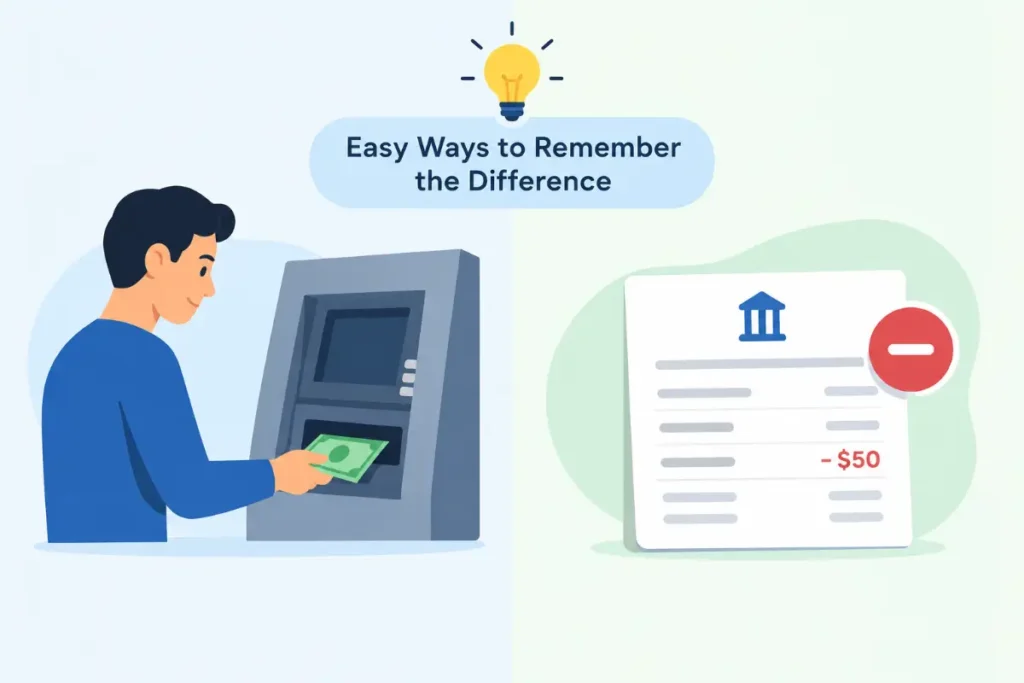
Easy Ways to Remember the Difference
You don’t need to memorize a long grammar rule. A few simple reminders can help you choose the right word quickly.
Remember That Verbs Show Actions
Think of withdraw as a command or action.
You can withdraw cash. You can withdraw an offer. You can withdraw from a class.
If you can naturally place will, can, or did before the base form, the verb is likely what you need.
For example, “I will withdraw my application” is correct. So is “Did you withdraw the money?”
Remember That Nouns Name Things
Think of withdrawal as the name of an event or process.
You can make a withdrawal, request a withdrawal, or discuss a withdrawal.
The word also appears in phrases such as withdrawal fee, withdrawal form, and withdrawal symptoms.
A simple test is to try adding a or the before the word. If the sentence works, you may need the noun.
For example, “The withdrawal was approved” sounds natural. “The withdraw was approved” doesn’t work in standard English.
Try Rewriting the Sentence
When you’re unsure, rewrite the sentence using the other form.
For example.
- Verb: I withdrew $100 from my account.
- Noun: I made a $100 withdrawal from my account.
Or try this pair.
- Verb: She withdrew from the course.
- Noun: Her withdrawal from the course was approved.
If both versions express your intended meaning, you can choose the one that fits the sentence structure.
Related Words That Are Easy to Confuse
The two main words belong to a larger word family. Learning their related forms can help you write more clearly.
| Word | Part of Speech | Example |
|---|---|---|
| Withdraw | Verb | I withdraw money every Friday. |
| Withdrawal | Noun | The withdrawal appeared on my statement. |
| Withdrew | Past tense verb | He withdrew his application. |
| Withdrawn | Past participle or adjective | She has withdrawn from the course. |
| Withdrawing | Verb form | They are withdrawing their offer. |
These forms share the same basic idea, but you can’t swap them freely.
For instance, withdrew works in “He withdrew the request yesterday.” The word withdrawn works in “He has withdrawn the request.”
The helping verb changes the form you need. After has, use withdrawn. For a simple past action, use withdrew.
Is Withdraw or Withdrawal Correct in American English
Both forms are standard in American English. Neither is more correct than the other in every situation.
The choice depends on grammar and meaning. American banks use phrases such as cash withdrawal and withdraw funds. Schools may use withdraw from a course and course withdrawal. Health professionals use withdrawal symptoms to describe symptoms that can occur after a person stops using a substance.
You may also see withdrawal used in official forms, financial statements, and policy documents. In everyday conversation, people often use the verb because it describes what they plan to do.
For example, someone might tell a friend, “I’m going to withdraw some cash.” The same person might later say, “I made a withdrawal at the ATM.”
Both sound natural. The sentence structure determines the correct choice, not the level of formality.
FAQs
What is the difference between withdraw and withdrawal?
Withdraw is a verb that describes an action. Withdrawal is a noun that names the action or process. You withdraw money from an account, but you make a withdrawal.
Is withdrawal a verb or a noun?
Withdrawal is a noun. It names an action, event, amount, or process. For example, “The bank approved my withdrawal” uses the word correctly.
Can I say I made a withdraw?
No. In standard English, say “I made a withdrawal.” You can also say “I withdrew money.” Both sentences are correct because each uses the right form of the word.
What is the past tense of withdraw?
The simple past tense of withdraw is withdrew. For example, “She withdrew her application yesterday.” The past participle is withdrawn, as in “She has withdrawn her application.”
Is it correct to say withdraw from a class?
Yes. Withdraw from a class is a standard expression that means to stop taking a course. For example, “He decided to withdraw from his history class.” The noun form is withdrawal from a class.
What does withdrawal mean in banking?
In banking, a withdrawal is a transaction that takes money out of an account. It can also refer to the amount removed. For example, “I made a $40 withdrawal” means that you took $40 out of your account.
What does withdrawal mean in health care?
In health care, withdrawal can describe symptoms that occur after a person reduces or stops using a substance that their body has become dependent on. Symptoms vary by substance and can sometimes be serious. A health professional can help a person understand the risks and choose a safe plan.
How do I remember withdraw or withdrawal?
Use withdraw for an action and withdrawal for the name of that action or process. If you can say “I will withdraw,” you need the verb. If you can say “I made a withdrawal,” you need the noun.
Conclusion
The difference between withdraw and withdrawal comes down to one simple grammar rule. Withdraw is a verb, while withdrawal is a noun. Both are correct, but they serve different purposes in a sentence.
Use withdraw when someone takes money out of an account, removes an application, takes back an offer, or stops participating in an activity. Use withdrawal when you name the transaction, event, or process.
When you aren’t sure which word fits, look at the sentence structure. Phrases such as will withdraw, can withdraw, and did withdraw call for the verb. Phrases such as a withdrawal, the withdrawal, and withdrawal request use the noun.
Keep this simple rule in mind and you’ll choose the right word with confidence. If you’re describing an action, use withdraw. If you’re naming the action, use withdrawal.

Sienna Watson is a veteran copywriter and communications coach who has helped startup founders, marketers, and professionals polish their writing for over a decade. Realizing that most people don’t need a degree in linguistics—just clear, impactful communication—Sienna focuses on practical grammar, business writing etiquette, and eliminating wordiness. She advocates for plain language, strong verbs, and persuasive prose that gets results.